Choosing Opinionated AI Frameworks: Why Constraints Boost Results
 Feb, 23 2026
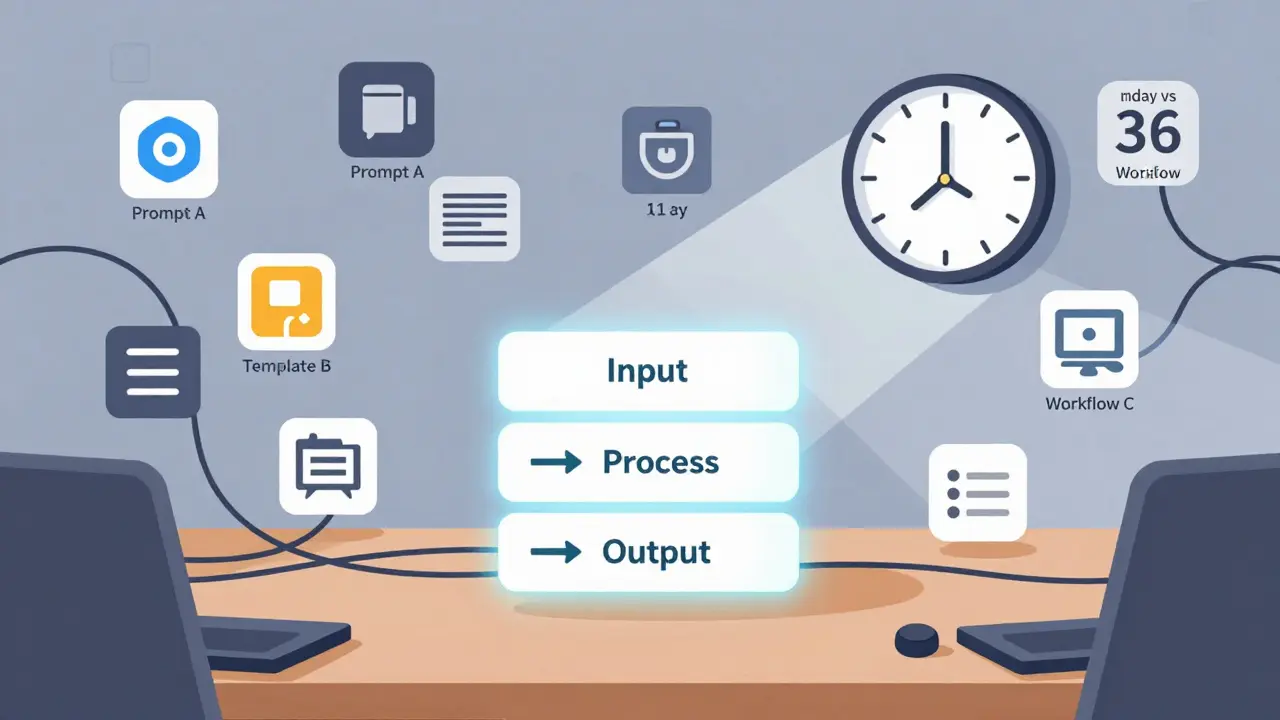
When you build something with AI, you don’t just need tools-you need direction. Too many AI platforms today throw a hundred options at you and call it flexibility. But in practice, that just leads to paralysis. You spend hours tweaking prompts, hunting for the right template, or debugging why your workflow doesn’t fit. Meanwhile, competitors are shipping products that just work.
The answer isn’t more features. It’s fewer choices-guided by a clear vision. That’s what opinionated AI stacks deliver. They don’t ask you what you want. They tell you what works. And in 2026, that’s becoming the standard for teams that move fast.
What Exactly Is an Opinionated AI Stack?
An opinionated AI stack is a set of tools and workflows that make hard decisions for you. It doesn’t offer 47 website templates. It offers 7-the ones that actually convert. It doesn’t let you design your own project board. It gives you a fixed pipeline that’s been proven to reduce bottlenecks. It doesn’t let you change how emails are processed. It enforces inbox-zero with keyboard shortcuts that cut response time in half.
This isn’t about being rigid. It’s about being intentional. The term comes from David Heinemeier Hansson’s 2005 essay on Ruby on Rails, where he wrote: “The best software has a vision.” Today, that vision is being baked into AI tools. Companies like Owner, Linear, and Superhuman didn’t get popular because they had the most features. They won because they removed noise. They made one thing excellent.
Opinionated stacks share three traits:
- Constrained configuration - You can’t change the core workflow. It’s locked in because it’s been tested.
- Predefined patterns - How you train models, handle data, or structure prompts is guided by best practices built into the system.
- Small API surface - Fewer ways to connect means fewer things can break. Less flexibility, more reliability.
Why Opinionated Stacks Win in 2026
Generative AI made it easy for anyone to build something. But that also made it easy for everything to look the same. If every startup uses the same LLM and prompt template, how do you stand out? The answer: your constraints.
According to Gartner’s November 2025 survey, 63% of enterprise tech leaders now say “clear workflow guidance” matters more than feature count when choosing AI tools. Why? Because teams don’t want to spend weeks figuring out how to use a tool. They want to start using it on day one.
Take Owner, the restaurant management platform. In 2023, they cut their website templates from 47 down to 7. The result? Online ordering conversion jumped 32%. Google SEO rankings rose 28 points. Why? Because they used real data-not guesses-to pick the templates that actually drove sales. Their opinion wasn’t arbitrary. It was based on what worked.
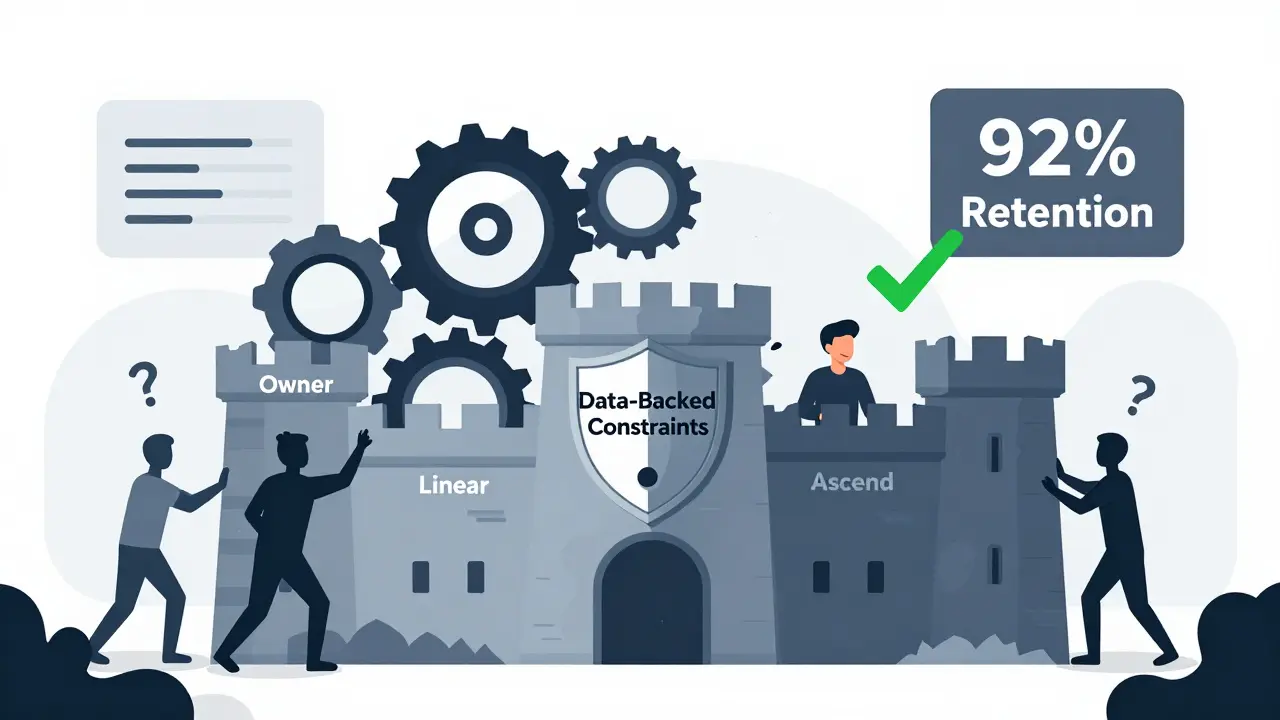
Linear, the project management tool, does something similar. Instead of letting users customize every status column, they locked in a simple pipeline: To Do → In Progress → Done. That might sound limiting. But it’s why 92% of their users stick around. People don’t want to organize their work-they want to get it done. Linear removes the friction.
And it’s not just small startups. Gartner reports that 83% of Fortune 500 companies now use at least one opinionated AI stack-for marketing automation, customer service bots, or internal document summarization. Why? Because their teams aren’t engineers. They’re marketers, HR staff, sales reps. They need tools that don’t require training.
Performance Numbers Don’t Lie
The data shows opinionated stacks aren’t just trendy-they’re faster, cheaper, and more reliable.
Wing Venture Capital’s 2025 study found that teams using opinionated AI stacks reached production in 11 days on average. Flexible alternatives? 36 days. That’s more than three weeks of lost time.
Costs drop too. Ascend’s closed-source data platform, which enforces strict data pipelines, uses 47% less infrastructure than custom-built alternatives. That’s not magic. It’s because fewer moving parts mean fewer servers, fewer bugs, fewer alerts at 2 a.m.
And retention? Huge. Contrary Research found that opinionated SaaS products have 28% higher net dollar retention (112% vs. 84%). Users don’t churn because they’re stuck. They stay because the tool just works the way they need it to.
Even user satisfaction scores climb. Superhuman’s AI email client, which forces keyboard shortcuts and inbox-zero habits, holds a 4.8/5 rating on G2. Competitors with more options? 3.9. The difference? Clarity.

The Hidden Cost of Flexibility
Flexibility sounds good. But in practice, it’s expensive.
Apache Airflow, a popular open-source workflow tool, looks flexible. But according to a 2025 Forrester study, maintaining it at production level costs $210,000 a year in engineering time. That’s not a license fee. That’s salaries for people who debug broken DAGs, patch security holes, and rewrite custom connectors.
Meanwhile, Ascend charges $15,000 a year-and includes all that maintenance. You get a system that’s been hardened by thousands of users. You don’t have to become an expert in orchestration.
And then there’s the hidden time tax. A developer on Reddit said: “I spent two weeks trying to bend an AI content tool to my workflow. Then I switched to a more opinionated one. Done in two days.” That’s the real cost of flexibility: wasted effort.
Even GitHub data shows a pattern: junior developers (under 3 years experience) prefer opinionated stacks 22% more than senior engineers. Why? Because they haven’t learned yet how to build systems from scratch. They just want to ship something.
When Opinionated Stacks Fail
But they’re not magic. They fail when the opinion is wrong.
Base, a Notion competitor, launched in 2024 with rigid templates and forced workflows. They believed everyone wanted structured notes. But 78% of users said it didn’t fit their process. The company shut down in Q2 2025. Their mistake? Assuming their opinion was universal.
Another risk: monocultures. In 2024, a single bug in a popular AI framework broke 12,000+ applications. Why? Because everyone was using the same stack. MIT’s January 2026 study warned this could become a systemic risk-if too many companies rely on the same opinionated model.
And there’s the EU’s 2025 AI Act. It now requires opinionated stacks to document every constraint. That’s added 15% to development costs for European vendors. Why? Because regulators want to know: “Why did you remove this option? Is it safe?”
So opinionated stacks aren’t risk-free. But they’re not about blind dogma. They’re about data-backed decisions.
How to Choose the Right One
Not every team needs an opinionated stack. But if you’re building something repetitive-customer support replies, social media posts, internal reports, inventory tracking-you do.
Here’s how to pick:
- Match the workflow - Does the tool’s core process match yours? If you need to approve content before it goes live, but the tool forces auto-publish, walk away.
- Check the data - Look for case studies. Did Owner really boost conversions? Did Linear improve retention? Don’t trust marketing. Look for numbers.
- Test the onboarding - Can you get to your first output in under 30 minutes? If not, it’s too complex.
- Ask about customization - The best modern opinionated stacks now offer “opinion toggles.” Ascend lets you change one setting without breaking the core. That’s the sweet spot.
- Look at the community - Smaller communities aren’t bad. Linear’s Discord has fewer users, but 63% faster help than flexible tools. That means real answers, not forum ghosts.
And avoid tools that say “everything is customizable.” That’s a red flag. If they can’t tell you what they believe in, they’re just dumping code on you.
The Future Is Opinionated
Gartner predicts that by 2027, 65% of industry-specific AI tools will be opinionated. Why? Because verticals don’t need flexibility. A hospital needs AI that follows HIPAA rules. A law firm needs AI that cites case law correctly. A restaurant needs AI that takes mobile orders.
AI didn’t make tools better. It made them noisier. Opinionated stacks cut through the noise. They don’t ask you to be an expert. They assume you’re busy-and they do the hard work for you.
The most successful AI tools of the next five years won’t be the ones with the most features. They’ll be the ones with the clearest vision. The ones that say: “This is how it’s done. Trust us.”
And if you’re building something today? Start with constraints. Not because you’re limiting yourself-but because you’re finally free to focus on what matters.
Are opinionated AI stacks only for small teams?
No. Fortune 500 companies are adopting them for specific workflows like marketing automation, customer support, and internal documentation. The key is matching the stack to the use case, not the team size. A 50-person marketing team benefits more from an opinionated AI tool than a 2-person startup trying to build a general-purpose platform.
Can I customize an opinionated stack later?
Some can. Tools like Ascend now offer “Opinion Toggles”-limited settings that let you adjust one part without breaking the core workflow. But if you need total freedom, an opinionated stack isn’t right. The point isn’t to lock you in forever-it’s to give you a working system now, then evolve it based on real usage, not guesswork.
Do opinionated stacks work for non-technical users?
Yes-and that’s where they shine. TrustRadius data from Q4 2025 shows the biggest satisfaction gap (0.9 points) is among non-technical users. People who aren’t engineers prefer clear, guided workflows. They don’t want to choose between 10 prompt templates. They want one that works. Opinionated stacks remove the guesswork.
What’s the biggest mistake when adopting an opinionated stack?
Trying to force your existing workflow into it. A 2025 Forrester study found 41% of failures happened because teams didn’t adapt their processes first. Don’t try to bend the tool. Ask: “Does this tool’s workflow actually match how we work?” If not, either change your process or pick a different tool.
Are open-source opinionated stacks a thing?
Yes, but they’re rare. Apache Airflow is open-source and opinionated in its structure-but maintaining it requires deep engineering. Most open-source AI tools are flexible because they’re built by volunteers. The truly opinionated ones-like Owner, Linear, Ascend-are usually commercial. That’s because they’re backed by data, testing, and ongoing refinement. Open-source can be opinionated, but it rarely is.
Emmanuel Sadi
February 23, 2026 AT 09:06Nicholas Carpenter
February 24, 2026 AT 20:17Chuck Doland
February 25, 2026 AT 10:00Madeline VanHorn
February 27, 2026 AT 07:16Glenn Celaya
March 1, 2026 AT 02:14Wilda Mcgee
March 1, 2026 AT 10:41Chris Atkins
March 1, 2026 AT 13:42