Data Privacy and Compliance Pitfalls for Non-Technical Vibe Coders
 Feb, 17 2026
Building an app with drag-and-drop tools sounds like magic. You sketch a form, connect it to a database, add a few buttons, and boom - you’ve got a customer portal. No coding. No headaches. Just vibes. But if your app collects names, emails, or health data, you’re not just a builder - you’re a data handler. And the law doesn’t care how cool your interface looks. It cares if you’re protecting people’s information.
That’s where things go wrong. A lot of vibe coders - people who build apps with tools like Bubble, Airtable, or Zapier - don’t realize they’re playing with fire. They think, "I didn’t write code, so I’m safe." But compliance isn’t about how you built it. It’s about what your app does with data. And the penalties? They’re real. GDPR fines have totaled over €3.3 billion since 2018. One small business got hit with a €20,000 fine just for collecting emails without consent. That’s not a rumor. That’s a court order.
What Even Is a Vibe Coder?
The term "vibe coder" isn’t slang for lazy developers. It’s a real category of builder emerging from the low-code revolution. These are people who use visual tools to create apps fast - marketers, small business owners, HR managers, even teachers. They care about speed, simplicity, and user experience. Security? That’s someone else’s job. Right?
Wrong.
According to Gartner, 65% of enterprise apps will be built with low-code tools by 2025. That’s not a niche trend. That’s the new normal. And most of these builders have never taken a cybersecurity class. They don’t know what SQL injection is. They don’t know why hardcoding an API key in a frontend form is like taping your house key under the doormat. They just want their app to work.
Here’s the problem: platforms like OutSystems or Mendix don’t stop you from doing dangerous things. They make it easy. Too easy. And when you skip the fundamentals - input validation, encryption, access controls - you’re not just risking your app. You’re risking your users’ data.
Top 5 Compliance Traps for Vibe Coders
Let’s cut through the noise. Here are the five most common mistakes vibe coders make - and how they lead straight to fines or breaches.
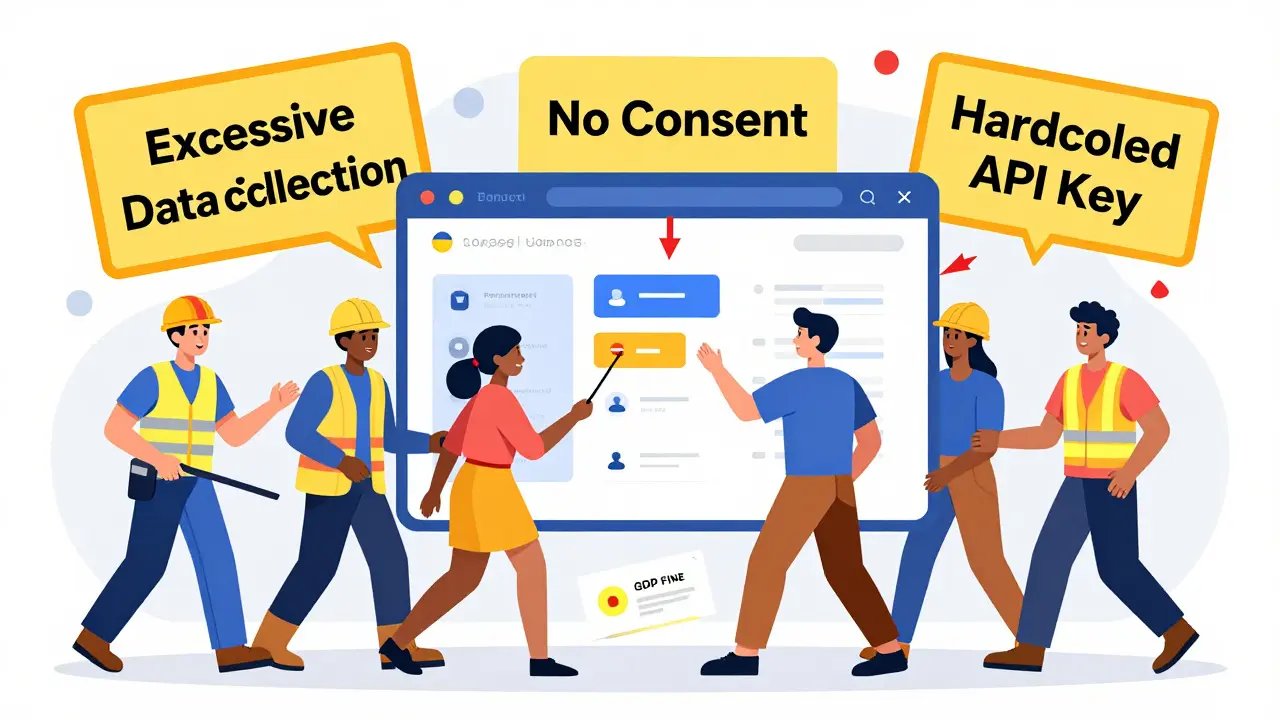
- Collecting more data than you need - GDPR says you can only collect what’s necessary. But most vibe coders just add every field they can think of: birthdate, phone number, address, even upload a photo. Why? "Just in case." That’s a violation. The 2023 IAPP study found 78% of low-code apps collected excessive data. You don’t need a home address to send a newsletter. Stop asking for it.
- No consent mechanism - If you’re collecting personal data, you need a clear "yes, I agree" checkbox. Not a pre-ticked box. Not a footer link. Not a vague privacy policy buried in a popup. Real consent. The European Data Protection Board found 89% of no-code apps lacked proper consent flows. That’s not just bad practice. It’s illegal.
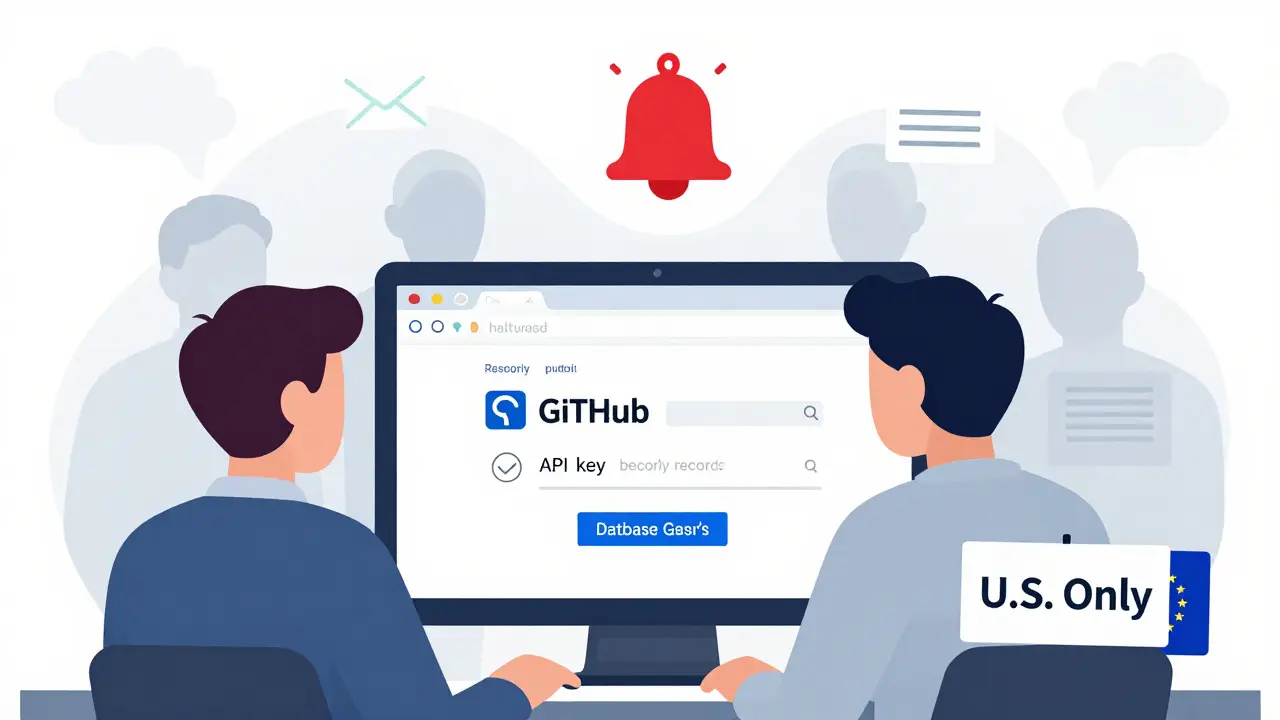
- Hardcoding secrets - Ever seen a public GitHub repo with an API key? 31% of low-code apps have one. If you’re using Airtable or Retool and you pasted your database password into a field labeled "Secret Key," congratulations - anyone who finds your app’s URL can access your whole database. GitGuardian found this in over 100,000 public repositories in 2024.
- Ignoring encryption - Data at rest? Unencrypted. Data in transit? Not using HTTPS. 22% of low-code apps properly manage encryption keys. That means your users’ data is stored like a postcard. Anyone with access to the server can read it. HIPAA violations in healthcare apps? 63% of no-code tools failed basic encryption checks in 2024.
- No right to be forgotten - GDPR says users can demand their data be deleted. But if you don’t know where all their data lives - in Airtable, in Zapier, in a Google Sheet - you can’t delete it. 67% of low-code apps can’t map where data is stored. That’s not just a technical glitch. It’s a compliance failure.
Why "It’s Not My Job" Is a Dangerous Mindset
Many vibe coders think: "I’m not a developer. I didn’t go to school for this. Why should I know about encryption?"
Because the law doesn’t care. If your app leaks data, you’re liable. Not your platform. Not your boss. You.
Think of it like driving. You don’t need to know how an engine works to get a license. But you do need to know traffic laws. You can’t just say, "I didn’t know red meant stop." The fine still applies.
Platforms like Microsoft Power Platform and Zapier are starting to help. Power Platform now scans apps for GDPR issues automatically. Zapier’s compliance tools blocked over 1,200 potential violations in 2024. But these tools don’t fix everything. They’re guardrails, not a full set of brakes. If you ignore them, you’re still going to crash.
What You Actually Need to Know
You don’t need to become a security expert. But you do need to know five things:
- Data minimization - Only collect what you absolutely need. If you don’t need it, don’t ask for it.
- Purpose limitation - If you collected data for billing, don’t use it for marketing. Tell users how you’ll use it. And stick to it.
- Storage limitation - Don’t keep data forever. Delete it when you’re done. Set auto-deletion rules in your tools.
- Access control - Only give team members access to the data they need. If your intern doesn’t need to see customer addresses, don’t give them access.
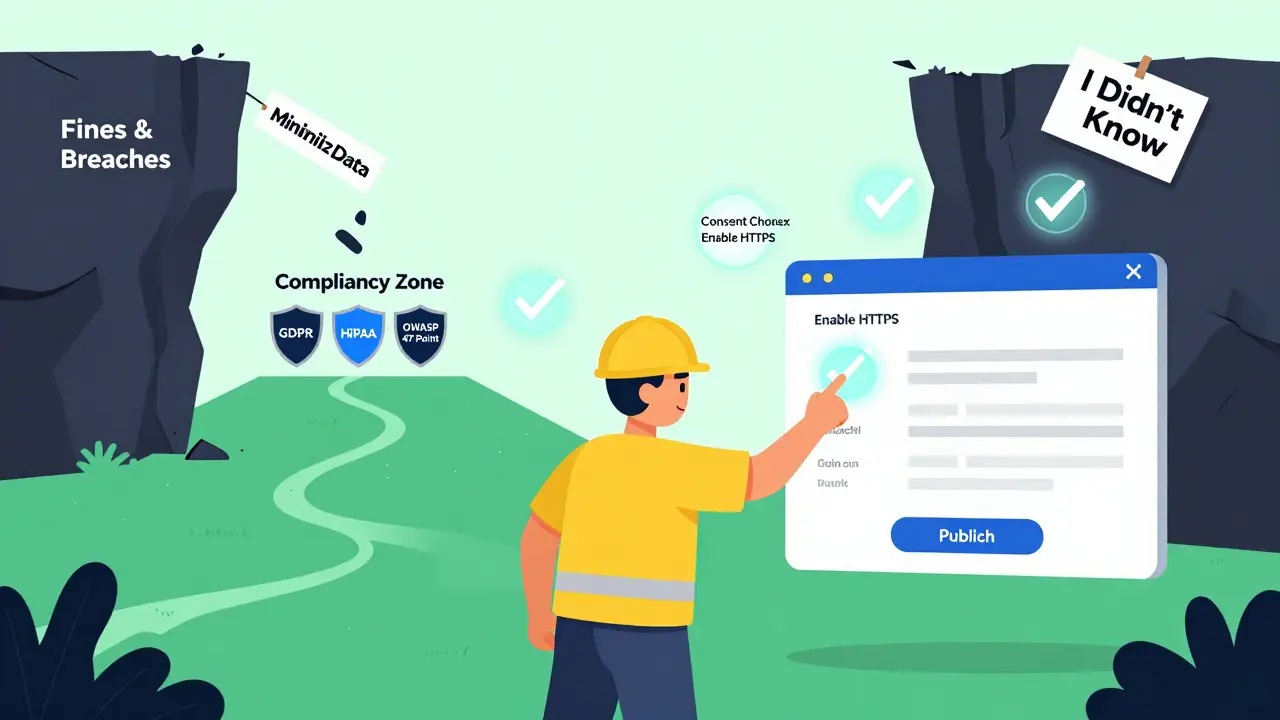
- Encryption - Use HTTPS. Enable encryption in your database settings. Don’t store passwords in plain text. Even if your platform says it’s "secure," double-check.
That’s it. Five rules. No jargon. No code. Just common sense.
Real Stories, Real Consequences
On Reddit, a user named "NoCodeNewbie42" built a customer portal with Bubble. Collected emails. Didn’t ask for consent. Got fined €20,000. The fine wasn’t because they were malicious. It was because they didn’t know.
Another case: a fitness coach used Airtable to store client health data. Shared the base with a contractor. The contractor accidentally made it public. 800 people’s medical records were exposed. The coach got sued. The platform didn’t protect them. The law didn’t care they were "just using Airtable."
Stack Overflow saw a 217% jump in questions about GDPR and low-code tools in 2024. People are asking: "How do I delete a user’s data in Retool?" "How do I add a consent banner in Glide?" They’re trying. But they’re learning too late.
How to Fix This - Without Learning to Code
You don’t need to rewrite your app. You need to make three simple changes.
- Use your platform’s built-in compliance templates. Mendix has a GDPR template that cuts setup time from 120 hours to 15. Bubble offers consent forms. Zapier has data deletion workflows. Use them.
- Turn on automated scanning. Microsoft Power Platform scans for compliance issues. OutSystems now flags insecure data flows. Turn these on. They’re free.
- Read the 47-point OWASP checklist for vibe coders. It’s written for non-technical people. No jargon. Just: "Do this. Don’t do that." 78% of users who followed it reduced vulnerabilities.
There’s also a Low-Code Security Consortium with over 12,500 members. They’ve documented 470 real-world compliance patterns. You don’t have to figure this out alone.
The Future Isn’t Just Tools - It’s Responsibility
Platforms are getting smarter. By 2026, 70% of low-code tools will auto-detect privacy issues. AI assistants will warn you before you publish a form that collects Social Security numbers.
But technology won’t save you if you don’t care.
The democratization of development is powerful. It lets anyone build. But power without responsibility is dangerous. You can build a beautiful app. You can make it fast. You can make it fun. But if you ignore data privacy, you’re not a creator. You’re a risk.
Ask yourself: Would you want your name, email, or health data in an app built like this? If the answer is no - fix it. Before someone else gets hurt.
Do I need to follow GDPR if my app is only used in the U.S.?
Yes. GDPR applies if you collect data from anyone in the European Union - even if your business is based in the U.S. If a single EU resident signs up for your app, you’re subject to GDPR. Many U.S.-based vibe coders learned this the hard way after getting fined for collecting emails from EU users without consent.
Can I rely on my low-code platform to handle compliance for me?
No. Platforms provide tools - not guarantees. Bubble, Airtable, and Zapier offer features like consent forms and data deletion buttons, but it’s your job to turn them on and use them correctly. If you ignore them, you’re still liable. Think of it like a car with airbags - they help, but they won’t save you if you’re speeding.
What’s the easiest way to start getting compliant?
Start with these three steps: 1) Remove any data fields you don’t absolutely need. 2) Add a clear consent checkbox before collecting any personal info. 3) Enable encryption and HTTPS in your platform settings. That covers the top 80% of compliance risks for small apps. You don’t need a lawyer. Just common sense.
Are there free tools to help me check my app?
Yes. Microsoft Power Platform includes free GDPR scanning for apps built on its tools. OWASP offers a free 47-point checklist designed for non-technical builders. The Low-Code Security Consortium also has free templates for consent forms and data maps. You don’t need to pay for a consultant to get started.
What happens if I get fined?
Fines vary. For small businesses, they can range from €10,000 to €20,000 for first-time violations. For larger apps or repeated offenses, fines can hit millions. But beyond the money, you risk your reputation. Users won’t trust you. Investors won’t back you. And in some cases, regulators can shut down your app entirely. A fine isn’t just a cost - it’s a warning sign you’re building on shaky ground.
If you’re building apps, you’re now part of the data economy. That means you have responsibilities - whether you like it or not. The tools are here. The guidance is free. The consequences are real. Don’t wait for a fine to learn the lesson.
Buddy Faith
February 18, 2026 AT 10:30Sandi Johnson
February 18, 2026 AT 17:57Eva Monhaut
February 20, 2026 AT 12:34mark nine
February 20, 2026 AT 13:50Tony Smith
February 21, 2026 AT 04:23Rakesh Kumar
February 22, 2026 AT 06:58Ronnie Kaye
February 24, 2026 AT 05:54Priyank Panchal
February 25, 2026 AT 01:46Nicholas Carpenter
February 25, 2026 AT 13:16Chris Atkins
February 27, 2026 AT 12:52