Financial Services Rules for Generative AI: Model Risk Management and Fair Lending
 Jan, 30 2026
Generative AI is in your bank’s loan system-now what?
It’s January 2026, and if your bank uses AI to approve mortgages, underwrite insurance, or draft customer emails, it’s already under regulatory scrutiny. The days of treating generative AI like a fancy chatbot are over. Regulators aren’t waiting for new laws-they’re applying old ones with new teeth. Model Risk Management (MRM) and Fair Lending rules, once designed for spreadsheets and static algorithms, now have to handle language models that hallucinate, drift, and accidentally discriminate. And they’re being enforced-with fines.
Why your old AI rules don’t work anymore
Before 2025, most financial firms treated AI like any other software tool. You tested it once, documented it, and moved on. But generative AI doesn’t work like that. Give it the same prompt twice, and it might give you two different answers. That’s not a bug-it’s how it’s built. And in finance, that’s dangerous.
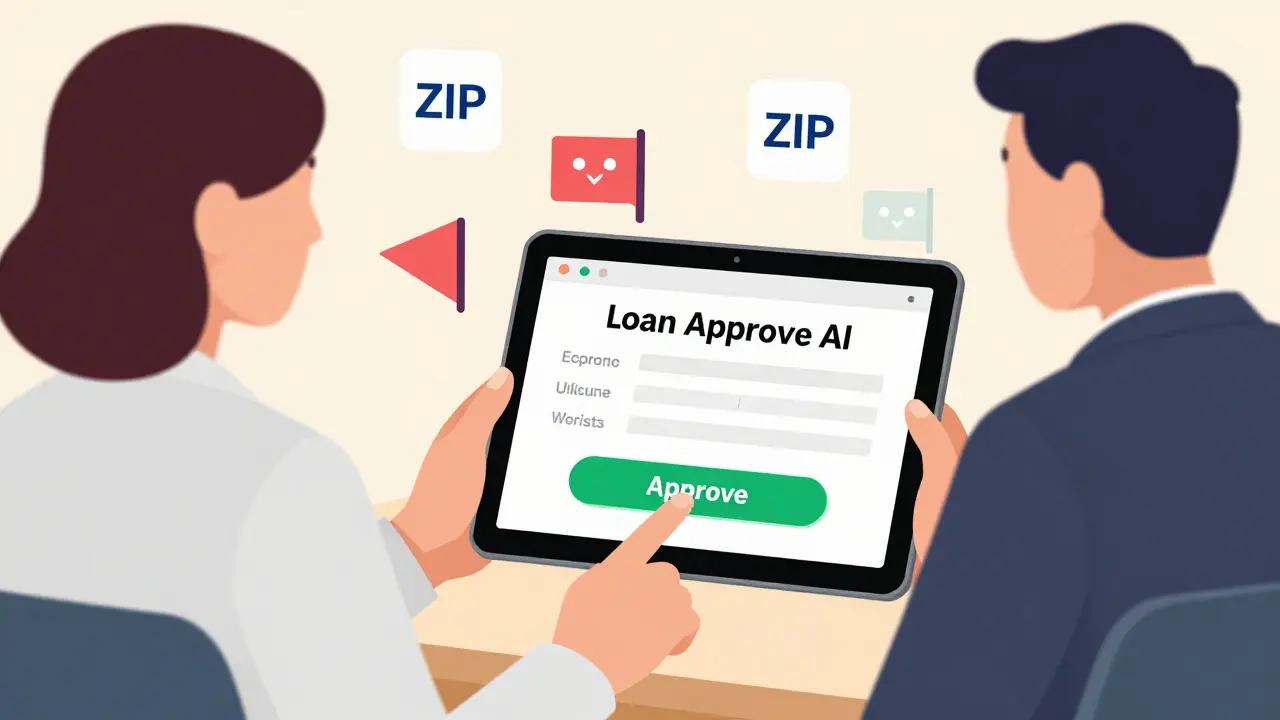
Take loan approvals. A model trained on historical data might learn to associate ZIP codes with creditworthiness-even if race or ethnicity isn’t directly listed. That’s not intentional bias. It’s statistical leakage. And under Regulation B, it’s still illegal. The Consumer Financial Protection Bureau (CFPB) fined a major online lender $12.7 million in January 2026 for exactly this: an AI model that drifted over 90 days and started rejecting applicants from certain neighborhoods at higher rates. No human meant to discriminate. But the system did. And regulators don’t care about intent-they care about outcomes.
What compliance-grade AI actually means
There’s a new term in town: compliance-grade AI. It’s not about using fancy models. It’s about locking them down. Red Oak Analytics and other regtech firms define it by three non-negotiables:
- Determinism: For the same input, the output must be 95%+ consistent. No random variations in loan terms or risk scores.
- Traceability: Every prompt, every data point, every decision path must be logged and stored for at least seven years. SEC Rule 17a-4 doesn’t care if it’s a human or an AI making the call-you need a paper trail.
- Constrained action: The AI can’t decide on its own. It can suggest, but it can’t execute. Every customer-facing output needs a human to click "Approve" before it goes out.
This isn’t theoretical. Firms using this approach report 98.7% consistency in loan decisions across racial and income groups-compared to 82.3% for uncontrolled systems. That’s not just compliance. That’s better lending.
The VALID framework: Your practical checklist
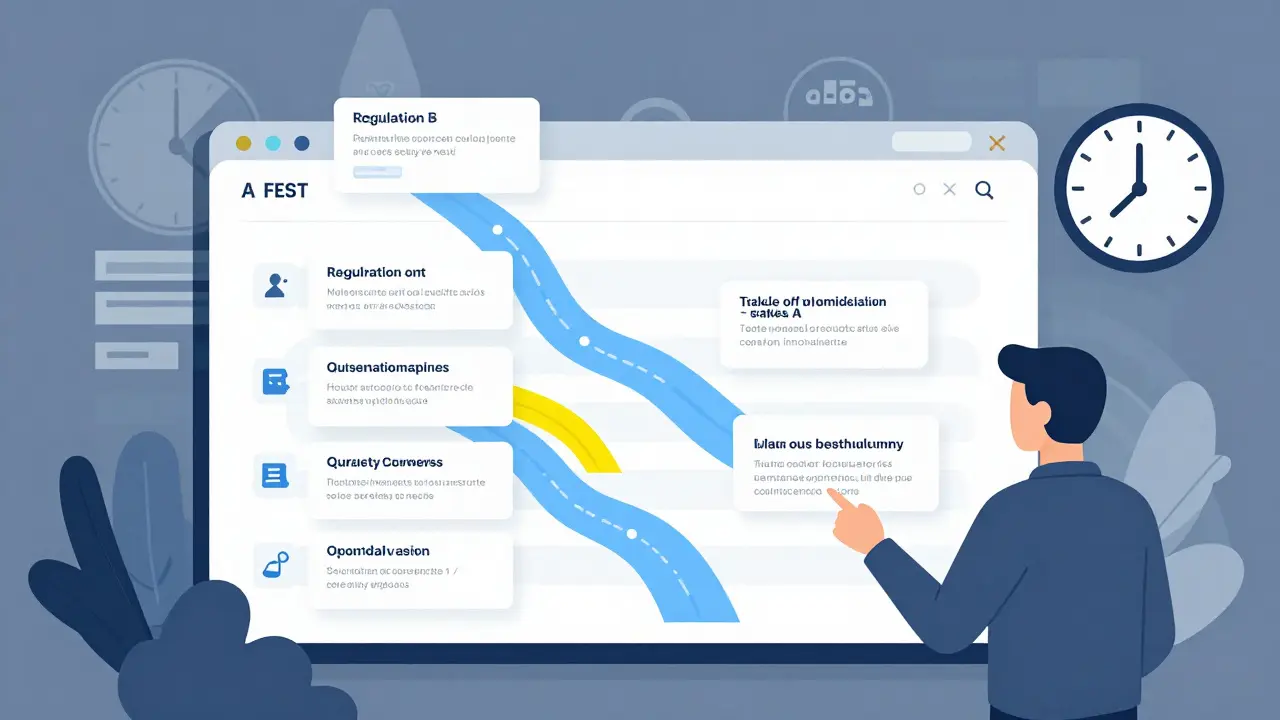
You don’t need a team of AI scientists to get started. The VALID framework is a simple, real-world guide used by 73% of financial compliance teams:
- Validate: Test every AI output against known regulatory rules. Use real-world scenarios, not synthetic data.
- Avoid personal information: Never feed names, SSNs, or addresses into public or unsecured models. Even if the model says it’s "anonymized," assume it’s not.
- Limit scope: Don’t let AI draft legal documents or set interest rates. Let it summarize, not decide.
- Insist on transparency: If a customer asks why they were denied, you must be able to explain it-not just say "the AI did it."
- Document everything: Logs, approvals, training data, model versions. If you can’t prove it, regulators assume you didn’t do it.
One credit union in Ohio used VALID to catch 147 cases where their AI was subtly referencing prohibited factors like gender or marital status in loan recommendations. They fixed it before regulators even noticed.
Who’s doing this right-and who’s getting burned
Top 25 U.S. banks? 92% have formal AI governance programs. Regional banks? Only 48%. Credit unions? Just 22%. The gap isn’t just size-it’s risk. Smaller institutions are more likely to use off-the-shelf tools like ChatGPT or open-source models without safeguards. FINRA testing shows those tools misinterpret financial regulations 37% of the time. That’s almost 4 in 10 answers wrong.
Meanwhile, firms using enterprise-grade compliance AI-like Red Oak’s systems-achieve 92% accuracy in regulatory interpretation. They also cut document processing time by 40-60% and reduce false positives in fraud monitoring by nearly half. The cost? Around $2.3 million per institution. But Baker Donelson’s 2026 legal forecast found those same firms saw a 65% drop in regulatory penalties. That’s not an expense. That’s insurance.
The human-in-the-loop problem
Here’s the catch: requiring a human to review every AI output slows things down. One Reddit user in r/FinTech said their team’s response time to customer inquiries jumped 22% after adding validation steps. Staff are frustrated. Customers are impatient.
But here’s what regulators say: if you’re making decisions that affect people’s lives-loans, insurance, credit limits-you can’t automate away responsibility. The human doesn’t have to be an expert. But they must be trained. FINRA data shows 87% of compliance staff now get 40+ hours of AI literacy training. They learn how to spot bias, how to interpret prompts, how to question outputs.
It’s not about replacing people. It’s about upgrading them. The best teams now have AI auditors-people who understand both the code and the law.
What’s coming next
By June 30, 2026, all institutions using AI for lending must run quarterly bias tests. The FCA’s Supercharged Sandbox is expanding to let U.S. and U.K. firms test cross-border AI models together. And by Q3 2026, FINRA will release rules on "AI agents"-systems that act on their own. Think: an AI that automatically adjusts credit limits or sends loan offers. Those will need a named human accountable for every action.
And don’t think state laws won’t catch up. By August 2, 2026, new state-level rules will require transparency for high-risk AI systems. If you’re using AI to make credit decisions, you’ll need to disclose it. Period.
Is this stifling innovation?
Some fintech founders argue strict rules kill innovation. They say AI could actually reduce bias by removing human prejudice from lending. That’s true-if the system is built right.
But the alternative? Unchecked AI that learns from flawed data and scales discrimination faster than any human ever could. The CFPB’s data shows 31% of AI lending models show significant bias deterioration within 90 days without monitoring. That’s not innovation. That’s a ticking time bomb.
The real innovation isn’t in building smarter models. It’s in building smarter oversight. Institutions using adaptive compliance systems are launching new products 18-22 months faster than their peers, not because they cut corners-but because they built trust from day one.
Where to start today
You don’t need to rebuild your entire tech stack. Start here:
- Map every AI use case in your organization. Where is it used? Who sees the output?
- Apply VALID to each one. Even if it’s just a draft email.
- Log everything. Even if it’s just a spreadsheet for now.
- Train your compliance team. Not on AI theory-on how to spot a biased output.
- Assign ownership. Who’s responsible if this AI makes a bad call? Name them. In writing.
The regulators aren’t asking for perfection. They’re asking for accountability. If you can show you’re trying, you’re already ahead of most of the industry.
Does FINRA have specific rules for generative AI?
FINRA doesn’t have rules that say "AI must do X." Instead, they apply existing rules-like Model Risk Management and Fair Lending-to AI systems. Their 2026 report makes it clear: if you’re using generative AI in finance, you’re subject to the same standards as if you used a spreadsheet. The difference? You now need proof you’re controlling it.
Can I use ChatGPT for customer service in banking?
Technically, yes-but only if you lock it down. Public ChatGPT has a 37% error rate in interpreting financial regulations, according to FINRA. If you use it, you must prevent it from accessing customer data, log every prompt and response, and require human review before any message is sent. Most firms avoid it entirely and use custom-built, compliant models instead.
What happens if my AI model starts showing bias?
If your model drifts and starts discriminating-like denying loans to certain groups at higher rates-you’re in violation of Regulation B. The CFPB already fined a lender $12.7 million for this in January 2026. The fix isn’t just retraining the model. You need documented bias testing, quarterly audits, and a plan to roll back changes if bias reappears.
Is compliance-grade AI more expensive?
Yes, upfront. Implementation averages $2.3 million per institution. But firms using these systems report 65% fewer regulatory penalties, 47% fewer false fraud alerts, and 90% fewer filing errors. The cost of non-compliance-fines, lawsuits, reputational damage-is far higher.
Do I need a Chief AI Officer?
Not necessarily. But you do need clear ownership. FINRA’s guidance requires AI governance to include business, compliance, technology, and risk teams-all with named leaders. Many firms assign this to their Chief Risk Officer or Head of Compliance. The key isn’t the title-it’s accountability.
How long does it take to implement compliant AI?
Most firms take 6-9 months. The biggest delays happen in Phase 2-getting vendor documentation for third-party AI tools. Many vendors don’t provide the audit trails or data lineage regulators require. Plan ahead. Ask for proof before you sign a contract.
What’s the biggest mistake firms make?
Assuming "it’s just a tool" and not treating it like a regulated system. The most common violations? Inadequate prompt logging (29 firms cited this in 2025) and skipping human validation (27 firms). Regulators don’t care if the AI is "smart." They care if you’re responsible.
sonny dirgantara
February 1, 2026 AT 02:13also i typoed like 3 times already. sorry.
Eric Etienne
February 2, 2026 AT 16:37ai's not the enemy. laziness is.
Dylan Rodriquez
February 3, 2026 AT 22:31this isn't about locking down models. it's about admitting that systems reflect our biases, not fix them. if we can use this moment to build fairness into the architecture - not just as a checkbox - we might actually get something better than what we had.
the VALID framework? it's not perfect. but it's a start. and sometimes, a start is all you need.
Amanda Ablan
February 5, 2026 AT 22:13we caught a bias in our draft responses recommending lower limits to women applicants. turned out the training data had more male customer service logs. fixed it in 2 days. no fines. no drama.
you don't need a cto. you just need to care enough to look.
Richard H
February 7, 2026 AT 10:07we don't need more logs. we need less regulation. let the market decide. if your ai discriminates, customers will leave. simple. not everything needs a government stamp of approval.
Kendall Storey
February 8, 2026 AT 05:10the $2.3M price tag? that's a bargain when you factor in reduced false positives, faster audit cycles, and zero CFPB fines. we rolled out our compliance-grade model in 7 months. our fraud team now spends 70% less time chasing ghosts.
and yes - the human-in-the-loop slows things down. but guess what? customers trust decisions more when they know a person stood behind them. that’s brand equity you can’t buy. this isn’t overhead. it’s strategy.