How Finance Teams Use Generative AI for Forecasting and Variance Analysis
 Jul, 22 2025
Finance teams used to spend weeks crunching numbers in Excel, pulling data from five different systems, and writing reports no one read. Now, they’re asking AI: why did revenue miss targets? What happens if interest rates spike next quarter? And how do we fix this before the board meeting?
What Generative AI Actually Does in Finance
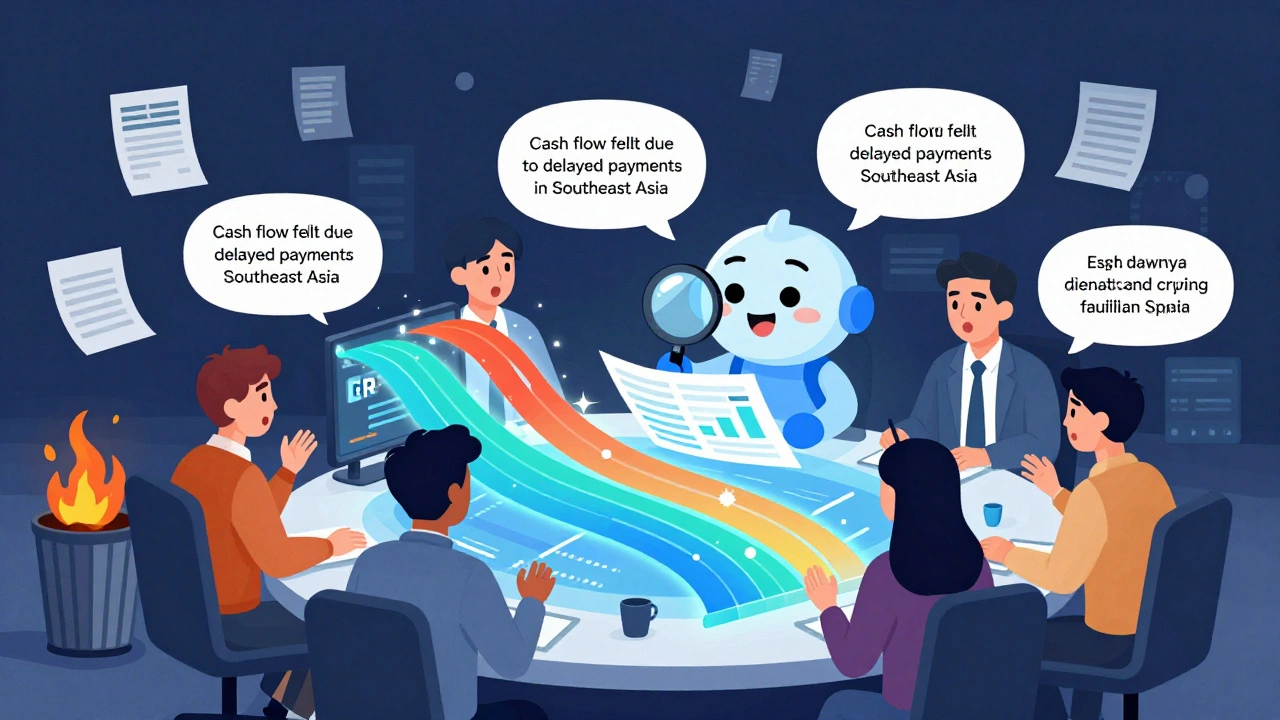
Generative AI doesn’t just spit out numbers. It tells stories. It takes messy financial data-sales figures, payroll records, supplier invoices, even news headlines-and turns it into clear, human-readable explanations. For example, instead of a spreadsheet showing a 15% drop in cash flow, the AI says: "Cash flow fell because two major clients delayed payments due to supply chain delays in Southeast Asia, and we overestimated holiday inventory demand by 22%." This isn’t science fiction. Companies like King’s Hawaiian cut their interest expenses by over 20% after switching to AI-driven cash flow forecasts. Why? Because they stopped guessing. They started knowing. The core innovation? Combining machine learning with large language models. The machine learning part finds patterns in years of financial history. The language model turns those patterns into plain English. It’s like having a senior analyst who’s read every report, every email, every earnings call-and can summarize it all in five sentences.How It Replaces Old-School Forecasting
Traditional forecasting? Static. Slow. Siloed. You’d build a model in Excel in January, update it in April, and hope nothing changed between updates. If a supplier raised prices or a competitor launched a new product? Too bad. Your forecast was already locked in. Generative AI changes that. It runs continuously. Updates daily. Learns from real-time data. One North American financial institution now generates first drafts of risk reports automatically-cutting 40 hours of manual work down to 3. Another team reduced their monthly forecasting cycle from 10 days to 3. That’s not efficiency. That’s transformation. And it’s not just faster. It’s smarter. A 2024 FP&A survey found teams using AI hit 25% higher forecast accuracy than those still using spreadsheets. Why? Because AI sees connections humans miss. It links weather patterns to retail sales. It correlates social media sentiment with customer churn. It flags anomalies before they become problems.Variance Analysis: From Confusion to Clarity
Variance analysis used to mean hours of digging. "Why did operating costs go up?" You’d check payroll. Then utilities. Then travel. Then vendor contracts. Then you’d find out it was a one-time legal fee buried in a PDF nobody had indexed. Now, generative AI does it in seconds. You ask: "Why did Q3 SG&A exceed budget by $1.2M?" The AI responds: "Legal fees spiked due to a new regulatory audit in Germany. Marketing spend increased 18% after the product launch, but ROI was 32% lower than projected due to lower-than-expected conversion rates on paid search." It doesn’t just list causes. It ranks them. Shows you the top three drivers of variance. And suggests fixes: "Consider renegotiating legal retainers. Shift $400K from paid search to email campaigns, which have a 2.1x higher ROI." This is what CFOs care about. Not numbers. Not charts. What’s happening? And what should we do?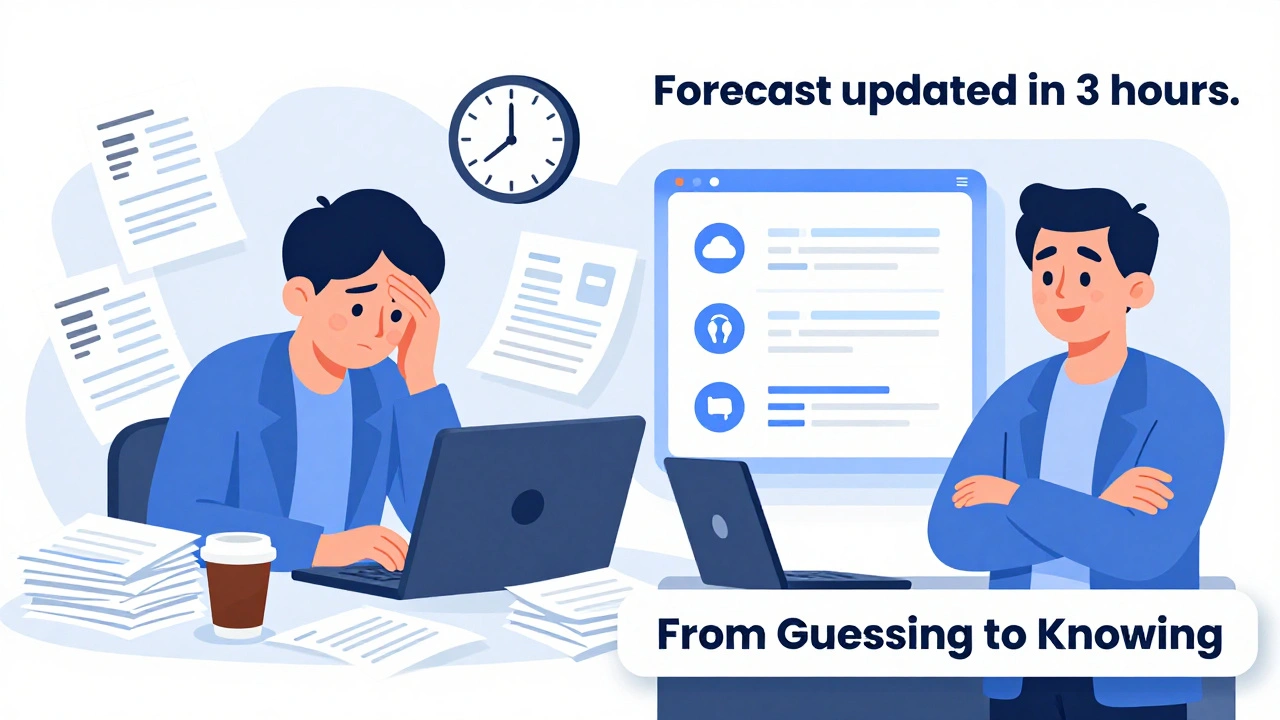
How It Integrates With Existing Systems
You don’t need to rip out your ERP. Generative AI works on top of what you already have. SAP S/4HANA. Oracle. NetSuite. Even Excel files uploaded as CSVs. Tools like DataRobot and Datarails connect directly to these systems. They pull in historical data-three to five years’ worth-and combine it with live feeds: market trends, commodity prices, even news about geopolitical events. The AI then builds a dynamic model that updates as new data flows in. SAP even launched Joule, its own AI assistant built into S/4HANA Finance. You can type: "Show me cash flow risks for next quarter," and it pulls from your treasury data, payment histories, and global economic indicators to give you a forecast with explanations. The key? Integration. If your data is scattered across 12 spreadsheets and three systems, AI won’t help. Clean, centralized data is the fuel. Without it, even the best AI gives garbage answers.Real Results: What Companies Are Seeing
- King’s Hawaiian: 20%+ reduction in interest expenses by improving cash flow predictability. They stopped borrowing too much or too little. - A large U.S. bank: Cut report-writing time by 70%. AI drafts internal audit documentation, freeing analysts to focus on risk assessment. - A global retailer: Reduced inventory overstock by 18% by using AI to predict regional demand shifts based on weather, local events, and competitor promotions. - A mid-sized manufacturer: Slashed planning cycle from 14 days to 4. Now they run 500 "what-if" scenarios before finalizing budgets-testing everything from inflation spikes to warehouse strikes. These aren’t outliers. They’re becoming the norm. IBM found that 82% of finance leaders believe generative AI frees up time for strategic work. And McKinsey says companies are now building "decision support agents" that don’t just predict-they recommend actions.Where It Falls Short
AI isn’t magic. It’s not infallible. And it doesn’t replace judgment. First, it needs good data. If your historical records are messy, incomplete, or inconsistent, the AI will learn the wrong patterns. Gartner found 68% of early adopters struggled with data quality. Second, it can’t predict black swans. A pandemic. A war. A sudden regulatory crackdown. If it’s never happened before, the AI has nothing to learn from. That’s why human oversight is non-negotiable. Third, explainability matters. Regulators are watching. The SEC now requires companies to disclose how AI is used in financial reporting. If you can’t explain how your AI reached a conclusion, you’re at risk. And fourth, culture. Some executives still think AI is a "black box." But when teams show them how the AI works-step by step, with clear sources-they start trusting it. One CFO told his team: "If the AI says we’re overpaying for logistics, I want to know why. Not just that it said so."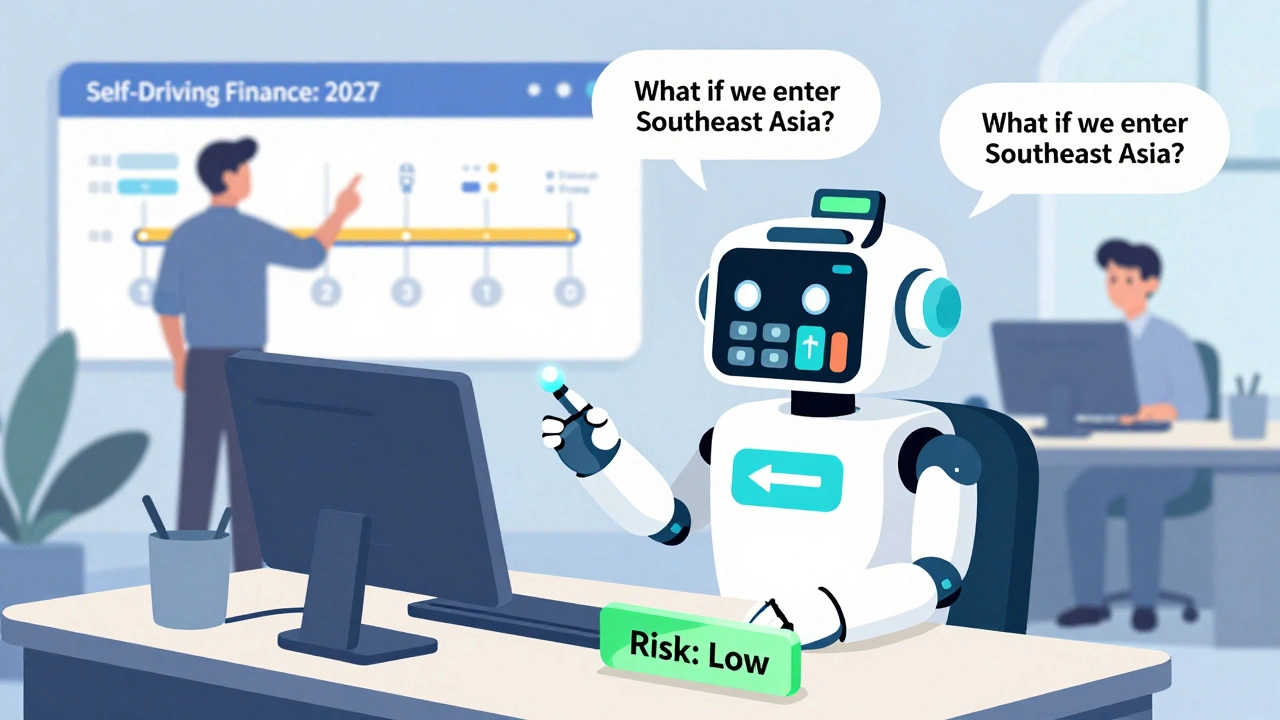
Who Should Implement This-and How
You don’t need a data science team. Most enterprise tools now have no-code interfaces. Analysts with basic Excel skills can learn to use them in 2-4 weeks. Start small. Pick one use case:- Cash flow forecasting
- Monthly variance reports
- Expense trend analysis
- Hours saved per cycle
- Reduction in forecast variance
- Stakeholder satisfaction (ask the sales and operations teams if the forecasts are more useful)
The Future: Self-Driving Finance
The next step? Finance that runs itself. Bain & Company calls it "self-driving finance." Imagine this: your AI notices that vendor payments are consistently late. It automatically adjusts your cash flow forecast, flags the supplier, and sends a request to procurement to renegotiate terms. No human needed. That’s not far off. By 2027, we’ll see systems that don’t just predict-they act. Adjusting budgets. Reallocating funds. Even triggering alerts to the CEO when risks exceed thresholds. But here’s the catch: the more autonomous the system, the more critical governance becomes. Who approves the AI’s decisions? How are changes logged? Who’s accountable if something goes wrong? The IFRS Foundation is expected to release formal guidance on AI-generated financial forecasts in early 2025. Companies that start building audit trails now will be ahead of the curve.Final Thought: It’s Not About Replacing People
Generative AI doesn’t make finance teams obsolete. It makes them more valuable. The people who used to spend 80% of their time gathering data? Now they’re advising the CEO. They’re asking: "What if we acquire this company?" "Should we enter the Southeast Asian market?" "Is our capital structure sustainable under 7% interest rates?" That’s the real win. Not automation. Empowerment. The best finance teams aren’t the ones with the most advanced tools. They’re the ones who use tools to think deeper, move faster, and speak with clarity. The AI doesn’t replace the analyst. It gives the analyst a voice.Can generative AI replace finance analysts?
No. It replaces repetitive tasks-data gathering, report writing, manual variance checks-but not judgment. Finance analysts now focus on strategy, risk assessment, and stakeholder communication. The AI handles the grunt work; humans handle the nuance.
Do I need technical skills to use generative AI in finance?
Not anymore. Leading platforms like Datarails, DataRobot, and SAP Joule have no-code interfaces. Finance professionals with basic Excel experience can learn to use them in a few weeks. IT and data teams handle integration; finance teams handle interpretation.
How accurate are AI-generated financial forecasts?
On average, AI improves forecast accuracy by 25% compared to traditional methods, according to the 2024 FP&A Trends survey. Some companies, like King’s Hawaiian, saw over 20% reductions in interest expenses due to better cash flow predictions. Accuracy depends on data quality-clean, historical data yields the best results.
What are the biggest challenges in adopting generative AI for finance?
The top three challenges are: data quality (68% of organizations report issues), integration with legacy systems (especially Excel-heavy processes), and gaining executive trust. Many CFOs initially distrust "black box" models, but trust grows when AI provides clear, traceable explanations for its outputs.
Is generative AI suitable for small businesses?
Yes-but adoption is slower. Only 12% of small businesses use AI in FP&A as of early 2025, compared to 62% of Fortune 500 companies. The barrier isn’t cost-it’s data. Small businesses often lack enough historical data to train models effectively. Start with a single use case like cash flow forecasting using a cloud-based tool with pre-built templates.
How does generative AI handle regulatory compliance?
Regulators like the SEC now require disclosure of AI use in financial reporting. AI systems must provide audit trails: showing which data was used, how the model made its prediction, and who reviewed the output. Leading platforms now include built-in compliance features, logging every decision and allowing users to trace results back to source data.
What’s the difference between generative AI and traditional forecasting tools like Anaplan?
Traditional tools like Anaplan or Adaptive Insights are powerful for modeling and scenario planning, but they don’t generate narratives. Generative AI adds the ability to explain forecasts in plain language-turning numbers into stories. It’s not just "what happened"-it’s "why it happened" and "what to do next."
How long does it take to implement generative AI in finance?
Most organizations see results within 3-6 months. A pilot project focused on one area-like monthly variance analysis-can be up and running in 60 days. Full enterprise rollout across departments typically takes 6-9 months, depending on data readiness and change management.
What metrics should I track to measure success?
Track three key metrics: (1) Percentage reduction in forecast variance, (2) Hours saved per forecasting cycle, and (3) Stakeholder satisfaction scores (from sales, operations, and leadership). If finance teams are spending less time on reporting and more time advising, you’re winning.
Will generative AI make finance roles obsolete?
Not at all. It’s reshaping them. Roles are shifting from data processors to strategic advisors. Finance professionals who learn to work with AI are becoming more valuable, not less. The most in-demand skill now isn’t Excel mastery-it’s asking the right questions of the AI.
Bharat Patel
December 13, 2025 AT 17:55It’s wild how AI is turning finance from a numbers game into a storytelling art. I used to think analysts were just glorified accountants, but now I see them as interpreters of chaos-helping leaders see the hidden patterns in noise. It’s not about replacing humans; it’s about giving them back their time to think, to wonder, to ask the bigger questions. The real magic isn’t in the algorithm-it’s in the shift from doing to meaning.
Bhagyashri Zokarkar
December 13, 2025 AT 23:08ok so i just tried this ai thing on my cousins small business and it said their cashflow was gonna crash because of some fake supplier in bangladesh but it was just a typo in the invoice and now they’re panicking and firing their accountant like its 2008 and the ai just kept saying ‘trust the data’ like its some oracle from the future lmao
Rakesh Dorwal
December 14, 2025 AT 11:37They say AI is helping finance teams-but who owns the data? Who’s feeding it? Let me guess-Western tech giants with servers in Nevada and California, training models on our financial history while we get ‘insights’ they don’t even have to explain. This isn’t progress, it’s digital colonialism. SAP Joule? More like SAP Juggernaut. And don’t get me started on how they’re rewriting accounting rules to suit Silicon Valley’s agenda. Wake up, India-we’re not beta testers for their algorithms.
Vishal Gaur
December 15, 2025 AT 05:03so i read all this and honestly i think its cool but like… why does every company act like they invented the wheel? i used a tool like this last year for my side hustle and it worked fine but it still messed up the tax code because someone forgot to update the fed rate in the feed and now i owe 3k and the ai just said ‘suggest consulting a CPA’ like duh thanks captain obvious i just spent 3 hours reading your 5000 word essay on why my spreadsheet was wrong
Nikhil Gavhane
December 15, 2025 AT 21:18This is one of the most hopeful pieces I’ve read about tech in finance. It’s not about replacing people-it’s about lifting them. The fact that someone who’s spent years buried in Excel can now step back and ask ‘What if we expand to Vietnam?’ instead of ‘Why is this pivot table broken?’-that’s real progress. The tools aren’t perfect, but the direction is. Keep building with heart, not just code.