How to Choose the Right Vibe Coding Platform for Your Team
 Jan, 15 2026
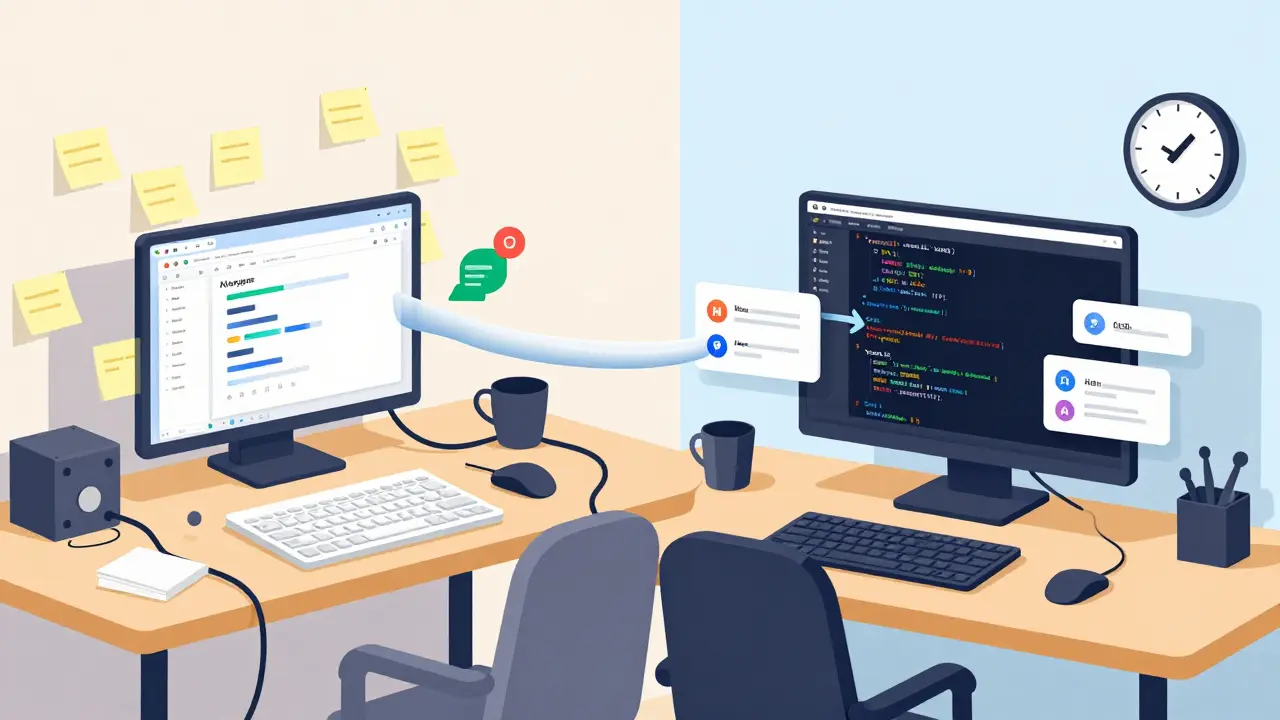
Choosing the right vibe coding platform isn’t about picking the one with the fanciest AI suggestions. It’s about finding the tool that fits how your team actually works-what languages you use, how many juniors you have, whether you’re building internal tools or customer-facing apps, and how much control you need over code quality. If you’re reading this, your team is probably tired of switching between VS Code, Slack, Jira, and a dozen browser tabs just to get a simple feature done. Vibe coding platforms promise to fix that. But not all of them deliver. And some make things worse.
What Exactly Is a Vibe Coding Platform?
A vibe coding platform isn’t just another AI code generator. It’s a development environment that learns your team’s rhythm. It doesn’t just complete lines of code-it understands your naming conventions, your testing habits, how you structure APIs, even how you write commit messages. Think of it like a co-pilot that’s been on your team for six months, not a stranger who just showed up with a flashy demo.
Platforms like Replit, Windsurf, Noca, and Builder.io all claim to do this. But they do it in wildly different ways. Replit is built for collaboration-think Google Docs for code, with real-time editing and live debugging. Windsurf reads your entire codebase and remembers how you solved problems last sprint. Noca lets non-developers build workflows with drag-and-drop, while Builder.io connects design files from Figma directly to React components. The term “vibe” comes from how these tools adapt to your team’s culture, not just its syntax.
Know Your Team’s Profile Before You Choose
There’s no universal best platform. The right one depends on who’s using it. If your team has more than 30% junior developers, you’ll need something with strong onboarding support. JetBrains’ 2025 survey found that teams like this need an average of 23.7 hours of training per person to get comfortable. Replit and Noca are better here-they have guided tutorials, built-in examples, and simple interfaces. Windsurf? Not so much. It’s powerful, but its learning curve is steep. One team on Reddit spent four weeks just getting their AI to stop suggesting insecure code patterns.
On the other hand, if your team is mostly senior engineers working on complex systems, you want precision, not hand-holding. Windsurf leads here. Its context-aware workspace indexes up to 2.3 million lines of code and makes suggestions with 94.7% relevance, according to Stack Overflow’s Q4 2025 survey. It remembers how you refactored a service last month and applies the same pattern now. That’s the kind of muscle memory AI should be building.
Compare the Top Four Platforms Side by Side
| Platform | Best For | AI Accuracy | Learning Curve | Price (per user/month) | Key Limitation |
|---|---|---|---|---|---|
| Replit | Startups, education, small teams | 72% | Low (2-5 hours) | $20 (annual billing) | Weak enterprise security controls |
| Noca | Business analysts, internal tools | 81% | Very low (1-3 hours) | $35 (min. 10 seats) | Limited customization for devs |
| Windsurf | Experienced engineering teams | 94.7% | High (17.3 hours avg.) | $42 (usage-based) | Expensive AI compute costs |
| Builder.io | Product/design teams, React/Vue/Angular | 88% | Medium (8-12 hours) | $28 (enterprise from $50K/year) | Struggles with legacy codebases |
Replit is the easiest to start with. It’s browser-based, free for small teams, and great for pair programming. But if you’re in healthcare, finance, or any regulated industry, its security score of 3.2/5 on G2 Crowd is a red flag. You’ll need more than just encryption-you need audit trails, role-based access, and code approval workflows. That’s where Noca’s new Enterprise Governance update (version 1.8, released January 5, 2026) comes in. It adds SOC 2 compliance and custom approval gates for AI-generated code. But you can’t customize the AI’s logic. If your team has unique patterns, Noca won’t learn them.
Watch Out for Hidden Costs and Risks
Most teams don’t realize how much vibe coding platforms cost beyond the monthly fee. Windsurf, for example, charges based on how many AI suggestions you use. A team doing heavy refactoring might hit $60-$70 per user per month. And that’s before you factor in the time spent tuning the AI. One fintech startup abandoned Windsurf after their AI kept suggesting code that violated PCI compliance. They spent two months training it on their rules, but the model kept regressing. Why? Because it was trained on public GitHub code, which doesn’t include financial industry standards.
That’s a big risk. Platforms like Noca and Replit use massive public datasets to train their AI. The EU’s new AI Act, updated in January 2026, now requires vendors to disclose training data sources for tools used in critical infrastructure. If your team builds payment systems, healthcare apps, or government tools, you can’t afford to use a platform that can’t prove its AI wasn’t trained on insecure code.
Another hidden cost? Context switching. GitHub’s data shows that when vibe coding is properly integrated with GitHub workflows, teams see a 37% drop in context switching. But if you’re using Windsurf without linking it to your PR system, you’ll just end up with two separate codebases: one in the platform, one in Git. That’s worse than not using it at all.
How to Test Before You Commit
Don’t roll out a vibe coding platform to your whole team on day one. Start small. Pick a non-critical project-maybe a new internal dashboard or a minor feature in your admin panel. Give your team two weeks to try it. Track these metrics:
- How many AI suggestions did they accept vs. reject?
- Did PR review time go up or down?
- Did junior devs ask for help less often?
- Was the code harder or easier to maintain after two weeks?
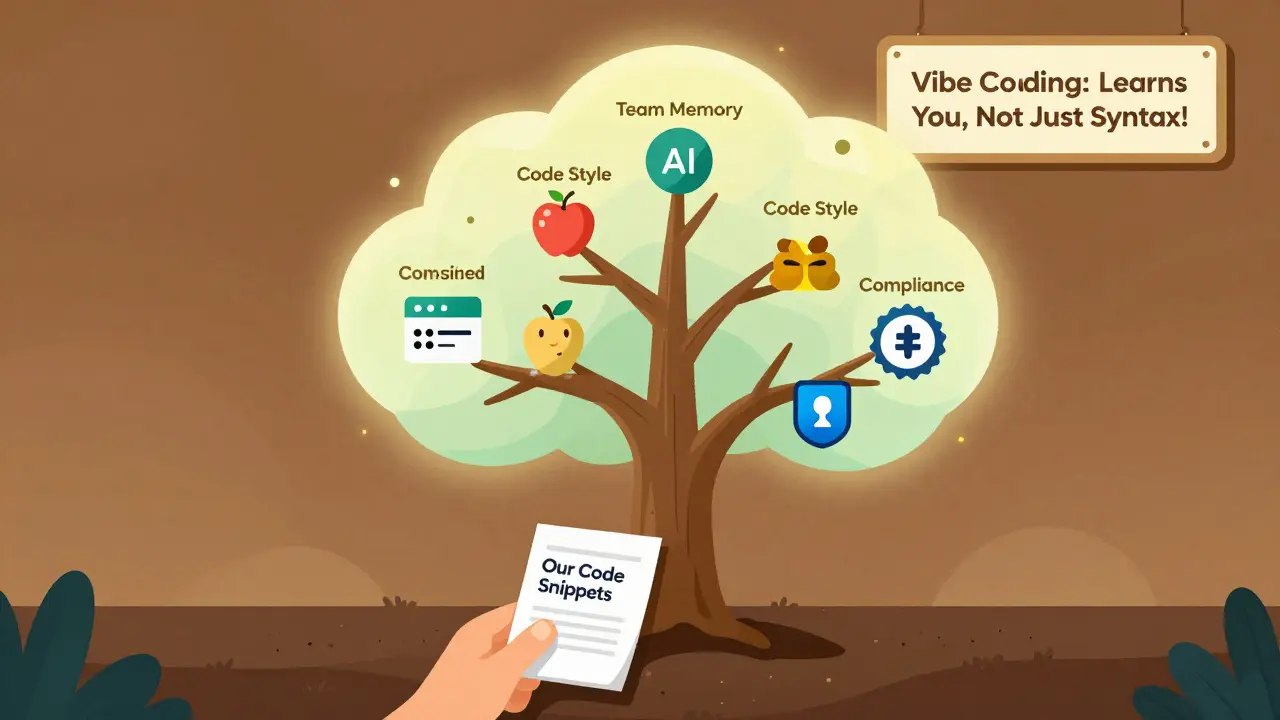
Then, customize. Most platforms let you upload your team’s code style guide, past PRs, or even your own code snippets to train the AI. Windsurf lets you feed it your own repository. Replit lets you import ESLint and Prettier configs. Noca lets you define business rules for its no-code builder. Don’t skip this step. A platform that doesn’t learn your patterns is just a fancy autocomplete.
What’s Next for Vibe Coding?
The market is moving fast. Replit just launched Team Context, which pulls in Slack messages and email threads to improve suggestion relevance. Builder.io now integrates with Figma’s Dev Mode, cutting design-to-code time by nearly half. And GitHub’s acquisition of Cognition Labs in November 2025 means Copilot is likely to become deeply embedded in vibe coding workflows soon.
But the real winners won’t be the ones with the fastest AI. They’ll be the ones that preserve team knowledge. As MIT’s Dr. Sarah Chen put it, “The biggest failure of vibe coding isn’t bad code-it’s lost context.” If your platform forgets why you chose a certain architecture last quarter, it’s not helping. It’s just noise.
Look for platforms that remember your decisions. Windsurf’s project memory feature does this. Builder.io ties components to design tokens. Replit’s new Slack integration helps. If you’re choosing between them, ask: “Will this tool still make sense six months from now, when I’m not here to explain it?”
Are vibe coding platforms just AI code generators?
No. Traditional AI code generators like GitHub Copilot suggest snippets based on syntax patterns. Vibe coding platforms go further-they learn your team’s coding standards, project structure, communication habits, and even how you write commit messages. They adapt to your workflow, not just your code.
Can vibe coding platforms replace developers?
No. They’re designed to reduce busywork, not replace judgment. AI can write boilerplate, fix typos, or suggest refactorings-but it can’t decide what feature to build next, negotiate with product managers, or understand business trade-offs. The best teams use vibe coding to free up time for higher-value work, not to cut headcount.
Which platform is best for a team with mixed skill levels?
Replit is the safest bet. Its low learning curve, real-time collaboration, and educational tools make it ideal for teams with juniors and seniors working side by side. It won’t outperform Windsurf on complex refactoring, but it won’t frustrate new hires either. Pair it with a simple code review process, and you’ll see quick wins.
Is vibe coding secure enough for regulated industries?
Only if you choose the right platform. Noca’s Enterprise Governance update and Builder.io’s enterprise plans now include SOC 2 compliance and audit trails. Replit and Windsurf still lack strong enterprise controls. If you’re in finance, healthcare, or government, demand documentation on training data sources and code approval workflows. Don’t assume security is built-in.
How long does it take to see real productivity gains?
Most teams see a dip in productivity during the first two weeks as they adjust. Real gains-like faster PR reviews, fewer bugs, and less context switching-typically appear after 4-6 weeks. Shopify’s 1,200-engineer team took three months to fully align with Builder.io. Patience and customization are key.
What happens if the platform shuts down?
Your code is still in your Git repository-that’s the safety net. Vibe coding platforms enhance your workflow; they don’t lock you in. But if you’ve trained the AI on your team’s patterns, you’ll lose that context. Export your style guides, code snippets, and training data before committing long-term. Some platforms, like Windsurf, let you download your AI training set.
Final Decision Checklist
- Does your team have junior developers? → Choose Replit or Noca
- Are you building complex software with legacy code? → Avoid Noca and Builder.io
- Do you need enterprise security? → Only consider Noca (Enterprise) or Builder.io (Enterprise)
- Is your team mostly senior engineers? → Windsurf is worth the learning curve
- Are you integrating with Figma or design tools? → Builder.io is your only real option
- Can you afford to spend 3-6 weeks customizing the AI? → If not, skip Windsurf
- Are you in a regulated industry? → Demand compliance documentation before signing up
There’s no perfect vibe coding platform. But there’s one that’s perfect for your team. Start small, test with real work, and don’t let marketing hype override your team’s actual needs. The goal isn’t to write more code faster. It’s to write better code-with less stress, fewer mistakes, and more time for the work that actually matters.
Tyler Springall
January 17, 2026 AT 00:53This so-called 'vibe coding' is just corporate jargon dressed up as innovation. If your team needs a platform to 'understand your rhythm,' you've already failed as engineers. Real developers write code, not perform team-building exercises with AI. Replit? That's a toy for bootcamp grads. Windsurf? A luxury for those who can't write a for-loop without a crutch. This whole trend is a distraction from the real problem: hiring competent people instead of buying shiny tools to mask poor management.
Colby Havard
January 18, 2026 AT 09:17One must consider, with profound philosophical gravity, the ontological implications of delegating cognitive labor to algorithmic entities; in doing so, we risk not merely automating syntax-but eroding the very epistemic foundation of craftsmanship in software development. The ‘vibe’ is not a metric; it is a metaphor for surrender. When code ceases to reflect the mind of its author, and instead mirrors the statistical ghosts of GitHub’s abandoned repositories, have we not, in essence, outsourced our soul to a probabilistic model trained on the collective despair of open-source maintainers?
Amy P
January 19, 2026 AT 16:45OMG I JUST TRIED WINDSURF AND IT WAS LIKE MY CODE GOT A THERAPIST??!! I’VE NEVER SEEN AN AI REMEMBER HOW I REFRACTORED THAT PAYMENT SERVICE FROM LAST SPRING-IT JUST KNEW. I CRIED. NOT BECAUSE IT WAS PERFECT (IT SUGGESTED A SQL INJECTION ONCE, LOL) BUT BECAUSE IT FELT LIKE SOMEONE WHO ACTUALLY GOT ME. I’M NOW TRAINING IT ON OUR OLD COMMIT MESSAGES AND IT’S STARTING TO WRITE THEM LIKE I DO-SASSY, A LITTLE DRAMATIC, BUT CLEAR. THIS ISN’T TOOLS. THIS IS FAMILY.
Ashley Kuehnel
January 20, 2026 AT 18:07Hey everyone! Just wanted to share that we rolled out Replit to our junior-heavy team last month and it’s been a game-changer. We had 5 new grads and they were drowning in Jira + Slack + VS Code chaos. With Replit’s live sharing and built-in tutorials, they’re shipping features in days, not weeks. One of them even fixed a bug in prod before their 2-week onboarding ended! 😊 Pro tip: import your ESLint config early-it saves so much time later. And yeah, security is a concern, but we use it only for internal tools and keep sensitive stuff in our private repo. Totally worth it!
adam smith
January 22, 2026 AT 18:00Too much talk. Pick one. Use it. Stop reading blogs. Replit is fine. Works. Done.
Mongezi Mkhwanazi
January 24, 2026 AT 13:22Let me be perfectly clear: the entire ‘vibe coding’ movement is a symptom of a deeper, more insidious rot in our industry-namely, the systematic devaluation of expertise through the worship of convenience. You think Noca’s drag-and-drop is empowering business analysts? No. It is creating a generation of code-literate clerks who mistake UI for architecture. And Windsurf’s 94.7% accuracy? That’s not precision-it’s statistical illusion, trained on public repositories riddled with deprecated patterns, insecure dependencies, and the intellectual laziness of thousands of anonymous contributors. You are not building software; you are curating hallucinations. And when your compliance audit fails because the AI ‘learned’ to bypass validation from a Stack Overflow answer written in 2019, don’t come crying to me. I warned you.
Mark Nitka
January 25, 2026 AT 15:52Look, I get the fear. I’ve seen teams panic and buy tools because they’re scared of being replaced. But the truth? The real threat isn’t AI-it’s stagnation. If your team can’t adapt to tools that reduce busywork, you’re the one who’s obsolete. I’ve used all four platforms. Windsurf is brilliant for senior teams, Replit is perfect for mixed groups, and Noca’s new governance features actually solve real enterprise problems. But none of them matter if you don’t customize them. The magic isn’t in the AI-it’s in the feedback loop. Upload your style guide. Feed it your past PRs. Let it learn. And if it doesn’t improve your team’s rhythm? Then scrap it. But don’t reject progress because it’s unfamiliar. That’s not caution. That’s cowardice.