Outcome-Driven Development: How to Manage Requirements in Vibe Coding Projects
 Feb, 13 2026
When you start a vibe coding project, you don’t write code line by line. You describe what you want - in plain language - and let an AI generate it. Sounds easy. But here’s the catch: vibe coding doesn’t fix bad requirements. It amplifies them. If your idea is fuzzy, the AI will build something that looks right… until it breaks under real use. That’s where outcome-driven development comes in. It’s not about letting AI run wild. It’s about giving it clear boundaries, structure, and feedback loops so it actually delivers working software.
Stop Guessing. Start Defining.
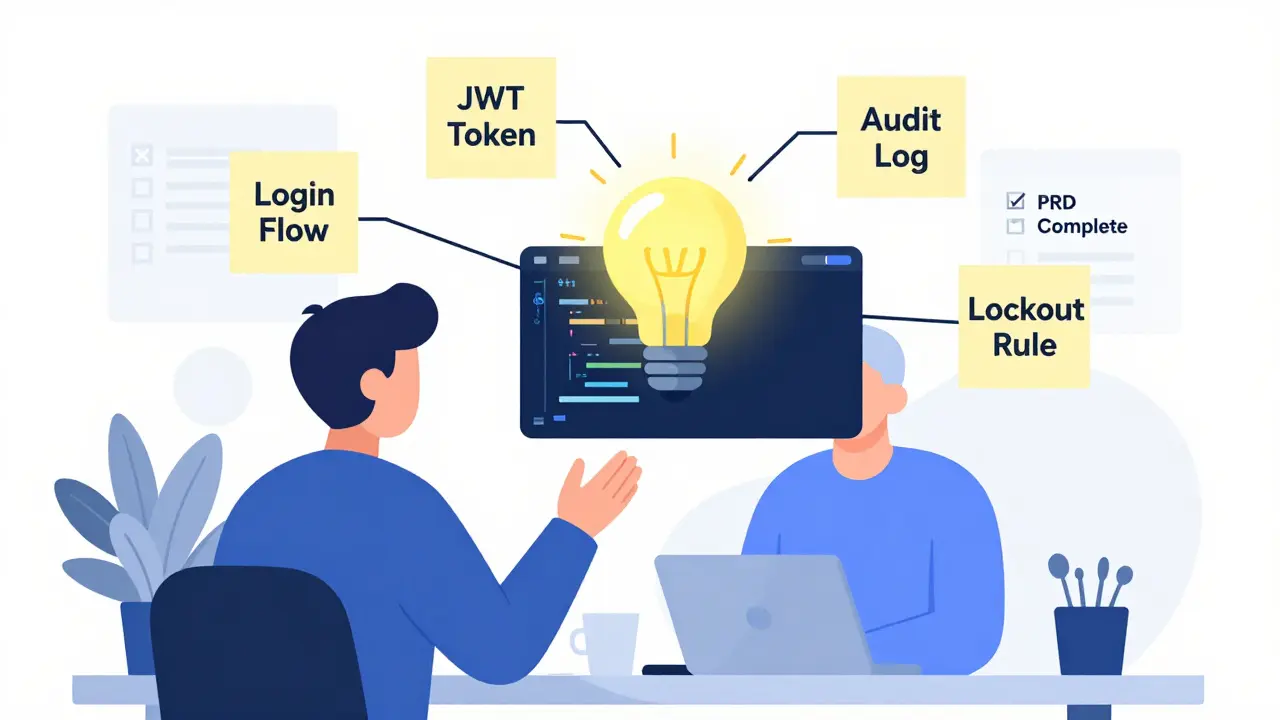
Most vibe coding failures happen because developers treat AI like a magic wand. They say, "Build me a login system," and expect a production-ready feature. But AI doesn’t know your business rules. It doesn’t know if users should be locked out after three failed attempts. It doesn’t know if you need audit logs for compliance. Without explicit guidance, it builds the simplest version - the "happy path." And that’s not enough. Outcome-driven development fixes this by forcing you to define the outcome before writing a single line of code. You don’t just say "login." You say: "When a user enters their email and password, the system checks against the users table in PostgreSQL, sets a secure JWT token, logs the attempt in the audit trail, and redirects to the dashboard. If there are three failed attempts in five minutes, lock the account for 15 minutes." That level of detail is non-negotiable. Start by writing a Product Requirements Document (PRD). Not a one-pager. A living document that answers: What does this feature do? Who uses it? What happens when things go wrong? What data does it touch? This isn’t busywork. It’s the foundation. Every time you ask the AI to generate code, you point it to this PRD. No PRD? No code.Build in Vertical Slices, Not Layers
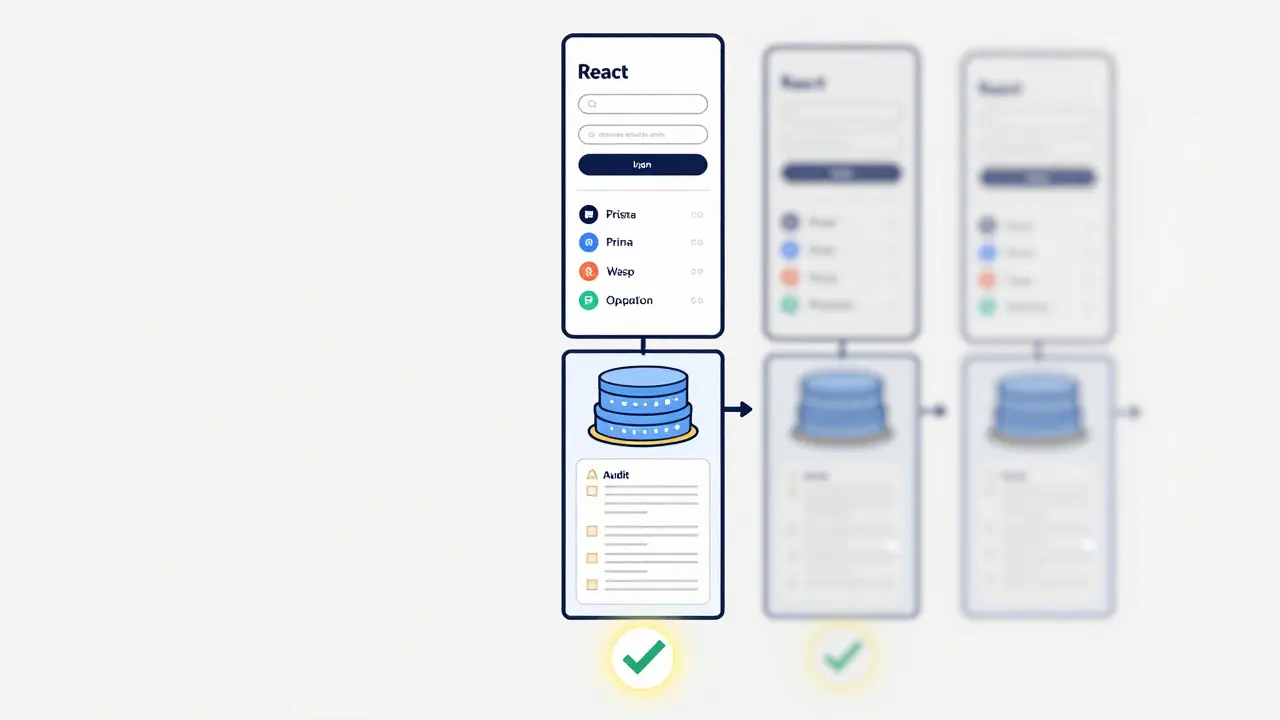
Traditional development builds one layer at a time: database first, then backend, then frontend. Vibe coding breaks that pattern - and that’s good. But you still need structure. That’s where vertical slicing comes in. Instead of building all the database tables for your app before touching the UI, you build one complete feature end-to-end. Start with authentication. Write the user model inschema.prisma. Define the login operation in main.wasp. Write the server logic in operations.ts. Build the login form in React. Test it. Then document it. Only then move to the next feature - like password reset or profile editing.
Why does this work? Because real problems show up in integration, not in isolation. You think you’ve got authentication figured out until you realize the JWT token expires too fast, or the audit log doesn’t capture IP addresses. Vertical slices surface those issues early. They turn vague requirements into concrete, testable outcomes.
Rules Are Your Safety Net
AI doesn’t have context. It doesn’t remember that your team uses PascalCase for variables, or that all API endpoints must return JSON with a consistent error structure. That’s why every vibe coding project needs a rules directory - typically.cursor/rules/.
This folder holds your project’s hidden contract. It includes:
- Code style guidelines (indentation, naming, comment format)
- Authentication patterns (how tokens are issued, refreshed, revoked)
- Database naming conventions (e.g., "user_id" not "userId")
- API response formats (status codes, error payloads)
- Security policies (CORS origins, rate limits, input sanitization)
Documentation Isn’t Optional. It’s Part of the Build.
You’ve built a feature. The AI generated the code. You tested it. Now what? Most teams move on. Big mistake. In outcome-driven development, documentation is built alongside the code. After each vertical slice, you ask the AI: "Here are the files I just wrote -schema.prisma, main.wasp, login.tsx. Based on the PRD section for this feature, write a clear markdown doc explaining how it works from database to UI. Include connections, edge cases, and why we chose this approach."
The result? A living knowledge base stored in an ai/docs/ folder. Future you - or a new team member - won’t have to reverse-engineer the logic. They’ll read the doc and understand exactly how the system behaves. And if you ever need to debug or extend this feature? The doc becomes your starting point.
Feedback Loops Keep You Honest
The best vibe coders don’t just use AI to write code. They use it to critique their own process. After a few sprints, you don’t just ask: "Build this." You ask: "Here’s my PRD, my rules, and my last three feature docs. What’s wrong with this workflow? Where am I missing clarity? What’s likely to break next?" This meta-level feedback turns vibe coding from a tool into a discipline. You start catching patterns: "Oh, every time I say ‘user profile,’ the AI forgets to check permissions." So you update your rules. "Every time I ask for a form, it skips validation." So you add validation templates to your docs. These aren’t one-time fixes. They’re system upgrades. The more you refine your prompts, your rules, and your documentation, the better your AI becomes at delivering what you actually need - not what it thinks you want.Enterprise Needs More Than Speed
Vibe coding is fast. But enterprises don’t just want fast. They want predictable, secure, and auditable. Basic vibe coding tools don’t handle:- Multi-environment deployments (dev, staging, prod)
- Role-based access controls (RBAC) across teams
- Audit trails for compliance (GDPR, HIPAA)
- Code review gates before deployment
- Monitoring and alerting for performance issues
- Automatic rollback on failed deployments
- Approval workflows for production changes
- Integrated logging and metrics
- Centralized secrets management
Security Isn’t an Afterthought
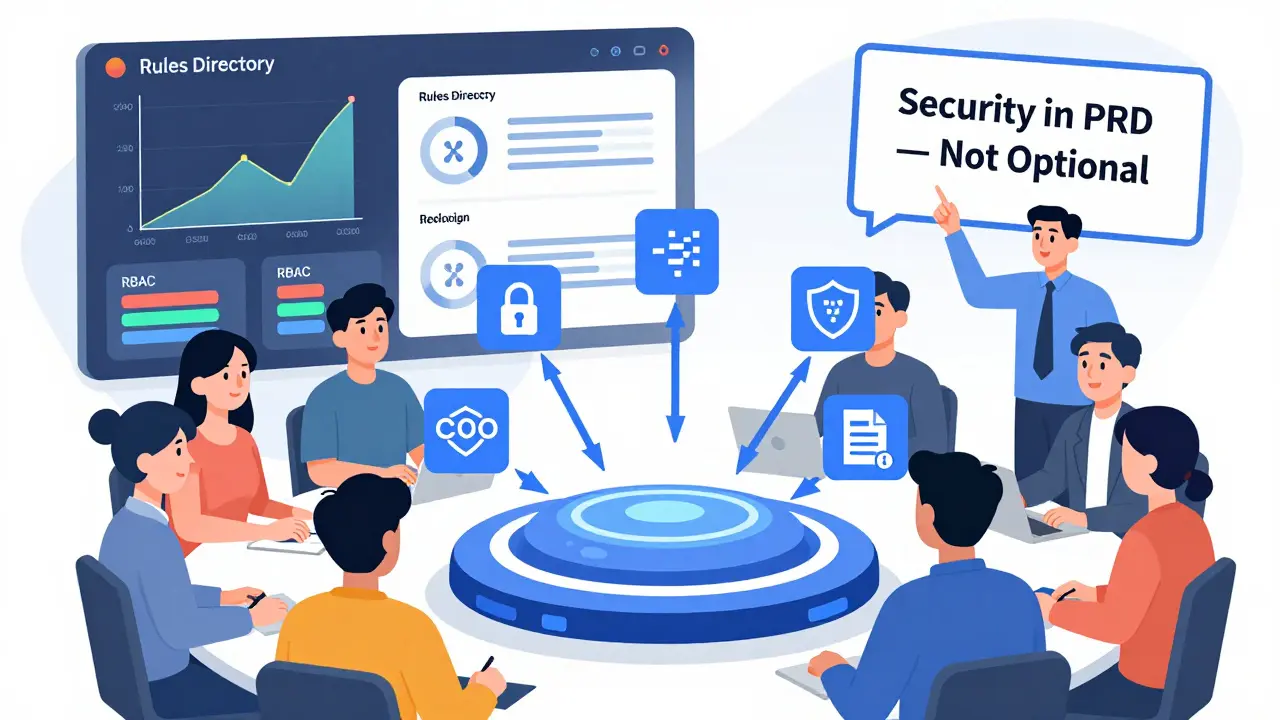
AI tools are terrible at security. They’ll generate code with wildcard CORS settings. They’ll leave debug endpoints exposed. They’ll use hardcoded secrets. They won’t sanitize inputs. And they won’t care. In outcome-driven development, security is part of the PRD. For every feature, you must answer: What data is being accessed? Who can access it? How is it protected? How do we log access? How do we detect breaches? For example, if you’re building a user profile page, your PRD doesn’t just say "show user info." It says: "Only the authenticated user or admins can read this data. All reads require a valid JWT with scope:profile:read. Writes require scope:profile:write. All access attempts are logged with timestamp, IP, and user ID. Invalid requests return 403, not 404." Then you feed that to the AI. And you verify the output manually. Never trust the AI on security.Frameworks Make AI Smarter
You don’t need to build everything from scratch. In fact, you shouldn’t. That’s why full-stack frameworks like Wasp and UI libraries like Shadcn-admin are game-changers. Wasp handles the backend plumbing: routing, database connections, API generation, authentication scaffolding. Shadcn-admin gives you pre-built, accessible admin panels with tables, forms, and filters. That means your AI doesn’t waste time guessing how to structure a CRUD interface. It focuses on your business logic: "When a user submits this form, validate the date, check inventory, and trigger a Slack notification." These tools constrain the problem space. And constrained problems = better AI results. A vague prompt like "make a dashboard" leads to chaos. A specific prompt like "use Shadcn-admin’s DataTable to show orders from the orders table, with filters for status and date" leads to clean, consistent code.It’s Not About Replacing Developers. It’s About Elevating Them.
Outcome-driven development isn’t about making developers obsolete. It’s about making them more powerful. Product managers can use it to write clearer requirements without learning to code. Junior devs can build complex features with guidance, not guesswork. Senior devs can focus on architecture, not boilerplate. The magic isn’t in the AI. It’s in the structure. When you combine clear outcomes, enforced rules, vertical slices, and living documentation, vibe coding stops being a gamble. It becomes a scalable, reliable way to build software - fast.Forget the hype. The future of coding isn’t just AI. It’s AI with discipline.
Adithya M
February 14, 2026 AT 18:58And yes-this works. We shipped a full auth stack in 3 days. No bugs. No surprises.
Donald Sullivan
February 16, 2026 AT 15:23Mark Tipton
February 17, 2026 AT 21:58GDPR doesn't care how pretty your markdown docs are. If your audit trail doesn't encrypt user identifiers, you're not building software-you're building liability. And if your 'rules' don't include NIST 800-53 controls, you're not secure-you're just lucky.
Jessica McGirt
February 19, 2026 AT 05:20One tweak I’d suggest: integrate the PRD directly into your version control as a markdown file alongside the code. That way, changes to requirements are tracked, reviewed, and versioned-not just stored in some Notion doc that gets lost after the third sprint. Documentation isn’t a chore-it’s the contract between past you and future you.
Ronak Khandelwal
February 20, 2026 AT 10:13Also-love the vertical slices. That’s the secret sauce. Build one tiny, complete thing. Test it. Document it. Then move on. No more ‘I’ll do the database later’ nonsense. Real progress is incremental, not monumental. Keep going. You’re onto something real. 💪
Jeff Napier
February 21, 2026 AT 17:24And who writes these PRDs? The same people who thought 'cloud' meant 'some server in someone else’s basement.' You’re not solving the problem-you’re just giving the AI more words to misinterpret. This isn’t discipline. It’s placebo engineering.
Sibusiso Ernest Masilela
February 22, 2026 AT 12:40Real engineers don’t need PRDs. They need context. And if your team can’t figure out how to build a login system without a 30-page spec, maybe they shouldn’t be coding.
This isn’t the future. It’s the past dressed in AI pajamas. I’ve seen startups like this die in 18 months. The market doesn’t care how pretty your docs are. It cares if it works. And if it takes you 2 weeks to ship a login, you’re already dead.