AI Pair PM: How Agents Generate and Refine Product Requirements
 Sep, 22 2026
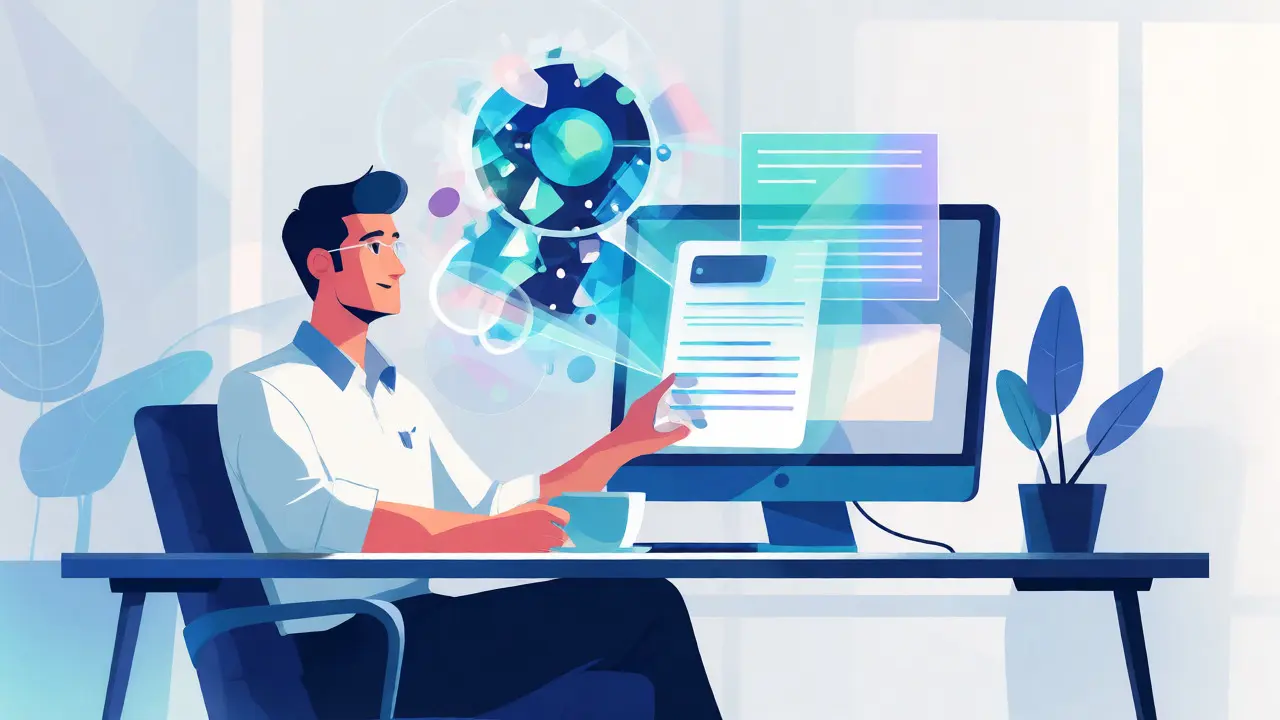
Imagine firing up your laptop on a Tuesday morning, opening a blank document titled "Product Requirements Document," and watching it fill itself out. Not with generic fluff, but with sharp user stories, precise acceptance criteria, and edge-case scenarios that you hadn't even thought of yet. This isn't science fiction; it's the emerging reality of AI Pair PM. It’s a workflow where autonomous AI Agents act as your co-pilot, drafting, critiquing, and refining requirements in real-time.
If you’re a product manager, you know the pain. You spend hours translating vague stakeholder desires into technical specs, only to have engineering push back because something was missed. The traditional PRD process is slow, manual, and prone to human error. But what if an agent could handle the heavy lifting? What if it could iterate through ten versions of a feature spec in the time it takes you to brew coffee? That’s the promise of AI-driven requirement generation. Let’s look at how this works, why it matters, and where the human element still fits in.
The Death of the Blank Page
We’ve all been there. The cursor blinks. The stakeholder said, "Make it pop," or "It needs to be more intuitive." Translating that into actionable engineering tasks is brutal. Traditional tools like Jira or Confluence are just digital filing cabinets. They store information; they don’t create it. Enter the concept of Generative AI for documentation. Unlike simple autocomplete, these systems understand context. They can take a raw meeting transcript or a high-level business goal and structure it into a formal specification.
Think of it like having a junior product manager who never sleeps and has read every PRD ever written. But unlike a human intern, this agent doesn’t get tired, biased, or forgetful. It can instantly cross-reference your new feature against existing API constraints or compliance rules. The speed is staggering. What used to take two days of drafting and reviewing can now happen in twenty minutes. But speed isn’t the only win. Consistency is huge. When one team uses a different template than another, alignment breaks down. AI enforces structure automatically.
How AI Agents Actually Work in This Workflow
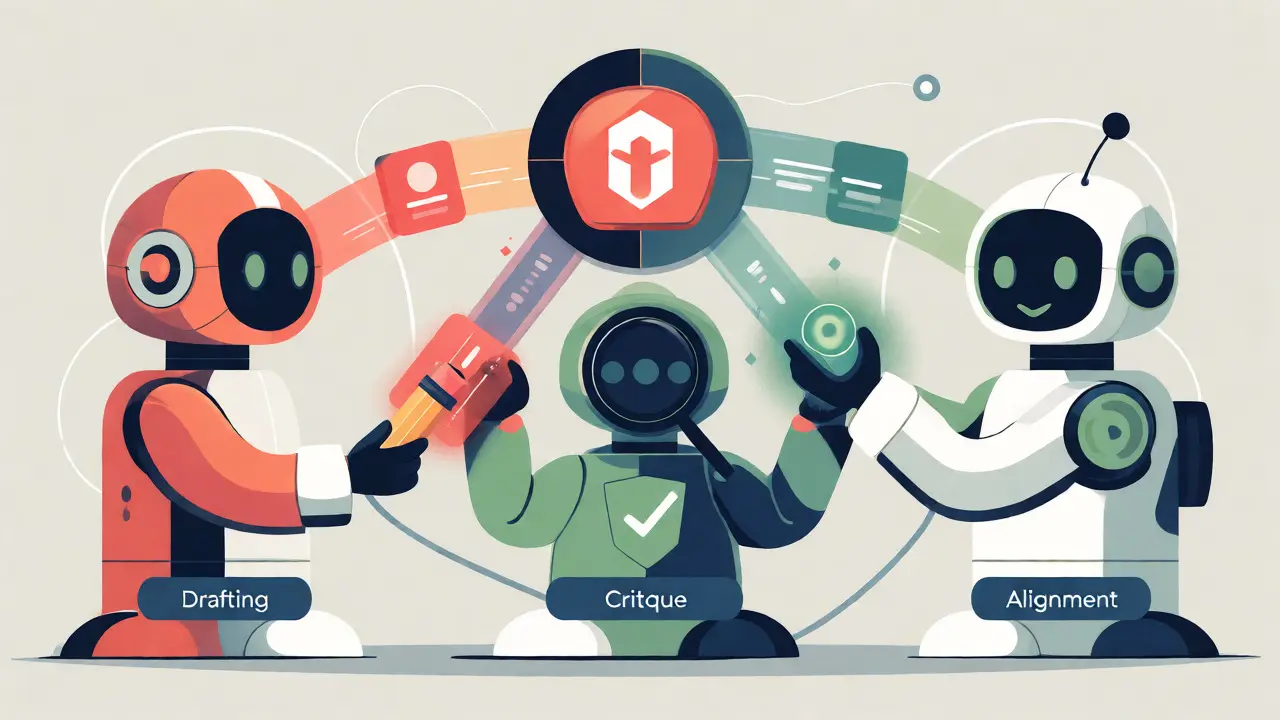
So, how does this magic work under the hood? It’s not just one big chatbot. It’s usually a system of specialized AI Agents working together. Think of them as a virtual squad. One agent might focus on parsing user intent from natural language inputs. Another might specialize in technical feasibility, checking if the proposed feature aligns with current tech stacks. A third acts as the critic, looking for gaps, ambiguities, or contradictions.
This multi-agent approach mimics human collaboration. In a real team, a designer talks to an engineer, who talks to a QA lead. An AI Pair PM system simulates this dialogue. For example:
- The Drafting Agent: Takes your bullet points and expands them into full user stories using standard formats like "As a [user], I want [feature], so that [benefit]."
- The Critique Agent: Reviews the draft and asks questions like, "What happens if the user loses internet connection here?" or "Is this metric measurable?"
- The Alignment Agent: Checks the output against company style guides and previous successful projects to ensure consistency.
This iterative loop is key. The first draft is rarely perfect. The refinement phase is where the real value lies. By having agents argue with each other-or rather, refine each other’s outputs-you get a much stronger final document. It’s adversarial collaboration, automated.
Why Traditional PRDs Are Failing Modern Teams
Let’s be honest: most Product Requirements Documents are shelf-ware. They get written, approved, and then ignored because they’re too dense or outdated by the time development starts. Why? Because static documents can’t keep up with agile development. Requirements change daily. Updating a PDF or a Word doc every time a ticket moves is tedious.
AI Pair PM changes this dynamic by making requirements living entities. If a developer changes a field name in the database schema, the AI agent can flag that the PRD is now inconsistent. It bridges the gap between documentation and code. This reduces the "telephone game" effect where information gets distorted as it passes from product to design to engineering.
| Feature | Traditional Manual Process | AI Pair PM Workflow |
|---|---|---|
| Initial Draft Time | 4-8 Hours | 10-30 Minutes |
| Error Rate (Ambiguity) | High (Human oversight varies) | Low (Automated critique loops) |
| Consistency Across Teams | Low (Varies by writer) | High (Enforced templates) |
| Update Frequency | Weekly/Monthly | Real-time/On-change |
| Stakeholder Engagement | Passive (Read-only) | Interactive (Q&A with Agent) |
The Human Role: Editor-in-Chief, Not Writer
Does this mean product managers are obsolete? Absolutely not. It means their job description is shifting. You are no longer primarily a writer. You are an editor, a strategist, and a validator. The AI handles the syntax and the structure. You handle the nuance, the empathy, and the business judgment.
Consider ethical considerations. An AI might suggest a feature that maximizes engagement but ignores privacy concerns. It doesn’t "feel" discomfort. It optimizes for patterns. As a human, you need to spot when a requirement feels wrong, even if it looks right on paper. You need to ask, "Will this annoy our loyal users?" or "Does this align with our brand voice?" These are qualitative judgments that current AI struggles with.
Furthermore, stakeholders often speak in metaphors or incomplete thoughts. An AI might misinterpret "make it seamless" as "remove all friction," which might technically break a necessary security step. Your role is to translate human ambiguity into machine precision. The AI gives you the draft; you give it the soul.
Implementation Pitfalls to Avoid
Adopting AI Pair PM isn’t plug-and-play. There are traps. The biggest one is hallucination. Large Language Models (LLMs) can sound confident while being completely wrong. They might invent API endpoints that don’t exist or cite regulations that were repealed years ago. Always verify critical technical details.
Another issue is over-reliance on templates. If you force the AI to use a rigid template, you might stifle creativity. Sometimes, a non-standard explanation is clearer. Use the AI as a starting point, not a cage. Also, watch out for data privacy. Don’t paste sensitive customer PII (Personally Identifiable Information) into public LLM interfaces without anonymizing it first.
Finally, manage expectations with engineering teams. Developers hate surprises. If the AI generates a complex requirement that seems easy but is actually hard to build, you’ll lose trust. Involve tech leads early in the AI-assisted review process. Let them poke holes in the generated logic before it becomes official.
Looking Ahead: Autonomous Product Discovery
We’re currently at stage one: generating and refining requirements based on human input. The next frontier is autonomous discovery. Imagine an AI agent that monitors user behavior analytics, identifies drop-off points in the funnel, drafts a hypothesis, writes the PRD, and submits it for approval-all without you initiating it.
This shifts product management from reactive to proactive. Instead of waiting for complaints, you react to signals. The "Pair" aspect becomes even more critical here. You and the agent form a continuous feedback loop. The agent learns from your edits, getting better at predicting what you’ll approve or reject. Over time, it becomes less of a tool and more of a partner that knows your taste.
For companies in Bellingham or anywhere else, this means smaller teams can ship faster. A single PM equipped with a robust AI Pair PM stack can do the documentation load of three people. This frees up budget for actual innovation rather than administrative overhead.
Do AI-generated PRDs replace human product managers?
No, they augment them. AI handles the drafting, structuring, and initial validation of requirements, freeing humans to focus on strategy, user empathy, ethical judgment, and stakeholder negotiation. The human remains the final decision-maker and editor.
How accurate are AI agents at understanding technical constraints?
Accuracy depends on the model and the context provided. Advanced agents trained on specific codebases or API documentation can be quite precise. However, they can still hallucinate or miss subtle architectural nuances. Human technical review is still essential for complex features.
What is the biggest risk of using AI for product requirements?
The primary risks are hallucinations (inventing non-existent features or APIs) and lack of contextual nuance. AI may miss unspoken organizational politics or deep user pain points that aren't explicitly stated in data. Verification and human oversight are critical mitigations.
Can AI Pair PM integrate with existing tools like Jira or Confluence?
Yes, most modern AI PRD generators offer integrations or export options compatible with major project management tools. Some allow direct API connections to update tickets automatically when requirements change, keeping documentation synchronized with development status.
How do I prevent my team from becoming lazy with AI assistance?
Set clear standards for human review. Require engineers to sign off on AI-generated specs. Treat the AI output as a "first draft" that must pass rigorous peer review. Encourage a culture where questioning the AI is valued, ensuring critical thinking remains active.
Joanna Mucha
September 22, 2026 AT 09:55Oh, how delightfully naive to assume that the soul of product management can be distilled into binary code. You speak of "agents" as if they possess a consciousness capable of grasping the ephemeral nature of human desire, yet you forget that true insight is born from suffering and intuition, not algorithmic iteration.
The blank page isn't an enemy to be conquered by efficiency; it is a sacred space for existential reflection. By outsourcing this struggle to a machine, we are merely accelerating our descent into a sterile void where meaning is optimized but never felt. It’s tragic, really, how we cling to these digital crutches because we lack the courage to sit with the discomfort of creation. The AI doesn’t care if your feature "pops," it only cares about statistical probability, which is the antithesis of art.