Building Human-in-the-Loop Evaluation Pipelines for LLMs
 Jul, 25 2026
Imagine spending months training a large language model only to find out it’s confidently hallucinating facts in your customer support chats. You didn’t catch it because your automated tests were too rigid, and you couldn’t afford to have humans read every single response. This is the trap many teams fall into when scaling AI. They rely entirely on machines to judge machines, or they drown in manual review costs.
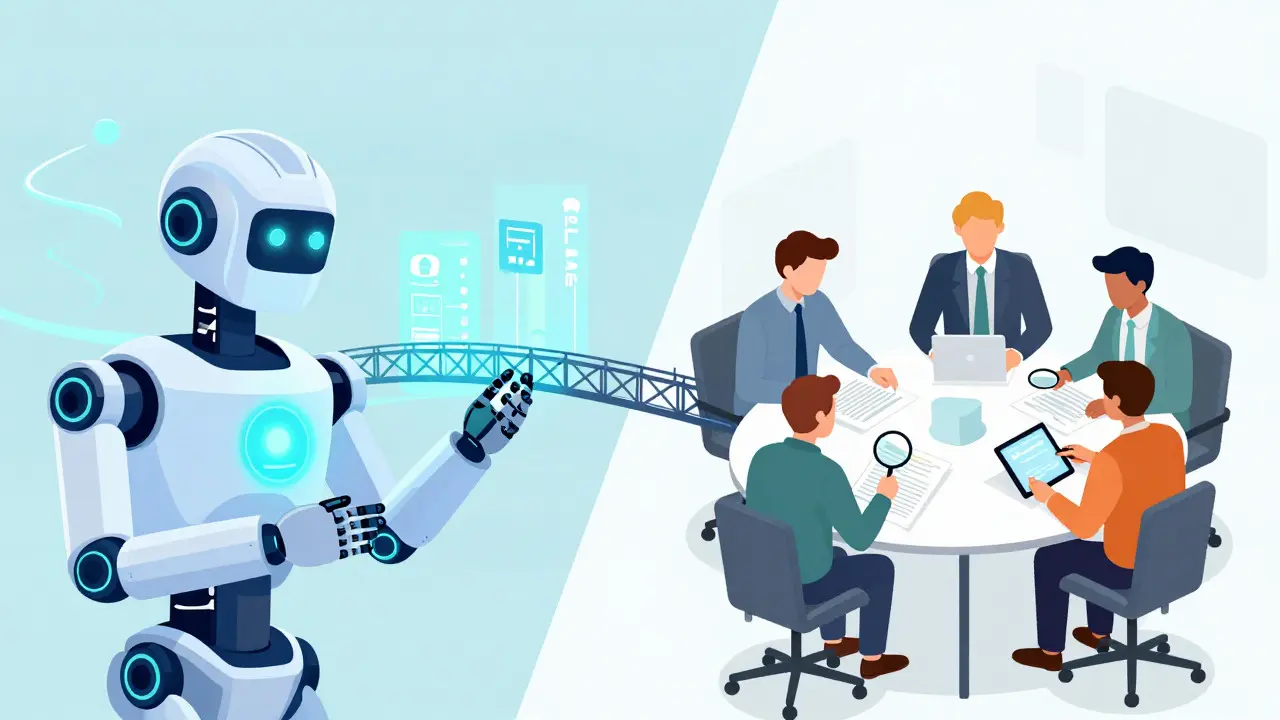
The solution isn't choosing between speed and accuracy. It's building a Human-in-the-Loop (HITL) evaluation pipeline. This hybrid approach uses automated systems for the heavy lifting and human experts for the nuanced judgment calls. By integrating these two forces, you get the scalability of software with the discernment of a senior engineer. Let’s break down how to build this system so it actually works in production.
The Core Architecture: A Tiered Approach
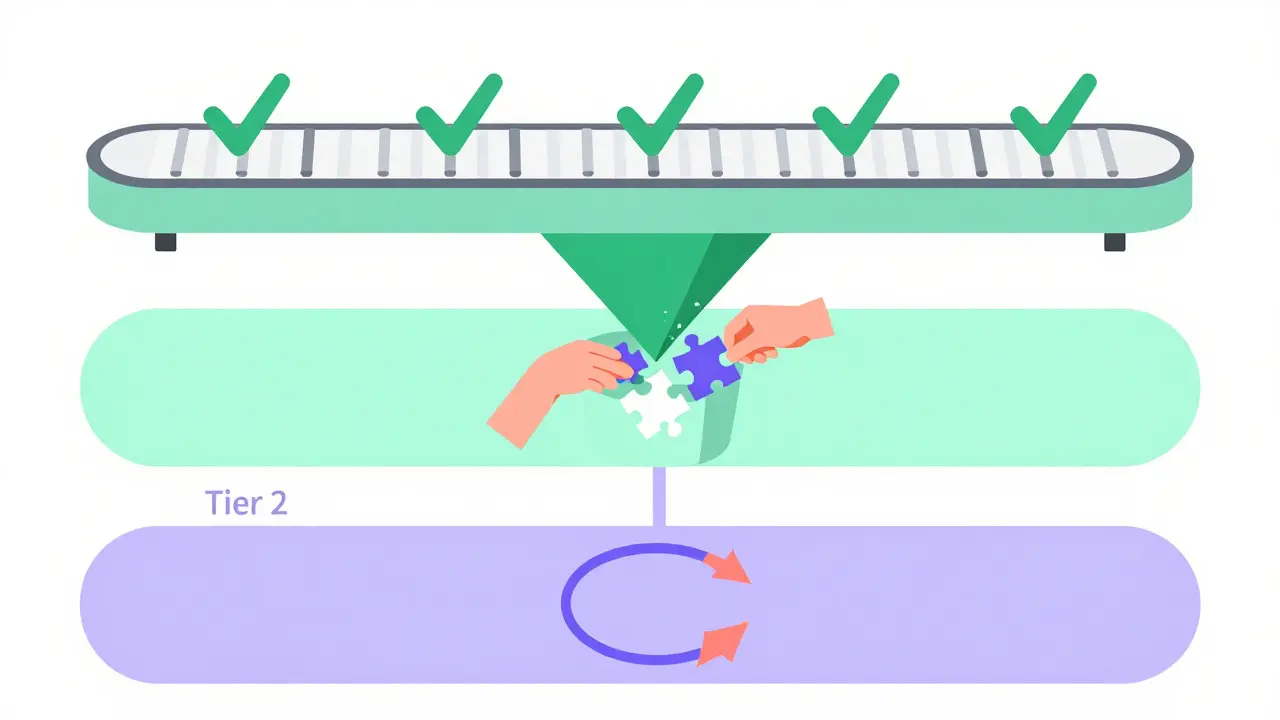
You can’t treat every output equally. If you send every chatbot response to a human reviewer, you’ll burn through your budget in days. If you let an AI judge everything, you risk subtle biases slipping through. The industry standard right now is a tiered architecture that filters work based on confidence and complexity.
| Tier Level | Primary Actor | Function | Volume Handled |
|---|---|---|---|
| Automated Screening | LLM-as-a-Judge | Filters clear passes/fails using predefined rubrics | 80-90% |
| Human Review | Expert Evaluators | Assesses edge cases, low-confidence scores, and random samples | 10-20% |
| Continuous Feedback | System Integration | Routes human corrections back to retrain the evaluator model | Ongoing |
In Tier 1, you use an LLM to act as the initial judge. This isn't about getting the final truth; it's about efficiency. You feed the model’s output into a prompt template that checks for basic criteria like safety, tone, and factual grounding. If the LLM judge gives a high confidence score, the output moves forward. If it flags something as risky or ambiguous, it gets bumped to Tier 2.
Tier 2 is where your human experts come in. These aren't just random annotators; they are domain specialists who understand the context. They review the flagged items from Tier 1. Crucially, they also review a random sample of the "passed" items to ensure the automated judge isn't becoming complacent or biased. Their feedback becomes the ground truth used to recalibrate the automated system.
Evaluation Mechanisms: Pointwise vs. Pairwise
How exactly do you ask an LLM to evaluate another LLM? There are two main methods, and picking the wrong one can skew your data.
Pointwise evaluation looks at a single output in isolation. You give the judge LLM a prompt like, "Rate this summary on a scale of 1 to 5 for clarity." It assigns a score and provides a justification. This is great for binary checks, such as determining if a response contains personally identifiable information (PII). It’s fast, cheap, and easy to automate. However, pointwise scoring can be inconsistent. One day, a "4" might mean "good," and the next, it means "great," depending on the judge’s mood or temperature settings.
Pairwise comparison solves this consistency issue. Instead of rating one output, you show the judge LLM two different responses to the same prompt and ask which one is better. Research shows that LLMs achieve over 80% agreement with crowdsourced human preferences when doing pairwise comparisons on general instruction-following tasks. This mimics how humans naturally compare options. It removes the arbitrary nature of absolute scoring scales. For high-stakes decisions, pairwise comparison is often more reliable than pointwise scoring.
Smart Routing: Uncertainty and Diversity Sampling
Sending everything to humans is expensive. Sending nothing is dangerous. The secret sauce of a good HITL pipeline is smart routing. You need algorithms that decide which cases truly need human eyes.
Use uncertainty sampling to route outputs where the LLM judge shows low confidence. If the automated system hovers near a decision boundary-say, a safety score of 3.5 out of 5-it doesn't know if the content is safe or not. That’s exactly where a human should step in. By focusing human effort on ambiguous cases, you maximize the value of their expertise.
Combine this with diversity sampling. Automated systems tend to cluster around common patterns. They might miss rare edge cases simply because they haven't seen them enough. Diversity sampling ensures that human evaluators see a wide variety of output types, preventing blind spots in your calibration. If your model starts handling medical queries differently than legal ones, diversity sampling ensures both domains get adequate human scrutiny.
When multiple LLM judges disagree on a single output, trigger a disagreement resolution protocol. Escalate these conflicts to human reviewers immediately. Establishing consensus on these tricky cases helps refine your evaluation criteria over time.
Mitigating Bias and Ensuring Fairness
AI models inherit biases from their training data. If you leave evaluation entirely to machines, those biases can compound silently. Humans are imperfect, yes, but they bring contextual awareness that algorithms lack. In a HITL workflow, humans act as a safeguard against algorithmic drift.
During the model training phase, data scientists monitor performance metrics. But after deployment, the real test begins. When an AI makes a low-confidence prediction or produces an ambiguous result, flag it for human review. The human corrects the output, and that correction feeds back into the system. This creates a continuous learning cycle. Over time, the model learns not just what is statistically probable, but what is fair and aligned with organizational values.
This is especially critical in specialized domains. A general-purpose LLM might miss a subtle nuance in a financial report or a medical diagnosis. Domain experts in the loop ensure that the model respects professional standards. They catch misleading outputs before they reach end-users, preventing negative downstream outcomes.
Operationalizing Continuous Feedback Loops
A static evaluation pipeline is a dead pipeline. User behavior changes. Models update. New slang emerges. Your HITL system must be dynamic.
Integrate real-time interfaces that allow product and QA teams to flag failure cases as they appear in production. Don't wait for a monthly report. If a user complains about a rude tone, let a moderator annotate that specific interaction instantly. Use analytics tools to track how human input shifts model behavior over time. You want visibility into where the model struggles most.
This operationalization extends across the entire lifecycle. During data labeling, humans annotate training examples for subjective tasks. During evaluation, they assess quality and safety. During feedback phases, subject matter experts diagnose why a model failed and provide new examples for retraining. The goal is a model that reflects the intent of the people building it, not just the statistical averages of its dataset.
Implementation Checklist for Teams
Ready to build this? Here is what you need to prioritize:
- Define Clear Rubrics: Before automating anything, agree on what "good" looks like. Create detailed evaluation criteria for each metric (clarity, safety, relevance).
- Select the Right Judges: Choose an LLM for Tier 1 screening that aligns with your target model’s capabilities. Ensure it has strong reasoning skills for pairwise comparisons.
- Recruit Expert Reviewers: Hire or train domain-specific evaluators for Tier 2. Generalists won't catch niche errors.
- Set Confidence Thresholds: Determine the exact score ranges that trigger human escalation. Start conservative and adjust based on error rates.
- Build Feedback Channels: Create seamless ways for humans to push corrections back into the training pipeline. Automation here reduces friction.
- Monitor Drift: Regularly audit your automated judges. Are they becoming too lenient? Too strict? Recalibrate using fresh human-labeled data.
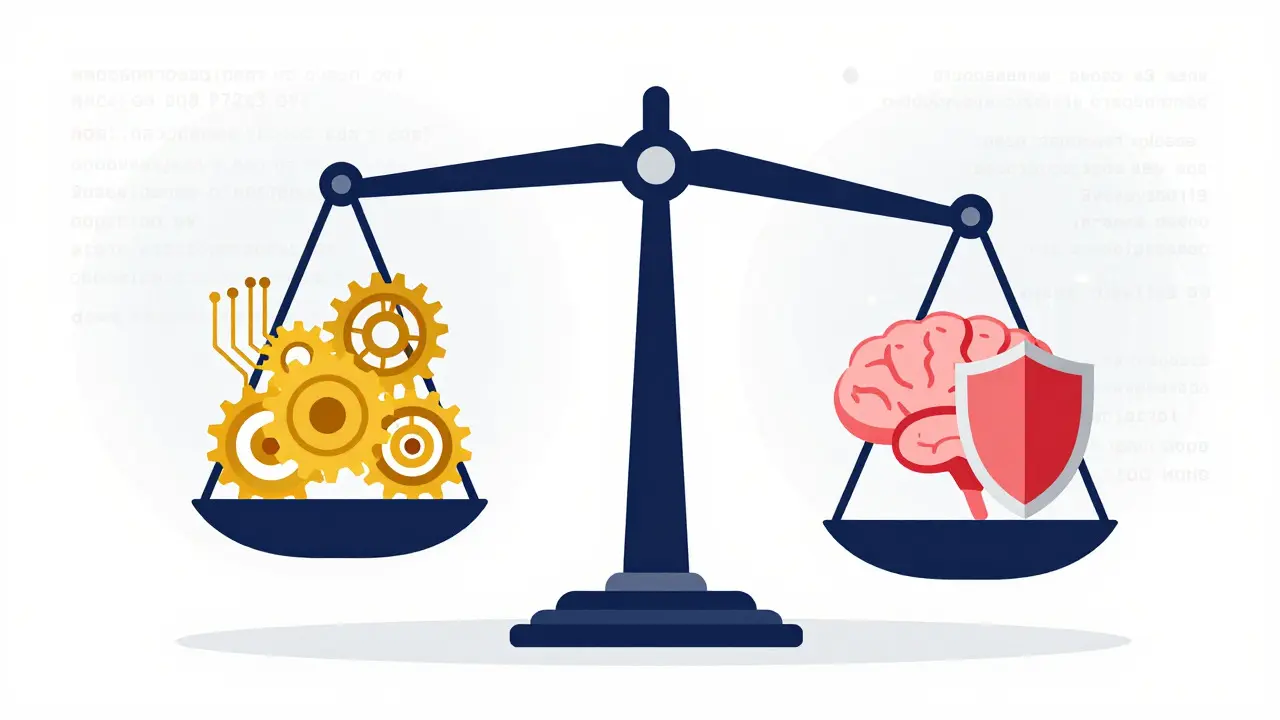
By adopting this hybrid approach, you leverage the best of both worlds. You get the speed and scalability of LLMs for routine tasks, and the depth and discernment of humans for complex judgments. This constructive interaction ensures high standards of accuracy, fairness, and relevance. As AI applications grow more sophisticated, the HITL pipeline remains the gold standard for maintaining trust and quality.
What is the primary benefit of a Human-in-the-Loop evaluation pipeline?
The primary benefit is balancing scalability with accuracy. Automated systems handle the volume of routine evaluations quickly, while human experts provide nuanced judgment for complex, ambiguous, or high-stakes cases. This hybrid approach prevents the cost explosion of full manual review and the quality risks of full automation.
How does uncertainty sampling improve HITL efficiency?
Uncertainty sampling routes only the outputs where the automated LLM judge has low confidence to human reviewers. This focuses human expertise on genuinely ambiguous cases rather than wasting time on clear-cut examples that the machine can handle accurately. It maximizes the return on investment for human labor.
Why is pairwise comparison preferred over pointwise scoring?
Pairwise comparison asks the evaluator to choose between two options, which is more consistent and less subjective than assigning an absolute score. Research shows higher agreement rates with human preferences in pairwise setups, reducing the variability inherent in pointwise rating scales.
What role do domain experts play in Tier 2 reviews?
Domain experts assess flagged outputs and random samples to ensure quality and catch nuanced errors that generalist evaluators or AI might miss. They provide ground truth labels that help calibrate the automated system and ensure the model adheres to specific industry standards, such as medical or legal accuracy.
How does HITL help mitigate bias in AI models?
Humans act as a safeguard by identifying and correcting biased or unfair outputs that automated systems might overlook due to training data limitations. Their corrections feed back into the model, creating a continuous learning cycle that promotes fairness and alignment with organizational values over time.