Change Management Costs in Generative AI: Training and Process Redesign
 Nov, 14 2026
You built the model. You integrated the API. The dashboard looks slick. But three months later, half your team is still emailing PDFs because they don’t know how to prompt the new tool, and the other half is using it wrong enough to create compliance risks. Sound familiar? Here’s the hard truth from Gartner: 85% of AI projects fail to deliver expected business value. And it’s rarely because the code was bad. It’s because people didn’t change.
Most budgets for generative AI focus heavily on compute, licensing, and development. They treat change management as an afterthought or a soft cost that can be cut when things get tight. That is a mistake. In 2026, ignoring the human side of AI adoption isn't just inefficient; it's expensive. This article breaks down exactly what you need to spend on training and process redesign to avoid becoming part of that failure statistic.
The Real Price Tag of Human Adoption
Let’s look at the numbers. For small and medium-sized enterprises (SMEs), staff training and change management typically consume $8,000 to $20,000 in the first year. This accounts for 15-25% of initial year-one budgets, which usually range from $50,000 to $100,000. If you’re thinking, "That’s too much," consider the alternative. SmartDev’s 2024 case study found that manufacturing SMEs with poor change management faced average remediation costs of $18,000 just to fix stalled adoption issues in year two.
The pattern is clear: pay now or pay more later. When you skip proper workflow redesign, employees force-fit AI into old habits. This leads to shadow IT, data breaches, and low utilization rates. Nguyen Le, COO at SmartDev, notes that even minor gaps in setup lead to noncompliance penalties. Change management isn't just about making people happy; it’s about securing your investment.
Three Phases of Change Management Spending
Costs aren't a one-time hit. They evolve as your program matures. Understanding these phases helps you forecast accurately.
- Initial Implementation: This is the heavy lifting. You need technical training on AI interfaces, mapping out new workflows, and launching user adoption programs. Expect to spend $8,000 to $20,000 here for SMEs. This covers creating role-specific materials and getting buy-in from resistant stakeholders.
- Ongoing Optimization: AI capabilities change fast. Quarterly refresher training and incremental workflow adjustments are necessary. Budget $3,000 to $8,000 annually per key team member. This ensures your staff stays current with new features and best practices.
- Scaling Phase: When you expand AI to new departments, costs spike. Each new business unit requires its own integration and training cycle. Plan for $15,000 to $30,000 per additional department. Year-three scaling often exceeds year-one development expenses if you haven’t standardized your approach.
Over five years, 60% of total AI implementation costs come from maintenance, training, and scaling. If you only budgeted for the build, you’re already behind.
How Company Size Changes the Equation
Your employee count dictates your strategy and your spend. A startup doesn’t need the same infrastructure as a Fortune 500 company.
| Organization Type | Employee Count | Initial CM Cost | Annual Operating CM Cost | Key Challenge |
|---|---|---|---|---|
| Startups | 10-50 | $5,000 - $15,000 | $20,000 - $100,000 (Total OpEx) | Lack of formal processes; founder dependency. |
| Mid-Size Companies | 100-1,000 | $15,000 - $35,000 | $200,000 - $800,000 (Total OpEx) | Siloed departments; resistance from legacy power users. |
| Enterprises | 1,000+ | $50,000 - $150,000 | $1M+ (Dedicated Teams & Tools) | Complex compliance; slow decision-making cycles. |
For mid-size companies, the biggest hurdle is silos. Cutter Associates reports that 68% of implementations face resistance from legacy system power users. These folks have been doing things one way for decades. If you don’t involve them in the design process from day one, they will sabotage the rollout quietly.
Tools and Infrastructure You Actually Need
You can’t manage change with just enthusiasm. You need platforms to track progress and integrate with existing systems. Most organizations use dedicated change management software like Prosci ADKAR or Prosci 360. These tools cost between $5,000 and $25,000 annually, depending on size.
Integration is another hidden cost. Your AI training logs need to talk to your HR systems. Your workflow changes need to reflect in tools like ServiceNow or Jira. Expect integration costs of $2,000 to $10,000 per system. Without this connectivity, you lack visibility into who is actually using the AI and where they are struggling.
Don’t forget personnel. During initial implementation, you need 0.5 to 2 full-time equivalent change management specialists for every 100 employees. This isn’t optional if you want to move beyond pilot purgatory.
Why Structured Programs Beat Ad-Hoc Efforts
Is it worth the overhead? USM Systems’ 2025 analysis of 200 enterprise AI implementations says yes. Organizations with structured change management achieve 73% user adoption rates. Those without formal programs hover around 42%. That’s a massive gap in ROI.
Consider the logistics SME documented by SmartDev. Their maintenance and scaling spend rose from $45,000 in year two to $74,000 in year three-a 65% escalation-because their initial workflow redesign was inadequate. Compare that to businesses adopting AI-native workflows with structured support, which report 20-60% reductions in operational spending within the first year.
GO-Globe’s 2026 benchmarking adds another layer: phased implementation strategies reduce change management costs by 35-45% compared to 'big bang' approaches. Trying to change everything at once creates shock and resistance. Gradual, supported transitions keep costs down and morale up.

Regulatory Pressures Are Adding Costs
If you operate in Europe or serve European clients, the EU AI Act is no longer a future concern. It requires documented change management processes for high-risk AI systems. GO-Globe’s 2026 analysis estimates this adds 10-15% to compliance costs.
This isn’t just bureaucracy. Proper documentation proves that your staff understands the limitations of the AI, reducing liability. The ISO 30428 standard, released in January 2026, sets baseline requirements for AI change management. Ignoring these standards doesn’t just risk fines; it signals to investors that your AI strategy is immature.
Practical Steps to Start Today
So, how do you begin without blowing the budget? Start small but start smart.
- Conduct a Change Readiness Assessment: Spend $2,000 to $8,000 to identify who will resist and why. Look for skills gaps and cultural blockers.
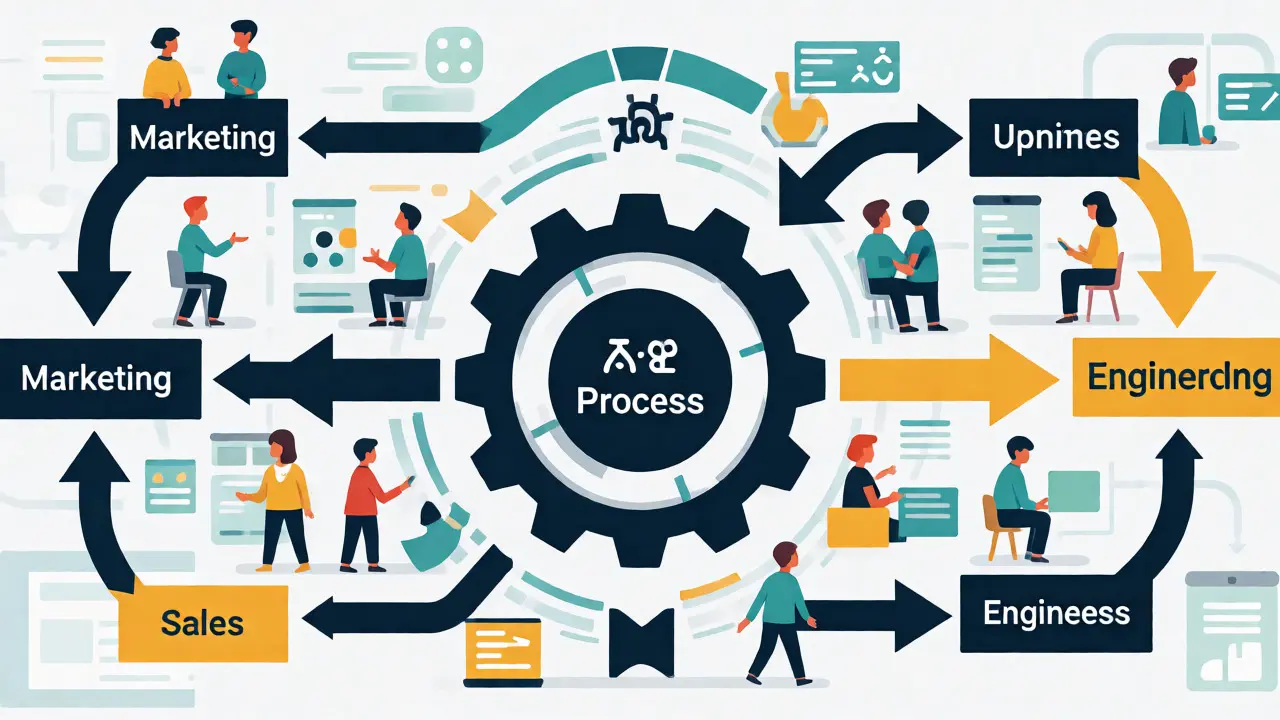
- Develop Role-Specific Materials: Generic training fails. Spend $3,000 to $10,000 creating guides tailored to marketing, sales, or engineering needs.
- Create Workflow Blueprints: Before touching the AI, map the new process. Spend $5,000 to $15,000 ensuring the AI fits the work, not the other way around.
Expect a learning curve. Technical teams need 40-80 hours of training; business users need 20-40 hours. Full staff adoption takes 3-6 months. Rush this timeline, and you’ll end up like the healthcare provider on LinkedIn who abandoned a $250,000 implementation after eight months due to staff resistance.
The Future Is Continuous Adaptation
The era of one-time change events is over. USM Systems’ Q1 2026 report shows that 82% of leading organizations now implement 'always-on' change management. Why? Because AI models update weekly. Your processes must adapt continuously.
By 2027, 70% of AI budgets will include dedicated line items for change management, up from 45% in 2025. Insight Global predicts that mature change management practices yield 4.1x higher ROI. The market for AI change management is growing at a 21.3% CAGR, projected to hit $7.8 billion by 2027.
You can’t automate empathy or organizational trust. As generative AI adds trillions to the global economy, the winners won’t be those with the best models, but those whose teams actually use them effectively. Budget for the humans, or watch your AI gather digital dust.
What percentage of an AI budget should go to change management?
Successful implementations typically allocate 25-30% of their total AI budget to change management activities. Industry averages sit lower at 15-20%, but GO-Globe’s tracking of 127 enterprise implementations shows that those allocating 25-30% see 3.2x higher ROI.
How long does it take for staff to fully adopt generative AI tools?
Organizations typically require 3-6 months for full staff adoption. Technical teams generally need 40-80 hours of training, while business users require 20-40 hours. Rushing this period often leads to increased remediation costs later.
Do startups really need dedicated change management resources?
Yes, though the structure differs. Startups (10-50 employees) face initial change management costs of $5,000-$15,000. While they may not hire a dedicated specialist, they must invest in defining workflows and training early to prevent the "founder bottleneck" where only leadership knows how to use the AI effectively.
What is the most common reason for AI project failure?
According to Gartner, 85% of AI projects fail to deliver expected business value primarily due to poor change management rather than technical shortcomings. Issues include staff resistance, lack of training, and misaligned workflows.
How does the EU AI Act impact change management costs?
The EU AI Act requires documented change management processes for high-risk AI systems. This regulatory requirement adds approximately 10-15% to compliance costs, as noted in GO-Globe’s 2026 analysis, due to the need for rigorous documentation and audit trails.