Domain-Driven Design with Vibe Coding: Mastering Bounded Contexts and Ubiquitous Language
 May, 19 2026
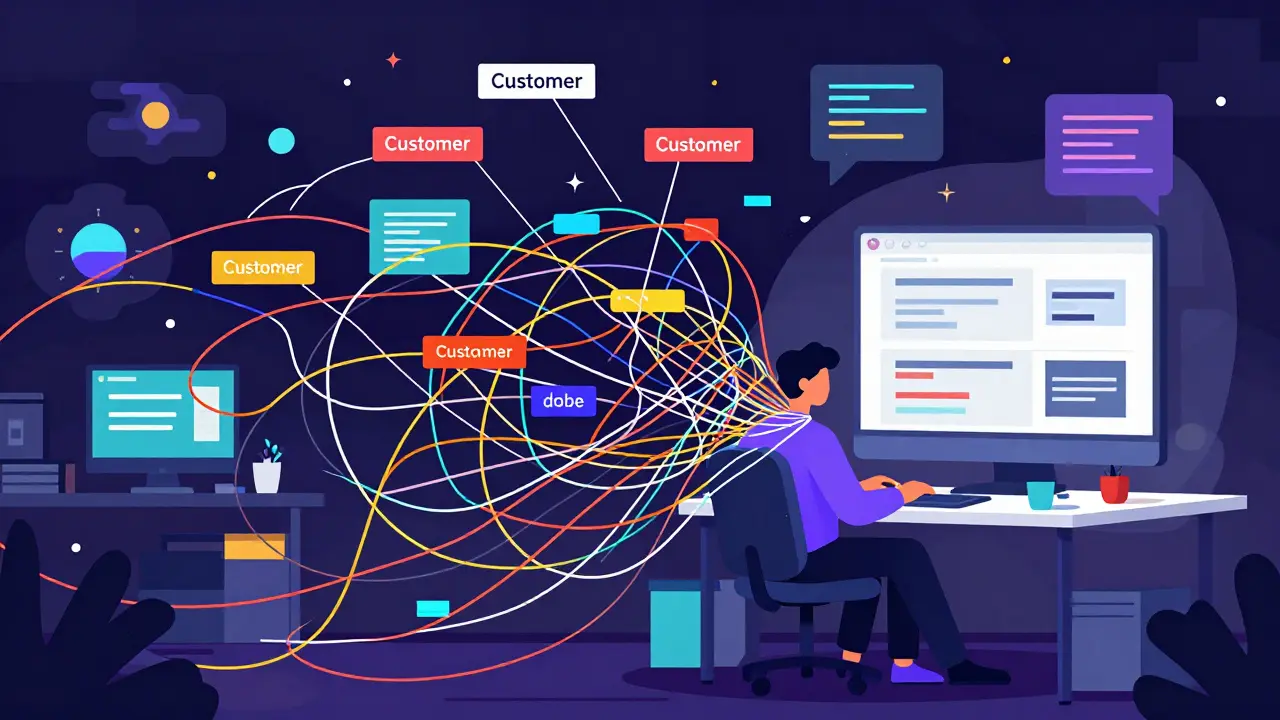
Have you ever spent three hours prompting an AI to write code, only to realize the resulting module doesn't fit anywhere in your existing architecture? You are not alone. In early 2025, Vibe Coding, defined as a collaborative development approach where developers use natural language prompts to guide AI in generating functional code, became the industry buzzword. Andrej Karpathy’s mantra to "give in to the vibes" promised a future where coding felt like magic. But by late 2025, that magic started wearing off for many teams. The problem wasn’t the AI; it was the lack of structure. Without clear boundaries, AI-generated code quickly turned into a tangled mess of inconsistent models.
This is where Domain-Driven Design (DDD) comes in. DDD isn’t just a set of patterns for database schemas; it’s a strategy for managing complexity. When you combine the strategic rigor of DDD with the speed of vibe coding, you get a powerful hybrid methodology. This approach allows you to move fast without breaking things. It shifts your focus from syntax to semantics, ensuring that every line of code generated by AI aligns with your business logic. Let’s look at how to make this work in practice.
The Creation-Maintenance Divide
Why do so many vibe coding projects fail after six months? According to an Instinctools Enterprise Survey from September 2025, 67% of early implementations failed to properly establish domain boundaries. These teams hit what UX Design researchers call the "creation-maintenance divide." Vibe coding excels at creation-generating prototypes in hours instead of weeks-but it struggles with maintenance. Without explicit rules, the AI keeps adding features without regard for architectural consistency.
Imagine building a house where every contractor uses a different definition of "door." One team installs sliding doors, another builds swinging ones, and a third leaves open archways. Eventually, you can’t walk through the house. In software, this is known as context collapse. It happens when concepts bleed across different parts of the system. For example, a developer might ask the AI to create a "Customer" model for billing and another "Customer" model for marketing. If these aren’t strictly separated, you end up with seventeen different implementations of "Customer" across your codebase, as one developer reported on Stack Overflow in November 2025. This inconsistency creates technical debt that accumulates 37% faster than in traditional development, according to a UX Design case study from August 2025.
DDD solves this by introducing Bounded Contexts, which are explicitly defined boundaries within a software system where specific domain models apply exclusively. A bounded context ensures that terms have consistent meanings within their scope but can differ outside it. By defining these boundaries before you start prompting, you give the AI a clear playground. Google Cloud’s research in June 2025 found that teams using DDD principles in vibe coding achieved 40% fewer integration errors compared to those using unstructured prompting. The trade-off? You need about 25% more upfront planning time. But that investment pays off quickly.
Establishing Your Bounded Contexts
How do you define a bounded context for an AI agent? It starts with explicit documentation. You cannot rely on the AI to infer boundaries from vague instructions. Instead, you must provide "context-rich" prompts that leave no room for ambiguity. Instinctools’ senior AI engineers identified four key responsibility areas for your initial setup:
- Explain the workflow: Describe the user journey and business process clearly.
- Clarify tool constraints: Specify which libraries or frameworks are allowed.
- State the development approach: Declare whether you are feature-driven, test-driven, or domain-driven.
- Establish boundaries: Define access levels, such as read-only access to production infrastructure or restricted access to security keys.
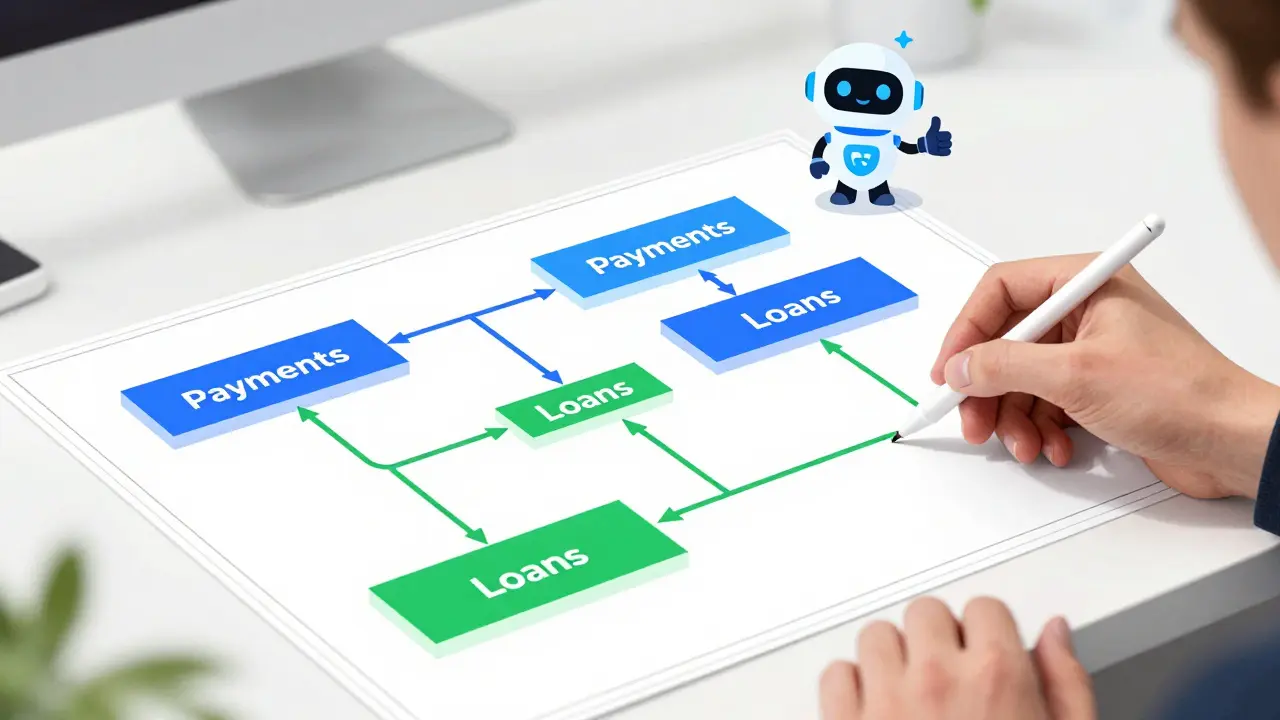
For instance, if you are building a fintech application, you might separate "Payments" and "Loans" into distinct bounded contexts. Even though both involve money, their rules differ significantly. Payments focus on transaction speed and security, while Loans focus on interest calculations and risk assessment. If you mix these in one prompt, the AI might apply loan interest logic to a payment gateway, creating critical bugs.
A successful implementation often begins with well-bounded microdomains. Data from Instinctools shows that 82% of successful projects started with single-context applications before scaling out. This gradual expansion helps teams refine their definitions and catch errors early. Remember, the outcome quality of vibe coding depends entirely on the depth of the project context you provide initially. Unguided generation leads to architecture erosion in 71% of projects lacking explicit bounded context definitions.
The Power of Ubiquitous Language
If bounded contexts are the walls of your house, Ubiquitous Language is the shared vocabulary used by developers and domain experts to ensure consistent understanding of domain concepts. Eric Evans, the creator of DDD, emphasized in a July 2025 interview that AI-assisted development makes shared understanding more critical than ever. Without it, AI will happily create inconsistent models across separate domains.
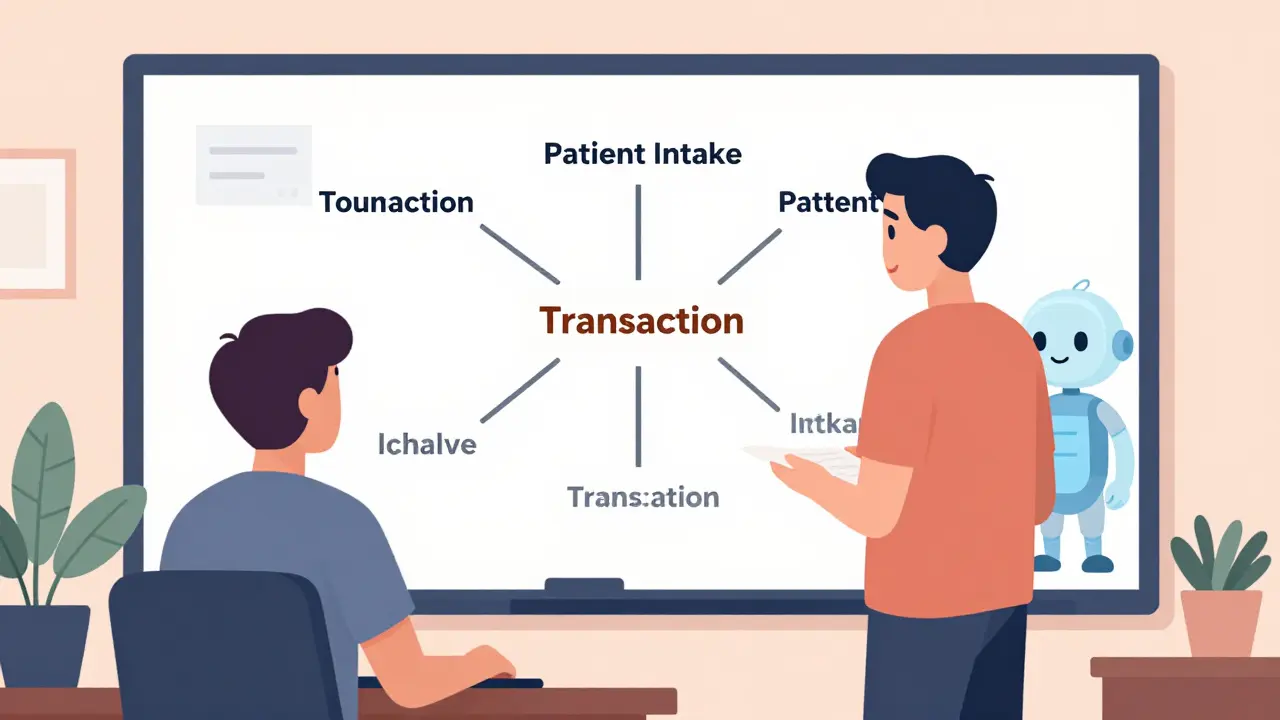
In vibe coding, ubiquitous language manifests through naming conventions, responsibilities, and design notes. You need to keep these documents updated and have the AI agent update them after each change or commit. This serves as the anchor for shared context. For example, in a healthcare startup, establishing a shared glossary of medical terms before starting reduced domain misunderstandings by 45%, according to a Dev.to post from September 2025. Non-technical clinical staff could effectively participate in the vibe coding process because everyone agreed on what "patient intake" meant.
To implement this, create a `context-definition.md` file for each bounded context. Include machine-readable boundary definitions and key term mappings. Hacker News users noted in August 2025 that standard templates requiring context name, boundary definition, and key ubiquitous language terms before any generation significantly improved results. The top-voted DDD-Vibe-Coding-Starter template on GitHub, with over 1,200 stars by December 2025, includes exactly this structure. By enforcing this discipline, you prevent the AI from inventing its own terminology, which often leads to subtle logic errors.
The Vibe Coding Loop with DDD
How does the actual coding process look? Strapi described the vibe coding loop in April 2025 as a rhythm: describe intent in natural language, let the model draft code, inspect and test, refine the prompt with targeted feedback, and repeat until the tests pass. With DDD, this loop gains a crucial step: context validation.
Before generating code, ensure your prompt references the correct bounded context and ubiquitous language terms. Google Cloud’s implementation guide specifies a three-phase approach:
- Define bounded contexts: Establish clear integration points between modules.
- Establish ubiquitous language: Create precise definitions for all domain terms.
- Generate code: Use context-specific prompts to build features within each boundary.
Teams implementing this structured workflow report significant efficiency gains. While traditional manual DDD implementation requires 6-8 weeks for domain modeling, the hybrid approach achieves 87% faster modeling-reducing time to just 2.1 days. More importantly, it reduces technical debt accumulation by 52% compared to unstructured vibe coding. However, you must remain vigilant against "context drift," the gradual erosion of boundaries through iterative generation. This affects 63% of projects lacking automated boundary enforcement, according to Instinctools data from September 2025.
To combat context drift, use automated context validation scripts. These tools check new code against your bounded context definitions and flag violations. About 41% of successful implementations use such scripts. Additionally, maintain living context documentation that updates after each commit. Teams doing this experience 58% fewer integration issues, per Google Cloud case studies from July 2025. Security is also paramount. Always avoid patterns where secrets live in source code. Instead, load secrets at runtime, as recommended by Google Cloud’s security guidelines for AI code generators.
Market Trends and Future Outlook
The market is rapidly shifting toward this hybrid approach. The global market for AI-assisted development tools reached $12.7 billion in Q3 2025, with the enterprise-grade vibe coding segment growing at 89% year-over-year. Gartner predicts that by Q3 2026, 92% of enterprise vibe coding implementations will incorporate explicit bounded context definitions, up from 58% currently. Regulatory compliance in finance and healthcare is driving this adoption, as ISO/IEC 27001:2025 updates require clear domain boundaries for audit purposes.
Tools are evolving to support this. ContextAI, launched in May 2025, gained 15,000 users in six months by focusing specifically on AI-assisted bounded context modeling. Google announced in November 2025 that AI Studio would incorporate automatic bounded context detection in its December 2025 release. Microsoft’s GitHub Copilot team plans to introduce DDD-aware prompting in Q1 2026 to enforce ubiquitous language consistency. The Domain-Driven AI Special Interest Group (DDAISIG) has already published best practices for context definition, signaling a maturing ecosystem.
Despite the optimism, caution remains. Forrester analyst Ken Yuan warned that this combination only works if teams invest in upfront domain modeling that AI cannot replace. The most significant risk remains context drift. As you scale, remember that vibe coding is a tool, not a substitute for architectural thinking. By anchoring your AI workflows in DDD principles, you ensure that speed never compromises stability.
| Approach | Modeling Time | Technical Debt (3 Months) | Integration Errors |
|---|---|---|---|
| Traditional DDD | 6-8 Weeks | Low | Very Low |
| Pure Vibe Coding | 2.3 Hours | +37% Higher | High |
| DDD + Vibe Coding | 2.1 Days | -52% Lower than Pure | -40% Lower than Pure |
What is the main benefit of combining DDD with Vibe Coding?
The main benefit is balancing speed with structural integrity. Vibe coding accelerates development, but without DDD’s bounded contexts, it leads to high technical debt and integration errors. Combining them reduces technical debt by 52% compared to pure vibe coding while maintaining rapid delivery speeds.
How do I define a Bounded Context for an AI agent?
Define it explicitly in a document like `context-definition.md`. Include the workflow explanation, tool constraints, development approach, and strict boundaries. Reference this document in every prompt to ensure the AI stays within the designated domain scope.
What is Ubiquitous Language in the context of AI coding?
It is a shared vocabulary of domain terms used consistently in prompts and code. By defining terms precisely and updating these definitions after each commit, you prevent the AI from misinterpreting concepts, reducing domain misunderstandings by up to 45%.
What is context drift and how can I prevent it?
Context drift is the gradual erosion of bounded context boundaries during iterative AI generation. Prevent it by using automated context validation scripts that check new code against your definitions and by maintaining living documentation that updates with every commit.
Is DDD with Vibe Coding suitable for beginners?
It requires some learning. Developers familiar with DDD need 8-10 hours of training, while those new to DDD need 24-30 hours. Starting with small, single-context applications is recommended to build confidence before scaling to larger systems.