How to Abstract LLM Providers: Interoperability Patterns for 2026
 Jul, 23 2026
You built a killer AI feature. It works great with OpenAI is the leading commercial provider of large language models including GPT-4 and GPT-3.5.. Then, prices spike. Or the API goes down. Or you realize another model handles your specific data better but costs half as much. Suddenly, swapping providers feels like rewriting your entire backend. This is the trap of vendor lock-in is a situation where a customer becomes dependent on a vendor for goods and services, unable to switch without significant disadvantage..
In 2026, smart teams don't just pick one model and pray. They build systems that can talk to any model. This is called LLM interoperability is the ability of different large language model systems to work together seamlessly through standardized interfaces and protocols.. It’s not just about saving money; it’s about keeping control of your technology stack. Let’s look at how you can abstract your LLM providers so you stay flexible, cost-effective, and resilient.
The Core Problem: Why Abstraction Matters Now
Back in 2023, everyone was happy to hardcode their API keys. Today, the landscape has shifted. According to Gartner is a leading research and advisory company providing strategic insights on technology trends and business strategy., the lack of standardized interoperability costs organizations an estimated $2.7 billion annually in integration overhead. That’s real money burned on making incompatible APIs play nice.
When you hardcode a provider, you tie your app to their specific quirks. One provider might return JSON strictly formatted; another might add conversational filler. One supports a 128k context window; another tops out at 8k. If you want to switch, you have to refactor every prompt, every parser, and every error handler. Abstraction solves this by creating a buffer layer between your application logic and the underlying model.
Five Proven Architectural Patterns
There isn’t one single way to abstract LLMs. Different use cases require different structures. Based on analysis from Latitude and industry practices in late 2024, here are the five patterns that actually work in production:
- Adapter Integration: Think of this as a universal power adapter. You write one interface for your app, and the adapter translates calls to whichever provider you’re using. It’s lightweight and perfect for simple text generation tasks.
- Hybrid Architecture: This combines monolithic inference services with microservices for auxiliary functions like caching or data enrichment. It achieved up to 40% cost efficiency improvements in third-party integrations according to Latitude reports.
- Pipeline Workflow: Useful when you need multiple steps (e.g., summarize, then extract entities). Each step can potentially use a different optimized model.
- Parallelization and Routing: Send requests to multiple models simultaneously and route the best response back. Great for high-reliability needs where latency is less critical than accuracy.
- Orchestrator-Worker: A central orchestrator decides which worker model to call based on task complexity, cost, or current load. This is complex but offers the highest level of optimization.
LiteLLM: The Quick Win for Developers
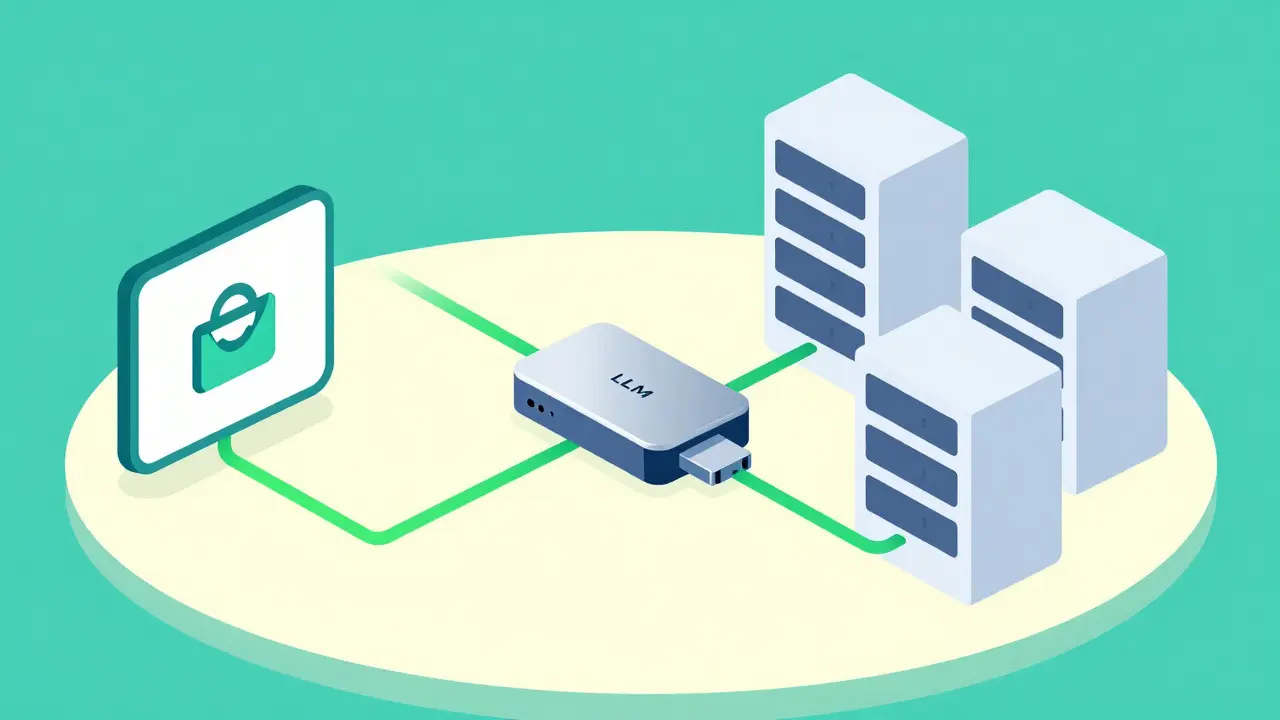
If you want to start abstracting today, LiteLLM is an open-source Python library that provides a unified API interface for accessing over 100 different large language model providers. is likely your best bet. Launched in early 2023, it acts as a thin API layer. Instead of importing OpenAI’s SDK directly, you import LiteLLM.
The beauty of LiteLLM is its simplicity. It standardizes access to over 100 providers, including Anthropic is an AI safety and research company known for developing Claude, a series of large language models focused on helpfulness, honesty, and harmlessness., Google Gemini, and local open-source models. According to Newtuple Technologies’ March 2024 case study, this reduces integration complexity by approximately 70%. You change one line of code to switch providers if they support the OpenAI SDK format.
However, be careful. LiteLLM handles the *transport* layer well-sending tokens and getting responses. It doesn’t automatically fix behavioral differences. As we’ll see, Model A and Model B might interpret the same prompt differently, even if the API call looks identical.
The Model Context Protocol (MCP): Standardizing Connections
API compatibility is only half the battle. Models also need to interact with external tools and data sources. This is where Anthropic’s Model Context Protocol (MCP) is an open standard protocol introduced by Anthropic in Q2 2024 that defines how AI models connect to external data sources and tools. comes into play. Released in Q2 2024, MCP creates a standardized framework for how AI applications connect with databases, file systems, and other tools.
Before MCP, if you wanted to give an LLM access to your SQL database, you’d write custom code for each model’s function-calling syntax. With MCP, you define the resource once. Any MCP-compatible client can access it. This decouples your tooling from your model choice. Mozilla.ai has been pushing this further with their 'any-*' fabric, including tools like 'any-llm' and 'any-agent', aiming to simplify deployment across diverse environments.
Comparing Approaches: LiteLLM vs. LangChain vs. Custom Adapters
| Feature | LiteLLM | LangChain | Custom Adapter |
|---|---|---|---|
| Implementation Time | 8-12 hours | 40+ hours | Varies widely |
| Provider Support | 100+ | Extensive via integrations | Only those you code |
| Complexity | Low | High | Medium to High |
| Behavioral Control | Minimal | Moderate (via chains) | Full control |
| Best For | Quick switching, cost optimization | Complex agentic workflows | Niche, highly specific needs |
LangChain offers broader functionality, allowing you to build complex chains and agents. But that comes with a steep learning curve. Users on G2 praise its capabilities but criticize the complexity. LiteLLM is lighter. It’s a translator, not a framework. Choose based on whether you need to swap models quickly (LiteLLM) or build intricate multi-step reasoning processes (LangChain).
The Hidden Trap: Behavioral Inconsistency
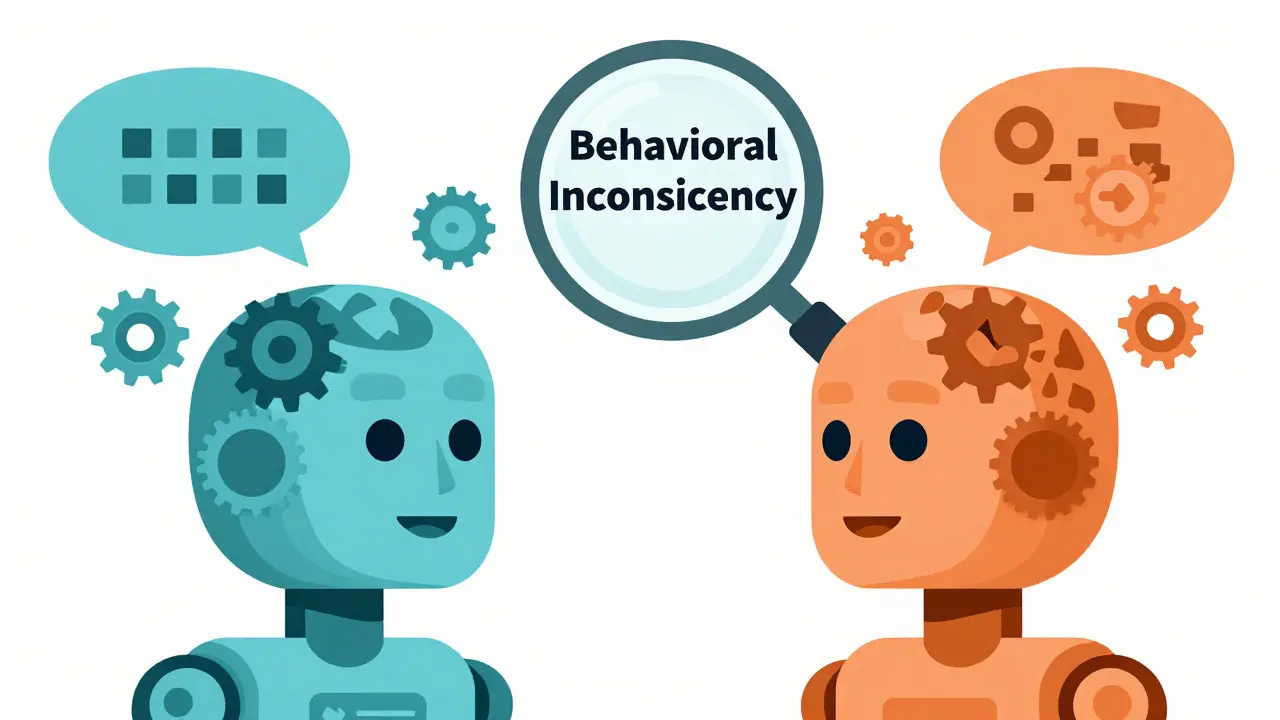
Here’s what most guides miss: Just because two models accept the same API request doesn’t mean they behave the same. An arXiv study from October 2025 evaluated 13 open-source LLMs and found massive variance. Qwen2.5-Coder is a specialized large language model variant optimized for coding tasks, part of the Qwen family developed by Alibaba Cloud. (32b parameter version) scored a pass@1 ≥ 0.99 on certain datasets, while others scored below 0.2. Worse, all models degraded significantly on dataset version v4.
Newtuple Technologies observed this in practice. They ran identical agent code on Model A and Model B. Model A improvised data joining methods to extract figures from tables successfully. Model B, adhering strictly to instructions, returned incomplete results. Swapping providers without testing for behavioral consistency introduces reliability risks. Your abstraction layer must include robust evaluation pipelines, not just API routing.
Implementation Checklist for 2026
Ready to abstract your LLM dependencies? Follow these steps to avoid common pitfalls:
- Audit Your Current Usage: Identify which features rely heavily on specific model capabilities (e.g., long context, precise JSON output).
- Choose Your Abstraction Layer: Start with LiteLLM for simple replacements. Consider building a custom adapter if you have unique legacy system requirements.
- Standardize Tool Access: Implement MCP for any external data connections. This ensures your tools remain accessible regardless of the model.
- Define Evaluation Metrics: Don’t just check if the API returns 200 OK. Measure exact match rates, token usage, and task completion accuracy. Use frameworks like Mozilla.ai’s emerging evaluators.
- Test Across Versions: As the arXiv study showed, performance can vary wildly with data complexity. Test with production-like, messy data, not just clean benchmarks.
- Plan for Fallbacks: Configure your router to failover to a secondary provider if the primary hits rate limits or errors.
Future Outlook: Standards Will Become Mandatory
We are moving toward a future where interoperability isn’t optional. Gartner forecasts that 75% of new enterprise LLM implementations will include multi-provider strategies by 2027. The EU AI Act’s February 2025 guidelines already require documentation of model switching procedures for high-risk applications.
Expect more standards like MCP to emerge. Mozilla.ai plans to expand their ecosystem with 'any-evaluator' tools to measure performance consistently across providers. The goal is clear: let providers compete on speed, accuracy, and price-not on incompatibility. By abstracting your LLM providers now, you position your organization to benefit from this competition rather than being held hostage by it.
What is the best way to switch between LLM providers?
The most efficient method is using an abstraction layer like LiteLLM. It allows you to change the provider by modifying a single configuration variable, provided the models support a common API format like OpenAI's. However, you must also test for behavioral differences, as models may interpret prompts differently.
Does LiteLLM handle all LLM providers?
LiteLLM supports over 100 providers, including major ones like OpenAI, Anthropic, Google, and many open-source models hosted locally or via cloud services. It standardizes the input/output format, but it does not magically fix fundamental differences in model capability or context window size.
What is the Model Context Protocol (MCP)?
MCP is an open standard introduced by Anthropic in 2024. It defines how AI models connect to external data sources and tools. Instead of writing custom integrations for each model, developers build MCP servers that any compatible client can use, ensuring consistent tool access across different LLMs.
Why do I need to worry about behavioral consistency?
Different models have different training data and instruction-following tendencies. A model that works perfectly for data extraction might fail silently or hallucinate when swapped in for another. Abstraction layers handle the API call, but you still need to evaluate the output quality for each provider to ensure reliability.
Is LangChain better than LiteLLM for abstraction?
It depends on your needs. LiteLLM is simpler and faster to implement for basic model swapping. LangChain is more powerful for building complex, multi-step agentic workflows but has a steeper learning curve and higher implementation time. For pure provider abstraction, LiteLLM is often sufficient.
How much can LLM interoperability save me?
Savings vary, but some developers report reducing API costs by 35% during peak usage by routing cheaper queries to smaller or open-source models. Additionally, avoiding vendor lock-in prevents potential price shock scenarios and reduces integration overhead, which Gartner estimates saves billions industry-wide.