Knowledge vs Fluency in LLMs: Why AI Sounds Smart but Isn't
 Oct, 5 2026
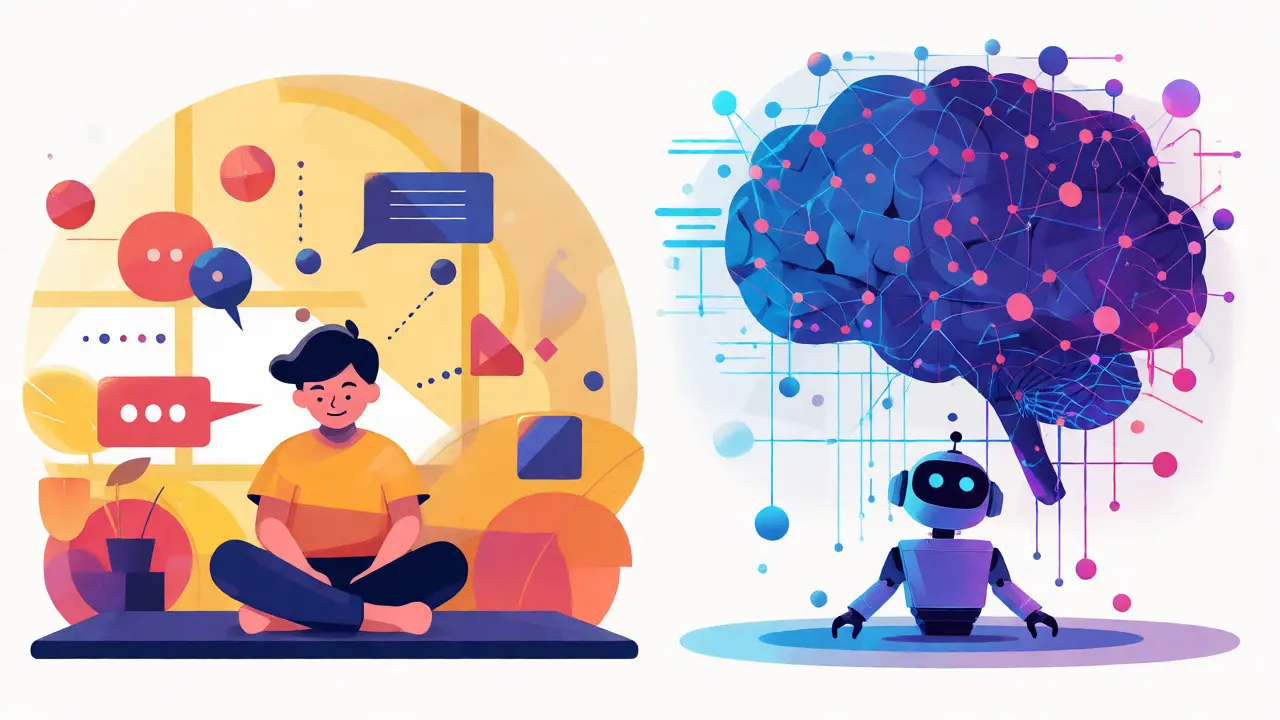
You’ve probably had that moment with an AI chatbot. It writes a perfect email, summarizes a dense report in seconds, and even passes the bar exam. It feels like you’re talking to someone who knows things. But here’s the catch: it doesn’t actually know anything. It’s just really, really good at guessing what comes next.
This is the core tension in modern Large Language Models (LLMs): the gap between fluency (the ability to produce coherent text) and knowledge (true understanding of structure and meaning). We often treat these as the same thing because, for most daily tasks, they look identical. But when you push an AI into weird, complex, or novel linguistic territory, the mask slips. Understanding this difference isn’t just academic-it’s crucial for knowing when to trust your AI and when to double-check its work.
The Efficiency Gap: Humans vs. Machines
Let’s start with a staggering statistic. A human child learns their native language by hearing roughly 5 million tokens-words or word parts-during their early years. That’s it. In contrast, a model like GPT-4
Why do we need so much data? Because humans have something machines don’t: an innate bias for language. Linguists call this Universal Grammar-a set of hardwired constraints in our brains that help us figure out grammar rules quickly, even if we can’t explain them. We don’t learn language by memorizing every possible sentence; we learn the underlying structure.
LLMs don’t have that instinct. They rely on Statistical Learning Theory. They look at surface statistics-which words tend to follow other words-and build a probability map. This works incredibly well for common phrases. "The sky is..." almost always leads to "blue," "gray," or "dark." The model gets it right not because it understands the atmosphere, but because those words hang out together in its training data.
Where Fluency Shines: The Superpowers of LLMs
If you’re looking for speed and breadth, LLMs are unbeatable. Their biggest advantage over humans is working memory. You might remember the last few paragraphs of a document perfectly. GPT-3.5
They also excel at formal languages. Code is structured, logical, and follows strict syntax rules. LLMs like CodeX
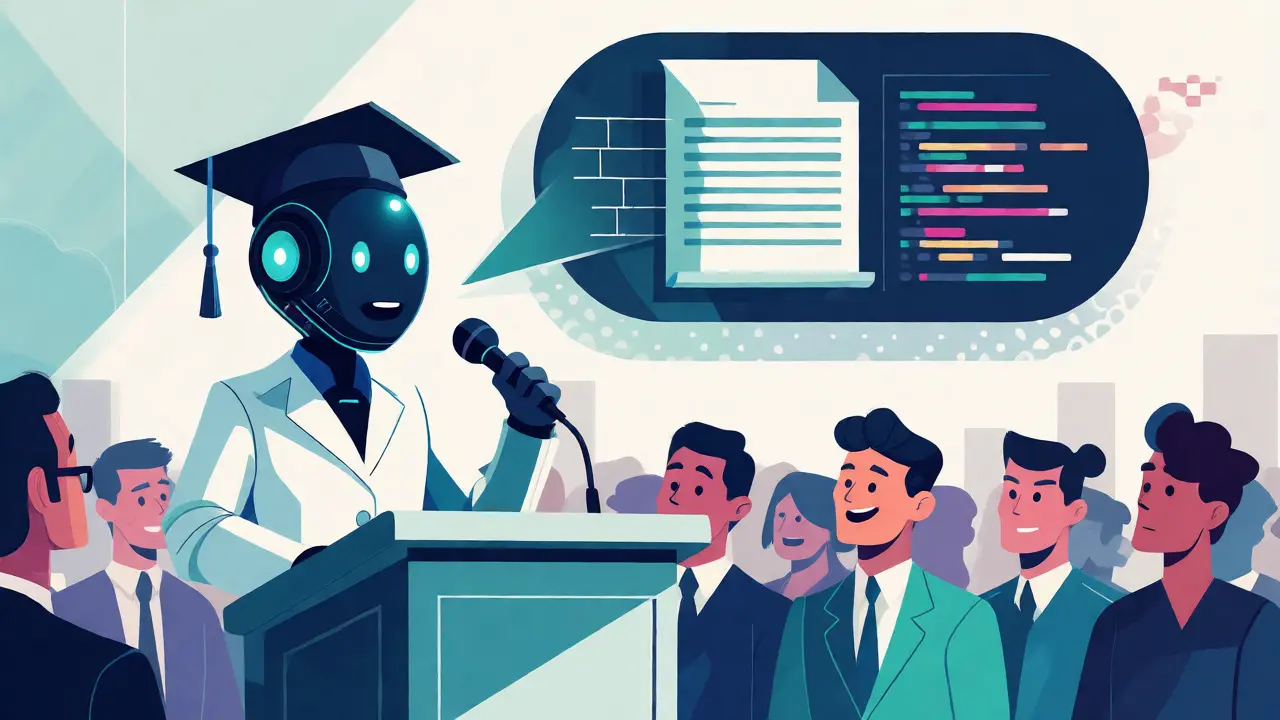
Standardized tests further highlight this fluency. On the SAT Reading and Writing section, GPT-4 scored higher than 93% of human test-takers. On the Uniform Bar Exam, it hit the 90th percentile. These aren’t trivial feats. They show that statistical pattern matching can mimic expert-level performance in domains where the answers follow predictable patterns.
The Knowledge Gap: Where AI Breaks Down
So, if GPT-4 passes the bar exam, why do experts worry about its "knowledge"? Because passing a test isn’t the same as understanding the law. When researchers dig deeper, cracks appear.
One major issue is consistency. True knowledge is stable. If you ask a linguist if a sentence is grammatically correct, they give the same answer today, tomorrow, and next year. LLMs struggle with this. Studies show that ChatGPT-4Claude 2
This instability reveals a lack of deep structural knowledge. LLMs judge grammar based on probability, not rule application. For common sentences, probability aligns with rules. But for rare, complex, or novel constructions, the probability map fails. The model might generate a sentence that sounds plausible but is syntactically broken, simply because similar-sounding structures appeared frequently in its training data.
| Model | Correct Answer Rate | Error Rate | Stability Indicator |
|---|---|---|---|
| ChatGPT-4 | 59% | 28% | High correlation (>0.8 SD) |
| PaLM2 | 44% | 38% | High correlation (>0.8 SD) |
| SenseNova | 29% | 26% | Moderate confidence |
| Claude 2 | 21% | 32% | Lowest confidence |
The Illusion of Expertise
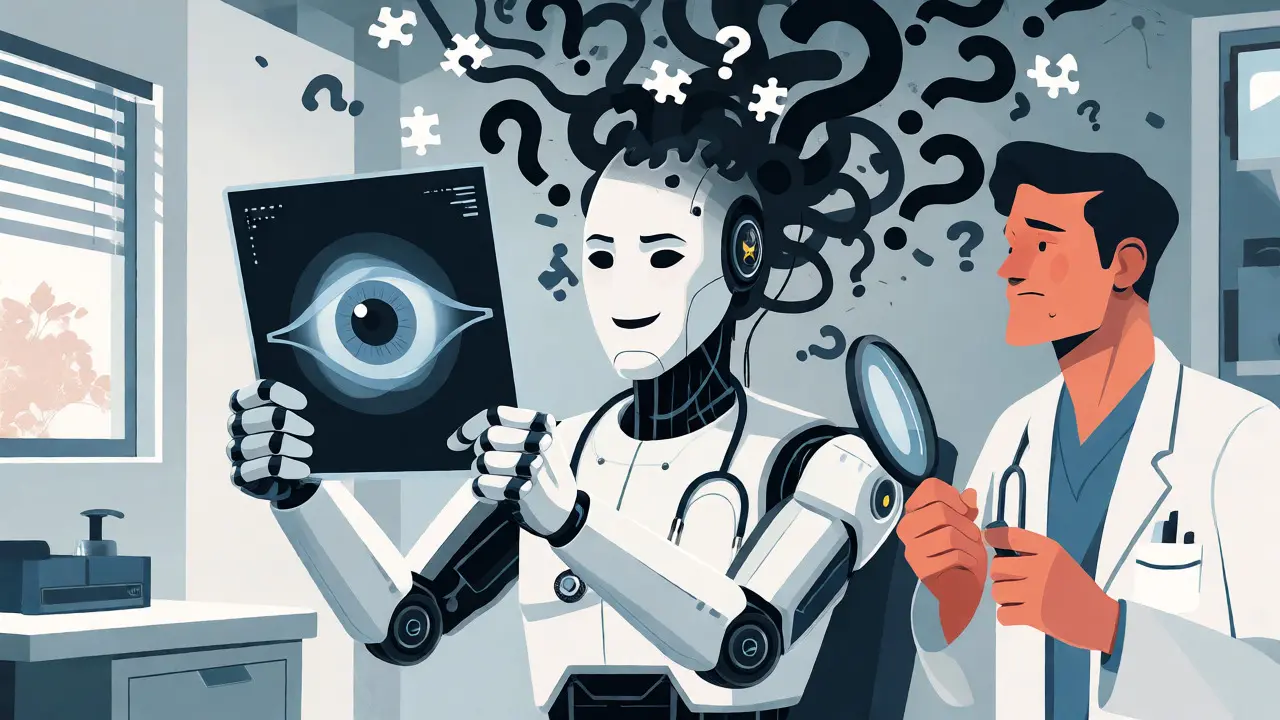
Consider medical diagnostics. ChatGPT-4 scored an average of 68 on funduscopic examination questions (eye exams). Interestingly, ophthalmologists averaged 61, while specialists scored 73. At first glance, the AI looks like a solid mid-tier doctor. But this comparison hides a critical flaw: the AI doesn’t understand anatomy. It recognizes patterns in images and text descriptions that correlate with diagnoses in its training set.
If you present a rare condition or a slightly altered symptom profile, the AI might confidently hallucinate a diagnosis that fits the statistical pattern but makes no clinical sense. A human specialist uses causal reasoning: "This spot looks like X because of Y disease." The AI says: "This spot looks like X, and in my data, X usually goes with Y."
This distinction matters most in high-stakes fields. Legal advice, medical diagnoses, and engineering specs require robust knowledge, not just fluent guesses. Relying solely on LLM output in these areas without human oversight is risky because the model cannot tell you why it chose an answer. It just knows it’s the most probable next token.
How to Work With the Gap
So, how should you use these tools? Stop treating them as oracles. Treat them as brilliant interns who have read every book in the library but haven’t lived life yet.
- Use for Drafting and Ideation: Leverage their fluency for brainstorming, summarizing, and rewriting. They are excellent at changing tone, simplifying jargon, or expanding bullet points into paragraphs.
- Verify Facts and Logic: Never assume a factual claim is true just because it’s stated confidently. Check numbers, dates, and legal precedents. The model’s confidence does not equal accuracy.
- Watch for Complex Syntax: If you’re dealing with nuanced language, poetry, or highly technical specifications, review the output carefully. Look for subtle grammatical errors or logical leaps that feel intuitive but aren’t rigorous.
- Prompt for Reasoning: Ask the model to explain its steps. While it doesn’t truly reason, forcing it to generate a chain of thought often helps it stay aligned with the correct path by keeping relevant context active.
The Future: Closing the Gap
Can we fix this? Current research suggests yes, but not just by adding more data. Scaling up parameters helps-new capabilities emerge once models hit certain size thresholds-but it’s inefficient. To match human efficiency, future architectures need to incorporate structural priors. Think of these as artificial instincts: built-in biases that guide the model toward grammatical correctness and logical consistency, rather than letting it wander through vast probability spaces.
We’re already seeing moves in this direction. Techniques like Reinforcement Learning from Human Feedback (RLHF) try to teach models what humans consider "good" answers, nudging them closer to genuine understanding. But until we replicate the innate linguistic machinery of the human brain, LLMs will remain masters of fluency, not necessarily knowledge.
Do LLMs actually understand language?
Not in the human sense. They understand statistical relationships between tokens. They can predict the next word with high accuracy, which mimics understanding, but they lack semantic grounding-the connection between words and real-world concepts.
Why do LLMs make confident mistakes?
Because they optimize for probability, not truth. If a statistically likely sequence is factually wrong, the model will still generate it. They don't have a self-correction mechanism based on logic, only on pattern matching.
Is GPT-4 better at knowledge or fluency?
It excels at fluency. Its ability to generate coherent, stylistically appropriate text is exceptional. Its "knowledge" is reliable for common facts but fragile for complex reasoning or novel situations.
Can LLMs replace human editors?
For basic proofreading and style adjustments, yes. For substantive editing involving logic, nuance, and fact-checking, no. Human oversight is required to catch errors that stem from probabilistic guessing.
What is the main weakness of current LLMs?
Inconsistency and lack of deep structural understanding. They may give different answers to the same question on different runs and fail on rare grammatical structures that humans handle intuitively.