LLM Recruiting Workflows: Automating Resume Parsing and Screening
 Nov, 16 2026
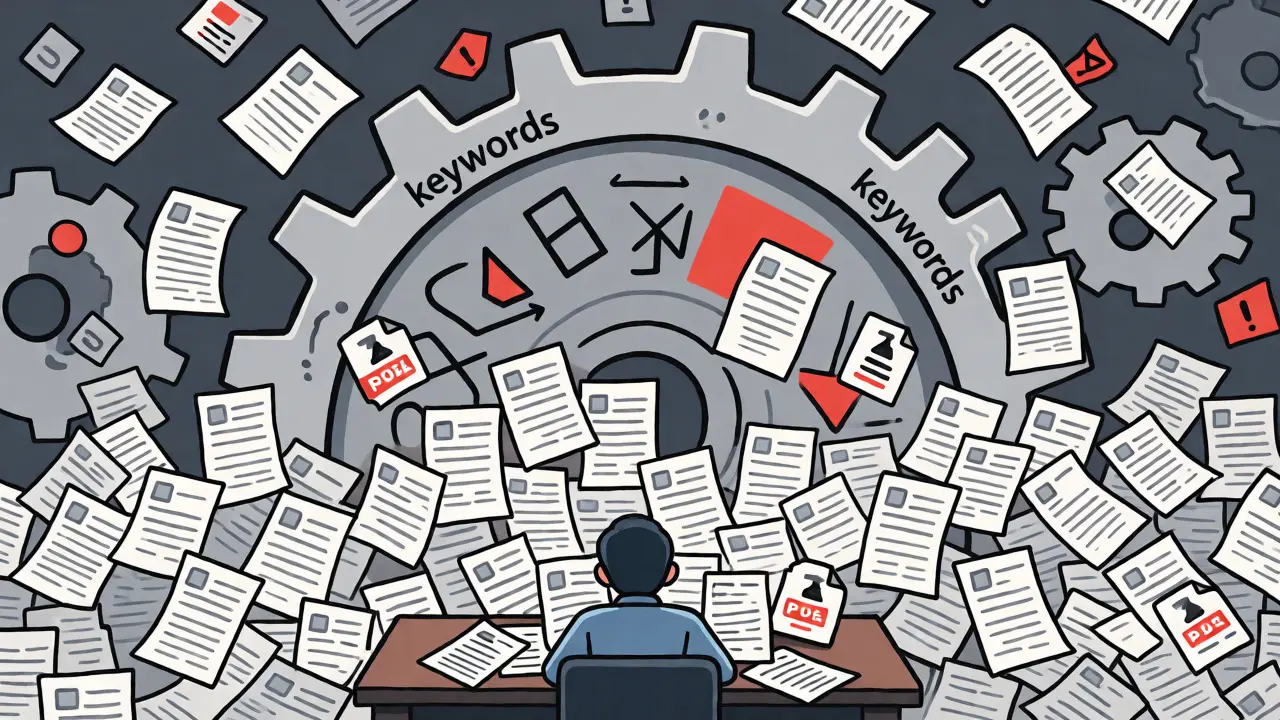
Imagine you are a recruiter at a mid-sized tech firm. It is Monday morning, and your inbox holds 400 new applications for a single Senior Developer role. Traditionally, this meant spending the entire week just opening PDFs, squinting at inconsistent fonts, and manually typing names into your Applicant Tracking System (ATS). You were essentially doing data entry, not talent acquisition. Now, imagine that same pile of resumes arrives, but within minutes, every single one has been converted into clean, structured JSON data. Skills are tagged, experience gaps are flagged, and candidates are ranked by relevance before you even drink your coffee. This isn't science fiction; it is the current reality of LLM-powered recruiting workflows. By leveraging Large Language Models to handle resume parsing and candidate screening, organizations are shifting from manual administrative burdens to strategic talent management.
This shift represents more than just convenience. It addresses a fundamental bottleneck in hiring: the inability to process high volumes of unstructured data without proportional increases in headcount. Traditional ATS parsers relied on rigid rules and keyword matching, often failing when faced with creative resume designs or subtle contextual cues. LLMs change the game by understanding context. They read a resume like a human would, recognizing that "managed a team of five" implies leadership skills, even if the word "leadership" never appears. This article breaks down how these systems work, why they outperform legacy tools, and how you can implement them to streamline your hiring pipeline.
The Core Problem with Traditional Resume Parsing
Before we look at the solution, let’s be honest about the problem. For decades, resume parsing was a nightmare of regular expressions and layout assumptions. If a candidate used a two-column format instead of a single column, many older parsers would scramble the data, placing work history next to education incorrectly. Worse, keyword-based screening was blunt. A system looking for "Python" might miss a candidate who listed "Django" and "Flask"-clear indicators of Python proficiency-but failed because the specific keyword wasn't present. This led to false negatives, where qualified candidates were rejected simply because their resume didn't match a rigid template.
Human screening had its own flaws. Recruiters suffer from unconscious bias. Studies have shown that visually polished resumes are often rated higher, regardless of content quality. A candidate with a fancy graphic design background might get an edge over someone with superior technical skills but a plain Word document. Furthermore, the sheer volume of applications means recruiters often spend less than ten seconds per resume. In that fleeting moment, critical details are missed, and subjective preferences override objective qualifications. The goal of modern recruiting automation is to eliminate this noise, providing a standardized, unbiased view of every applicant.
How LLMs Transform Unstructured Text into Structured Data
Resume parsing is the process of extracting structured information from unstructured resume text into a predefined format, such as JSON. When you integrate an LLM into this workflow, you aren't just copying text; you are performing semantic analysis. The architecture typically involves three distinct stages: file ingestion, intelligent extraction, and structured output generation.
First, the system must handle the chaos of input formats. Candidates submit resumes as PDFs, Word documents, images, or even scanned photos. Robust LLM pipelines use MIME type detection to identify the file format. For standard PDFs and DOCX files, dedicated libraries extract raw text while preserving metadata like LinkedIn URLs. For images or scans, the system employs Optical Character Recognition (OCR) combined with computer vision tools like OpenCV to convert pixels into text. This preprocessing step is crucial because LLMs cannot process images directly without this conversion layer.
Once the text is extracted, it is sent to the LLM endpoint-such as Google Vertex AI or OpenAI’s API-with a carefully engineered prompt. This prompt instructs the model to act as a strict data extractor. It doesn't ask for a summary; it demands a specific JSON schema. The model identifies entities like full name, contact info, work experience dates, education credentials, and skills. Crucially, advanced implementations distinguish between explicit skills (listed directly) and implicit skills (inferred from job descriptions). For example, if a resume lists "maintained CI/CD pipelines," the LLM infers knowledge of DevOps practices, even if the term "DevOps" isn't explicitly written.
The Role of Fine-Tuning and LoRA
While pre-trained models are powerful, they aren't always perfect for niche industries. This is where Low-Rank Adaptation (LoRA) comes in. Instead of retraining the entire massive neural network, which is computationally expensive, LoRA updates only a small subset of parameters. This allows companies to fine-tune the model on their specific internal job titles and skill taxonomies. For instance, if your company calls all engineers "Product Builders," the fine-tuned LLM will recognize this title as equivalent to "Software Engineer," normalizing diverse industry jargon into a consistent internal taxonomy.

Why Contextual Understanding Beats Keyword Matching
The primary advantage of using LLMs for candidate screening is contextual awareness. Legacy systems operate on boolean logic: Does the resume contain "Java"? Yes or No. LLMs operate on semantic similarity. They understand that "Java Spring Boot developer" is highly relevant to a "Backend Java Engineer" role, even if the exact phrase doesn't match. This reduces false positives (candidates who list keywords but lack depth) and false negatives (qualified candidates who use different terminology).
Consider date range detection. Humans often make errors here, missing employment gaps or overlapping dates. An LLM can systematically analyze every date string, flagging invalid formats or suspicious overlaps automatically. It can also normalize job titles. A "Chief Code Wizard" and a "Senior Software Architect" might hold similar responsibilities. The LLM maps these disparate titles to a standardized level in your company’s hierarchy, allowing for accurate comparison across candidates from different corporate cultures.
| Feature | Traditional Rule-Based ATS | LLM-Powered Parsing |
|---|---|---|
| Data Extraction Method | Regular Expressions & Layout Rules | Semantic Analysis & Prompt Engineering |
| Format Flexibility | Low (breaks on non-standard layouts) | High (handles diverse designs and free-text) |
| Skill Identification | Exact Keyword Match | Explicit & Implicit Skill Inference |
| Bias Potential | High (favors visual polish) | Low (standardized tabular output) |
| Maintenance Effort | High (constant rule updates) | Medium (prompt refinement & fine-tuning) |
Implementing LLM Workflows in Enterprise Systems
You don’t need to build a custom AI platform from scratch to benefit from this technology. Many enterprises integrate LLM capabilities directly into existing stacks like Salesforce or Workday. One effective approach uses Lightning Web Components (LWC) for the user interface and client-side JavaScript for initial PDF text extraction. This hybrid method ensures performance remains high because heavy lifting happens in the browser, while the complex semantic analysis is offloaded to the LLM API.
For cloud-native organizations, a multi-stage pipeline is common. Files enter a queue, get routed to appropriate parsers (PDF, OCR, etc.), and then hit the LLM. The output is stored in a scalable database like BigQuery or Snowflake. This structure allows for powerful downstream analytics. Once resumes are parsed into structured data, you can run SQL queries to find all candidates with "AWS" certification and "5+ years" of experience instantly. This transforms your candidate pool from a static folder of PDFs into a dynamic, queryable database.
Handling exceptions is critical. Not every resume parses perfectly. Corrupted files, unsupported languages, or bizarre formatting can cause failures. A robust system routes these outliers to a fallback queue for manual review, triggering alerts so recruiters know exactly which files need human eyes. This ensures that automation handles the bulk, while humans handle the edge cases, optimizing time allocation.
Downstream Benefits: From Screening to Strategic Hiring
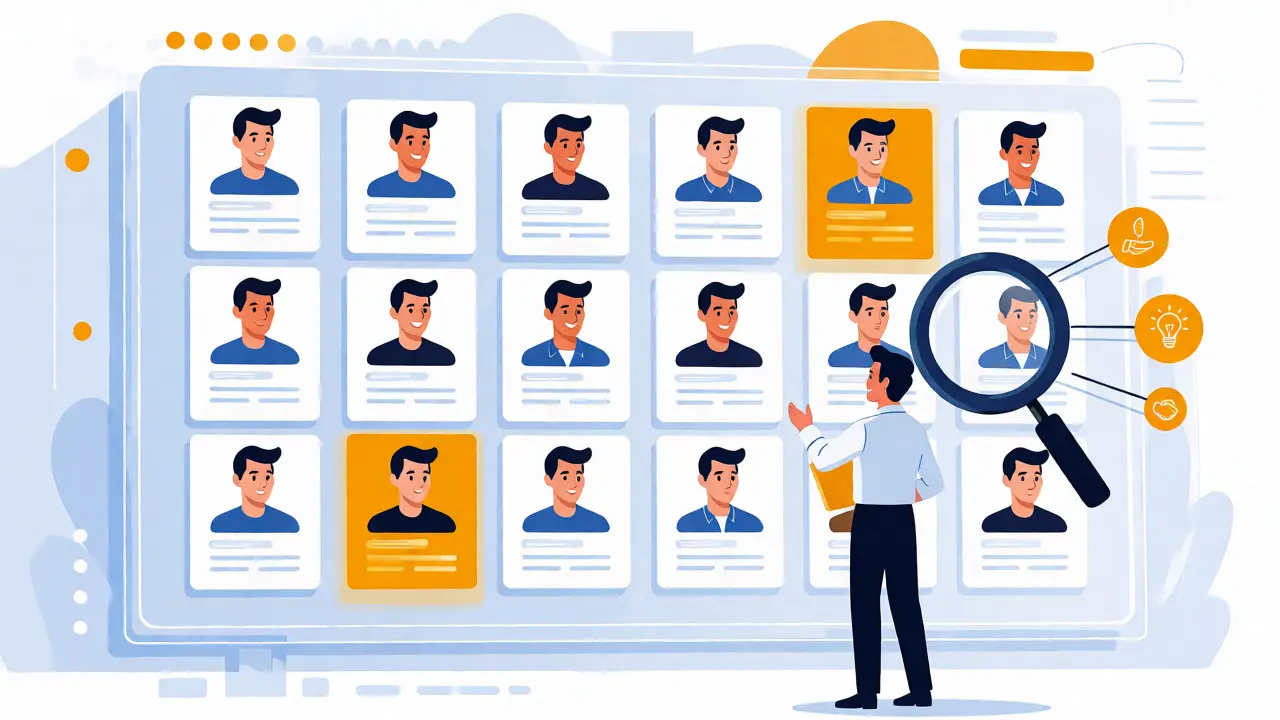
The value of LLM parsing extends far beyond data entry. Once you have structured candidate data, you unlock advanced screening capabilities. Job description matching becomes precise. Instead of guessing fit, the system calculates a relevance score by comparing the candidate’s normalized skills against the job requirements. This allows recruiters to prioritize outreach to the top 10% of applicants rather than sifting through the bottom 90%.
Talent mapping is another powerful application. By tagging candidates based on parsed data, you create reusable pools. A candidate who wasn’t right for a Senior role today might be perfect for a Team Lead position in six months. Because their data is structured, they remain searchable and categorized in your CRM, preventing valuable leads from being lost in the digital ether. Additionally, this standardization supports Diversity, Equity, and Inclusion (DEI) initiatives. By removing visual biases and focusing on substantive skills, organizations can ensure that screening decisions are based on merit, not presentation.
Challenges and Future Trajectory
Despite the benefits, challenges remain. Multilingual support requires sophisticated language detection and routing to ensure consistent parsing quality across different languages. API dependencies mean that changes in pricing or service availability from providers like OpenAI can impact operations. Furthermore, prompt engineering is an art form; poor prompts lead to hallucinations or incomplete data extraction. Continuous validation against ground-truth data is necessary to maintain accuracy.
Looking ahead, LLMs are becoming foundational components of talent acquisition infrastructure. We are moving toward comprehensive workflow orchestration, where parsing is just the first step. Future systems will integrate interview question generation, offer letter drafting, and candidate communication management into a seamless loop. As models become more efficient and cost-effective, the barrier to entry lowers, making this technology accessible not just to giants like Amazon, but to any organization serious about scaling their hiring efforts intelligently.
Can LLMs handle resumes with unusual or creative designs?
Yes, this is one of the key strengths of LLMs. Unlike traditional parsers that rely on fixed layout templates, LLMs analyze the semantic meaning of the text. They can extract relevant information from creative designs, two-column layouts, or even free-text submissions, as long as the text itself is legible after OCR processing.
How do LLMs reduce bias in candidate screening?
LLMs reduce bias by converting all resumes into a standardized, structured format (like JSON) before human review. This removes visual cues such as font choice, color schemes, and layout aesthetics, which can trigger unconscious bias. Recruiters then evaluate candidates based on consistent, substantive data fields like skills, experience duration, and education, rather than presentation style.
What is the difference between explicit and implicit skill detection?
Explicit skills are those directly mentioned in the resume, such as "Python" or "Project Management." Implicit skills are inferred by the LLM from context. For example, if a resume describes "managing cross-functional teams in Agile environments," the LLM may infer "Agile Methodology" and "Team Leadership" as implicit skills, even if those exact terms weren't listed in a skills section.
Do I need to replace my entire ATS to use LLM parsing?
No, you typically do not need to replace your ATS. Most solutions integrate via APIs. The LLM processes the resume externally, extracts structured data, and pushes it back into your existing ATS or CRM via custom objects or fields. This allows you to enhance your current system without a costly and disruptive full migration.
How does LoRA fine-tuning improve resume parsing?
Low-Rank Adaptation (LoRA) allows you to customize a pre-trained LLM for your specific needs without retraining the whole model. By updating only a small fraction of parameters, you can teach the model to recognize your company-specific job titles, internal skill taxonomies, or industry jargon, resulting in more accurate and relevant data extraction.
Patrick Sarandi
November 18, 2026 AT 00:02Finally someone gets it! We've been drowning in PDFs for years. The implicit skill detection is the real game changer here. If I can stop manually tagging "leadership" from every single resume that mentions managing a team, my life changes. This tech feels like it's actually solving the right problem instead of just adding more dashboards to ignore.
Adam Fenech
November 19, 2026 AT 10:17I must respectfully dissent from the prevailing enthusiasm surrounding this technological paradigm shift. While the theoretical underpinnings of Large Language Models are indeed impressive one cannot overlook the inherent fragility introduced by API dependencies and prompt engineering volatility. It seems rather presumptuous to assume that semantic analysis will universally outperform rigid rule-based systems without acknowledging the catastrophic potential for hallucinations in high-stakes hiring scenarios where precision is paramount not merely convenient.