LLMs in Finance: Practical Risk and Compliance Use Cases for 2026
 May, 5 2026
Regulatory exams don't sleep, and neither do the risks that keep financial executives up at night. In 2026, the pressure to maintain strict compliance while scaling operations has never been higher. Traditional rule-based systems are struggling to keep pace with the volume of unstructured data-emails, chat logs, legal contracts, and social media sentiment-that modern financial institutions must monitor daily. This is where Large Language Models (LLMs) are AI systems capable of understanding, interpreting, and generating human-like text based on vast amounts of training data are stepping in. They aren't just a buzzword anymore; they are becoming critical infrastructure for risk and compliance departments.
The global LLM market is projected to reach $130.65 billion by 2034, growing at a compound annual growth rate (CAGR) of 36.8%. The Banking, Financial Services, and Insurance (BFSI) sector is a major driver of this growth. But why? Because banks and insurers need to process information faster and more accurately than humans can, without compromising on security or ethical standards. Let's look at how these models are actually being used to manage risk and ensure compliance right now.
Fraud Detection Beyond Rules
Traditional fraud detection relies heavily on structured data: transaction amounts, timestamps, and geographic locations. If a transaction fits a predefined "suspicious" pattern, it gets flagged. The problem? Fraudsters are creative. They adapt quickly, using methods that don't trigger simple rules but still indicate malicious intent.
LLM-driven fraud detection is The application of large language models to analyze both structured and unstructured data to identify patterns indicative of fraudulent activity changes the game by processing unstructured data alongside traditional metrics. Imagine an LLM analyzing customer support call transcripts, email correspondence, and social media posts associated with a user account. It might detect subtle shifts in tone, urgency, or context that suggest account takeover or synthetic identity fraud long before a financial loss occurs.
- Contextual Analysis: LLMs understand nuance. They can read between the lines of a customer service interaction to spot inconsistencies in a story.
- Real-time Monitoring: These systems can scan thousands of interactions per second, flagging anomalies that human analysts would miss.
- Pattern Recognition: By connecting disparate data points-like a change in spending habits combined with new device login info and unusual communication patterns-LLMs create a holistic risk profile.
This doesn't replace human investigators; it empowers them. Instead of sifting through thousands of false positives, compliance teams receive prioritized alerts with clear explanations of *why* a specific case was flagged.
Automating Regulatory Compliance Research
Compliance officers spend a significant portion of their time reading, interpreting, and tracking changes in regulatory guidelines. From GDPR and CCPA to Basel III and local banking regulations, the landscape is complex and constantly shifting. Missing a minor update can lead to massive fines or reputational damage.
Regulatory tech (RegTech) powered by LLMs is Software solutions that use artificial intelligence to help financial institutions manage regulatory compliance more efficiently simplifies this burden. LLMs act as intelligent search engines for your entire regulatory library. You can ask questions like, "What are the current reporting requirements for cross-border transactions under the EU's MiCA regulation?" and get a precise, cited answer instantly.
Here’s how it works in practice:
- Ingestion: The system ingests new regulatory documents, legal updates, and internal policy manuals.
- Indexing: It creates a searchable knowledge base, linking related clauses across different jurisdictions.
- Querying: Employees query the system in natural language. The LLM retrieves relevant excerpts and summarizes the implications for the institution's specific operations.
This reduces the lag time between a regulation being published and your team understanding its impact. It also ensures consistency in interpretation across different departments.
Document Processing and Due Diligence
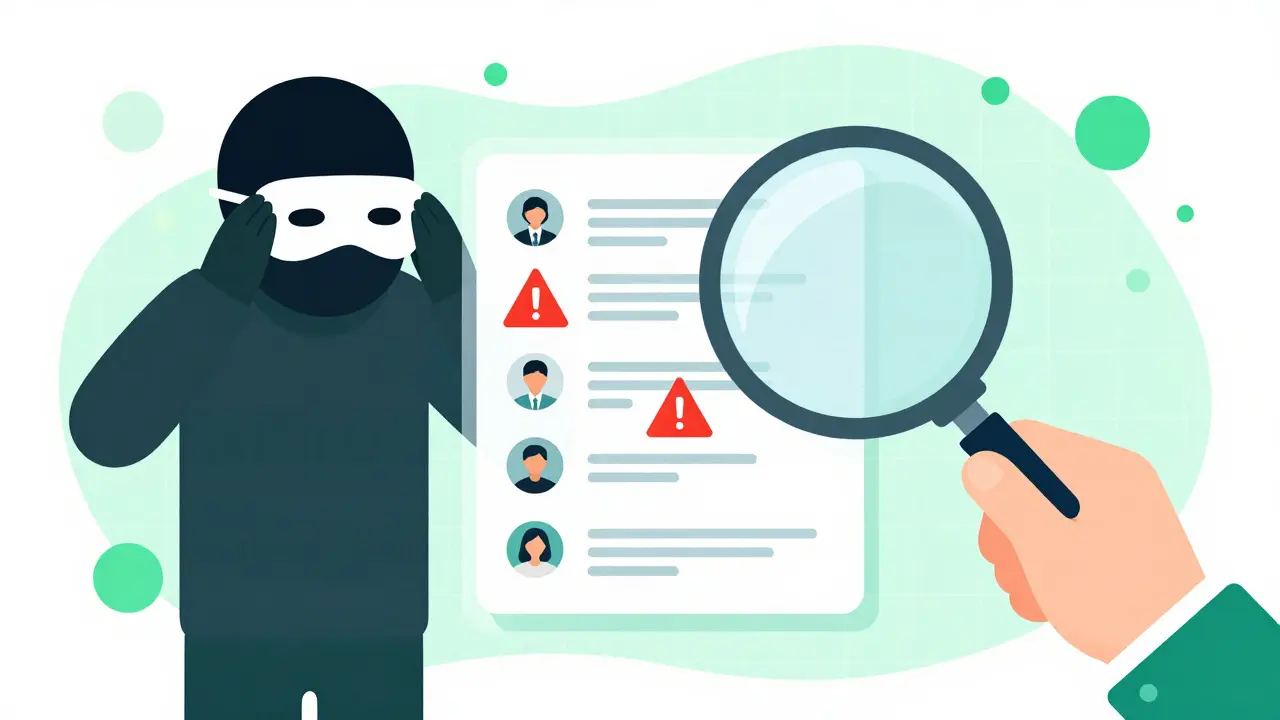
Know Your Customer (KYC) and Anti-Money Laundering (AML) processes involve reviewing mountains of documentation: passports, utility bills, corporate structures, and beneficial ownership records. Manual review is slow, expensive, and prone to error.
Multi-modal LLMs are AI models that can process and understand multiple types of data inputs, including text, images, and audio are transforming this workflow. They can digitize physical documents, extract key information fields, verify identities against databases, and summarize content for human reviewers. During complex legal proceedings or mergers and acquisitions, these systems can review thousands of pages of contracts in minutes, highlighting potential liabilities or non-compliant clauses.
| Feature | Manual Review | Rule-Based OCR | LLM-Powered Analysis |
|---|---|---|---|
| Speed | Slow | Moderate | Fast |
| Accuracy with Unstructured Data | Variable | Low | High |
| Context Understanding | High | None | High |
| Scalability | Poor | Moderate | Excellent |
The key advantage here isn't just speed-it's accuracy in handling unstructured formats. A rule-based Optical Character Recognition (OCR) tool might fail if a document is handwritten or poorly scanned. An LLM can infer missing information based on context, significantly reducing the need for manual re-entry.
Risk Management: Sentiment and Scenario Modeling
Risk isn't just about past transactions; it's about future possibilities. Market sentiment, geopolitical events, and consumer behavior shifts can all impact a bank's stability. LLMs excel at analyzing textual data to gauge sentiment.
Sentiment analysis via LLMs is The use of AI to interpret subjective information from text to determine attitude or emotion allows institutions to monitor news sources, social media, and earnings calls for early warning signs of market instability. For example, a sudden spike in negative sentiment regarding a specific sector could prompt treasury teams to adjust their exposure proactively.
Beyond sentiment, LLMs assist in scenario modeling. They can generate synthetic datasets based on historical trends, allowing risk managers to test how their portfolios would perform under various stress conditions. This "what-if" analysis is crucial for capital adequacy planning and ensuring resilience against black swan events.
Data Governance and Security Challenges
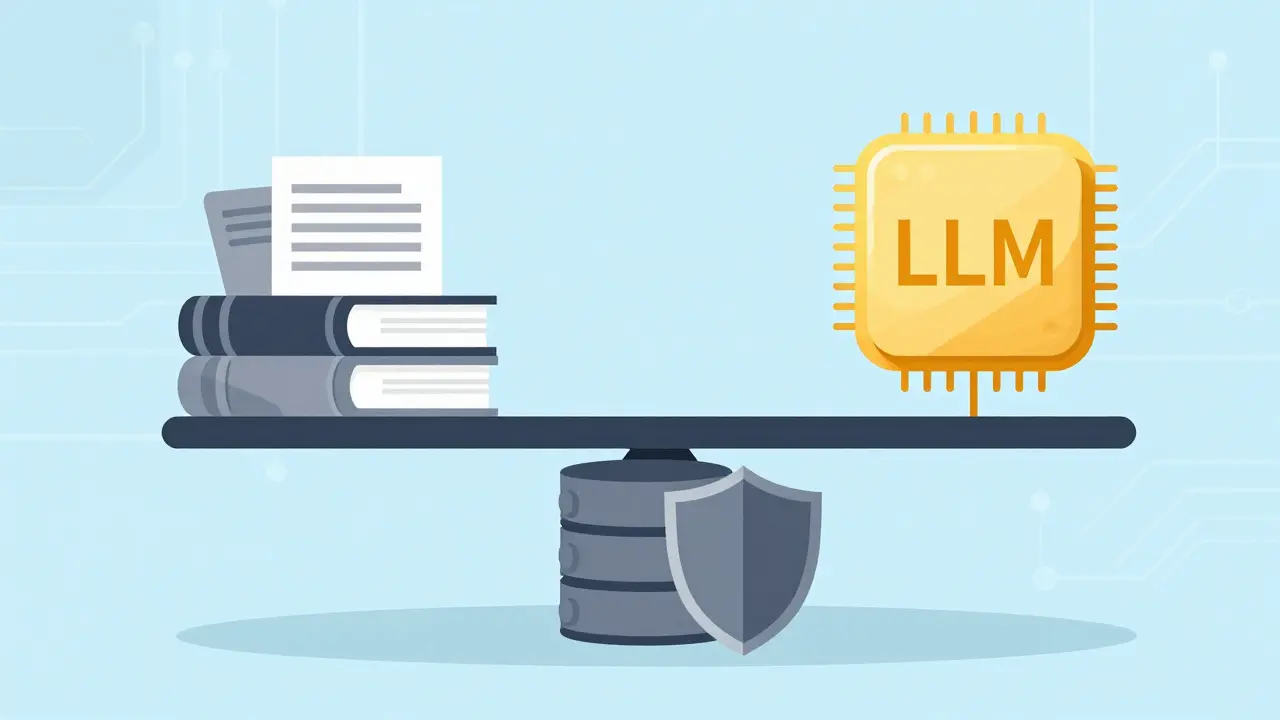
Deploying LLMs in finance isn't plug-and-play. The stakes are too high. Data governance frameworks are Sets of policies, procedures, and standards that manage the availability, usability, integrity, and security of data are non-negotiable. Financial institutions must ensure that sensitive customer data never leaks into public model training sets.
Key considerations include:
- Privacy Preservation: Using techniques like differential privacy or federated learning to train models without exposing raw data.
- Bias Mitigation: Regularly auditing models for biases that could lead to unfair lending practices or discriminatory outcomes.
- Explainability: Regulators demand transparency. You can't just say "the AI said so." Institutions need to explain *how* the LLM reached a decision, especially in credit scoring or loan approvals.
- Model Audits: Continuous monitoring of model performance to detect drift or degradation over time.
Many organizations are adopting a hybrid approach. They use general-purpose frontier models for broad language understanding but pair them with Retrieval-Augmented Generation (RAG) systems. RAG grounds the LLM's responses in verified, domain-specific data, reducing hallucinations and improving accuracy for critical tasks.
Choosing the Right Model: General vs. Domain-Specific
Not all LLMs are created equal. Financial LLMs (FinLLMs) are Large language models specifically fine-tuned or trained on financial data to better understand industry-specific terminology and contexts have emerged as a distinct category. While general-purpose models like GPT-4 offer superior reasoning capabilities, FinLLMs often perform better on tasks requiring deep financial literacy, such as parsing complex balance sheets or understanding nuanced regulatory jargon.
However, FinLLMs may lag behind in complex logical reasoning or mathematical calculations. The trend in 2026 is toward specialized smaller models for specific tasks (like document extraction) and larger general models for strategic analysis. This modular approach balances cost, performance, and privacy requirements.
Are LLMs replacing human compliance officers?
No. LLMs are augmenting human capabilities by handling repetitive, high-volume tasks like document review and initial screening. Human experts remain essential for complex judgment calls, ethical oversight, and final decision-making.
How do LLMs handle data privacy concerns?
Institutions use private deployments, anonymization techniques, and retrieval-augmented generation (RAG) to ensure sensitive data isn't exposed. Robust data governance frameworks and regular audits are mandatory to maintain compliance with regulations like GDPR.
What is the biggest risk of using LLMs in finance?
Hallucination and bias are the primary risks. If an LLM generates incorrect information or makes biased decisions, it can lead to regulatory penalties and reputational damage. Explainability and rigorous testing are critical mitigations.
Can LLMs predict stock prices?
While LLMs can analyze sentiment and news to inform trading strategies, they cannot reliably predict stock prices with certainty. Market dynamics are influenced by countless unpredictable factors. LLMs serve as decision-support tools, not crystal balls.
Is it cheaper to use general-purpose LLMs or FinLLMs?
It depends on the task. For general language understanding, general-purpose models may be more cost-effective due to economies of scale. For specialized financial tasks requiring high accuracy and low latency, fine-tuned FinLLMs or smaller domain-specific models often provide better value by reducing errors and computational overhead.
Kristina Kalolo
May 5, 2026 AT 10:29The section on multi-modal LLMs for KYC is particularly interesting, as it addresses a major bottleneck in current compliance workflows. Traditional OCR tools often fail when dealing with handwritten documents or poorly scanned images, which leads to significant delays and increased operational costs. By using models that can infer missing information based on context, institutions can reduce the need for manual re-entry and improve overall accuracy. This approach not only speeds up the process but also ensures that critical details are not overlooked due to formatting issues. The ability to handle unstructured data effectively is a key advantage of these advanced systems.
ravi kumar
May 6, 2026 AT 12:08It is good to see a detailed breakdown of how LLMs are being used in fraud detection beyond simple rule-based systems. The emphasis on contextual analysis and real-time monitoring provides a more holistic view of potential risks. I appreciate the note that these systems empower human investigators rather than replacing them entirely. This collaborative approach seems more sustainable and less prone to errors caused by over-reliance on automation. The reduction in false positives will likely lead to more efficient use of resources within compliance teams.
Megan Blakeman
May 7, 2026 AT 19:41I really like how this post explains the difference between general-purpose LLMs and FinLLMs. It makes sense that specialized models would perform better on tasks requiring deep financial literacy, such as parsing complex balance sheets. However, the point about general models having superior reasoning capabilities is also important. A modular approach that uses smaller models for specific tasks and larger models for strategic analysis seems like a smart way to balance cost and performance. This flexibility allows institutions to adapt to different needs without compromising on accuracy.
Pamela Tanner
May 9, 2026 AT 11:55The discussion on data governance and security challenges is crucial, as deploying LLMs in finance requires strict adherence to privacy regulations. Techniques like differential privacy and federated learning are essential for training models without exposing raw customer data. Additionally, the need for explainability cannot be overstated, especially in areas like credit scoring where regulatory transparency is mandatory. Institutions must ensure that they can clearly articulate how an LLM reached a particular decision to maintain trust and comply with legal requirements.
Steven Hanton
May 10, 2026 AT 21:35This is a comprehensive overview of the current landscape.