Managing Conversation State in Multi-Turn LLM Interactions
 Nov, 19 2026
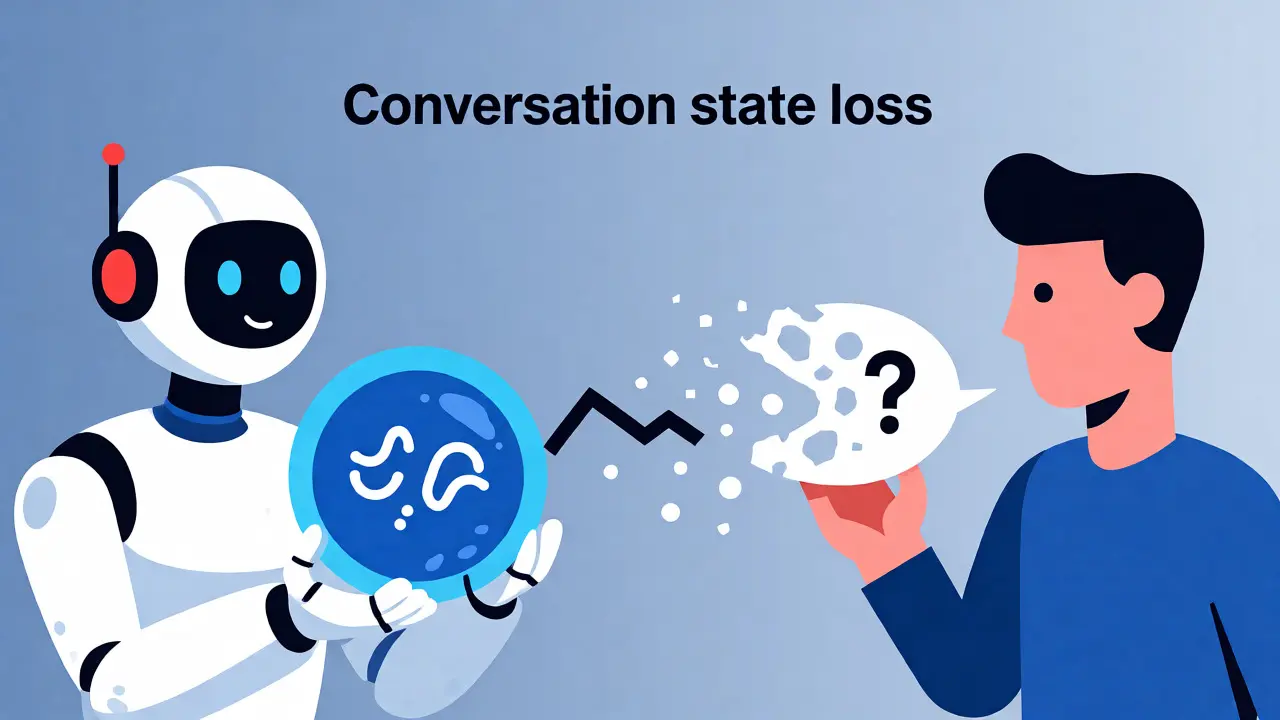
You ask a question. The AI answers. You follow up. Suddenly, the AI forgets what you were just talking about. It’s frustrating, right? This isn't just bad luck; it's a fundamental challenge in how Large Language Models handle conversation state. While these models are brilliant at single-shot tasks, they often stumble when the conversation drags on. Recent research from Salesforce Research revealed that major LLMs suffer an average performance drop of 39% in multi-turn settings compared to single-turn ones. When a model takes a wrong turn early on, it rarely recovers. So, how do we keep AI on track over long exchanges?
The Problem with Forgetting
Think about a customer service chat. You explain your issue, get a partial answer, and then clarify a detail. If the bot ignores that clarification because it lost track of the previous context, you’re back to square one. This is the core issue with managing conversation state. In a perfect world, the model would remember every nuance of our chat history. But in reality, context windows have limits, and attention mechanisms can dilute earlier information as new tokens pile up.
A study titled "LLMs Get Lost In Multi-Turn Conversation" highlighted that models make premature assumptions and over-rely on their own previous responses, even if those responses were flawed. This creates a feedback loop of errors. If the AI hallucinates a fact in turn two, it might treat that hallucination as ground truth in turn five. That’s not just annoying; it’s dangerous for high-stakes applications like healthcare or legal advice, where continuity is critical.
How We Teach Models to Remember
To fix this, engineers don’t just hope the model remembers. They actively manage the state. One common approach is fine-tuning with specific datasets designed for multi-turn interactions. Instead of feeding the model isolated questions and answers, developers use structured JSONL files where each entry is a list of messages. Each message has a role-system, user, or assistant-and content.
A key technique here is loss masking. During training, the model learns to predict only the assistant’s responses while ignoring the user’s inputs and system prompts for the purpose of calculating error (loss). Why does this matter? Because it prevents the model from trying to "predict" the user’s next word during inference, which can lead to awkward or inappropriate continuations. By focusing the loss calculation strictly on the desired output, we sharpen the model’s ability to respond appropriately to complex conversational cues.
Advanced Frameworks: Review-Instruct
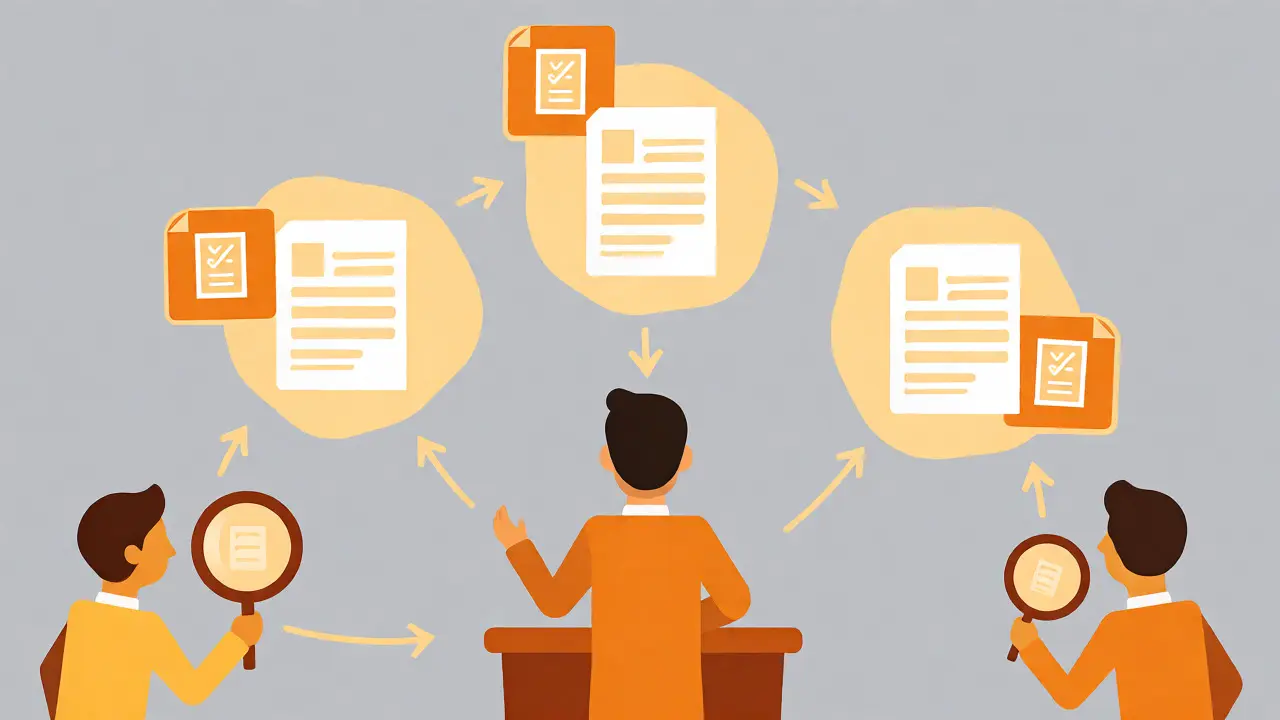
Static fine-tuning isn't always enough. Enter dynamic frameworks like Review-Instruct, introduced by researchers at OPPO AI Center. This framework uses a multi-agent architecture to refine responses iteratively. Imagine a committee: one agent generates a draft response, several reviewer agents evaluate it for relevance and coherence, and a chairman agent aggregates their feedback to create a better final answer.
This iterative refinement process boosts instruction diversity and difficulty by about 27% compared to static datasets. The results speak for themselves. Review-Instruct-13b achieved 29.65% accuracy on the MMLU-Pro benchmark, showing significant gains over standard approaches. However, this comes at a cost. Generating data for such frameworks requires nearly four times more GPU hours than standard supervised fine-tuning. It’s a trade-off between quality and computational expense.
| Approach | Accuracy Improvement | Computational Cost | Best Use Case |
|---|---|---|---|
| Standard SFT | Baseline (42.3%) | Low | Simple Q&A bots |
| Loss Masking Fine-Tuning | Moderate (+15-20%) | Medium | Customer support |
| Review-Instruct | High (+19.4 pts) | Very High (3.8x) | Complex reasoning tasks |
Practical Implementation Tips
If you’re building a system today, you don’t need to reinvent the wheel. Start with clear dataset preparation. Ensure every conversation example has distinct turn delineation. Use system messages to set the persona and context upfront. Consistency in role labeling is non-negotiable; mixing up "user" and "assistant" roles will confuse the model faster than you can say "token limit."
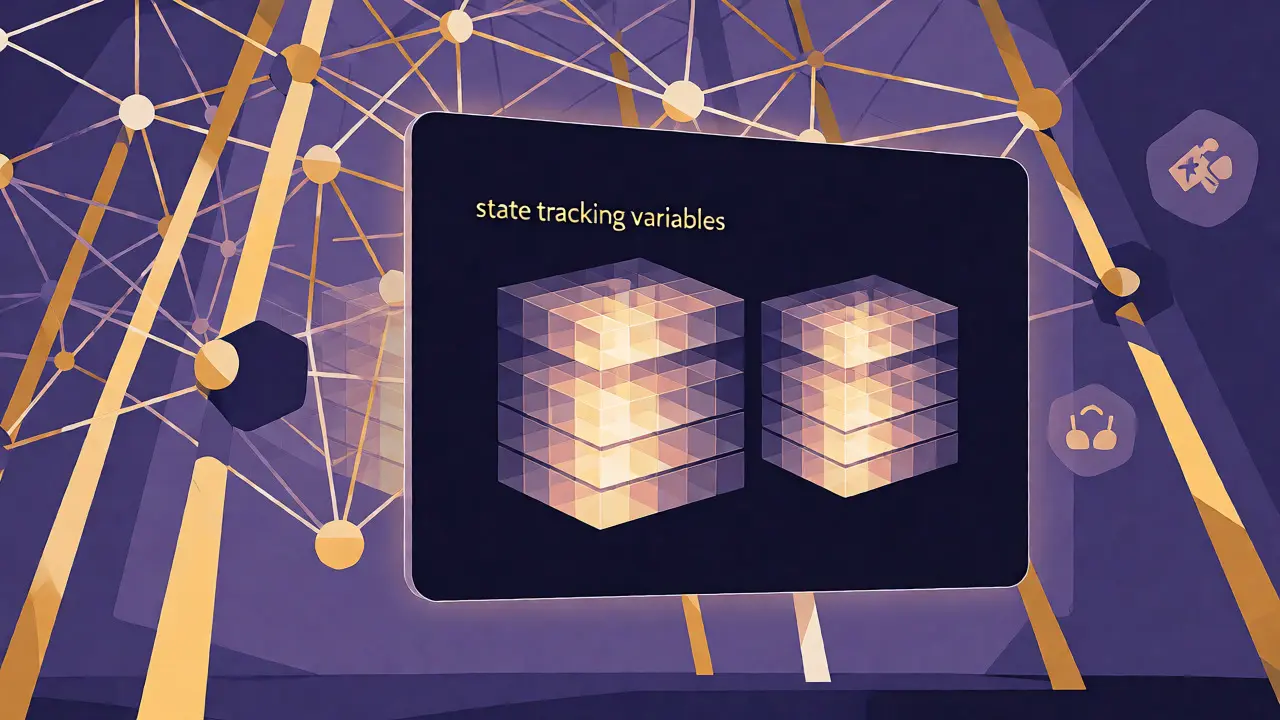
Developers often report a learning curve of three to five weeks to get production-ready systems working smoothly. A crucial success factor is using explicit state tracking variables. Don’t rely solely on the model’s internal memory. Pass relevant state information explicitly in the prompt if possible. For instance, if the user mentioned their budget in turn one, include a summary of that constraint in the prompt for turn ten. Context summarization techniques help here, compressing older parts of the conversation into a concise narrative that fits within the window.
Where It Still Breaks
Despite improvements, challenges remain. Conversations exceeding ten turns see performance degradation reach 63.2%. Context overflow is a frequent complaint, reported by 68% of developers. When the history gets too long, the model either truncates important info or slows down significantly. Maintaining a consistent persona across dozens of turns is another hurdle, problematic in half of all implementations.
Commercial platforms like Together.ai offer APIs to handle some of this heavy lifting, with pricing starting around $0.0015 per 1K tokens for fine-tuning. But for many, open-source solutions require substantial infrastructure. Fine-tuning a model like Llama-3-8B on multi-turn data typically demands two to four A100 GPUs for up to 24 hours. It’s not cheap, but the payoff in user experience can be huge. One case study showed first-contact resolution rates jumping from 47% to 73% after implementing proper multi-turn fine-tuning on Zendesk data.
The Future of Dialogue
The industry knows this is a problem worth solving. The NeurIPS 2025 Workshop on Multi-Turn Interactions focuses heavily on maintaining alignment over extended interactions. Researchers are exploring conversational memory networks that could reduce performance drops to under 20%. Gartner predicts that by 2027, 95% of enterprise deployments will require robust multi-turn management. It’s no longer a nice-to-have feature; it’s a baseline expectation.
We are moving toward hybrid approaches that combine fine-tuning with explicit state tracking and architectural tweaks. Regulatory bodies like the EU AI Office are already drafting guidelines requiring demonstrable state management for high-risk systems. If you’re deploying AI in business-critical environments, mastering conversation state isn’t optional-it’s survival.
Why do LLMs lose context in long conversations?
LLMs rely on attention mechanisms that can become diluted as the number of tokens increases. Additionally, models may over-rely on their own previous outputs, leading to a compounding effect of errors if an early mistake occurs. Limited context windows also force truncation of older, potentially relevant information.
What is loss masking in multi-turn fine-tuning?
Loss masking is a training technique where the model calculates error (loss) only on the assistant's generated tokens, ignoring user inputs and system prompts. This ensures the model learns to generate appropriate responses without trying to predict user behavior, improving coherence in dialogue.
How much does multi-turn fine-tuning cost compared to single-turn?
Multi-turn fine-tuning is significantly more expensive, costing approximately 2.3 times more than single-turn approaches on average. This is due to the larger dataset sizes required and the increased computational resources needed for processing complex conversation structures.
Can I fix poor multi-turn performance without retraining?
Partially. You can improve performance by optimizing prompts, using context summarization to fit more history into the window, and implementing explicit state tracking variables in your application layer. However, fundamental architectural limitations often require fine-tuning or specialized frameworks for significant gains.
What is the Review-Instruct framework?
Review-Instruct is a multi-agent framework that uses a candidate model, multiple reviewers, and a chairman agent to iteratively refine responses. It improves instruction diversity and coherence by simulating a review process before finalizing the output, though it requires higher computational resources.