Multimodal AI in Education: Interactive Lessons & Tutors
 Nov, 2 2026
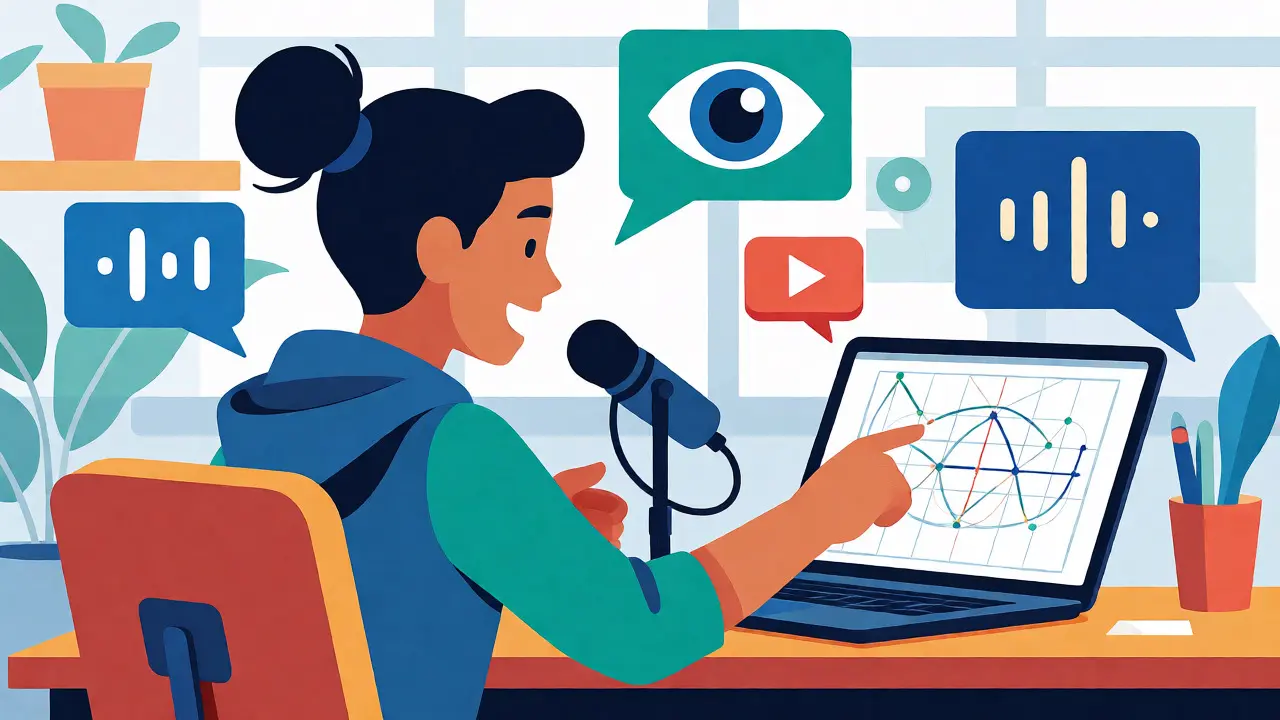
Imagine a student struggling with a complex physics concept. Instead of reading a dense textbook paragraph, they open their laptop, share their screen showing the problem, and simply talk to an AI tutor. The AI sees the code or diagram, listens to the confusion, and responds not just with text, but with a generated video simulation that highlights exactly where the student’s logic broke down. This isn't science fiction from a 2030s movie; it's happening right now in classrooms and living rooms across the United States.
Multimodal Generative AI is an artificial intelligence system capable of processing and generating multiple forms of communication-including text, audio, video, images, and real-time screen-sharing-to create dynamic educational experiences. Unlike the chatbots of yesterday that only typed back words, these systems see, hear, and speak. They transform static content into living, breathing learning environments. If you are an educator wondering how to keep up, or a student tired of one-size-fits-all lectures, this technology offers a radical shift toward personalized, interactive education.
The Shift from Text-Only to Multimodal Interaction
For years, "AI in education" meant simple quiz generators or basic spell-checkers. Then came large language models (LLMs) that could write essays. But students rarely learn best by just reading walls of text. We process information through eyes, ears, and hands. Multimodal AI bridges this gap. It understands that a student might prefer hearing an explanation while looking at a diagram, rather than reading about it.
A recent peer-reviewed study published on ArXiv examined how undergraduate programming novices interacted with these new tools. The results were striking. In over 50% of observed cases, students chose to share their screens as their primary way of showing the AI what they were working on. When they did this, 83% of them spoke to the AI instead of typing. Why? Because explaining a coding error verbally while pointing at the screen feels natural. It mirrors how you would ask a human tutor for help. You don't type out every variable name; you say, "Look here, why isn't this loop closing?"
This preference for voice-plus-visual interaction signals a major design principle for future ed-tech: seamless modality switching. Students shouldn't have to choose between a text box and a microphone. They should be able to mix them freely, depending on what makes sense for the task at hand.
Interactive Lessons: Beyond Static Content
Traditional lessons are linear. You read chapter one, then chapter two. Multimodal AI breaks this linearity. It allows for the creation of interactive narratives where historical figures, authors, or even fictional characters engage directly with students. Imagine interviewing Abraham Lincoln about his decision-making process during the Civil War, with the AI generating responses based on historical records and delivering them in a synthesized voice accompanied by period-appropriate visuals.
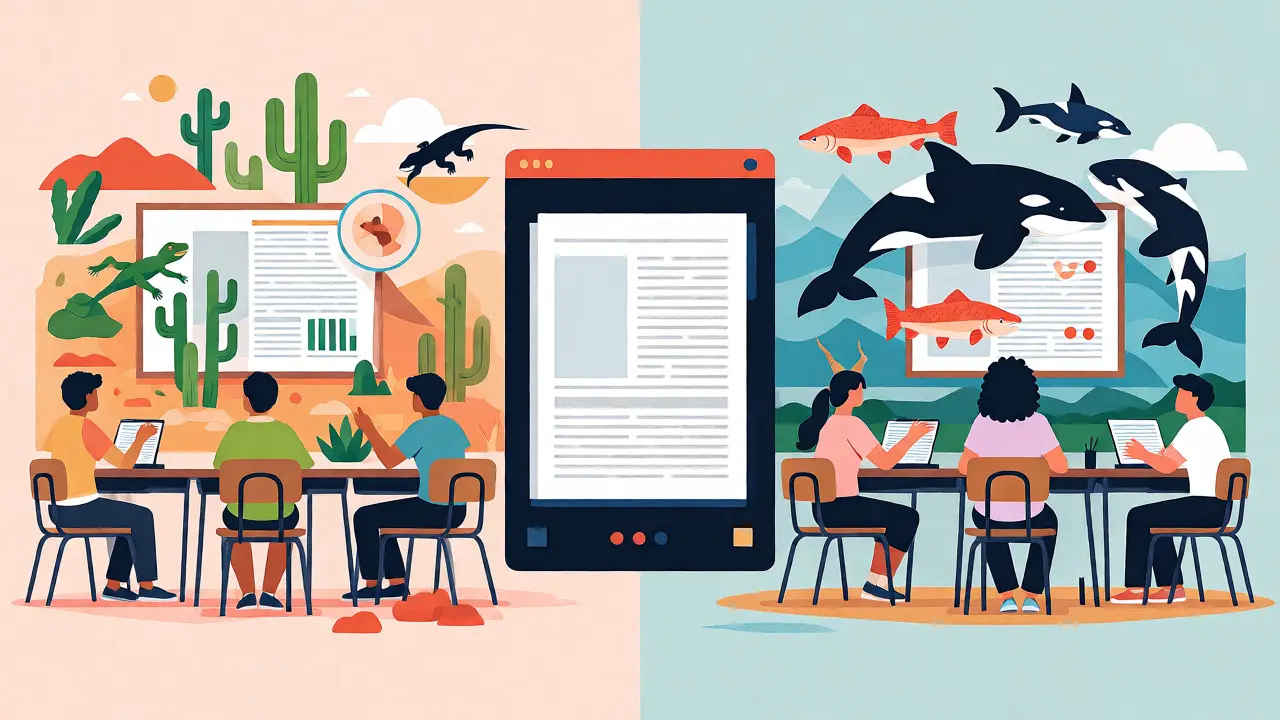
But it goes deeper than novelty. These tools allow for cultural responsiveness. A teacher can take a standard biology lesson and instantly adapt it. For a class in Bellingham, Washington, the AI might generate examples involving local marine life like salmon or orcas. For a class in Arizona, it might use desert ecosystems. The core scientific concepts remain identical, but the context shifts to match the student's reality. This increases engagement because the material feels relevant, not abstract.
Furthermore, students gain control over their learning format. A dense textbook chapter can be converted into a podcast-style audio summary for a commute home. Or, it can be broken down into TikTok-like mini-lessons-short, visual bursts of information perfect for quick review. The underlying pedagogical structure, such as spaced repetition intervals and assessment checkpoints, remains intact thanks to embedded learning science principles. The delivery changes, but the rigor doesn't drop.
The Rise of the Always-On AI Tutor
Human tutors are expensive and hard to schedule. AI tutors solve the availability problem. But early AI tutors were frustrating-they couldn't see what the student was doing. Multimodal AI fixes this. By integrating screen-sharing capabilities, these tutors observe the student's work in real-time. They provide context-aware assistance that feels surprisingly human.
Consider a chemistry student trying to balance an equation. They get stuck. They share their screen. The AI sees the mistake immediately. Instead of just giving the answer, it generates a short animation showing why the atoms aren't balancing. Then, it asks a guiding question via voice: "What happens if we add another oxygen molecule to the left side?" This Socratic method, delivered through multimodal channels, helps students build understanding rather than just copying answers.
These tutors also handle accessibility better than any previous technology. For a student with dyslexia, the AI can convert text-heavy instructions into audio narration paired with highlighted keywords. For a student who struggles with verbal explanations, it can provide step-by-step visual guides. The system adapts to the learner's needs, not the other way around.
How Teachers Are Adapting to the New Role
Fear often surrounds AI in schools: Will robots replace teachers? The data suggests otherwise. Edtech Insiders research indicates that educators are shifting from being sole content creators to becoming precision customizers and learning experience designers. Teachers use AI to handle the heavy lifting of content adaptation-resizing difficulty levels, translating languages, or generating practice problems-so they can focus on high-value tasks: building relationships, assessing emotional well-being, and guiding critical thinking.
It’s a partnership. The AI ensures that every student gets a version of the lesson they can access. The teacher ensures that the learning objectives are met and that students stay motivated. This division of labor frees up time for what humans do best: mentorship.
Implementation Challenges and Realities
Despite the promise, there are hurdles. One major challenge is the learning curve for students. Knowing when to use voice versus text, or when to share your screen versus uploading a document, requires meta-cognitive awareness. However, studies show students adapt quickly. Within a few sessions, they intuitively grasp which combination of inputs yields the best results.
Another concern is accuracy. AI can hallucinate, especially in highly specialized fields like advanced calculus or medical diagnostics. Teachers must verify AI-generated content before distributing it widely. Additionally, there is the risk of superficial engagement. Just because a lesson looks cool with videos and animations doesn't mean deep learning is happening. Educators need to look past the flash and check for comprehension using traditional assessments alongside AI analytics.
The Future: Virtual Worlds and Seamless Learning
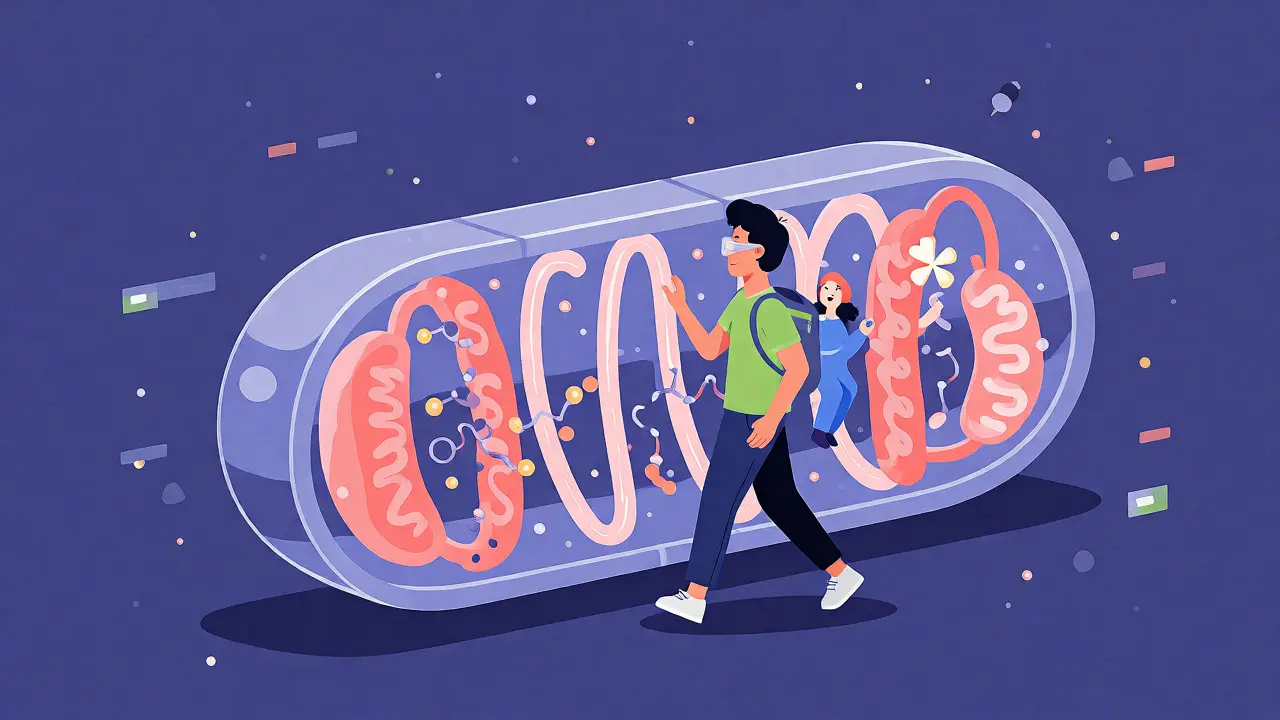
We are moving toward an era where AI creates entire virtual worlds in response to student inquiries. Ask a question about cellular respiration, and the AI might generate an explorable 3D environment where you walk through a mitochondria, interacting with enzymes as you go. These aren't just games; they are rich learning environments with embedded pedagogy.
The trajectory is clear. As costs decrease and capabilities improve, multimodal AI will move from luxury to standard. The distinction between "digital" and "physical" learning will blur. Students will carry their AI tutors in their pockets, ready to explain anything, anywhere, in any format they prefer.
| Feature | Traditional Digital Learning | Multimodal GenAI Learning |
|---|---|---|
| Input Methods | Text entry, mouse clicks | Voice, screen-share, image upload, gesture |
| Content Format | Static PDFs, pre-recorded video | Dynamic simulations, generated audio/video, interactive chats |
| Personalization | Limited (preset tracks) | High (real-time adaptation to user level/context) |
| Tutor Availability | Scheduled hours only | 24/7 instant access |
| Pedagogical Basis | Often bolted-on after tech choice | Embedded learning science principles |
Frequently Asked Questions
Do I need special hardware to use multimodal AI tutors?
Most modern laptops and smartphones already have the necessary cameras and microphones. While high-end headsets can improve voice clarity, standard equipment usually suffices. The key requirement is a stable internet connection, as most processing happens in the cloud.
Can multimodal AI replace human teachers entirely?
No. Current evidence suggests AI augments teaching rather than replacing it. AI excels at content delivery, personalization, and routine feedback. Human teachers excel at motivation, social-emotional support, and complex ethical guidance. The best outcomes occur when both work together.
Is my student data safe when sharing screens with AI?
This depends on the specific platform's privacy policy. Reputable educational AI providers typically comply with FERPA (in the US) and GDPR standards. They often anonymize data and do not use student inputs for training public models without explicit consent. Always check the provider's security certifications.
How does multimodal AI help students with disabilities?
It offers flexible input/output options. Visually impaired students can rely on audio descriptions and voice commands. Students with motor difficulties can use voice-to-text or eye-tracking integrations. Those with auditory processing issues can prioritize visual or textual outputs. The system adapts to the disability, reducing barriers to entry.
What subjects benefit most from multimodal AI?
Subjects requiring visualization or spatial reasoning benefit greatly, such as STEM fields (physics, chemistry, coding), geography, and art history. Language learning also thrives due to the emphasis on listening and speaking. However, humanities and social sciences also gain from immersive historical simulations and debate partners.