NLP Research Trends: How LLMs Are Evolving in 2026
 Sep, 16 2026
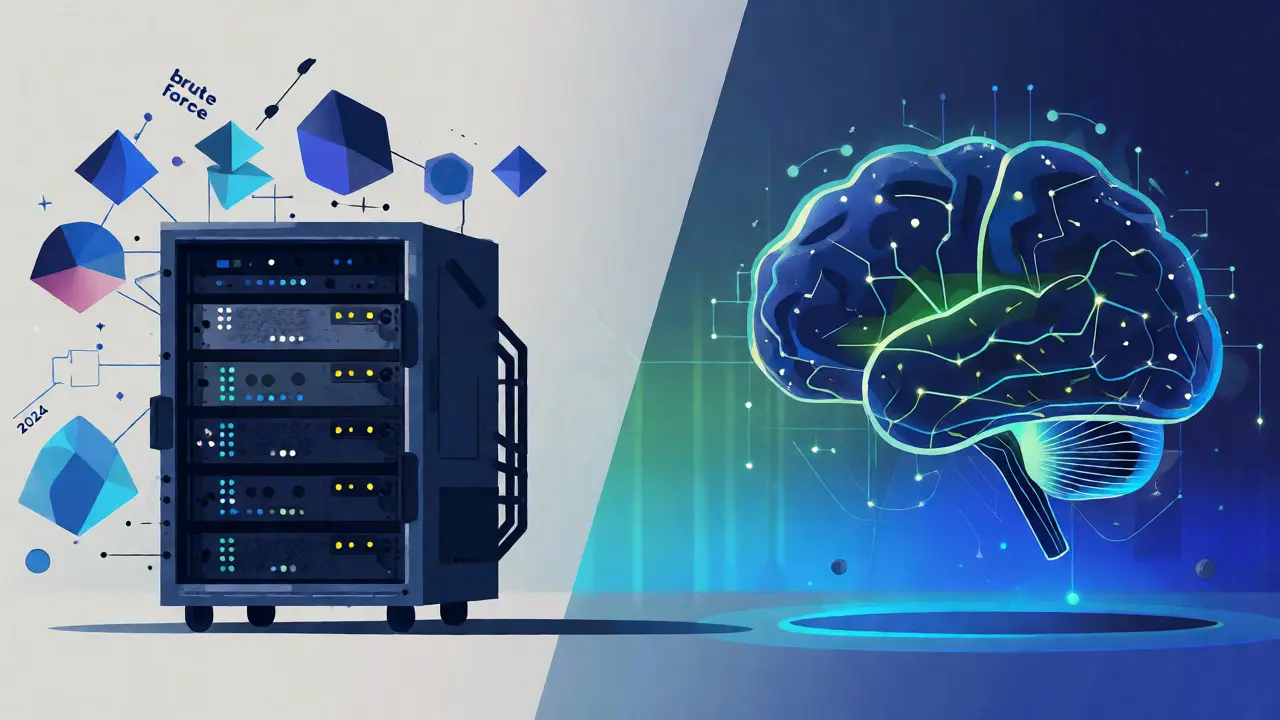
Remember when bigger was better? In the early days of Natural Language Processing, researchers chased parameter counts like kids chasing ice cream trucks. GPT-3’s 175 billion parameters felt like magic. But by 2026, that magic has faded into mundane infrastructure. We aren’t impressed by raw size anymore. We want models that think, remember, and act without burning down our server racks. The race isn’t about who has the biggest brain; it’s about who has the most useful one.
The landscape shifted dramatically between 2024 and 2026. We moved from experimental chatbots to core digital plumbing. Enterprises don’t just "try" AI now; they depend on it for customer service, code review, and legal discovery. This shift forced a hard pivot in research priorities. If a model can’t handle a 200-page contract or reason through a multi-step logic puzzle reliably, it doesn’t get deployed. Here is what is actually happening in the labs right now.
The End of the Context Window Bottleneck
For years, the biggest headache with Large Language Models (LLMs) was amnesia. You’d paste a document, ask a question, and the model would forget the first half by the time it read the second. That constraint is largely gone. Next-generation architectures are pushing context windows past 200,000 tokens. To put that in perspective, that’s roughly 150,000 words. You can feed an entire novel, a full codebase, or a year’s worth of meeting transcripts into a single prompt.
This isn’t just a number game. It changes how we build applications. Instead of chunking documents and using complex retrieval systems to stitch answers together, you can now perform holistic analysis in one pass. Researchers at KumoHQ have documented models like GPT-4.5 and Claude 3.7 hitting 128,000-token limits, but the frontier models of 2026 go further. This capability reduces the "lost in the middle" phenomenon where models ignore information buried deep in long texts. It means your legal AI can cross-reference clauses across hundreds of pages instantly, spotting contradictions that human reviewers might miss after three coffees.
Multimodal Is No Longer Optional
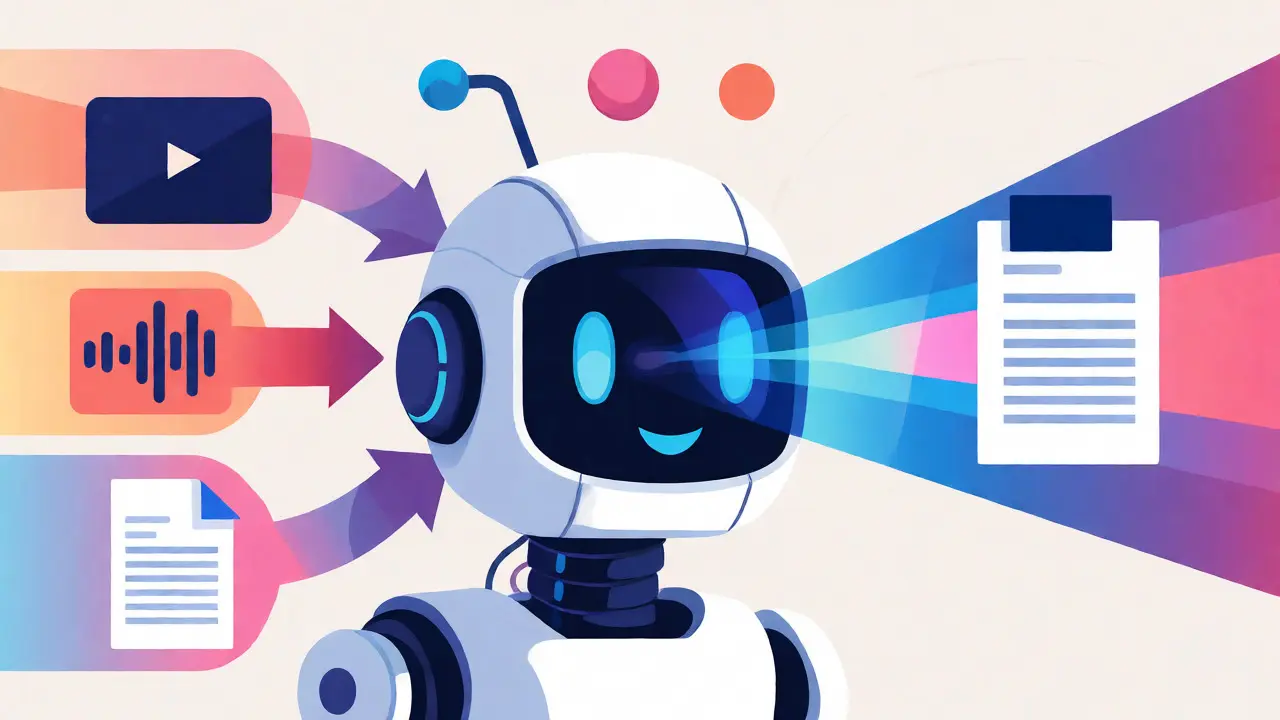
Text-only models feel archaic now. Why process text alone when humans communicate through video, audio, images, and sensor data? The defining architectural pivot for 2026 is native multimodality. Models like Gemini 3 and GPT-5 don’t just accept image inputs as an afterthought; they process visual, auditory, and textual data within a unified framework.
Think about analyzing a recorded lecture. A multimodal LLM can watch the video, listen to the speaker’s tone, read the slides, and generate a study guide that captures not just the facts, but the emphasis and urgency of specific points. Zapier’s industry analysis flags this as one of the top two developments reshaping the field. It solves a real problem: the explosion of non-text content online. If your model can’t interpret a chart or understand sarcasm in a voice note, it’s missing half the conversation. This integration allows for richer context understanding, reducing hallucinations because the model can verify claims against visual evidence.
Agentic AI: From Chatting to Doing
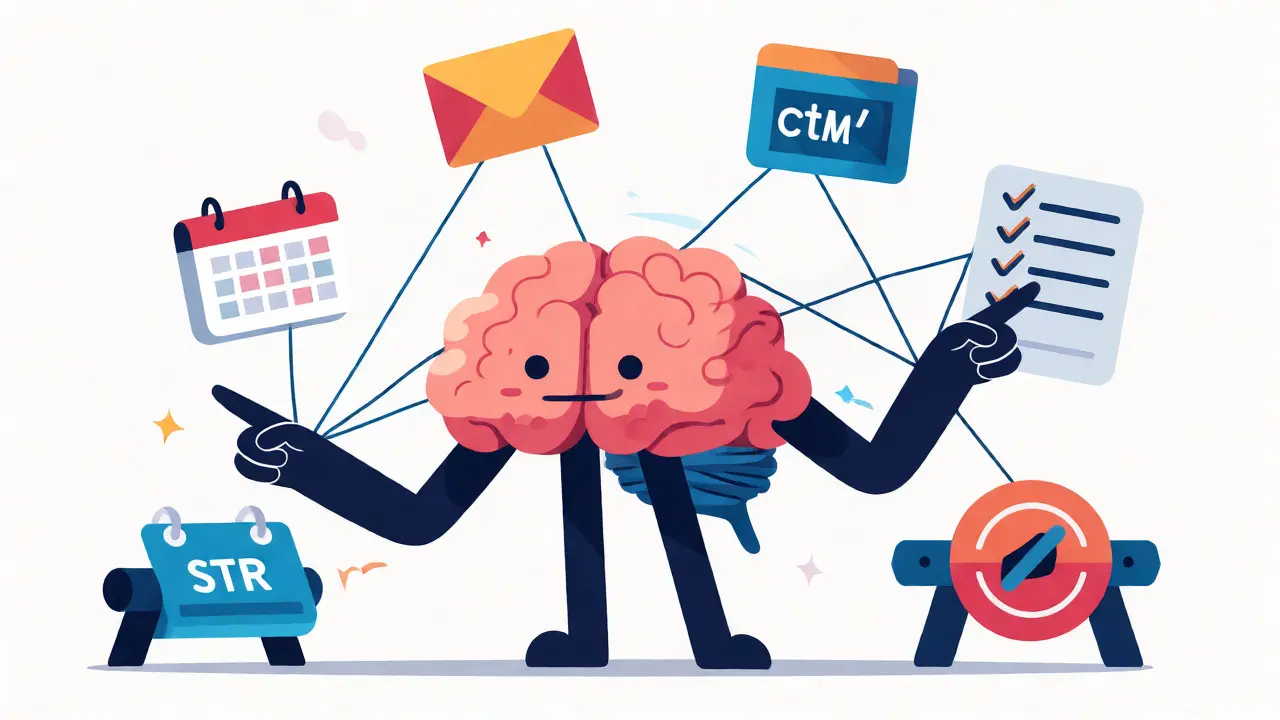
We are done asking AI to "write me an email." We want it to send the email, schedule the follow-up meeting, and update the CRM. This is Agentic AI. These systems use LLMs as the reasoning engine to plan, execute, and correct actions autonomously. They break down complex goals into sub-tasks, call external tools, check results, and iterate if something fails.
This trend moves beyond conversational interfaces into functional automation. For example, an agent tasked with "reconcile these invoices" doesn’t just summarize them. It logs into the accounting software, matches transactions, flags discrepancies, drafts emails to vendors, and waits for approval. The challenge here isn’t just intelligence; it’s reliability. Agents need guardrails to prevent infinite loops or costly mistakes. Research focuses heavily on improving planning capabilities and error recovery, ensuring agents know when to stop and ask for help rather than guessing wildly.
Eficiency Over Brute Force: Mixture-of-Experts
Running massive dense models is expensive. Enter Mixture-of-Experts (MoE). Instead of activating every neuron for every word, MoE architectures route queries to specialized "expert" networks. Only a fraction of the model activates per token. Mistral Large 2 and DeepSeek V3 exemplify this approach, delivering high performance at a fraction of the compute cost of traditional dense transformers.
This architecture addresses the persistent tension between quality and cost. You get the knowledge capacity of a huge model with the inference speed of a smaller one. For enterprises running millions of daily requests, this difference translates directly to bottom-line savings. It also enables edge deployment. Because MoE models are more efficient, they can run locally on devices, keeping sensitive data on-premise and reducing latency. This is critical for healthcare and finance sectors where sending patient records or transaction details to a cloud API raises privacy red flags.
Reasoning Chains and Reducing Hallucinations
Hallucinations-when a model confidently states false information-remain the biggest barrier to trust. Pure generative approaches often prioritize fluency over factuality. The solution gaining traction is Chain-of-Thought (CoT) reasoning combined with Retrieval-Augmented Generation (RAG).
CoT forces the model to show its work. Instead of jumping straight to an answer, it breaks problems into intermediate steps. OpenAI highlights this as a core component of GPT-5’s design. When a model explains its logic, errors become visible and correctable. RAG complements this by grounding outputs in verified external sources. MIT researchers emphasize that combining CoT with RAG significantly reduces factual inaccuracies. The model retrieves relevant documents, reasons through them step-by-step, and cites its sources. This transparency builds user confidence. You’re no longer trusting a black box; you’re auditing a logical process.
| Trend | Primary Benefit | Key Challenge | Leading Example |
|---|---|---|---|
| Context Expansion | Holistic document/code analysis | Memory management costs | GPT-5 / Claude 4 |
| Multimodality | Unified text/image/audio processing | Data alignment complexity | Gemini 3 |
| Agentic AI | Autonomous task execution | Error propagation/reliability | AutoGen / LangChain |
| MoE Architecture | Cost-efficient inference | Routing optimization | Mistral Large 2 |
| RAG + CoT | Reduced hallucinations | Retrieval accuracy | Llama 4 Enterprise |
The Rise of Domain-Specific Specialization
Generalist models are great for trivia nights, but terrible for surgery. We are seeing a rapid acceleration toward domain-specific specialization. Healthcare, legal, financial, and scientific fields are deploying customized variants fine-tuned on proprietary data. Techniques like LoRA (Low-Rank Adaptation) allow organizations to adapt large models to their niche without retraining from scratch.
A general LLM might struggle with medical jargon or regulatory nuances. A specialized model, trained on clinical trials and FDA guidelines, understands the stakes. This shift acknowledges that one-size-fits-all is a myth. Organizations with limited budgets can now achieve high-performance customization thanks to parameter-efficient fine-tuning. It democratizes access to advanced AI, allowing mid-sized firms to compete with tech giants by leveraging their unique data assets.
Open vs. Closed: The Gap Closes
In 2024, closed-weight models from major vendors held a clear advantage. By 2026, that gap has narrowed to months, not years. Open-weight models like Llama 4 and Qwen 3 now rival commercial APIs in many benchmarks. This shift empowers developers who need control over their data and infrastructure.
Why does this matter? Sovereignty and compliance. Governments and banks prefer open weights because they can audit the model, ensure no data leaks, and deploy it on private servers. The market is bifurcating: closed models dominate consumer-facing apps where convenience rules, while open models win enterprise deals where security and customization are paramount. Expect open-source communities to continue driving innovation, particularly in efficiency and specialized tasks, forcing closed vendors to justify their premium pricing with superior ease-of-use and integrated ecosystems.
What This Means for You
If you’re building products today, stop worrying about which model has the highest benchmark score. Start worrying about integration. Can your app handle long contexts? Does it leverage multimodal inputs? Are you using agents to automate workflows, or just chatting? The winners in 2026 won’t be those with the smartest model, but those with the best-engineered system around it.
Keep an eye on edge deployment. As models shrink via MoE and quantization, running AI locally becomes viable. This reduces latency and privacy concerns. Also, invest in your data pipeline. With RAG becoming standard, the quality of your retrieval system matters more than the generation model itself. Garbage in, garbage out still applies, even with trillion-parameter brains.
Are larger context windows always better?
Not necessarily. While larger windows allow processing more data, they increase computational cost and latency. Additionally, models can sometimes suffer from "attention dilution," where they struggle to focus on specific details within vast amounts of text. For most tasks, a well-retrieved 10k-token context is more effective and cheaper than dumping 200k tokens and hoping the model finds the needle in the haystack.
How does Agentic AI differ from standard LLM usage?
Standard LLM usage is reactive: you ask, it answers. Agentic AI is proactive and autonomous. An agent uses the LLM to plan a sequence of actions, execute them using tools (like APIs or browsers), observe the results, and adjust its plan. It closes the loop between thought and action, enabling complex workflow automation rather than just content generation.
Is Multimodal AI ready for production use?
Yes, for many use cases. Leading models in 2026 handle images, audio, and video natively. However, success depends on the specific task. Analyzing static charts is highly reliable. Interpreting complex video narratives or subtle audio cues can still yield inconsistent results. It’s best used in hybrid workflows where human oversight validates critical multimodal interpretations.
Why are open-weight models gaining popularity?
Three main reasons: cost, control, and performance parity. Open models eliminate recurring API fees for heavy users. They allow organizations to keep data on-premise, satisfying strict privacy regulations. Finally, the performance gap between open and closed models has shrunk significantly, making open options viable for most enterprise applications without sacrificing quality.
What is Chain-of-Thought reasoning?
Chain-of-Thought (CoT) is a prompting or architectural technique that encourages the model to generate intermediate reasoning steps before producing a final answer. By breaking down complex problems into smaller, logical parts, CoT improves accuracy on tasks requiring math, logic, or multi-step analysis. It also makes the model’s decision-making process transparent and easier to debug.