Prompt Chaining in Generative AI: A Complete Guide to Reliable AI Workflows
 Mar, 27 2026
Quick Summary / Key Takeaways
- Prompt Chaining breaks complex tasks into sequential steps where the output of one prompt becomes the input for the next.
- This method reduces factual errors (hallucinations) by over 60% compared to single-prompt strategies.
- You can implement chains manually or use platforms like AWS SageMaker and Jotform AI for automation.
- Be wary of error propagation-if step one fails, the entire chain collapses without validation.
- Ideal for complex analysis, legal docs, and customer support, but too slow for real-time chatbots.
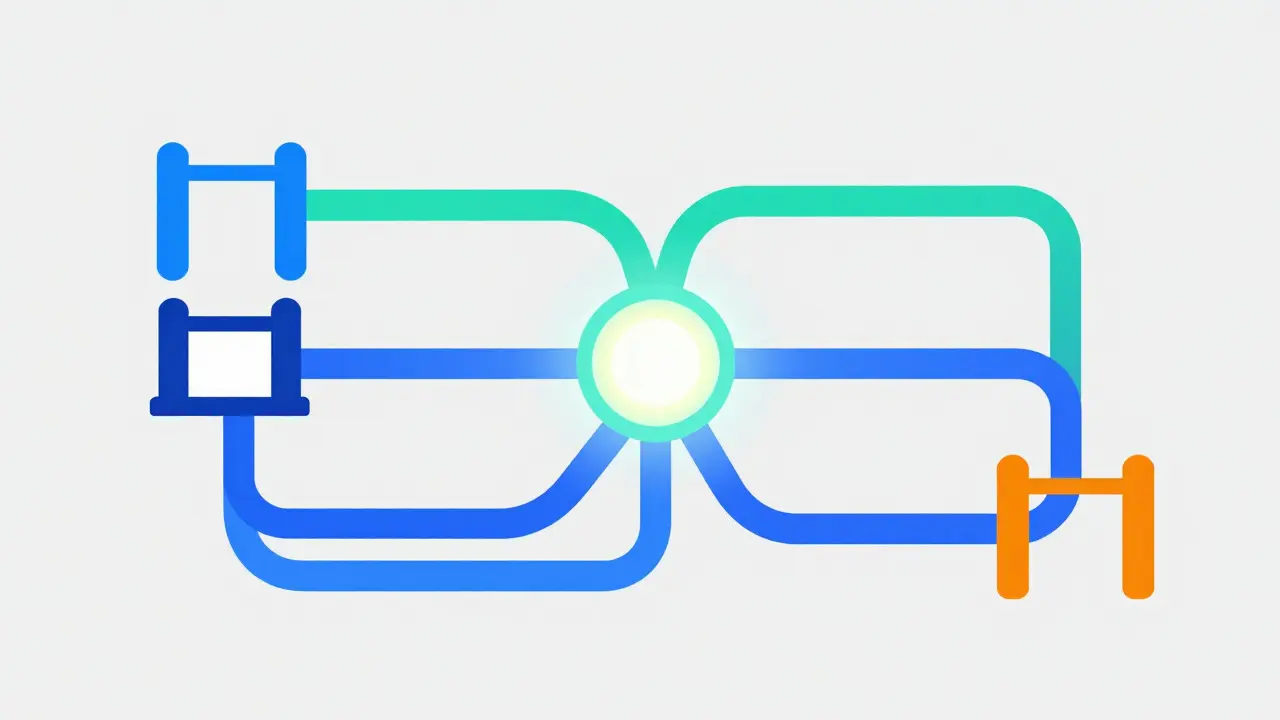
We've all been there. You ask an AI model something specific, detailed, and you get a confident-sounding answer that turns out to be completely wrong. It happens because asking one big question forces the model to guess multiple variables at once. That's where Prompt Chaining is a technique used when working with generative artificial intelligence models in which the output from one prompt is used as input for the next. changing the game. Instead of expecting the AI to juggle everything in one go, you build a step-by-step process that mimics human reasoning.
By March 2026, this isn't just a "nice-to-have" trick anymore. It is standard practice for enterprise-grade AI. Companies are moving away from single-shot prompts because the risk of hallucination-where the AI invents facts-is simply too high for critical work. If you want your AI workflows to be reliable, you need to stop treating the model like a magic 8-ball and start treating it like an employee who needs clear instructions and checkpoints.
Why You Should Switch to Prompt Chains
The biggest benefit of chaining is accuracy. According to a 2024 study by IBM, using multi-step chains reduced factual errors by 67.3% when analyzing complex data. Why does this happen? When you break a task down, you allow the model to focus on one variable at a time. In a single prompt asking for "analyze market trends and predict sales," the model tries to do everything simultaneously, often getting tangled. When you split that into "summarize trends" followed by "analyze risks based on trends," each step has a smaller scope and higher precision.
Beyond accuracy, chaining gives you control over the logic. You can enforce rules that a single prompt might ignore. For example, in a legal document review workflow, you might have Step 1 identify sensitive clauses, and Step 2 specifically redact names. If you ask both in one go, the AI often misses the second instruction because its attention gets diluted. With Prompt Chaining, the output of the first prompt acts as concrete evidence for the second, creating a logical trail you can audit later.
Speed is the trade-off here. Because these processes run sequentially, they take longer. Independent testing showed average processing times increase by about 38%. However, if your goal is high-stakes decision-making rather than instant chat, that extra time buys you significantly more trust in the result.
How Prompt Chains Actually Work
At its core, a prompt chain relies on state management. The AI doesn't remember conversations perfectly across long periods, so you have to pass information explicitly between stages. There are five main architectural patterns used in 2025 and 2026:
- Instructional Chaining: Providing explicit step-by-step directions. You tell the AI exactly what to do first, then feed the result back to it for the next command.
- Iterative Refinement: This creates a loop. The AI drafts an idea, then critiques it, then improves it based on its own critique. It's self-correcting.
- Contextual Layering: Adding background information incrementally. You start with general knowledge and layer in specific details as the chain progresses.
- Comparative Analysis: Generating multiple options in one step, then evaluating them against criteria in the next.
- Conditional Branching: Using if-then logic. If Step 1 identifies a negative sentiment, Step 2 becomes "suggest apology." If positive, Step 2 becomes "upsell opportunity." This requires programming logic alongside prompts.
To maintain coherence, you need to manage the context window. Research from late 2024 suggests keeping context windows around 4,096 tokens is optimal for multi-step reasoning. If you pack too much text into the initial prompt, the model loses focus on the final instruction. By passing only the relevant snippet from Step 1 to Step 2, you keep the token usage low and the relevance high.
| Strategy | Best For | Reliability | Processing Speed |
|---|---|---|---|
| Single Prompt | Simple queries, creative ideas | Low (High hallucination risk) | Fastest |
| Prompt Chaining | Complex logic, data analysis | Very High (Controlled steps) | Slower (Sequential) |
| Chain-of-Thought | Math problems, reasoning traces | Medium-High | Fast-Medium |
Building Your First Workflow
Getting started feels technical, but the logic is straightforward. You don't need to be a coder to design a basic chain, though knowing your way around Python or low-code platforms helps.
First, map out the ideal human process. If you were doing this yourself, what would you do first? Probably research, right? Then draft, then edit. That's your chain. Next, define the "handoff." Step 1 needs to produce output that Step 2 can actually read. If Step 1 outputs a messy list and Step 2 expects a clean table, the chain breaks.
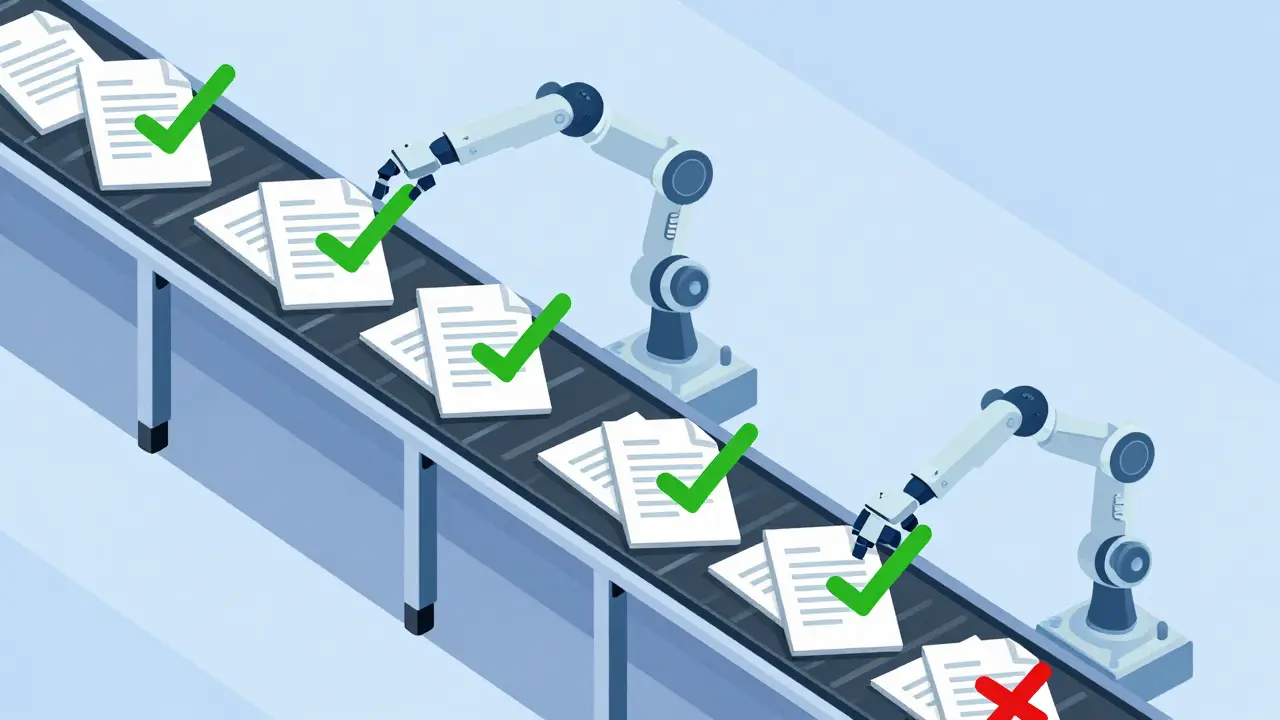
Validation is the secret sauce. Between major steps, add a verification prompt. Ask the AI: "Is the data from the previous step complete?" If the answer is no, send it back to retry. This "Human-in-the-Loop" feature, launched by AWS in late 2024, increased accuracy on legal reasoning by over 80%. Even without automated tools, adding a simple "check" step manually prevents errors from snowballing.
Common Pitfalls and Risks
While powerful, chaining isn't a cure-all. The biggest risk is error propagation. Imagine a house of cards; if you knock over the first card, the rest falls. If your first prompt generates a wrong number, every subsequent calculation will be flawed. A 2024 MIT study noted that error rates climb 23.5% when chain logic is flawed early on.
Another issue is cost. Because you are making multiple API calls, costs multiply. If one task takes three prompts, your bill triples compared to a single prompt. You have to weigh the value of accuracy against the token price. Finally, complexity matters. If a chain exceeds 7-8 steps, users experience significant "context drift." The model starts forgetting the original goal by the end of the sequence.

Tools and Platforms to Watch
You don't always need to code these from scratch. In 2026, several platforms offer robust chaining environments. LangChain remains a favorite for developers open-sourcing workflows, while AWS SageMaker dominates the enterprise space with its managed pipelines. For non-technical users, Jotform AI offers visual builders where you can drag and drop prompt steps.
If you are looking for specialized solutions, Promptitude.io has become a leader for prompt optimization, offering templates that test different chain structures automatically. These tools handle the heavy lifting of state management, so you don't have to worry about passing variables between functions manually. Always verify compatibility with your preferred model, like GPT-4 or Claude 3, as context limits vary slightly between providers.
Where Is This Heading?
We are rapidly approaching "Auto-Chaining." Google announced capabilities for Gemini 2.0 to optimize sequences automatically, which implies we will soon stop designing the chain manually and let the AI figure out the best path. However, until fully automated, the discipline of breaking tasks down remains the most valuable skill you can learn. As Dr. Andrew Ng noted in late 2024, this is the most significant advancement in reliability since few-shot learning. Mastering it means you're ready for whatever comes next in the AI landscape.
Frequently Asked Questions
What is the difference between Prompt Chaining and Chain-of-Thought?
Chain-of-Thought asks the model to think aloud in a single response (e.g., "Show me your steps"). Prompt Chaining involves sending multiple separate prompts to the API, where the output of the first physically becomes the input string of the second. Chaining allows for external validation and stricter logic control between steps.
Does prompt chaining work with all AI models?
Yes, it works with any large language model that accepts text input. However, the effectiveness depends on the model's context window size and reasoning capabilities. Smaller models may struggle with longer chains due to memory limitations.
How many steps should my chain have?
Experts recommend starting with 3-5 steps for simple tasks. If a chain goes beyond 7 or 8 steps, the risk of context drift increases significantly. Longer chains require better state management techniques or intermediate summaries.
Can I use prompt chaining for real-time applications?
It can be challenging because chaining is sequential and slower than single prompts. For time-sensitive tasks, pre-chaining (pre-defining steps) or parallel processing of independent chains is recommended to reduce latency.
What causes error propagation in chains?
If an early step contains a mistake, that incorrect information is fed into the next step. Without a validation checkpoint, the error compounds. For example, if Step 1 calculates the wrong total revenue, Step 2's profit margin calculation will also be wrong.
Ian Cassidy
March 28, 2026 AT 08:24The concept of instructional chaining fundamentally alters how we approach state management in LLM deployments. You cannot rely on implicit context retention across extended sessions without explicit token passing mechanisms. When integrating iterative refinement loops, the cost implications become significant regarding API billing cycles. Many developers underestimate the latency overhead introduced by sequential dependency structures. Validation checkpoints serve as critical safeguards against compounding hallucinations during multi-stage processes. We must prioritize structured output formats like JSON to ensure seamless data transfer between chain nodes. Without strict schema validation, downstream prompts will inherit malformed variables causing total workflow failure. Error propagation remains the primary vulnerability in these architectures despite robust logic design. It requires dedicated engineering effort to implement conditional branching correctly across diverse model providers. Latency penalties are acceptable when the alternative involves unreliable automated outputs in production environments. Context window limitations dictate the maximum depth of any given reasoning sequence before drift occurs. Token optimization strategies should be applied aggressively to maintain session relevance throughout the execution chain. Human-in-the-loop integration provides necessary oversight for high-risk decision pathways. Manual verification steps might slow throughput but drastically improve overall system trustworthiness. Future auto-chaining implementations will likely abstract this complexity away from end users entirely. Until then, manual orchestration remains the gold standard for enterprise reliability requirements.
Zach Beggs
March 29, 2026 AT 07:30AWS SageMaker handles the pipeline state management much better than raw API calls.
Kenny Stockman
March 29, 2026 AT 21:40Totally agree that breaking tasks down is key to getting reliable results from these massive models. Just started experimenting with LangChain last week and the visual builders really help visualize the flow. Don't forget to add those validation steps early on so you don't debug a broken chain later!
Paritosh Bhagat
March 30, 2026 AT 13:01While your points regarding state management are accurate, the phrasing 'total workflow failure' seems slightly hyperbolic for minor parsing errors. Proper schema enforcement typically mitigates most downstream issues without requiring such alarmist conclusions. :)
Ben De Keersmaecker
April 1, 2026 AT 06:51Context windows are definitely the bottleneck for longer chains in current generation models. 4096 tokens feels tight when aggregating large datasets for analysis tasks. Smaller models struggle significantly with memory retention in these extended reasoning scenarios.
Aaron Elliott
April 1, 2026 AT 08:47Your suggestion regarding visual builders overlooks the inherent complexity of prompt engineering required for production grade systems. Abstraction layers often obscure critical logic dependencies necessary for professional deployment standards. Furthermore, manual verification adds unnecessary friction to agile development methodologies in established teams.
Chris Heffron
April 2, 2026 AT 21:15Hey man, no need to get so intense about the tools! Sometimes simple stuff works best for beginners :) We just need to find what fits our specific workflow needs. Keep experimenting though! 😊