Vibe Coding Curricula: Teaching Prompting, Reviews, and Governance
 Aug, 18 2026
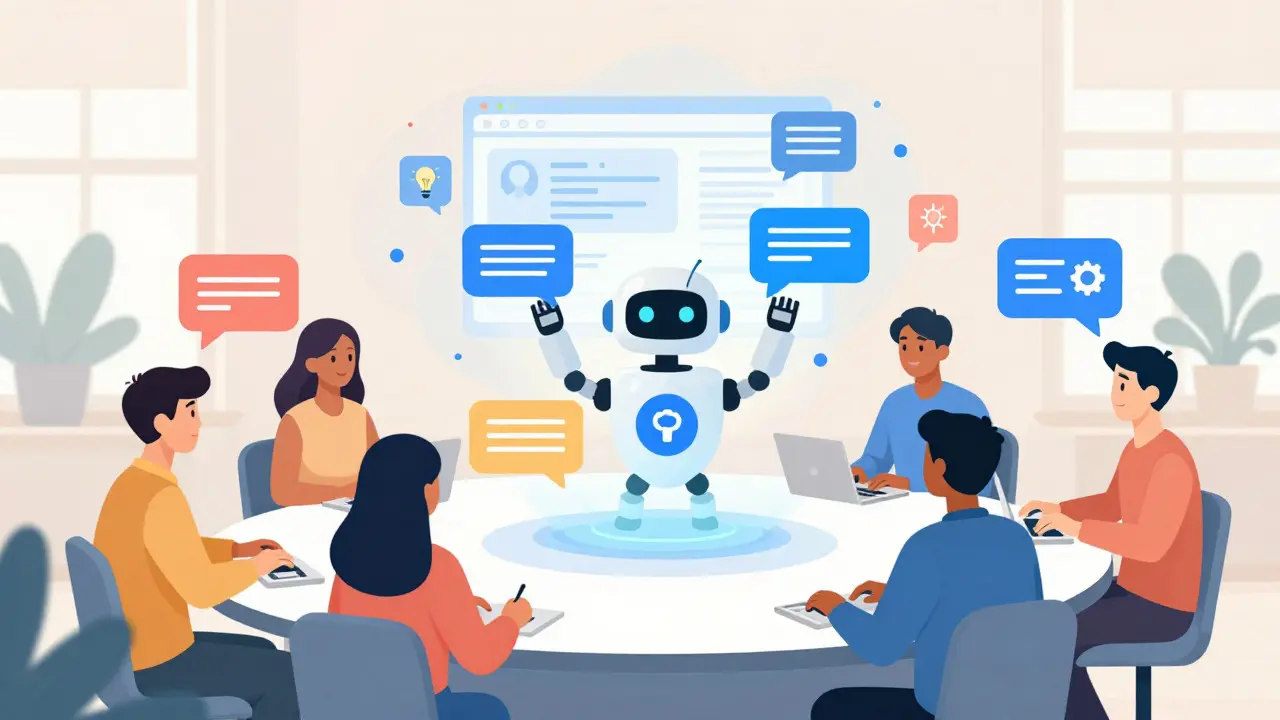
Imagine building a working web app without writing a single line of Python or JavaScript. You just describe what you want in plain English, and an AI assistant writes the code for you. This is vibe coding, a concept-first approach to software creation where learners use natural language prompts to guide AI tools in generating code. The term was popularized by Andrej Karpathy, who described it as letting the "vibes take over" rather than manually debugging every variable. As of 2026, this isn't just a hobbyist trick; it's becoming a formal educational discipline. Universities, corporate training platforms, and K-12 schools are now designing specific curricula around this method. But here’s the catch: if you only teach people how to talk to AI, you’re setting them up for failure. Effective vibe coding education requires three distinct pillars: mastering prompting, rigorous human review, and clear governance rules.
The Shift from Syntax to Context
Traditional computer science education has always prioritized syntax. You learn loops, variables, and data structures before you build anything complex. Vibe coding flips this hierarchy on its head. In these new courses, the primary skill isn't memorizing the rules of a programming language; it's articulating intent. Platforms like Maven define vibe coding as replacing "Syntax with Context." Your superpower becomes the richness of the details you provide to the model. If you want a button that turns red when clicked, you don't write CSS selectors; you explain the desired user experience and the logic behind the state change. This shift means that educators are no longer just teaching code; they are teaching design thinking and communication. A student who can clearly decompose a problem into small, logical steps will get better results from an AI tool than a student who throws vague requests at the chat window.
Anatomy of a Modern Vibe Coding Course
By 2026, several distinct types of curricula have emerged, each targeting a different audience and risk profile. For adult learners and professionals, Stanford Continuing Studies offers a course titled "Vibe Coding: Using AI for Programming," which focuses on guiding AI tools to create applications without deep technical background. On massive open online course (MOOC) platforms, Coursera hosts a specialization called "Vibe Coding Essentials - Build Apps with AI," designed specifically for beginners with zero coding experience. Corporate environments are seeing integration through Microsoft Learn, which features modules tied directly to GitHub Copilot. These modules teach users how to implement a vibe-coding process within their existing development workflows. Even K-12 education is adapting; educator guides now outline step-by-step workflows for teachers to use tools like ChatGPT to create interactive classroom activities that run in any browser. Despite the different formats, all these curricula share a common structure: they move away from manual typing and toward iterative refinement.
Pillar One: Mastering Iterative Prompting
Most beginners make the mistake of expecting perfection from a single prompt. They type "Make me a website about cats" and expect a production-ready site. Effective curricula teach that prompting is an iterative dialogue. You start with a high-level description, inspect the output, and then craft increasingly precise follow-up prompts to fix bugs or adjust the layout. For example, a teacher might first ask for a quiz game, see that the scoring is wrong, and then issue a specific prompt: "Change the score calculation so that multiple-choice questions are worth 10 points and true/false are worth 5." This technique, often called "refinement prompting," is the core of the skill set. Courses emphasize that context is king. You need to specify constraints, edge cases, and user stories in natural language. The goal isn't to write perfect code in one shot, but to steer the AI toward the correct solution through a series of targeted instructions. This requires a different kind of mental agility than traditional coding-it's closer to directing a team of junior developers who are fast but occasionally misinterpret your intent.
Pillar Two: The Critical Role of Human Review
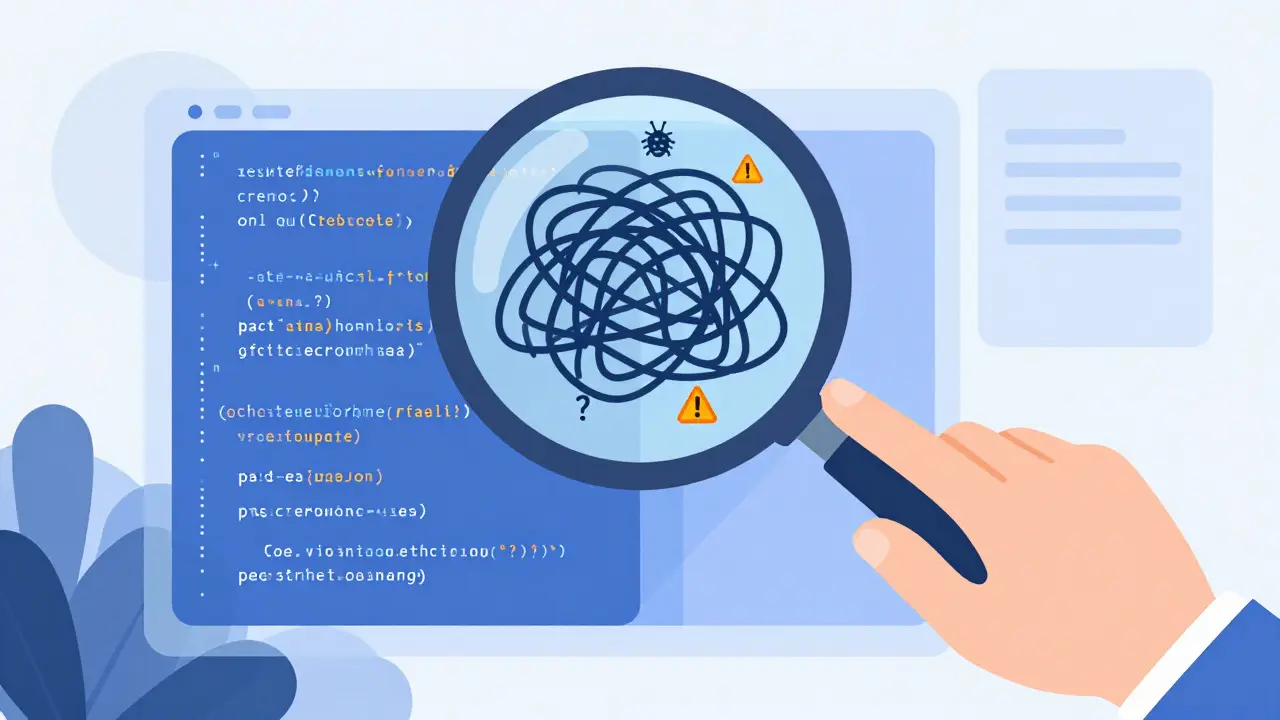
If prompting is the engine, review is the brake. Without it, vibe coding is dangerous. AI models hallucinate. They generate code that looks right but fails under specific conditions. They might invent API endpoints that don't exist or use deprecated libraries. Therefore, modern curricula place a heavy emphasis on critical evaluation. Learners are taught to treat AI-generated code as a draft, not a final product. They must run the application, test its behavior, and cross-verify factual claims against official documentation. A key lesson in many bootcamps is the "verify, verify, verify" rule. Students are encouraged to read the generated code to understand *why* it works, even if they didn't write it. This prevents the "black box" effect where a developer ships an app they don't fully understand. Some educators advocate for a "harm reduction" model, where students write most of the code themselves early in the course and use AI primarily for debugging or explanations. This ensures they retain fundamental programming knowledge while learning to leverage AI efficiency later on.
Pillar Three: Governance and Responsible Use
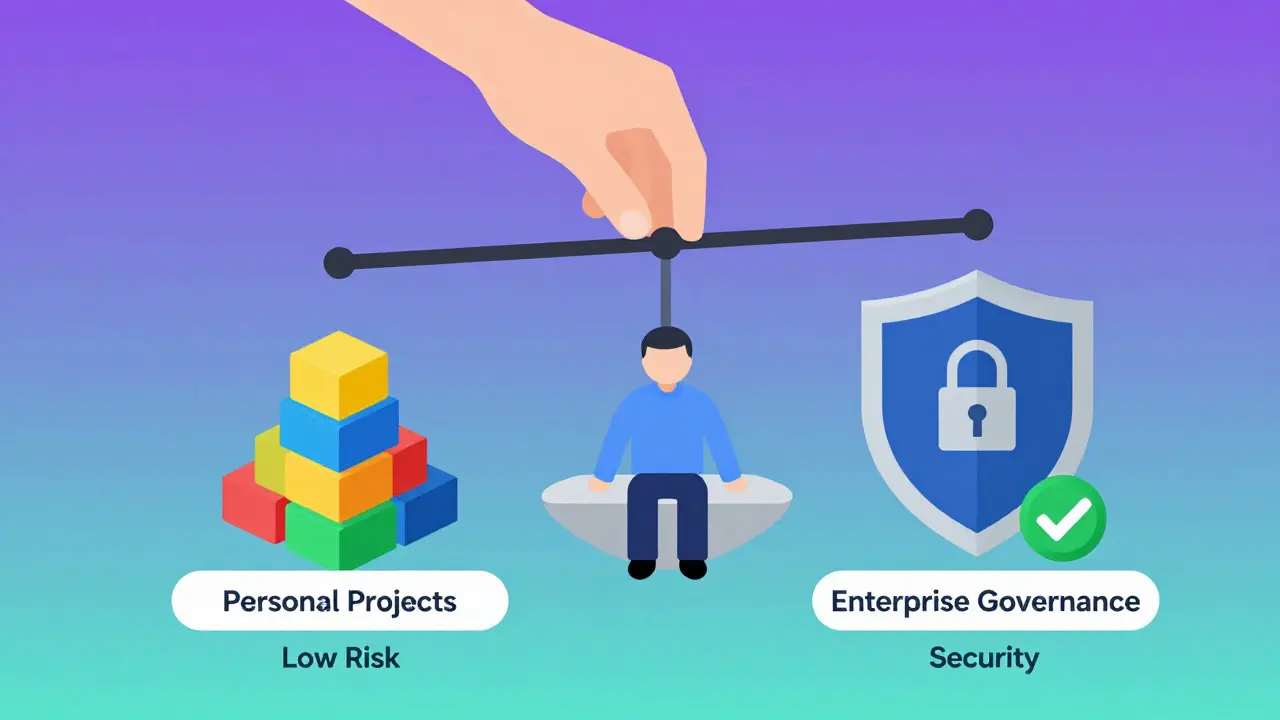
Governance refers to the policies and safeguards that keep AI-assisted coding safe and ethical. It answers questions like: When is it okay to let AI write the code? How do we handle sensitive data? Who owns the intellectual property? Mature curricula include explicit modules on these topics. For instance, a common rule of thumb taught in professional settings is the "10-user threshold." If an app is for personal use or fewer than 10 users, vibe coding is low-risk. But if the app handles real user data, monetary transactions, or serves a large public audience, professional human review is mandatory. Schools also face unique governance challenges. Educators must decide whether students have full access to AI tools or mediated access. They need to establish norms for attribution-how do you cite AI-generated work? And they must ensure that students aren't just copying and pasting without understanding. These governance lessons are crucial because they prepare students for the workplace, where compliance and security are non-negotiable.
Vibe Coding vs. Traditional Programming Education
How does this compare to standard CS1 or CS2 courses? Traditional programs assume you will master a language like Python or Java before building complex systems. Vibe coding curricula lower that barrier significantly. You can build functional apps without knowing the syntax of the underlying language. However, this doesn't mean fundamentals are obsolete. Experts argue that understanding concepts like loops, conditionals, and data structures still helps you write better prompts and debug faster. The difference is the entry point. In a traditional course, you start with syntax. In a vibe coding course, you start with design. This makes it highly accessible for non-technical roles, such as product managers, designers, or teachers, who need to prototype ideas quickly. It also changes the definition of "competence." Being competent in vibe coding means being able to decompose problems, communicate requirements clearly, and critically evaluate outputs-not necessarily being able to write a binary tree from scratch.
| Feature | Traditional Coding Curriculum | Vibe Coding Curriculum |
|---|---|---|
| Primary Skill | Syntax mastery and algorithmic logic | Prompt formulation and context building |
| Entry Barrier | High (requires learning language basics) | Low (natural language interface) |
| Role of Human | Author of code | Director and reviewer of AI output |
| Error Handling | Manual debugging and tracing | Iterative prompting and behavioral testing |
| Risk Profile | Logical errors due to human fatigue | Hallucinations and hidden dependencies |
Implementing Vibe Coding in the Classroom
For educators, implementing these curricula requires practical adjustments. You need to provision AI accounts for students and ensure device compatibility. Since many vibe coding projects result in simple HTML or web-based apps, any modern browser works. Teachers are finding success with a five-step workflow: Describe the activity, Generate the code, Refine through prompts, Test in the browser, and Publish online. This structure provides clear checkpoints for assessment. Instead of grading syntax correctness, instructors grade the quality of the prompt, the thoroughness of the testing, and the clarity of the final user experience. Assessment strategies are evolving to distinguish between student understanding and raw AI output. This might involve oral exams where students explain their code choices or requiring written reflections on why certain prompts worked better than others. The goal is to assess the cognitive process, not just the final artifact.
Future Directions and Industry Trends
As of 2026, the landscape is shifting from ad-hoc experimentation to systematic programs. We are seeing a stratification of curricula based on risk profiles. Enterprise-oriented courses are integrating DevSecOps practices, including automated testing and secure-coding guidelines, to mitigate the risks of AI-generated vulnerabilities. Meanwhile, K-12 syllabi are adding explicit AI-governance learning outcomes, teaching students how to articulate when AI use is appropriate and how to comply with institutional policies. With AI coding assistants like GitHub Copilot continuously adding new features, these curricula are living documents. Instructors must update their materials regularly to reflect new capabilities and changing regulatory expectations. The future of software education lies in balancing these three pillars: prompting fluency, rigorous human review, and explicit governance. By mastering this triad, learners won't just be able to build apps; they'll be able to build them responsibly, efficiently, and effectively.
Do I need to know how to code to learn vibe coding?
No, you do not need prior coding experience to start. Most vibe coding curricula are designed for beginners and focus on using natural language to guide AI tools. However, having basic logical thinking skills helps you break down problems effectively. As you progress, understanding fundamental programming concepts will allow you to review AI output more critically and resolve complex issues.
What is the biggest risk of relying solely on vibe coding?
The biggest risk is shipping untested or insecure code due to AI hallucinations. AI models can generate code that looks correct but contains subtle bugs or uses non-existent libraries. Without rigorous human review and testing, these errors can lead to broken applications or security vulnerabilities, especially in production environments handling real data.
How is vibe coding different from general prompt engineering?
General prompt engineering applies to various domains like writing, data analysis, or image generation. Vibe coding is a specialized subset focused specifically on software development. It requires expressing requirements in terms of UIs, APIs, data models, and test cases, rather than just asking for text or images. It involves iterating on code behavior rather than just refining text output.
When should I stop using vibe coding and switch to traditional coding?
You should switch to traditional coding or require professional human review when the stakes are high. A common guideline is the "10-user threshold": if your app serves more than 10 users, handles real user data, or processes monetary transactions, you need robust testing, security checks, and likely manual code inspection to ensure reliability and compliance.
Which tools are best for practicing vibe coding?
Popular tools include ChatGPT, Gemini, and GitHub Copilot. For beginners, ChatGPT is often recommended because of its conversational interface and ability to generate standalone HTML files. For developers already in a professional workflow, GitHub Copilot integrates directly into code editors, allowing for seamless iteration within existing projects. The choice depends on your comfort level and the specific curriculum you are following.