Vibe Coding: Managing Technical Debt and Code Quality in the AI Era
 Apr, 4 2026
The Quick Take on Vibe Coding Quality
- Velocity over Precision: Vibe coding trades detailed architectural planning for rapid iteration.
- The Oversight Gap: Code quality depends almost entirely on the developer's ability to review AI output.
- Flexible Debt: Unlike no-code tools, vibe coding produces editable text, meaning you can fix mistakes-if you can find them.
- Conversational Debugging: Fixing bugs happens through feedback loops with the AI rather than manual line-by-line tracing.
The Hidden Cost of High Velocity
Traditional software engineering is a slow, deliberate process. You design a schema, plan your API endpoints, and write tests before the logic even exists. Vibe coding flips this. You prompt, you run, and if it looks right, you move on. While this feels like a superpower, it often creates a massive gap in Code Maintainability, which is the ease with which a software system can be modified to correct faults, improve performance, or adapt to a changed environment.
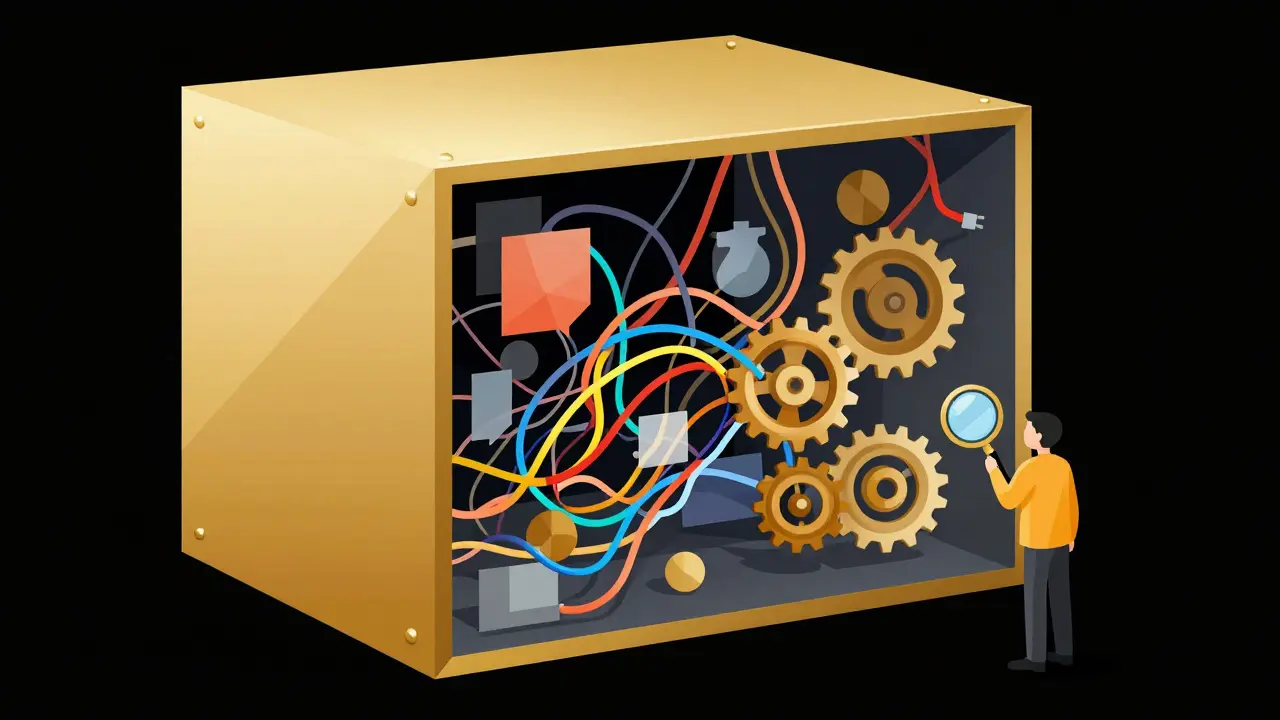
When you rely on a tool like GitHub Copilot or Claude to generate a 200-line function, you aren't just getting code; you're getting a series of assumptions. If the AI chooses an inefficient sorting algorithm or a nested loop that kills performance at scale, it might not be obvious during the 'vibe' phase. The problem is that the developer often becomes a curator rather than a creator. When you stop understanding the why behind the logic, the code becomes a black box. Maintenance then becomes a game of "prompt and pray," where you hope the AI can fix the bug without breaking three other things it wrote yesterday.
Analyzing Technical Debt in AI-Generated Systems
We need to talk about Technical Debt. In a traditional sense, this is the cost of choosing an easy, fast solution now instead of a better approach that takes longer. In vibe coding, technical debt is generated at an industrial scale. Because 41% of global code is now AI-generated, we are effectively borrowing against the future of our softwarebases.
There are three specific types of debt that emerge here:
- Architectural Drift: Because the AI focuses on the immediate prompt, it often misses the big picture. You might end up with a system where the auth logic is scattered across four different patterns because the AI "vibed" differently on Tuesday than it did on Friday.
- The Documentation Void: AI doesn't write why it did something; it just gives you the what. Without a human documenting the intent, future maintainers are left guessing.
- Hidden Complexity: AI loves to use libraries or patterns that work but are overly complex for the task. This "over-engineering by proxy" makes the codebase feel bloated.
| Feature | Traditional Coding | Vibe Coding | No-Code Platforms |
|---|---|---|---|
| Development Speed | Slow / Methodical | Very Fast / Iterative | Fast / Template-based |
| Code Control | Total | High (Editable) | Low (Locked) |
| Technical Debt Risk | Moderate (Human error) | High (Architectural drift) | Extreme (Platform lock-in) |
| Entry Barrier | High (Language mastery) | Low (Natural language) | Very Low (Visual) |
The New Debugging Paradigm: Conversational Feedback
One of the biggest shifts is how we find and fix errors. We're moving away from the Debugger-that classic tool for stepping through code line by line-and moving toward conversational refinement. If a feature is broken, you don't necessarily open the source code; you tell the AI, "The button on the mobile view is overlapping the text, fix it."
This is a double-edged sword. On one hand, it's incredibly efficient for UI tweaks and simple logic fixes. On the other, it encourages "patching" over "solving." Instead of fixing the underlying state management issue that caused the bug, the AI might just apply a CSS hack that hides the symptom. Over time, these patches pile up like layers of old paint on a house. The "vibe" remains intact, but the structural integrity of the code is rotting.
Strategies to Maintain Quality While "Vibing"
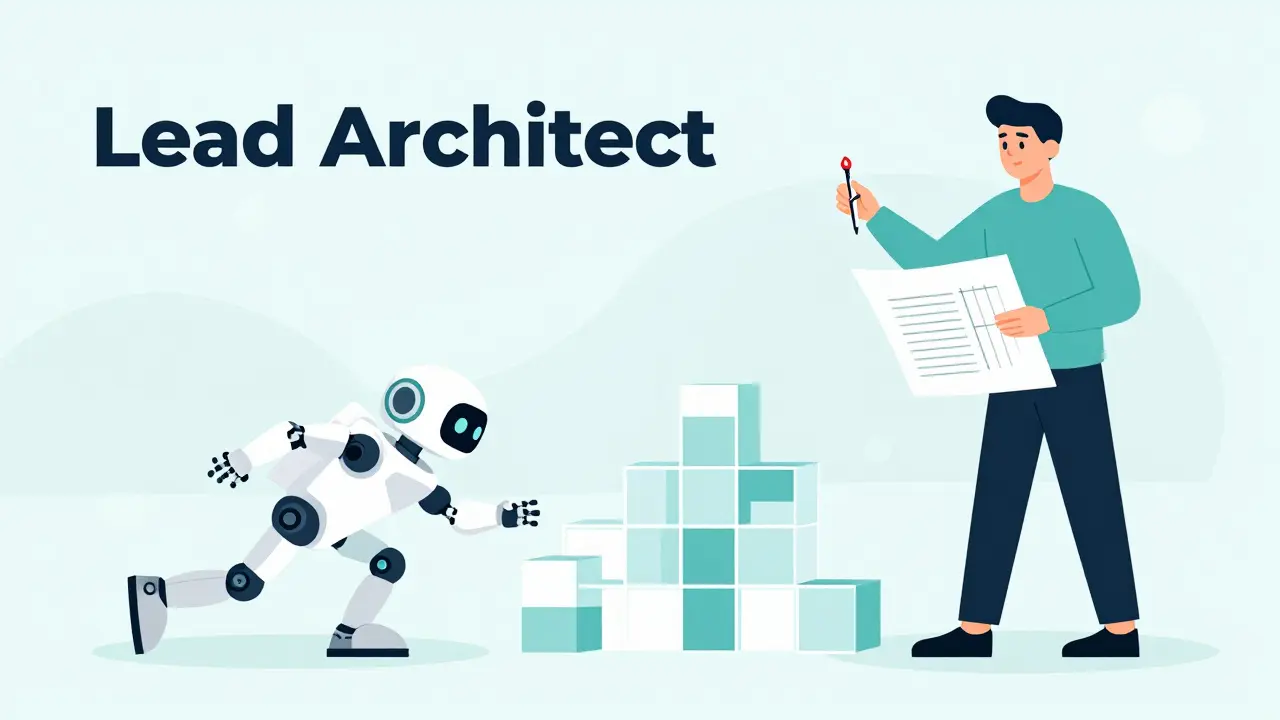
You don't have to stop using AI to keep your code clean. The key is to treat the AI as a junior developer who is incredibly fast but occasionally hallucinates. You are the Lead Architect; your job is to provide the constraints.
First, implement Prompt-Driven Standards. Instead of just asking for a feature, tell the AI the architecture it must follow. For example: "Build this feature using a Repository pattern and ensure all types are strictly defined in TypeScript." By imposing a structural framework, you reduce the chance of architectural drift.
Second, embrace Test-Driven Vibe Coding. Before asking the AI to write the logic, ask it to write the tests based on your requirements. If the generated code passes the tests, you have a baseline of reliability. If the AI writes both the code and the tests, you're just asking the AI to grade its own homework-which is a recipe for disaster.
Finally, schedule Human Refactoring Sprints. Every few weeks, step away from the prompts. Open the actual files. Delete the redundant functions the AI created. Merge the three different ways it implemented a button. This is the only way to pay down the technical debt accumulated during the high-velocity phase.
Is Vibe Coding Sustainable?
Andrej Karpathy has suggested that this shift will essentially "terraform" software development. If we move to a world where the "code" is just a compiled artifact of a conversation, the definition of a "good developer" changes. It's no longer about knowing where the semicolons go; it's about system design and critical verification.
The risk isn't that AI writes bad code-humans have been writing bad code for decades. The risk is that we lose the ability to read the code the AI writes. If we reach a point where no human on a team actually understands the underlying logic of a production system, we haven't just accumulated technical debt; we've lost ownership of our technology. The goal should be Augmented Engineering, not total replacement. Use the AI to handle the boring parts, but keep your hands on the steering wheel when it comes to the architecture.
Does vibe coding always lead to worse code quality?
Not necessarily. If the developer has a strong grasp of software architecture and uses the AI to implement specific, well-defined patterns, the quality can be very high. The danger arises when developers use AI as a substitute for architectural thinking, leading to "spaghetti code" that just happens to work on the surface.
How is technical debt in vibe coding different from traditional debt?
Traditional debt usually comes from conscious trade-offs (e.g., "we need to ship by Friday, so we'll skip the refactor"). Vibe coding debt is often unconscious; the AI might introduce inefficient patterns or redundant logic that the developer doesn't notice because the feature "works" and the development speed is too fast to allow for deep review.
Can AI tools help pay down the technical debt they create?
Yes, but with caution. You can prompt an AI to "refactor this function for better readability" or "identify redundant logic in these three files." However, the human must validate the result, as AI can sometimes introduce new bugs while trying to clean up old ones.
What is the best way to document vibe-coded projects?
Since the AI doesn't provide the "why," developers should keep a "Decision Log." Instead of documenting every line of code, document the prompts and the architectural decisions that led to the current state. Linking the prompt history to specific commits is a great way to maintain a trail of intent.
Will vibe coding replace the need for computer science degrees?
It lowers the barrier to entry for creating prototypes, but it actually increases the value of deep CS knowledge. Knowing how memory management, big-O notation, and concurrency work is the only way to tell when an AI's "vibe" is actually a performance nightmare waiting to happen.
Next Steps for Developers
If you're currently using a "vibe-first" workflow, try these three things this week to protect your codebase:
- The 10% Rule: Spend 10% of your coding time reading the generated code without running it. Try to predict where it will fail.
- Constraint Prompting: Start your prompts with a set of "non-negotiables" (e.g., "No global variables, use async/await for all API calls").
- Audit a Feature: Pick one feature you "vibed" into existence a month ago. Try to explain exactly how it works to a colleague. If you can't, it's time to refactor.
Tia Muzdalifah
April 4, 2026 AT 05:49this is basically how i build all my side projects now lol. its kinda scary but the speed is just too good to pass up even if the code looks like a mess under the hood. just vibing through the deployment process is a whole mood honestly
Zoe Hill
April 4, 2026 AT 18:02I love how this frames the future of dev!! It feels like we are all just learning a new way to communicate with machines and its so exciting to think about what we can create when we arent bogged down by syntax errors all day long :)
Stephanie Serblowski
April 5, 2026 AT 05:22Oh wow, a "Decision Log" for vibe coding? Groundbreaking stuff right there. 🙄 I'm sure the stakeholders will be absolutely thrilled when the technical debt reaches a critical mass and the whole monolithic architecture collapses because someone "vibed" a database migration into a disaster zone. But hey, at least the frontend looks like a luxury boutique while the backend is literally on fire.
Real talk though, the cognitive load of auditing AI-slop is actually higher than just writing the boilerplate myself from scratch. The throughput is high, but the entropy is higher. Just absolute peak efficiency in creating a maintenance nightmare for the next poor soul who inherits the repo. 💅
michael T
April 5, 2026 AT 16:44Absolute clusterfuck of a workflow if you ask me. It's a goddamn slippery slope into a digital wasteland where nobody knows how anything actually works and we're all just praying to the LLM gods that the whole heap of garbage doesn't implode on a Tuesday afternoon.
Christina Kooiman
April 6, 2026 AT 07:06It is truly an absolute tragedy that we are witnessing the complete and utter degradation of the fundamental principles of computer science in favor of this so-called vibe coding which is nothing more than a glorified way of pretending that one can build a stable system without having the slightest bit of understanding regarding the underlying logic, and frankly, it is an insult to every single person who spent years mastering the actual art of engineering only to have it replaced by a prompt that basically tells a machine to guess what the human actually wants in a way that is both inefficient and fundamentally flawed in its very core!