Data Classification Rules for Vibe Coding: Inputs, Outputs & Security
 Aug, 22 2026
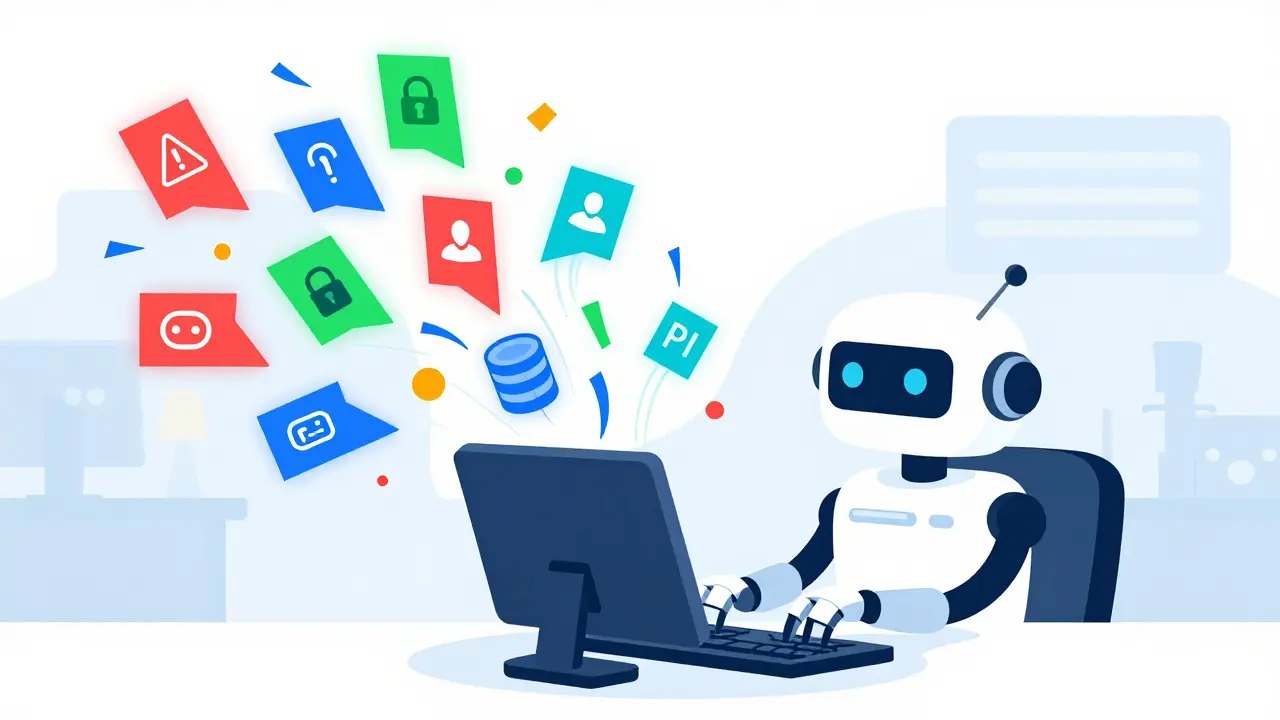
You type a prompt like "build a user login page," and the AI spits out clean code in seconds. It looks great. But did it hardcode your database password? Did it expose a Supabase service key in the frontend? In Vibe Coding is an AI-assisted programming approach where users describe software requirements in natural language and language models generate corresponding code implementations, speed is the headline feature. But for governance teams, the real story is risk. Without strict Data Classification Rules are structured frameworks that categorize data based on sensitivity, access requirements, and compliance obligations to manage security risks, you're shipping vulnerabilities at machine speed.
The problem isn't just bad code; it's misclassified data. When an LLM generates code, it doesn't inherently know that a customer email field is Personally Identifiable Information (PII) or that an API endpoint requires Row-Level Security. It guesses based on training data, which often includes insecure defaults. This article breaks down how to classify inputs and outputs in vibe coding environments so your team can govern what the AI builds without slowing down the workflow.
Why Standard Data Governance Fails in Vibe Coding
Traditional data governance relies on human review. A developer writes code, a peer reviews it, and a security team scans it before deployment. In vibe coding, the "developer" is an LLM, and the output volume is massive. You might generate fifty variations of a function in an hour. Reviewing each one manually is impossible.
This creates a gap between intent and implementation. The user intends secure code, but the tool optimizes for syntactic correctness, not semantic security. For example, the Cloud Security Alliance’s Secure Vibe Coding Guide notes that these tools frequently generate Cross-Origin Resource Sharing (CORS) configurations with wildcard (*) settings. This allows any domain to access your API. To a non-expert, this looks fine. To a security architect, it’s a critical failure of data classification because the sensitivity of the API endpoint was never properly assessed.
Furthermore, vibe coding tools often struggle with environment separation. They tend to generate code that works in a local development sandbox but fails in production because secrets are hardcoded rather than pulled from environment variables. If your governance framework doesn't explicitly classify "environment configuration" as a protected entity, the AI will treat it as plain text.
The Four-Tier Risk Stratification Model
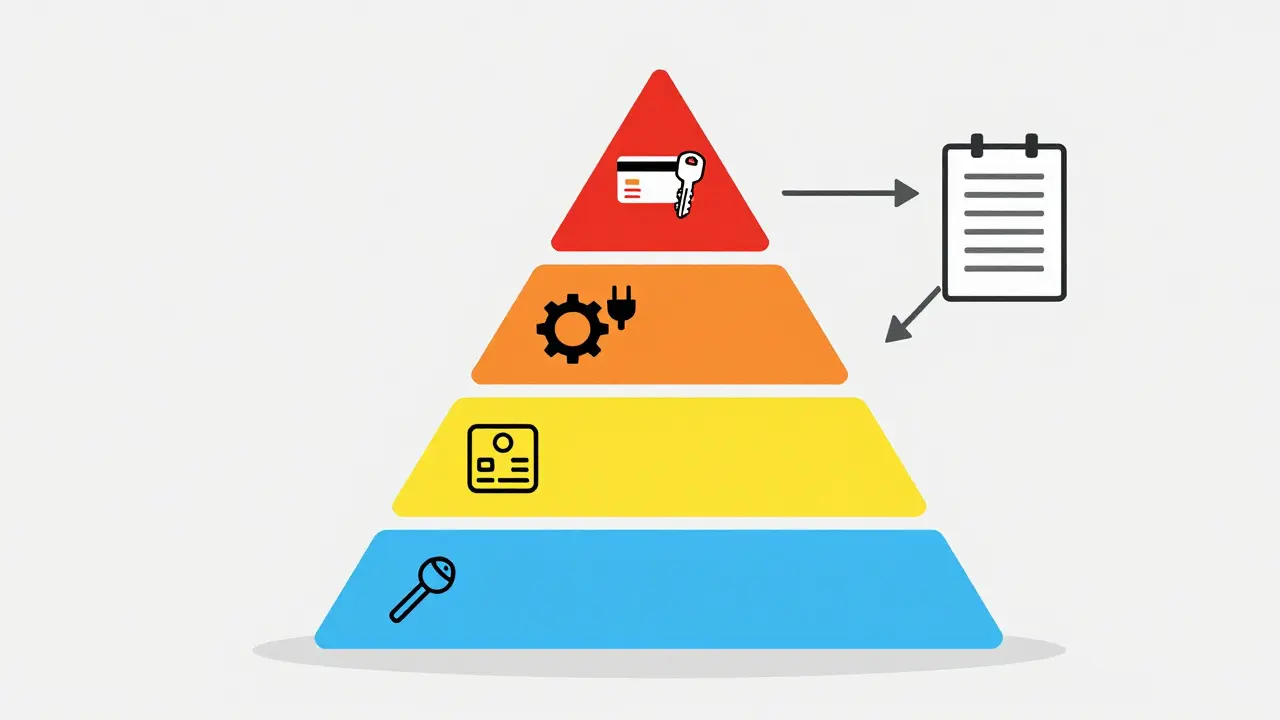
To manage this chaos, you need a clear taxonomy. The Vibe Coding Framework suggests a four-tier system based on risk impact. This model helps you decide how much verification effort to spend on each generated component.
| Tier | Typical Components | Verification Level | Required Actions |
|---|---|---|---|
| Critical | Financial data, Authentication, PII | Level 3 | Security specialist review, comprehensive documentation, manual audit |
| High | Data processing, Integration points | Level 2 | Automated security scanning, peer review |
| Medium | Standard functionality, UI components | Level 2 | Automated scanning protocols |
| Low | Internal tools, Non-critical utilities | Level 1 | Ongoing compliance monitoring |
This stratification matters because reviewing every line of code at the Critical level would bottleneck your entire engineering pipeline. Instead, you apply intensive scrutiny only where the blast radius is largest. If the AI generates a button that changes color on hover, it’s Low tier. If it generates a function that handles credit card numbers, it’s Critical. The classification rule must be applied *before* the code is merged, not after.
Classifying Inputs: Prompts and Context
Most teams focus on the output code, but the input side is equally dangerous. In vibe coding, the "input" is your prompt plus any context files you upload. If you feed the AI a schema that contains PII without tagging it, the AI has no reason to treat it specially.
Consider a scenario where you ask an LLM to build a dashboard for patient records. You provide the database schema as context. If that schema includes fields like `date_of_birth` or `ssn_last_4`, but they aren't explicitly marked as PII in your prompt or metadata, the LLM might generate SQL queries that log these values to the console for debugging purposes. This is a classic data leakage vector.
Effective input classification involves:
- Metadata Tagging: Explicitly label sensitive fields in your context documents. Use comments or JSON keys like `sensitivity: high_pii` to guide the model.
- Prompt Engineering for Compliance: Include instructions in your system prompt such as "Ensure all PII fields are encrypted at rest and masked in logs."
- Exclusion Logic Sequencing: Be careful when applying exclusion rules. Research by David Jayatillake highlights that if you apply data exclusions *after* auto-tagging, you might miss subtle PII groupings. Always filter raw data first, then tag.
Classifying Outputs: Code Artifacts and Secrets
The output is where the rubber meets the road. Here, data classification translates into specific code patterns. The most common failure point is secret management. A study by Escape Technologies analyzed over 2,000 vulnerabilities in vibe-coded applications and found that exposed secrets were a dominant pattern.
Specifically, they discovered that many apps built with platforms like Lovable and Bolt.new exposed Supabase service role keys. These keys grant admin-level access to the database. Why? Because the AI didn't classify the `supabaseUrl` and `supabaseKey` as sensitive credentials. It treated them as standard configuration strings.
To fix this, your classification rules for outputs must enforce:
- Environment Variable Mandates: No hardcoded URLs, passwords, or API keys. The AI must generate code that reads from `process.env` or equivalent.
- Row-Level Security (RLS) Enforcement: For any database table containing user-specific data, the AI must generate RLS policies. If the AI generates a `GET /users` endpoint without checking the JWT token against the row owner, it’s a High-tier violation.
- Input Validation: All external inputs must be sanitized. The AI should generate parameterized queries, not string concatenation, to prevent SQL injection.
Think of it this way: if the output touches a database, it inherits the highest classification level of the data it accesses. If it touches authentication, it inherits Critical status.
Implementing Governance Controls
Knowing the rules is one thing; enforcing them is another. Since vibe coding tools don't natively enforce enterprise policies, you need compensating controls. These are automated checks that run immediately after code generation but before human review.
First, integrate static application security testing (SAST) tools into your CI/CD pipeline. Tools like SonarQube or Checkov can scan the generated code for common anti-patterns. Configure them to flag any hardcoded secrets or missing CORS restrictions as blocking errors.
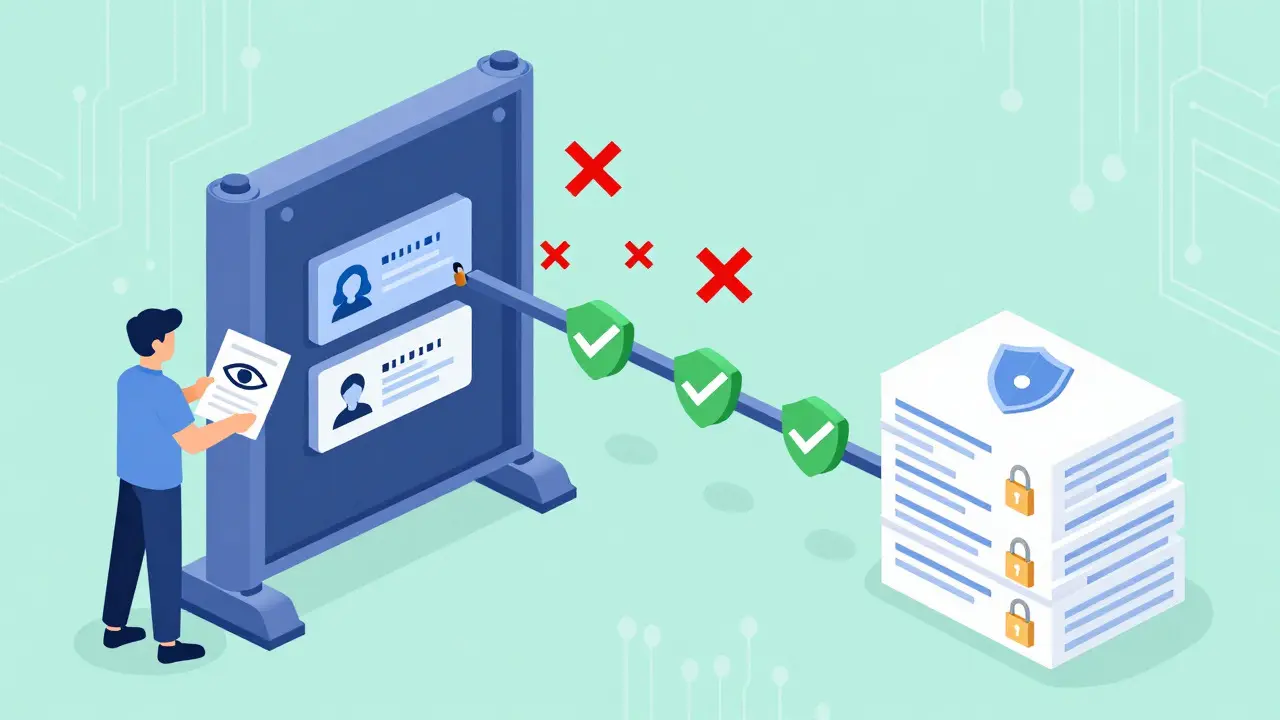
Second, use dynamic analysis for runtime behavior. Replay requests without authentication tokens to see if the API returns data. If it does, the classification rule for "Access Control" failed. This is known as replay testing. It’s simple but effective for catching authorization bugs that static scanners miss.
Third, maintain a living document of "Vibe Coding Guardrails." This document should list specific prompts that trigger higher scrutiny. For example, any prompt containing "payment," "login," or "export" automatically flags the resulting code for Level 3 verification. This reduces the cognitive load on your engineers-they don't have to guess if something is risky; the system tells them.
Common Pitfalls and How to Avoid Them
Even with rules in place, teams make mistakes. Here are the top three pitfalls we see in practice.
1. Trusting Default Configurations. Many vibe coding platforms ship with permissive defaults suitable for demos but dangerous for production. Always assume the default is insecure until proven otherwise. Check your CORS settings, your firewall rules, and your database permissions manually.
2. Ignoring Temporal Bias. Vulnerability landscapes change. A technique that was safe in January 2025 might be exploited today. Your classification rules shouldn't be static. Review them quarterly. As noted in recent research, platform imbalances mean that what works for Lovable might not work for Base44. Test your rules across different tools.
3. Over-Reliance on Auto-Tagging. Automated PII detection is good, but not perfect. Regex patterns can miss context. For instance, a field named `user_id` might not look like PII to a regex engine, but if it links to a profile with emails, it is indirect PII. Use hybrid approaches: combine auto-tagging with human spot-checks on sample data.
Building a Sustainable Workflow
The goal isn't to stop vibe coding. It's to make it safe. Start small. Pick one project and apply the four-tier model. Track how many times you had to manually fix a security issue versus how many times the automated checks caught it. Adjust your thresholds accordingly.
Remember, data classification in vibe coding is a continuous process. The AI gets smarter, the threats evolve, and your business needs shift. Keep your rules flexible, your scans automated, and your humans focused on high-value decisions. That’s how you scale innovation without scaling risk.
What is the biggest security risk in vibe coding?
The biggest risk is exposed secrets, particularly database service keys and API tokens, that are hardcoded into the frontend or backend code because the AI failed to classify them as sensitive data.
How do I classify PII in AI-generated code?
You must explicitly tag PII fields in your input context and enforce encryption/masking rules in your prompt. Then, use automated scanning to verify that the output code applies these protections consistently.
Do I need to review every line of AI-generated code?
No. Use a risk-stratified approach. Only Critical tier components (like auth and financial data) require full manual review. Lower tiers can rely on automated scanning and sampling.
What is Row-Level Security (RLS) and why does it matter?
RLS is a database feature that restricts data access based on user identity. It matters in vibe coding because AI often forgets to implement it, allowing users to see other people's data.
How often should I update my data classification rules?
At least quarterly. Vibe coding tools and threat landscapes evolve rapidly. Regular reviews ensure your rules keep pace with new vulnerabilities and platform updates.