Domain-Specific RAG: Building Compliant Knowledge Bases for Regulated Industries
 Aug, 9 2026
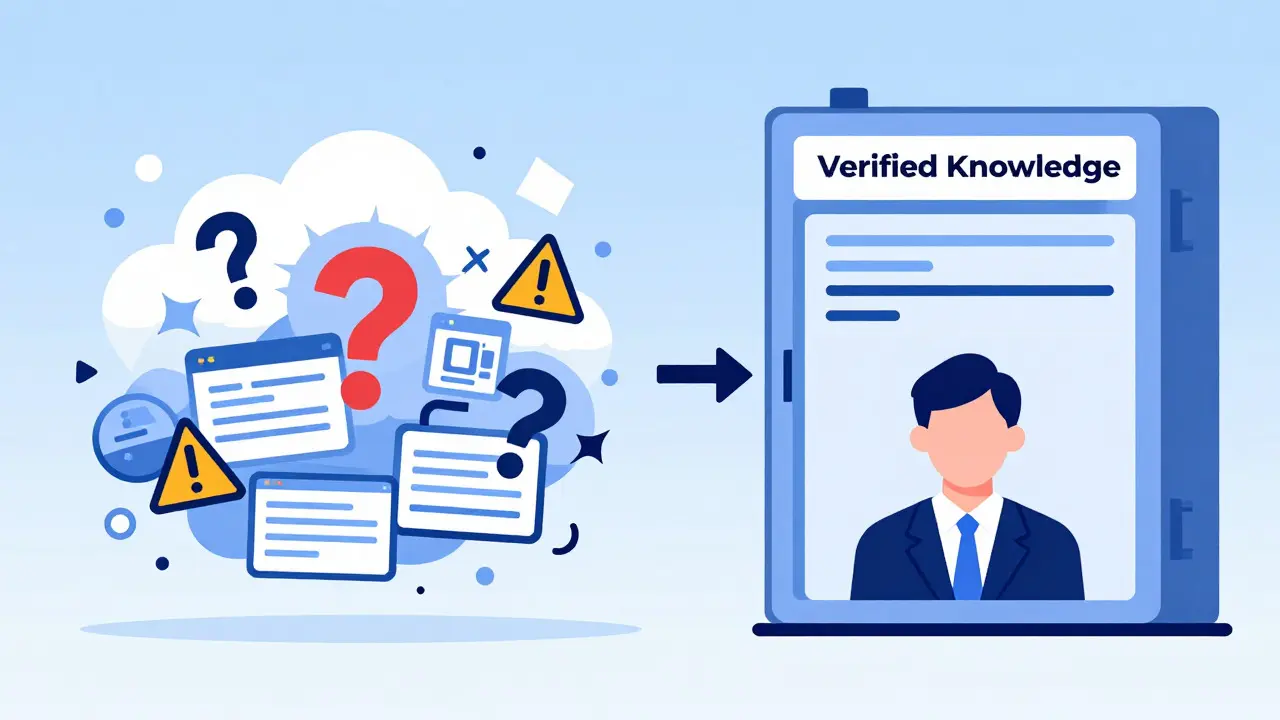
Imagine an AI assistant telling your medical team to prescribe a dosage that contradicts the latest FDA guidelines. Or worse, a financial advisor suggesting an investment strategy that violates SEC rules because it hallucinated a regulation that doesn't exist. In regulated industries like healthcare, finance, and law, generic large language models (LLMs) are dangerous liabilities. They are brilliant conversationalists but terrible fact-checkers when it comes to niche, high-stakes data.
This is where Domain-Specific Retrieval-Augmented Generation (RAG) is an advanced AI architecture designed to ground LLM outputs in verified, industry-specific knowledge bases. Unlike standard chatbots that guess based on internet training data, domain-specific RAG systems pull answers only from approved, vetted documents-like internal policy manuals, legal statutes, or clinical trial results. As of 2026, this technology has become the gold standard for compliance-critical operations, with implementations achieving up to 99% verification accuracy against domain knowledge.
Why Generic LLMs Fail in Regulated Environments
You might wonder why we can't just fine-tune a general model on our company's data. The problem isn't just about adding information; it's about controlling behavior. Generic LLMs are trained on broad internet data, which means they carry biases, outdated facts, and irrelevant noise. When you ask them a complex regulatory question, they often prioritize sounding confident over being correct.
In high-stakes sectors, confidence without citation is a liability. According to the UK Government's AI Insights report (2025), general-purpose LLMs struggle significantly in specialized fields because of their limited exposure to expert knowledge. They lack the context to understand nuances like HIPAA privacy rules or SOX accounting standards. Domain-specific RAG solves this by decoupling the reasoning engine (the LLM) from the knowledge source (your database). This ensures every answer is traceable back to a specific document, creating an audit trail that regulators demand.
| Feature | Generic LLM | Fine-Tuned LLM | Domain-Specific RAG |
|---|---|---|---|
| Hallucination Rate | High | Moderate | Low (<1%) |
| Auditability | Poor | Limited | Full Traceability |
| Update Speed | Slow (Retraining) | Slow (Retraining) | Instant (Database Update) |
| Regulatory Precision | 38-42% Lower | Moderate | High (Industry Standard) |
Core Components of a Compliant RAG System
Building a domain-specific RAG system isn't just about plugging a database into a chatbot. It requires a carefully engineered architecture with five core components working in harmony. Each piece plays a vital role in ensuring accuracy and compliance.
- Specialized Embedding Models: These are the eyes of your system. Instead of using generic embeddings, you need models fine-tuned on industry corpora. For example, a financial RAG system should use embeddings trained on SEC filings and trade policies. Research from arXiv (2025) shows that the embedding model is the "pivotal" component for retrieval accuracy, directly influencing the quality of the final answer.
- Vetted Knowledge Bases: Your data must be clean, structured, and authorized. This includes regulatory documents, internal SOPs, and historical case studies. Systems often use datasets like TradePolicy (import/export regulations) or BusinessAI reports to train initial retrieval mechanisms.
- Optimized Retrieval Mechanisms: The system must understand domain semantics. A query about "AML checks" needs to retrieve Anti-Money Laundering protocols, not American Music League schedules. Advanced retrieval uses metadata tagging and semantic search to ensure relevance.
- Constrained Generation Layers: The LLM acts as a summarizer, not a creator. It is constrained by guardrails that prevent it from inventing facts. Amazon Bedrock Guardrails, for instance, enforce strict output formats and verification checks.
- Governance Frameworks: Every interaction must be logged. Audit trails are non-negotiable in regulated industries. You need to know who asked what, what documents were retrieved, and what the final response was.
Designing for Specific Industries: Healthcare vs. Finance
While the core architecture is similar, the implementation details vary wildly between sectors. Let's look at how healthcare and finance approach domain-specific RAG differently.
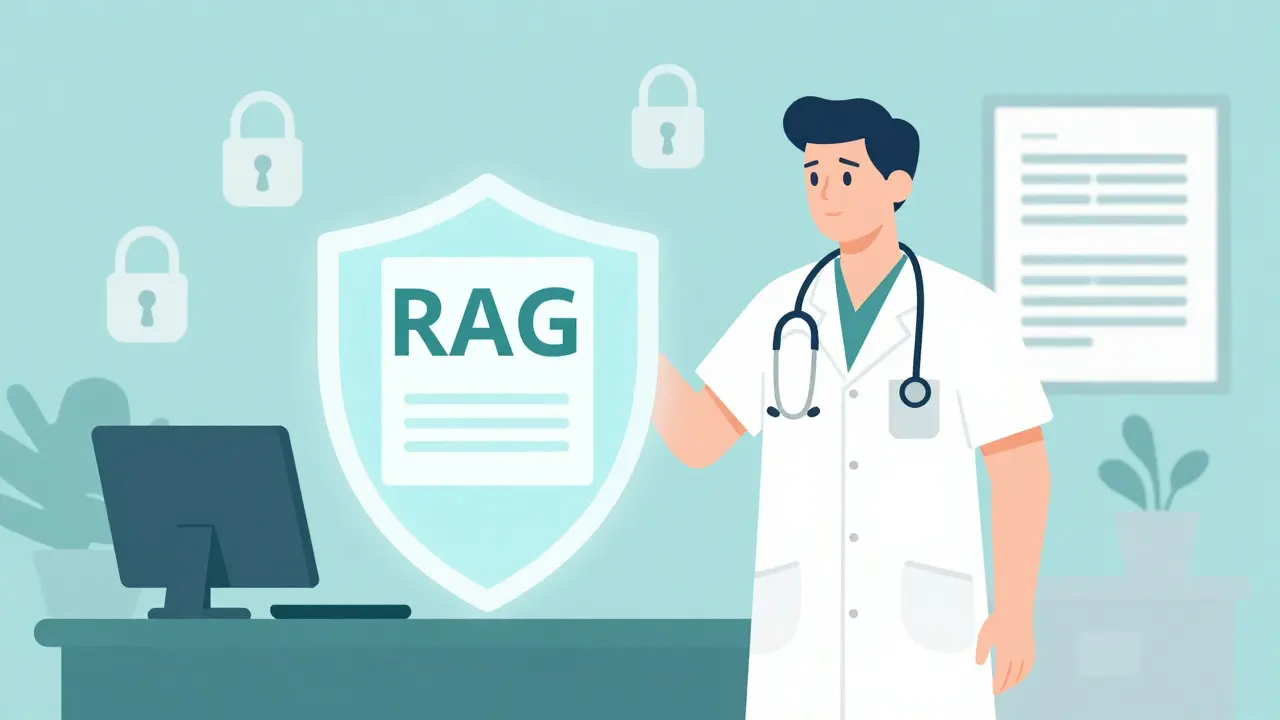
In healthcare, the priority is patient safety and privacy. Implementations require HIPAA-compliant storage with end-to-end encryption meeting NIST SP 800-53 security controls. Dr. Elena Rodriguez, Chief AI Officer at Mayo Clinic, noted in 2025 that RAG-enabled systems reduced medical coding errors by 58% while maintaining full audit trails required by CMS. However, the learning curve is steep. Clinical staff reported a 23-hour average training requirement to achieve proficiency, leading to initial resistance among some nurses.
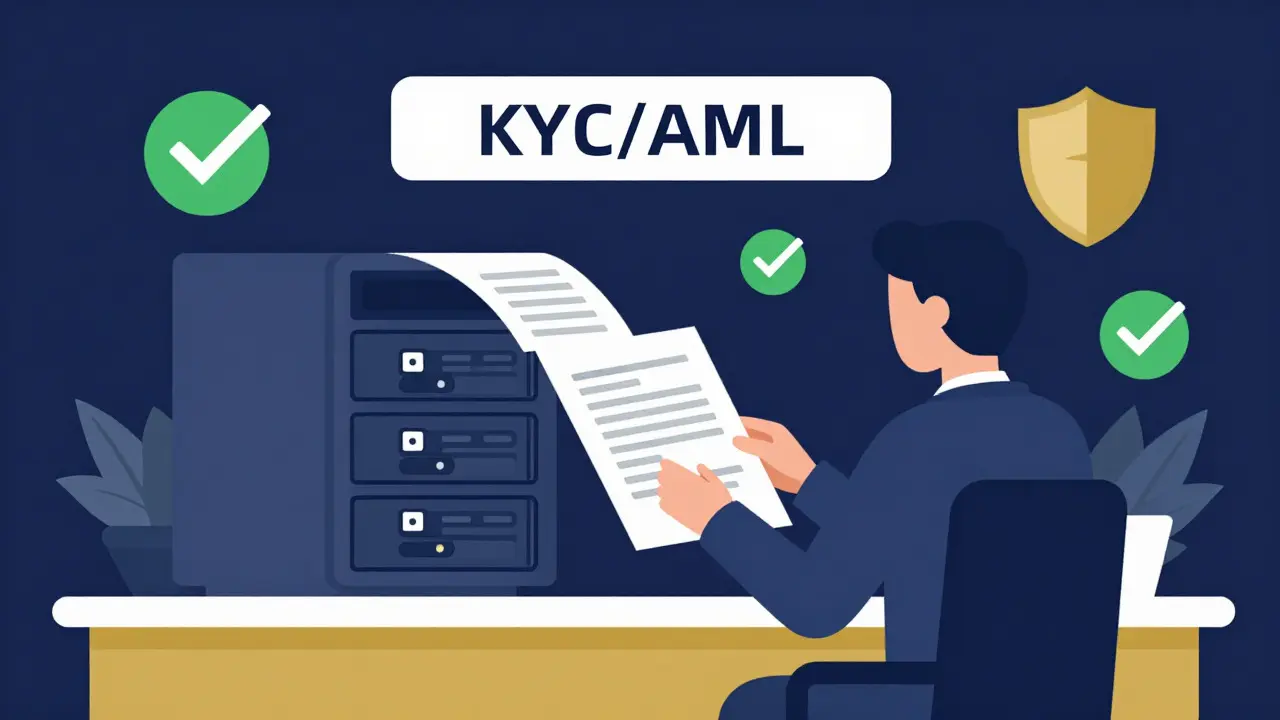
In finance, speed and precision are key. Financial institutions use RAG for Know Your Customer (KYC) verification and Anti-Money Laundering (AML) investigations. A senior compliance officer at JPMorgan Chase reported that their RAG system reduced AML investigation time from 45 minutes to 7 minutes per case. Crucially, 78% of financial institutions deploy these systems within Virtual Private Cloud (VPC) environments to isolate sensitive data. The system achieves 94.7% compliance with FATF recommendations for KYC documentation, making it far more reliable than manual review processes.
Overcoming Implementation Challenges
Despite the benefits, deploying domain-specific RAG is not plug-and-play. Organizations face significant hurdles during integration. The most common issue is document segmentation errors, reported in 53% of initial deployments. If your PDFs aren't parsed correctly, the retrieval mechanism fails, leading to incomplete answers.
Another major challenge is entity resolution failures (37% of cases). The system might struggle to link "Apple Inc." the tech company with "AAPL" the stock ticker if the knowledge base isn't properly normalized. Additionally, handling outdated regulations is tricky. If a law changes today, your RAG system must reflect that immediately. Without real-time updates, you risk giving advice based on obsolete rules.
To mitigate these risks, successful implementations follow a multi-agent architecture. This framework, described by Latitude (2025), involves separate agents for document ingestion, extraction, normalization, triplet storage, retrieval, story-building, and generation. Adopting this modular approach reduces complexity and makes debugging easier. Critical success factors also include using custom embeddings trained on at least 50,000 industry documents and enforcing a minimum 95% precision threshold before going live.
The Future of Regulated AI: Trends and Predictions
The market for domain-specific RAG is exploding, reaching $2.8 billion in 2025 with a projected growth to $8.7 billion by 2028. This surge is driven by new regulations like the EU AI Act, which mandates traceable decision-making in high-risk applications. By 2027, 73% of financial institutions plan to connect their RAG systems to real-time regulatory change detection tools, ensuring instant compliance updates.
However, challenges remain. Professor Michael Chen of MIT warns that over-reliance on RAG without human-in-the-loop verification creates single-point failure risks. If source documents contain ambiguities, the AI will propagate those errors confidently. Therefore, the future lies in hybrid models where AI handles the heavy lifting of retrieval and drafting, but humans provide the final sign-off for critical decisions.
What is the difference between RAG and Fine-Tuning?
Fine-tuning changes the model's weights to learn new patterns, which is expensive and slow to update. RAG keeps the model static but provides it with external documents at runtime. RAG is better for regulated industries because it allows instant updates to knowledge bases without retraining the entire model, and it provides clear citations for every answer.
How accurate is domain-specific RAG compared to generic LLMs?
Domain-specific RAG systems achieve 38-42% higher precision in regulatory queries compared to generic LLMs. With proper guardrails and vetted knowledge bases, verification accuracy can reach up to 99%, making them suitable for high-stakes compliance tasks.
Which industries benefit most from domain-specific RAG?
Healthcare, finance, and legal sectors benefit the most due to strict regulatory requirements. Healthcare uses it for medical coding and diagnostic support, finance for KYC/AML compliance, and legal for contract analysis and case research.
What are the main risks of implementing RAG in regulated environments?
Key risks include hallucinations if the knowledge base is incomplete, document segmentation errors leading to missing context, and over-reliance on AI without human oversight. Proper governance frameworks and human-in-the-loop verification are essential to mitigate these risks.
How long does it take to implement a domain-specific RAG system?
Technical teams typically need 8-12 weeks to master deployment. Healthcare implementations may take 37% longer due to stricter data handling requirements. Full domain-specific tuning can take up to 14 months for complex financial systems.