Employment Law and Generative AI: Monitoring, Productivity Tools, and Worker Rights in 2026
 Oct, 19 2026
You might think that if a computer decides who gets hired or fired, the rules are simple. They aren't. As of late 2026, the legal landscape for Generative AI in the workplace has shifted from "nice to have" compliance to strict, enforceable law. If you are an employer using AI to monitor productivity or screen resumes, you are no longer just managing staff; you are navigating a complex web of state-specific regulations that treat algorithms like employees with rights and responsibilities.
The core issue isn't just about efficiency. It's about accountability. When an algorithm flags an employee for low productivity, who is liable if that flag was biased? In 2026, the answer is almost always the employer. This guide breaks down what these new laws mean for your business, specifically focusing on the heavy hitters: Colorado, California, New York City, and Texas.
Why Your AI Monitoring Tool Might Be Illegal (Or Just Risky)
Let's get straight to the point: not all AI tools are created equal in the eyes of the law. The biggest change in recent years is the classification of many employment-related AI systems as "High-Risk." Under the Colorado Artificial Intelligence Act (CAIA), which fully took effect on June 30, 2026, any AI system affecting hiring, termination, or promotion is automatically high-risk. That includes the fancy dashboard you use to track how many tickets support agents close per hour.
Why does this matter? Because high-risk status triggers mandatory obligations. You can't just plug in a tool and hope for the best. You need to conduct annual impact assessments. You need to prove your tool doesn't discriminate against protected classes. And if it does? You have 90 days to report it to the State Attorney General. This isn't a suggestion box; it's a regulatory requirement with teeth.
| Jurisdiction | Primary Focus | Key Employer Obligation | Enforcement Penalty |
|---|---|---|---|
| Colorado | Risk Assessment & Transparency | Annual impact assessments; 4-year data retention | State AG enforcement; fines for non-compliance |
| California | Privacy & ADMT Accountability | Algorithmic accountability under FEHA; disclosure of AI content | $5,000/day for transparency violations |
| New York City | Bias Audits | Annual independent bias audits; public disclosure | $500-$1,000 per violation |
| Texas | Limited Liability | Avoid intentional discrimination; 60-day cure period | Attorney General action; injunctive relief |
The Colorado Standard: Setting the Bar for High-Risk AI
If you operate in multiple states, look at Colorado first. Why? Because its requirements are the most stringent. If you comply with Colorado's CAIA, you likely satisfy most other jurisdictions' baseline needs. The law distinguishes between "Developers" (who build the AI) and "Deployers" (you, the employer). As a Deployer, you own the risk.
Here is what you actually have to do:
- Conduct Risk Assessments: Every year, evaluate your AI tools for potential harm. Did the algorithm disproportionately reject candidates from a specific zip code? You need to know before the regulator does.
- Provide Notice: Tell candidates and employees when AI is making decisions about them. No more silent screening.
- Offer Human Review: If an AI rejects a resume, the candidate must have a path to appeal. This isn't optional where technically feasible.
- Retain Data: Keep all input data, outputs, and bias testing results for four years. If you delete your logs after six months, you're already out of compliance.
The goal here is to prevent "algorithmic discrimination." This happens when a tool uses proxy variables-like commute time or educational background-that correlate with race or gender, even if those traits aren't explicitly coded into the model.
California’s Layered Approach: Privacy Meets AI
California doesn't just have one AI law; it has a stack. Effective January 1, 2026, three major frameworks intersect in the workplace. First, the Automated Decision-Making Technology (ADMT) regulations from the CPPA apply anti-discrimination laws directly to AI tools. If your HR software makes a decision, it must be accountable under the Fair Employment and Housing Act.
Second, the AI Transparency Act requires "manifest disclosure" for AI-generated content. If you use generative AI to draft job descriptions or internal memos, and that content is hard to distinguish from human writing, you must label it. Third, the Generative AI Data Transparency Act forces developers to disclose training data sources, but employers still bear the brunt of using opaque models.
For California employers, the risk is twofold: privacy violations and discrimination. A productivity monitoring tool that tracks keystrokes might violate privacy expectations if not properly disclosed, while simultaneously creating disparate impacts if it penalizes workers with disabilities who type slower.

New York City: The Audit Trail Requirement
New York City Local Law 144-21 has been active since 2023, but its impact is peaking in 2026 as enforcement tightens. The rule is straightforward but expensive to ignore: if you use an Automated Employment Decision Tool (AEDT) for hiring or promotions, you must conduct an annual bias audit by an independent auditor.
Crucially, you can't keep this audit secret. You must publish a summary on your careers page. Applicants also have the right to opt-out of AI assessment and request an alternative method. This puts the power back in the candidate's hands. If you fail to notify applicants or provide the opt-out, you face fines ranging from $500 to $1,000 per violation. For a company hiring hundreds of people, those fines add up quickly.
Texas and Utah: The Light-Touch Alternatives
Not every state wants to burden businesses with red tape. Texas enacted the Texas Responsible Artificial Intelligence Governance Act (TRAIGA), effective January 1, 2026. TRAIGA is business-friendly. It prohibits only intentional AI-based discrimination and focuses mainly on government agencies. Private employers get a 60-day notice-and-cure period for violations. There are no mandatory audits or impact assessments for most private sector uses.
Utah takes a different angle with its Artificial Intelligence Policy Act. Its main focus is transparency in interaction. If an employee interacts with a generative AI chatbot for HR queries, the bot must clearly identify itself as AI upon request. More importantly, the employer is legally responsible for anything the AI says. If your chatbot makes a discriminatory statement, you can't blame the vendor. You own the speech.
Worker Rights in the Age of Algorithmic Management
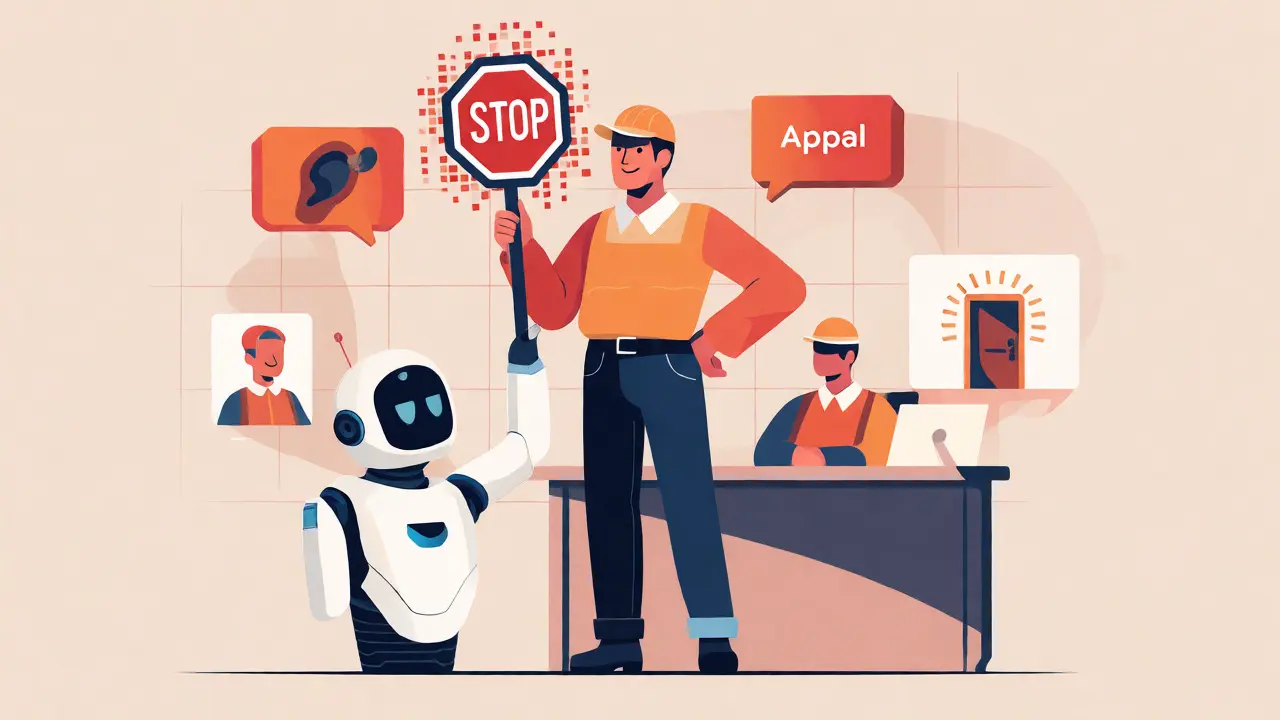
So, what does this mean for the average worker? Their rights have expanded significantly. Historically, workers could sue only after proving they were discriminated against. Now, they have proactive rights:
- Right to Know: Employees must be informed when AI influences their employment status.
- Right to Appeal: In Colorado and NYC, workers can challenge automated decisions.
- Right to Opt-Out: NYC allows candidates to refuse AI assessment entirely.
- Protection from Bias: Workers are protected from disparate impacts caused by flawed algorithms, even if the intent wasn't malicious.
This shift moves liability from reactive lawsuits to proactive compliance. Employers must now document their efforts to mitigate bias. If you don't test your tools, you lose the defense that you acted in good faith.
Practical Steps for Compliance in 2026
Navigating this patchwork is tough. Here is a simplified strategy for multi-state employers:
- Inventory Your Tools: List every AI system used in HR, from resume parsers to performance dashboards.
- Classify by Risk: Determine which tools affect hiring, firing, or promotion. These are your high-risk candidates.
- Audit for Bias: Hire an independent auditor to test your high-risk tools annually. Do this regardless of location; it's cheaper than defending a lawsuit.
- Update Notices: Revise job postings and employee handbooks to disclose AI usage. Ensure the language meets Colorado's strict standards.
- Implement Appeals: Create a clear process for humans to review AI-driven negative outcomes.
- Standardize to the Strictest Rule: Instead of maintaining five different compliance regimes, adopt Colorado's standards nationwide. It reduces complexity and litigation risk.
Remember, the technology evolves faster than the law. But in 2026, the law has caught up enough to make ignorance costly. Don't let your productivity tools become your liability.
What qualifies as a "High-Risk System" under the Colorado AI Act?
Under the Colorado Artificial Intelligence Act (CAIA), any AI system that substantially influences or facilitates consequential decisions regarding employment, such as hiring, termination, promotion, or compensation, is classified as a High-Risk System. This classification triggers mandatory annual impact assessments and transparency obligations for the employer (the "Deployer").
Do I need to disclose AI use if I just use it for drafting emails?
In California, the AI Transparency Act requires "manifest disclosure" for AI-generated content that is extraordinarily hard to remove or distinguish from human-created content. If the email is routine and obviously drafted by a human assistant using AI as a helper, it may not trigger the same strict labeling requirements as public-facing marketing materials or formal legal notices, but caution is advised. In Utah, interactive AI tools used by employees must identify themselves as AI upon request.
How often must I conduct bias audits for my hiring tools?
New York City Local Law 144-21 requires an annual bias audit by an independent auditor for Automated Employment Decision Tools (AEDTs). While other states like Colorado require annual impact assessments, they do not strictly mandate an *external* independent audit for all cases, though third-party verification is strongly recommended to meet the "reasonable care" standard.
Can I fire an employee based solely on an AI productivity score?
It is risky. In Colorado and California, if the AI score drives the termination decision, it is considered a consequential employment decision. You generally need to offer a human review or appeal process. Relying solely on an unreviewed algorithm increases the risk of a wrongful termination claim, especially if the algorithm contains hidden biases against protected classes.
Does the Texas AI law apply to small businesses?
The Texas Responsible Artificial Intelligence Governance Act (TRAIGA) applies broadly but imposes limited obligations on private employers compared to other states. It primarily prohibits intentional discrimination and focuses on government use. Small businesses benefit from a 60-day notice-and-cure period for violations, making compliance less burdensome than in Colorado or California.