Establishing Coding Standards for Vibe-Coded Repositories: A Practical Guide
 Jul, 30 2026
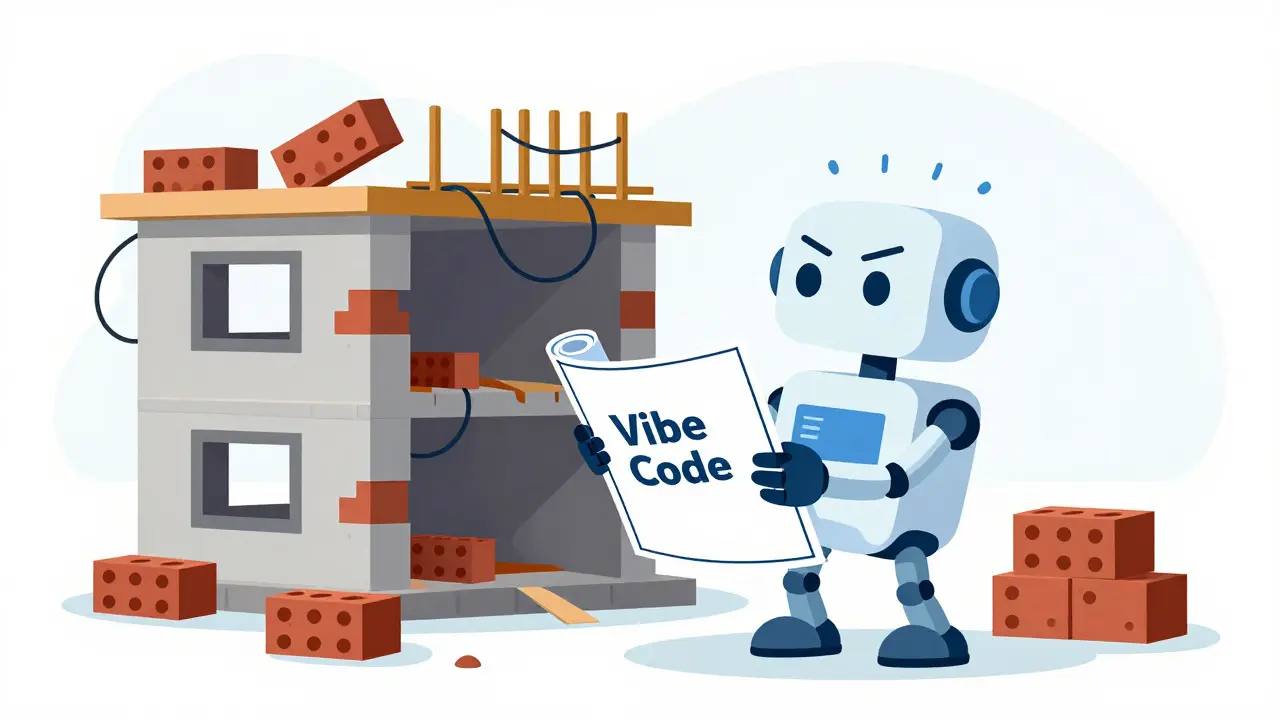
Imagine handing a stack of blueprints to an architect who speaks fluent English but has never seen a building permit. The result? A structure that looks great on paper but might collapse under the first heavy rain. That is exactly what happens when teams adopt vibe coding, defined as AI-assisted software development where natural language prompts serve as the primary interface for code generation without establishing strict coding standards. You get working code fast, but you also get a repository that is difficult to maintain, hard to debug, and potentially insecure.
Vibe coding is not just a trend; it is a fundamental shift in how we build software. By using tools like Claude Code or Gemini CLI, developers describe intent rather than typing syntax. This speed is intoxicating. However, speed without direction leads to chaos. If you want your vibe-coded projects to survive beyond the initial prototype phase, you need a governance framework. Here is how to establish robust coding standards for these AI-driven workflows.
Why Traditional Standards Fail in Vibe Coding
In traditional development, you enforce style guides using linters like ESLint or Prettier. These tools catch formatting errors before code reaches the repository. In vibe coding, this approach falls short because the "author" is an AI model that generates entire files based on high-level instructions. The problem isn't just indentation; it is architectural consistency.
When an AI generates code, it pulls from a vast dataset of public repositories. Without constraints, it might mix React patterns with Vue conventions, or use deprecated libraries alongside modern ones. This creates a "Frankenstein" codebase. To fix this, you must move beyond simple syntax checks and implement semantic standards. You need to define not just how the code looks, but how the AI thinks.
- Syntax vs. Semantics: Linters check commas and braces. Semantic standards check logic flow and dependency management.
- Determinism: AI models are non-deterministic. Two identical prompts can yield different code structures. Standards must account for this variability.
- Context Window Limits: AI agents often lose track of global project state. Standards must enforce modular design to keep context manageable.
The Role of Prompt Engineering as a Standard
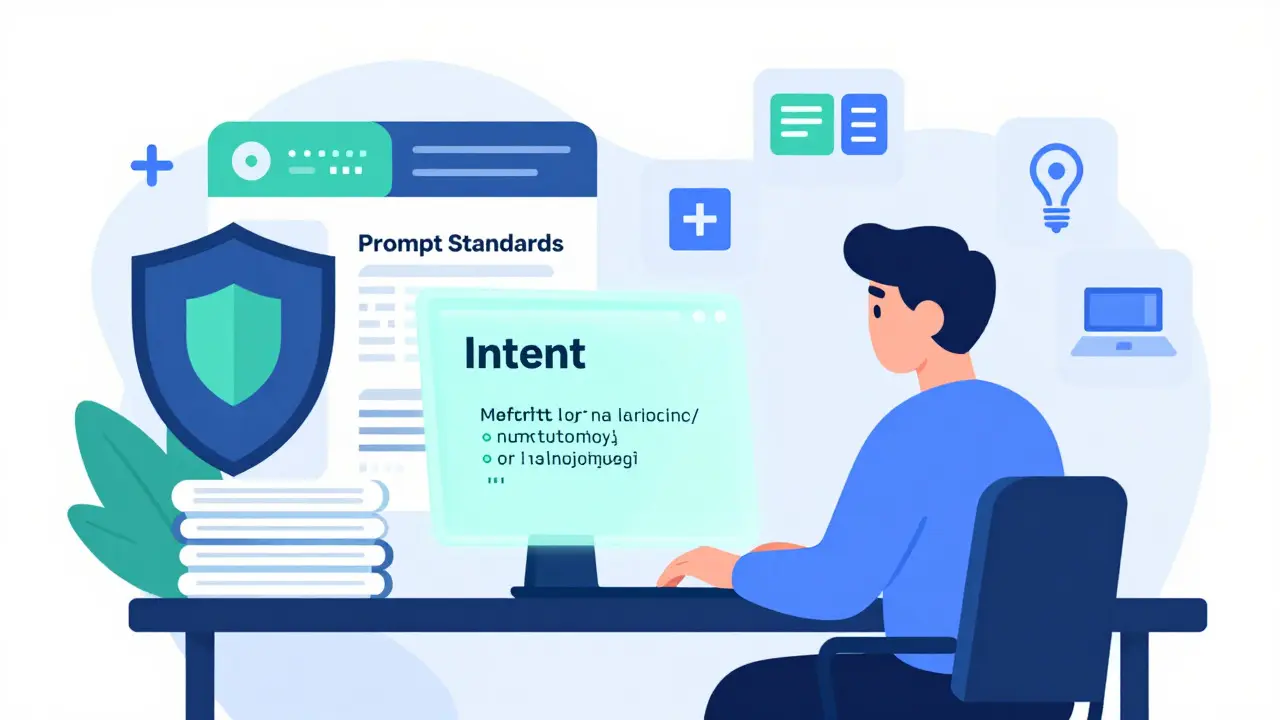
If code is the output, the prompt is the input. Therefore, your first coding standard should be a prompt engineering standard. Just as you document API endpoints, you must document how to instruct your AI agents. This involves creating a library of approved system prompts and workflow commands.
Tools like Vibe Kanban allow you to centralize configurations for AI agents. Use this to your advantage. Define specific command structures such as `/specify`, `/plan`, and `/implement`. These commands force the AI to pause and generate documentation before writing code. This spec-driven development approach ensures that every piece of generated code has a clear purpose and aligns with broader project goals.
For example, instead of prompting "Create a login page," your standard might require: "Generate a login component using React hooks, adhering to our authentication schema defined in auth.ts, and include unit tests using Jest." This level of detail reduces ambiguity and improves code quality.
Implementing Safety Layers and Sandboxing
Security is often an afterthought in rapid development. In vibe coding, it must be front and center. AI agents can inadvertently introduce vulnerabilities if not constrained. One effective strategy is to run AI coding agents in isolated environments.
Platforms like VibeKit provide a safety layer by running agents in Docker sandboxes. This isolation prevents accidental access to sensitive secrets or unintended changes to critical infrastructure. Your coding standard should mandate that all AI-generated code undergoes automated security scanning within these sandboxes before merging into the main branch.
| Tool | Primary Function | Standardization Feature |
|---|---|---|
| Vibe Kanban | Orchestration Platform | Centralized agent configuration and review workflows |
| VibeKit | Safety Layer | Docker sandboxing and automatic secret redaction |
| Augment | Semantic Analysis | Repository indexing for consistent code querying |
| GoCodeo MCP | Workflow Framework | Chained tasks for standardized deployment pipelines |
Leveraging the Model Context Protocol (MCP)
The Model Context Protocol (MCP) framework is emerging as a key standardization mechanism. It allows AI agents to connect to external tools like databases, GitHub repositories, and search engines in a standardized way. By adopting MCP, you ensure that your AI agents interact with your infrastructure consistently.
For instance, GoCodeo's implementation of MCP enables intelligent, chained workflows. An agent can generate code, push it to GitHub, and deploy to Vercel automatically. This reduces human error and ensures that deployment steps follow a predefined, auditable path. Your coding standards should specify which MCP servers are approved for use and how they should be configured.
Mandatory Human Review Protocols
No matter how advanced AI becomes, human oversight remains essential. Google Cloud’s documentation on vibe coding emphasizes that a human expert must review applications for security, quality, and correctness before deployment to production environments like Cloud Run. This is not just a recommendation; it should be a hard rule in your standards.
Define clear criteria for what constitutes a "review-ready" pull request. Does it include updated documentation? Are there passing unit tests? Is the code commented according to your team’s guidelines? Use tools like Augment, which indexes repositories for semantic analysis, to help reviewers understand dependencies and trace logic flows quickly.
Documentation and Maintainability
Vibe-coded repositories often suffer from poor documentation because the AI focuses on functionality over explanation. To combat this, enforce a "docs-as-code" policy. Require that every significant module includes a README file generated by the AI, detailing its purpose, inputs, outputs, and dependencies.
Use natural language queries to verify documentation accuracy. With tools like Augment, you can ask, "How does the payment processing module handle failures?" If the AI cannot answer based on the existing docs, the code fails the standard. This ensures that knowledge transfer remains smooth even as team members change.
Performance Benchmarks and Testing
AI-generated code can be inefficient. It might use nested loops where array methods would suffice, or make unnecessary database calls. Establish performance benchmarks as part of your coding standards. Use profiling tools to measure execution time and memory usage of critical paths.
Integrate automated testing into your CI/CD pipeline. Every commit from an AI agent should trigger a suite of unit, integration, and end-to-end tests. If the test coverage drops below a certain threshold, block the merge. This ensures that speed does not come at the cost of reliability.
Version Control and Branching Strategies
Traditional Git workflows apply here, but with twists. Since AI can generate large chunks of code quickly, small, frequent commits are crucial. Encourage atomic commits where each change addresses a single issue or feature. This makes it easier to revert problematic changes introduced by the AI.
Use feature branches for all AI-generated work. Never let an AI agent push directly to the main branch. Instead, have it create a pull request that requires human approval. This adds a checkpoint for quality assurance and allows teammates to discuss architectural decisions.
Continuous Improvement of Standards
Coding standards are not static. As AI models evolve, so should your practices. Regularly review your standards to incorporate new best practices. Hold monthly retrospectives to discuss common issues found in AI-generated code and update your prompt libraries accordingly.
Share lessons learned across the team. Create a shared repository of successful prompts and anti-patterns to avoid. This collective knowledge base becomes a valuable asset, reducing the learning curve for new team members and improving overall code quality.
What is vibe coding?
Vibe coding is an AI-assisted development method where developers use natural language prompts to guide AI agents in generating code. It shifts focus from manual syntax writing to descriptive intent and iterative refinement.
Why do vibe-coded repositories need special coding standards?
AI models can produce inconsistent architecture, mix outdated libraries, and introduce security vulnerabilities if not constrained. Special standards ensure maintainability, security, and logical consistency across AI-generated codebases.
How does the Model Context Protocol (MCP) help with standardization?
MCP provides a standardized way for AI agents to connect to external tools like databases and version control systems. This ensures consistent interaction patterns and enables automated, auditable workflows for code generation and deployment.
Is human review still necessary in vibe coding?
Yes. Human experts must review AI-generated code for security, quality, and correctness before production deployment. This step catches subtle bugs, architectural flaws, and compliance issues that AI might miss.
What tools support vibe coding governance?
Tools like Vibe Kanban for orchestration, VibeKit for sandboxed safety, Augment for semantic analysis, and GoCodeo for MCP-based workflows help teams manage and standardize AI-assisted development processes.
Zach Loescher
July 31, 2026 AT 23:43it is interesting how we are trying to fit square pegs into round holes with these AI tools. the idea of prompt engineering as a standard feels like we are just creating a new bureaucracy for code generation. i wonder if this will actually slow things down in the long run or if it is just a necessary evil to keep the chaos at bay.
Quintin Franzese
August 1, 2026 AT 15:13lol vibe coding standards. because nothing says fun and fast like filling out paperwork for your robot overlord. but seriously, the bit about frankenstein codebases is spot on. we have all seen those repos where half the code looks like it was written by a pythonista and the other half by a java dev from 2005.
Tamara Miller
August 3, 2026 AT 12:17Oh, please! Another article telling us that we need more rules? More bureaucracy? It is absolutely exhausting to read this kind of corporate drivel. You think a "prompt library" is going to save you from the inherent laziness of developers who refuse to learn syntax? It is pathetic. The real issue is that people want shortcuts without putting in the work. And don't get me started on the security risks. If you are letting an AI touch your main branch, you deserve whatever hack comes your way. Honestly, it is a disgrace to the profession.
Susan Cole
August 4, 2026 AT 19:13i think the point about semantic standards is really important here. it is not just about formatting anymore. when the AI is generating whole modules, you need to make sure it understands the bigger picture. otherwise you end up with code that works but makes no sense architecturally.
Anthony Miller
August 5, 2026 AT 03:04You are missing the forest for the trees. This entire premise is flawed because you assume the human reviewer is competent. They are not. Most reviewers are too busy to actually read the code so they just click merge. The AI generates garbage and the human stamps it with approval. It is a farce. A complete waste of time. You should be firing everyone involved in this nonsense instead of writing guides on how to manage it.
Savara Gunn
August 6, 2026 AT 21:28the part about docker sandboxes makes a lot of sense to me. i have had issues with AI agents accidentally deleting files or messing up configs before. having that isolation layer seems like a no-brainer for any team using these tools heavily.
michelle veluz
August 7, 2026 AT 17:56This is clearly a setup! Who do you think is behind Vibe Kanban and VibeKit? Probably big tech trying to spy on our code! They say it is for safety but it is all about data harvesting! Don't trust the AI! Don't trust the humans selling you the tools! Wake up sheeple!
alex kobri
August 8, 2026 AT 13:35we must consider the philosophical implications of delegating architectural decisions to non-deterministic models. it shifts the burden of responsibility from the creator to the curator. perhaps the standard is not in the code but in the intent behind the prompt.