From Pilot to Production: How to Harden Vibe-Coded Apps for Real Users
 Jun, 6 2026
You’ve built it. You’ve prompted it into existence in an afternoon. The app works on your laptop, the UI looks slick, and the logic holds together when you click through it yourself. But here’s the uncomfortable truth: vibe coding is an AI-assisted development methodology where developers describe functionality in natural language to generate source code, coined by Andrej Karpathy in February 2025. It is brilliant for prototyping. It is dangerous for production if you treat the output as final.
Moving from a pilot vibe-coded application to a hardened production system isn’t about rewriting everything from scratch. It’s about applying rigorous engineering discipline to code that was generated with speed, not safety, in mind. If you skip this step, you aren’t just risking bugs; you’re inviting security breaches, performance collapses, and maintenance nightmares that will cost ten times more than the hours you saved during generation.
The Hidden Risks of AI-Generated Code
When you use large language models (LLMs) like OpenAI’s GPT-4 or Anthropic’s Claude to write code, you are trading explicit control for implicit probability. The model predicts the next likely token based on training data. It doesn’t "think" about edge cases unless you force it to. This creates specific vulnerabilities that traditional hand-written code rarely exhibits in the same volume.
First, there is the issue of hallucinated dependencies. An LLM might reference a library function that doesn’t exist in the version you specified, or worse, a package that has been deprecated but still appears in its training corpus. Second, consider security blind spots. AI models often generate code that prioritizes functionality over security. They might leave SQL injection vectors open, fail to sanitize user inputs, or expose API keys in client-side code because the prompt focused on "making it work" rather than "making it secure."
Third, look at technical debt accumulation. Vibe-coded apps tend to be monolithic and tightly coupled. The AI generates a single file with mixed concerns-UI, logic, and data access all tangled together. This works for a demo. It fails under load. When real users hit your app, they don’t follow the happy path. They upload malformed files, send concurrent requests, and exploit race conditions. Your vibe-coded app needs armor plating to survive them.
Establishing a Security Baseline
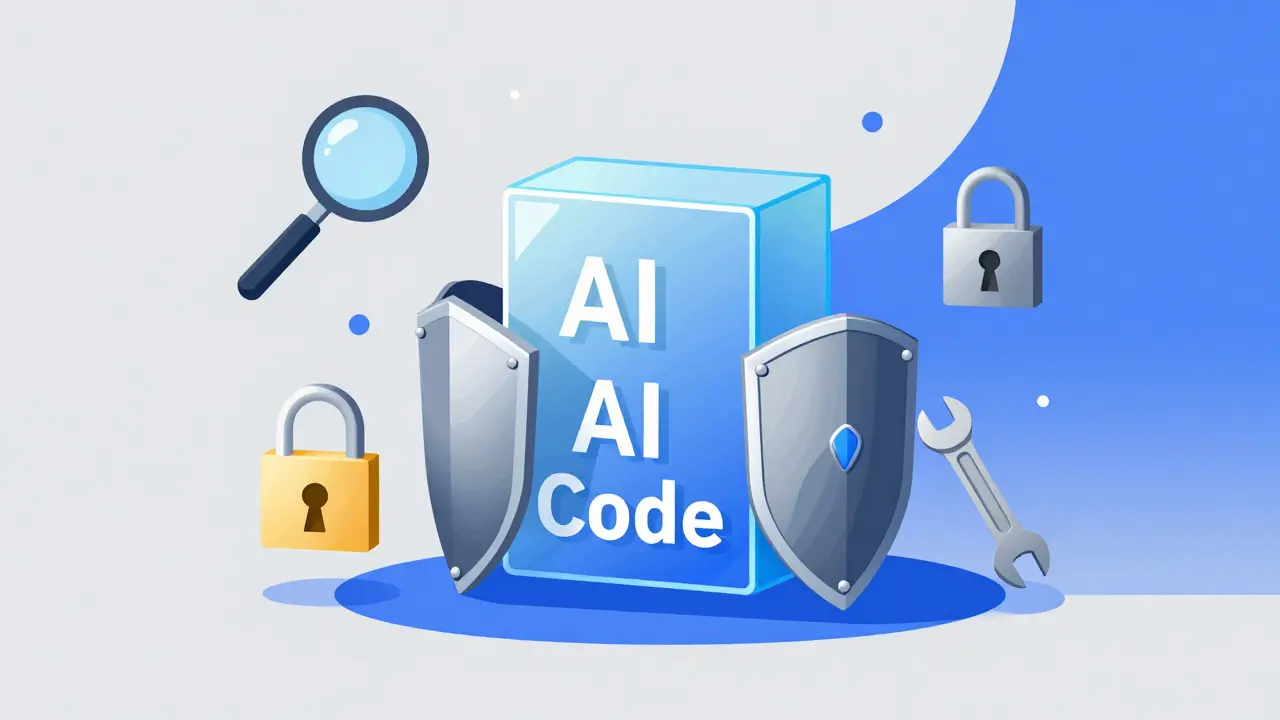
Security cannot be an afterthought. You must audit the AI-generated code immediately after generation, before adding features. Start with static analysis tools. Tools like SonarQube or Snyk can scan your repository for known vulnerabilities, hardcoded secrets, and insecure patterns. These tools provide instant feedback on code quality, which is critical when generating code at high velocity.
Implement strict input validation. Never trust user input, even if the AI told you it was safe. Use schema validation libraries (like Zod for JavaScript or Pydantic for Python) to enforce data types and constraints at every entry point. If your app accepts JSON, define the exact structure expected. Reject anything else.
Review authentication and authorization flows manually. AI models often implement simplistic auth mechanisms that lack proper session management, token rotation, or role-based access control (RBAC). Ensure that sensitive endpoints require verified identities and that permissions are checked server-side, not just in the frontend.
- Scan for secrets: Use pre-commit hooks to prevent API keys from being committed to version control.
- Validate dependencies: Run
npm auditorpip checkto identify vulnerable packages introduced by the AI. - Enforce least privilege: Ensure database connections and external API calls use minimal necessary permissions.
Refactoring for Maintainability and Scale
Vibe-coded applications are often spaghetti code wrapped in a pretty UI. To harden them, you need to introduce architectural boundaries. Break the monolith into modular components. Separate concerns: keep your business logic distinct from your presentation layer and your data access layer.
Consider adopting a standard design pattern. If you’re building a web app, move toward a Model-View-Controller (MVC) or a service-oriented architecture. This makes testing easier and allows different parts of the system to scale independently. For example, if your image processing module is resource-intensive, isolating it behind a message queue allows you to scale that specific component without scaling the entire application.
Document your assumptions. AI-generated code lacks context. Add comments explaining *why* certain decisions were made, especially if they deviate from standard practices. Future maintainers (including your future self) will thank you when they need to debug a complex interaction between modules.
Building a Robust Testing Strategy
Testing is the bridge between pilot and production. You cannot rely on manual testing alone. Implement a three-tier testing strategy:
- Unit Tests: Test individual functions and classes. Aim for high coverage on business logic. Use mocking to isolate dependencies.
- Integration Tests: Verify that different modules work together correctly. Test database interactions, API calls, and file uploads.
- End-to-End (E2E) Tests: Simulate real user journeys using tools like Cypress or Playwright. These tests catch UI glitches and workflow breaks that unit tests miss.
Automate these tests in your CI/CD pipeline. Every commit should trigger a test run. If tests fail, the build fails. This prevents broken code from reaching production. Additionally, include performance tests. Use tools like k6 or Locust to simulate load. Determine how many concurrent users your app can handle before latency spikes or errors occur. Identify bottlenecks early.
Infrastructure and Observability
Hardening isn’t just about code; it’s about infrastructure. Deploy your app using containerization (Docker) and orchestration (Kubernetes or Docker Compose). This ensures consistency across development, staging, and production environments. Define resource limits (CPU, memory) to prevent one process from consuming all available resources.
Implement comprehensive observability. You need to know what’s happening inside your app in real-time. Set up structured logging, metrics collection, and distributed tracing. Tools like Prometheus, Grafana, and ELK Stack (Elasticsearch, Logstash, Kibana) can help. Monitor key indicators:
- Error rates: Track HTTP 5xx errors and application exceptions.
- Latency: Measure response times for critical endpoints.
- Resource usage: Monitor CPU, memory, and disk I/O.
- Business metrics: Track user sign-ups, transactions, or other key actions.
Set up alerts for anomalies. If error rates spike or latency exceeds a threshold, notify your team immediately. Proactive monitoring prevents minor issues from becoming major outages.
Continuous Integration and Deployment (CI/CD)
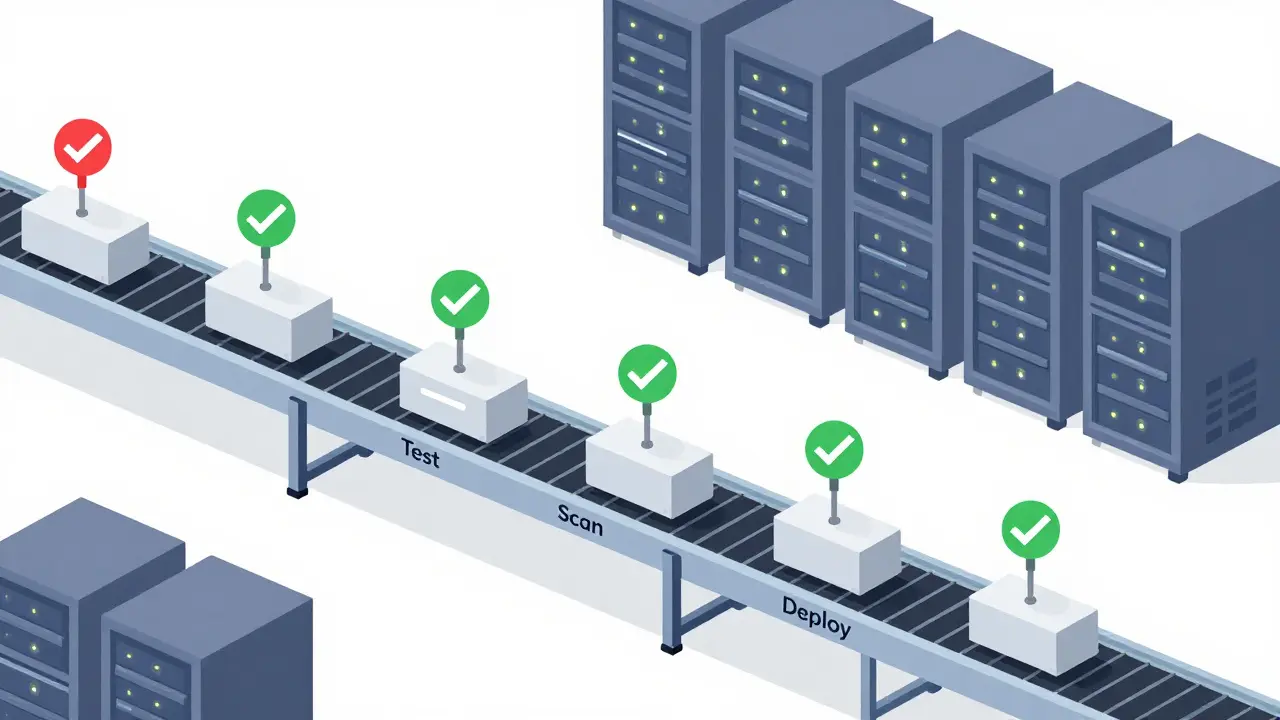
Manual deployments are error-prone and slow. Automate your deployment process. Create a CI/CD pipeline that builds, tests, and deploys your application automatically upon merging code to the main branch. Use blue-green deployments or canary releases to minimize risk. Roll out changes to a small subset of users first. Monitor for issues. If everything looks good, roll out to everyone. If problems arise, rollback instantly.
Integrate security scanning into your pipeline. Shift left on security by running vulnerability scans during the build phase. Block deployments that contain critical vulnerabilities. This ensures that only secure, tested code reaches production.
Validating with Real User Behavior
As noted by Pendo.io, velocity alone doesn’t guarantee success. Teams that excel combine rapid AI-assisted development with intelligent validation systems. Once your app is in production, monitor real user behavior. Use analytics tools to track how users interact with your features. Are they dropping off at a certain step? Are they encountering unexpected errors?
Collect feedback actively. Provide easy ways for users to report bugs or suggest improvements. Use this feedback to refine your app continuously. Vibe coding is iterative. Treat your production app as a living entity that evolves based on user needs and operational realities.
| Aspect | Pilot Phase | Production Hardening |
|---|---|---|
| Code Structure | Monolithic, tightly coupled | Modular, separated concerns |
| Security | Basic, often overlooked | Rigorous, automated scanning, input validation |
| Testing | Manual, ad-hoc | Automated unit, integration, E2E, and performance tests |
| Deployment | Manual, infrequent | Automated CI/CD, canary releases |
| Monitoring | Minimal or none | Comprehensive logs, metrics, traces, alerts |
| Scalability | Single instance | Containerized, orchestrated, load-balanced |
Common Pitfalls to Avoid
Don’t assume AI-generated code is optimal. It’s often verbose, inefficient, or redundant. Refactor aggressively. Don’t ignore technical debt. Pay it down regularly. Don’t deploy without rollback plans. Always have a way to revert to a previous stable version. Finally, don’t neglect documentation. As your app grows, clear docs become essential for onboarding new developers and maintaining long-term viability.
Is vibe-coded code less secure than hand-written code?
Not inherently, but it requires more rigorous auditing. AI models prioritize functionality and may omit security best practices unless explicitly prompted. Without manual review and automated security scanning, vibe-coded apps are more susceptible to common vulnerabilities like injection attacks and exposed secrets.
How do I refactor a monolithic vibe-coded app?
Start by identifying distinct responsibilities within the codebase. Extract UI components, business logic, and data access layers into separate modules. Introduce interfaces or contracts between these modules to decouple them. Gradually replace direct dependencies with abstractions, allowing for easier testing and scalability.
What tools are essential for hardening AI-generated code?
Essential tools include static analysis scanners (SonarQube, Snyk), dependency auditors (npm audit, pip check), testing frameworks (Jest, Pytest, Cypress), containerization platforms (Docker), and observability stacks (Prometheus, Grafana, ELK). These tools automate quality checks, security audits, and performance monitoring.
Can I deploy vibe-coded apps directly to production?
No. Direct deployment is risky. Vibe-coded apps lack the structural integrity, security hardening, and testing coverage required for production. They must undergo refactoring, security audits, automated testing, and infrastructure setup before being considered production-ready.
How does continuous integration help with vibe-coded apps?
CI pipelines automate testing and security scanning for every code change. This ensures that new AI-generated code doesn’t break existing functionality or introduce vulnerabilities. It provides immediate feedback to developers, preventing bad code from accumulating and reducing the risk of production failures.
What is the role of observability in production hardening?
Observability provides visibility into the internal state of your application. By collecting logs, metrics, and traces, you can detect anomalies, diagnose issues quickly, and understand user behavior. This data-driven approach allows for proactive maintenance and optimization, ensuring high availability and performance.