GenAI for Energy & Utilities: Solving Outage Comms and Field Support
 Apr, 17 2026
When a storm hits and the power goes out, the first thing customers do is check their phones. If they hit a busy signal or a vague "we are working on it" message, frustration spikes. For utility providers, these moments are the ultimate stress test. The challenge isn't just fixing the wires; it's managing the chaos of communication and ensuring field crews have the exact technical data they need in the middle of a rainstorm. Generative AI is a branch of artificial intelligence capable of creating new content, such as text and synthetic data, by learning patterns from existing datasets. In the energy sector, this isn't about writing poems; it's about transforming how grids are managed and how people are informed during a crisis.
Fixing the Outage Communication Gap
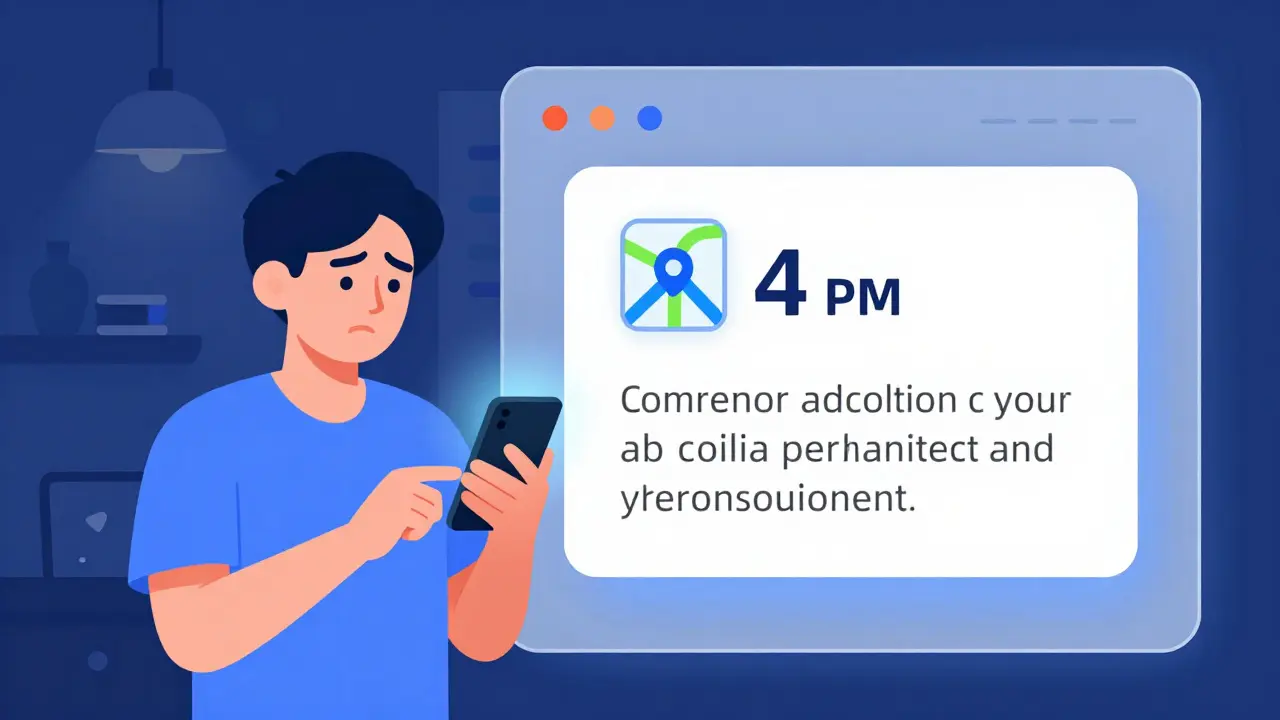
Traditional outage notifications are often static and generic. You get a text saying there is an outage in your zip code, but you have no idea if the crew is five minutes away or five hours away. By integrating Large Language Models (or LLMs) with backend outage management systems, utilities can now provide hyper-personalized updates. Instead of a template, a GenAI-powered assistant can pull real-time data to tell a customer, "The fault is at the substation on 5th Street; crews are currently replacing a transformer, and we expect your power back by 4 PM."
This shift does more than just calm customers. It drastically reduces the load on call centers. When GenAI handles the 80% of repetitive questions-like "When will my lights be back on?" or "How do I report a downed line?"-human agents can focus on complex emergency routing and critical safety issues. The result is a measurable lift in customer sentiment and a significant drop in average wait times during peak outage spikes.
Smart Field Guides for On-the-Go Technicians
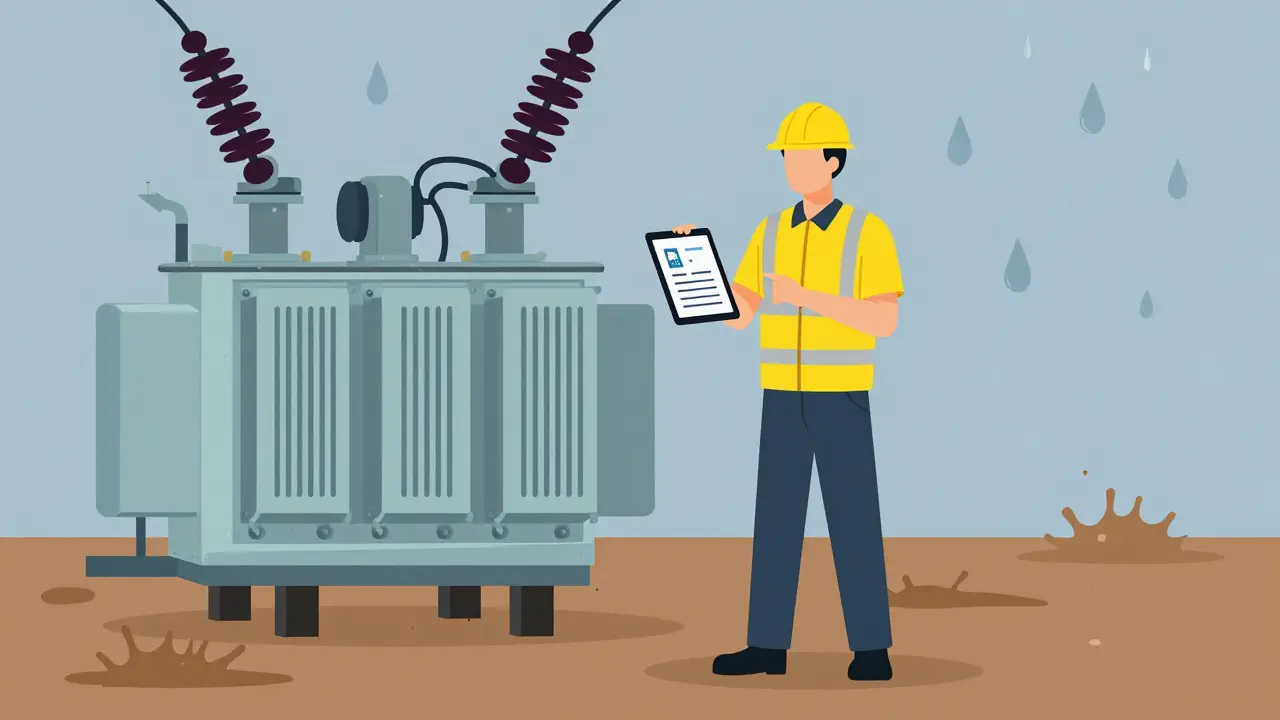
Imagine a field technician standing in a muddy trench, trying to remember the specific torque setting for a 30-year-old valve or the exact safety protocol for a rare piece of legacy switchgear. Digging through a 400-page PDF manual on a tablet is slow and dangerous. This is where GenAI functions as an intelligent personal assistant. By indexing decades of technical manuals, regulatory updates, and historical repair logs, GenAI allows technicians to ask questions in plain English: "What's the lockout procedure for the Model-X transformer in the North District?"
These AI-powered virtual assistants provide instant, accurate answers, which means fewer trips back to the warehouse and less guesswork on site. This consistency is vital for regulatory compliance; when every technician follows the same AI-verified safety step, the risk of workplace accidents drops. It turns the collective experience of a 40-year veteran engineer into a searchable asset available to a rookie technician in real-time.
Predictive Maintenance and Synthetic Scenarios
The real magic happens before the outage even occurs. Most utilities rely on threshold-based alerts-if a sensor hits 100 degrees, trigger an alarm. But real-world failures are rarely that simple. Machine Learning can analyze SCADA (Supervisory Control and Data Acquisition) logs and weather patterns to spot anomalies that don't hit a threshold but look "wrong" based on history.
GenAI takes this further by generating synthetic failure scenarios. By feeding the AI 10 years of historical outage data and sensor readings, the system can simulate "what-if" crashes. It might generate a scenario where a specific combination of high humidity, peak EV charging loads, and vegetation encroachment leads to a transformer failure. Engineers can then use these synthetic scenarios to tune their monitoring systems to be more sensitive to those specific patterns. Industry data shows that this proactive approach can reduce maintenance costs by an average of 30% and boost machine uptime by up to 20%.
| Feature | Traditional Approach | GenAI-Enhanced Approach |
|---|---|---|
| Customer Comms | Static templates, high call volume | Dynamic, personalized, 24/7 AI assistants |
| Field Support | Manuals, PDFs, peer phone calls | Natural language query, instant retrieval |
| Maintenance | Threshold-based or scheduled | Predictive based on synthetic failure models |
| Grid Planning | Manual modeling, slow updates | AI-simulated load balancing and optimization |
Beyond Electricity: Water and Gas Applications
While power grids get the most attention, water and gas utilities face similar pressures. Water providers are using GenAI to model rainfall and demand forecasts to manage reservoir levels more effectively during droughts. They're also applying these models to detect leaks in real-time by spotting abnormal usage patterns that a human operator might miss in a sea of data.
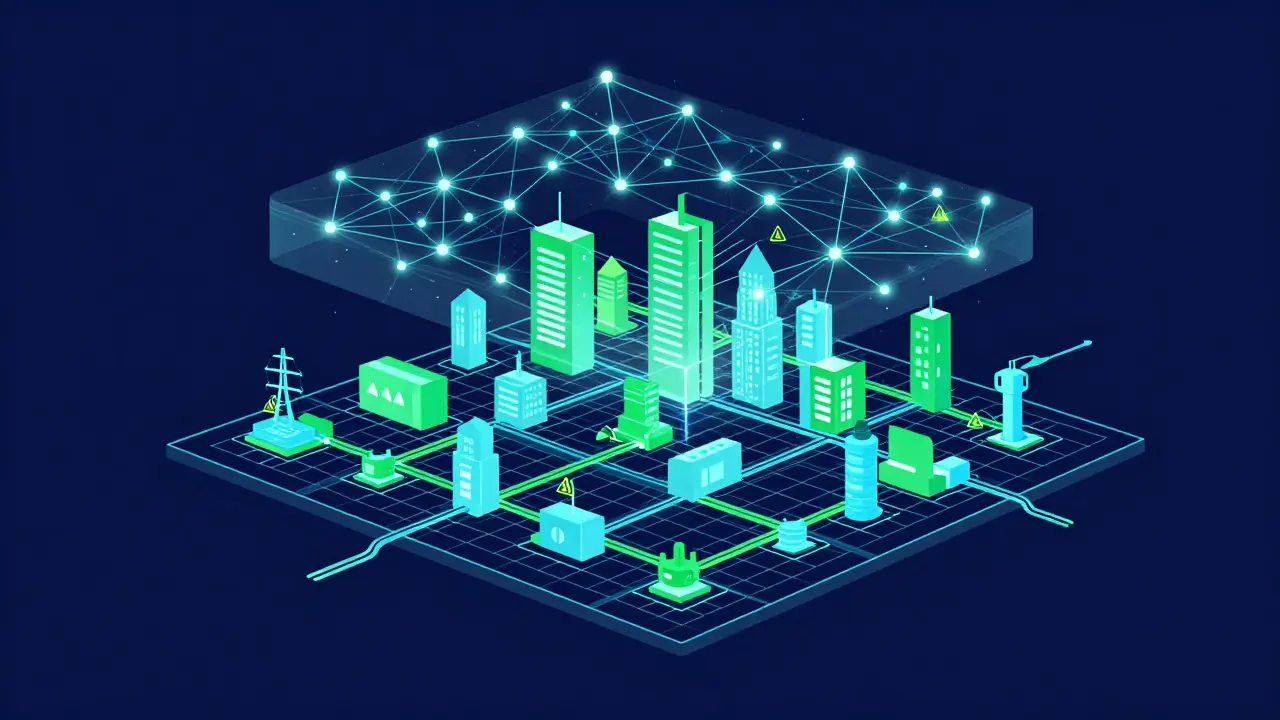
In gas distribution, AI helps redefine energy utilization during peak periods and predicts equipment failures in pumps. By coordinating electric, gas, and water operations through shared AI models, cities can achieve a level of "cross-utility effectiveness" that was previously impossible. For example, if a water main break is predicted, the AI can alert the electric grid team to prepare for potential localized power shutdowns before the pipe actually bursts.
The Roadmap to Implementation
You can't just plug a chatbot into a power grid and hope for the best. The stakes are too high. A successful rollout usually starts with a pilot program focusing on a specific asset class-like transformers or switchgear. The goal is to compare AI-generated failure scenarios against actual historical events to gauge accuracy before trusting the system with live infrastructure.
One of the biggest traps is "overfitting." If an AI is trained only on data from a decade ago, it won't understand the stress that modern EV charging stations put on a local transformer. Therefore, the data must be continuously refreshed with current load profiles and environmental context. Furthermore, every AI recommendation must have a "human-in-the-loop." An AI can suggest a repair priority, but a certified engineer must sign off on the action to ensure safety and regulatory compliance.
Will GenAI replace human field technicians?
No. GenAI is a tool for augmentation, not replacement. While it can retrieve a technical specification in seconds, it cannot physically replace a blown fuse or climb a utility pole. Its purpose is to remove the administrative burden and information silos that slow technicians down.
How does GenAI handle legacy systems that don't have APIs?
Many utilities use GenAI as a "wrapper" around legacy data. By indexing exported logs and PDFs into a vector database (a process called RAG, or Retrieval-Augmented Generation), the AI can provide answers based on old data without needing to rewrite the original legacy software.
Is the data used for training secure?
Security is a primary concern for critical infrastructure. Most utilities deploy private, on-premise, or VPC-hosted LLMs rather than using public consumer versions. This ensures that sensitive grid maps and customer data never leave the utility's secure environment.
How long does it take to see results from a GenAI pilot?
Pilot-phase results, such as improved accuracy in outage notification drafts, can often be seen within 2-3 months. However, a full-scale integration across the entire enterprise typically takes 6-12 months due to the complexity of legacy system integration.
Can GenAI actually prevent a blackout?
While it can't stop a tree from falling on a line, it can prevent "cascading" failures. By analyzing usage patterns and rebalancing distribution loads in real-time, GenAI helps prevent specific grid segments from becoming overstrained, which is a common trigger for larger outages.
Amy P
April 17, 2026 AT 15:37Omg the idea of a technician in a muddy trench actually getting an instant answer instead of flipping through a soggy manual is honestly a game changer!!
I can just imagine the sheer panic when you're staring at a 30-year-old valve and have no clue what to do. This is literally the future of infrastructure!
James Winter
April 19, 2026 AT 08:58Canada would do this better. US tech is always overrated.
Jasmine Oey
April 21, 2026 AT 04:31Its just so basiclly obvious that we need this for the greater good of humanity!!
Like, imagine the moral failing of a company that doesn't prioritze the emotional well-being of a customer in the dark. Totally unacceptable. We deserve better than generic texts, period!
Colby Havard
April 21, 2026 AT 17:14One must ponder the ethical implications of delegating critical infrastructure decisions to a stochastic parrot... Is the efficiency gained worth the erosion of human intuition??? Surely, we are trading our cognitive autonomy for a mere reduction in call center wait times!!!
Marissa Martin
April 22, 2026 AT 17:32It is interesting that the focus is on efficiency rather than the actual human cost of these outages. I suppose some people just care more about the bottom line than the people actually suffering in the cold.
Tyler Springall
April 23, 2026 AT 23:00The sheer audacity of suggesting a "human-in-the-loop" is sufficient to prevent a catastrophe is laughable. I have seen these legacy systems firsthand and they are a disaster waiting to happen. The level of incompetence in utility management is truly an art form at this point.
Patrick Bass
April 25, 2026 AT 12:17The phrasing in the section regarding SCADA logs is slightly imprecise.