Legal Basics for Vibe-Coded Apps: Copyright, Licensing, and IP Ownership
 Mar, 8 2026
When you tell an AI, "Build me a to-do app that feels like scrolling through TikTok," and it spits out working code in seconds-that’s vibe coding. It’s fast, fun, and feels like magic. But here’s the thing no one talks about: who owns that code? If you build an app using AI, is it yours? Can you sell it? Could someone sue you for using code the AI pulled from GitHub? These aren’t hypotheticals. People are already launching apps this way-and getting hit with legal notices.
Vibe coding, introduced by Andrej Karpathy in early 2025, isn’t just a productivity hack. It’s a full shift in how software gets made. Instead of typing out loops and functions, you describe what you want. AI agents generate the code. Tools like Cursor, Replit AI, and Windsurf make it feel effortless. But behind the scenes, those AI models were trained on millions of lines of open-source code-code with licenses, restrictions, and legal baggage. And now, that baggage is showing up in your app.
Who Owns the Code You Didn’t Write?
The short answer: no one knows for sure. But courts and companies are starting to figure it out.
Under U.S. copyright law, only human-created works are protected. That means if an AI writes code entirely on its own-with zero human input beyond a single prompt-the U.S. Copyright Office says it’s not copyrightable. But if you guide it? Refine its output? Fix bugs? Edit the structure? Then you’ve crossed into authorship territory. The key is control. The more you shape the output, the more likely you own it.
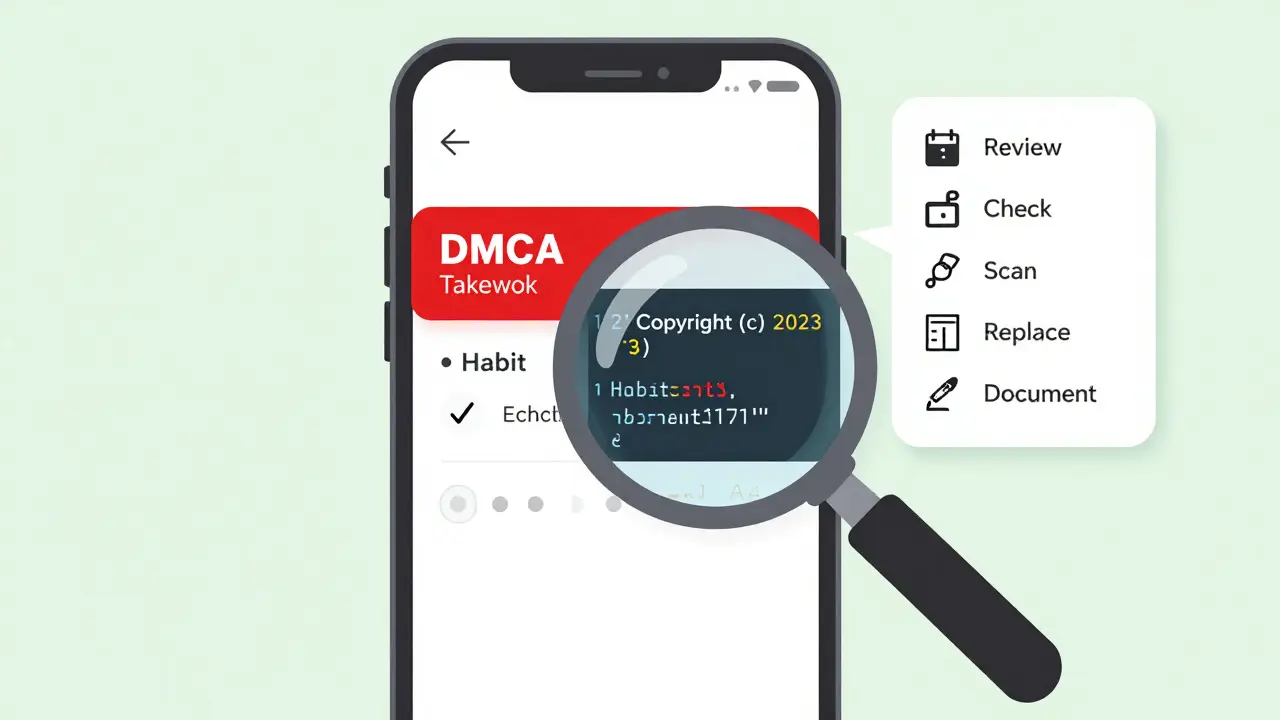
Take a real example: a developer in Austin used Windsurf to build a mobile habit tracker. The AI generated 90% of the code. She tweaked the UI, added user authentication, and fixed three critical bugs. She published it on the App Store. Two months later, she got a DMCA takedown notice. The code had copied a snippet from a GPL-licensed project on GitHub-code the AI had learned during training. Even though she didn’t copy it herself, the AI did. And now her app was flagged.
That’s the problem. You don’t need to copy code to infringe on it. If the AI reproduces protected code, even accidentally, the copyright holder can still come after you.
Licensing: The Hidden Trap in AI Training Data
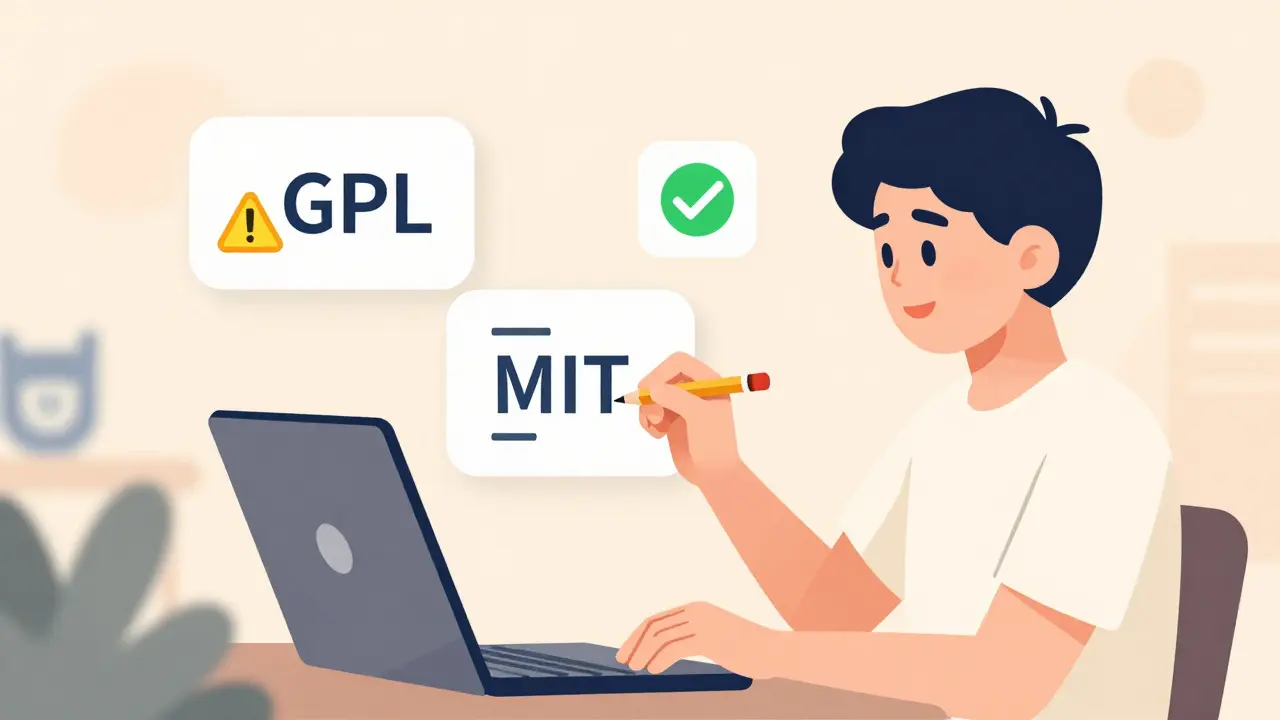
Most AI coding tools are trained on public codebases. GitHub alone has over 300 million repositories. Many of them use licenses like MIT, GPL, or Apache 2.0. But here’s where it gets messy:
- MIT License: Allows almost anything, including commercial use. Safe to use.
- GPL License: Requires any derivative work to also be open-source. If the AI regurgitates GPL code into your app, you might be forced to open-source your whole project.
- Apache 2.0: Permits commercial use but requires attribution. If the AI uses Apache code and you don’t credit it, you’re in violation.
Most AI tools don’t tell you what code they pulled from training. You can’t audit it. You can’t check licenses. And that’s the risk. You could be unknowingly violating terms you never agreed to.
Companies like GitHub Copilot and Replit have disclaimers in their Terms of Service. They say you’re responsible for what the AI generates. But they don’t guarantee the code is clean. Some developers have sued them for this exact reason. The courts haven’t ruled yet-but the lawsuits are piling up.
What You Can Do Right Now
You don’t need a lawyer to protect yourself. Just follow these steps before you ship anything:
- Review the output. Don’t just copy-paste AI code. Read it. Understand what it does. If it looks like a known open-source project, Google it.
- Check for license markers. Look for comments like
// Licensed under MITorCopyright (c) 2023. Those are red flags. - Use tools that scan for license risks. Tools like CodeQL and LicenseAI can scan AI-generated code for matches in public repos. Some are free. Others cost $10/month.
- Replace high-risk code. If you find GPL-licensed snippets, rewrite them yourself. Even if the AI wrote it, you can fix it.
- Document your edits. Keep notes on what you changed. That’s your proof of human authorship if someone questions ownership.
One indie dev in Portland built a music app using vibe coding. He didn’t check licenses. A week after launch, he got a cease-and-desist letter. He had copied a 12-line function from a GPL project. He rewrote it in two hours. He added a disclaimer. He kept the app live. He didn’t get sued.
What About Selling Vibe-Coded Apps?
Yes, you can sell apps built with AI. But you need to be transparent.
If you’re selling a SaaS product or a mobile app, your Terms of Service should say something like:
"This application was developed using AI-assisted tools. While human oversight was applied to all code, certain components may have been generated by third-party AI systems. We make no claim of originality for all code elements."
This doesn’t make you immune-but it shows you’re not hiding anything. Courts look at intent. If you tried to be responsible, you’re far less likely to lose a case.
Also, avoid trademarked names. If the AI generates code that says "Instagram-style feed," don’t use that phrase in your app. Trademarks aren’t about code-they’re about branding. You can’t copy the look and feel of a big platform, even if the AI suggested it.
The Bigger Picture: Democratization Has a Price
Vibe coding is the most powerful democratization tool in software history. A 16-year-old in rural Ohio can now build an app that competes with Silicon Valley startups. That’s incredible. But with great power comes great responsibility.
Legal systems aren’t built for this. Copyright law was written for humans typing at keyboards. Now, code is being born from conversation. Courts are scrambling. Regulators are clueless. The rules are being written right now-and you’re part of that process.
Don’t wait for a lawsuit to wake you up. Start checking licenses. Start documenting your work. Start asking: "Is this mine?" before you hit "deploy."
The future of software isn’t just AI. It’s responsible AI. And that starts with you.
Can I copyright an app built with vibe coding?
Yes-if you significantly edited, shaped, or refined the AI-generated code. The U.S. Copyright Office requires human authorship. If you just copied and pasted AI output with no changes, you likely can’t copyright it. But if you rewrote logic, redesigned the UI, fixed bugs, or added unique features, you’ve created a derivative work you can protect.
Is AI-generated code considered plagiarism?
Not technically-it’s not copying by human intent. But legally, it can still be infringement. If the AI reproduces code from a licensed project, even accidentally, and you use it in your app, the original copyright holder can still issue a takedown notice. It’s not plagiarism-it’s unauthorized reproduction.
Do I need to license my vibe-coded app as open-source?
Only if the AI used code from a copyleft license like GPL and you didn’t remove or replace it. If your app contains even one GPL-licensed function, you may be legally required to open-source your entire project. Always scan for GPL, AGPL, or LGPL code before releasing.
Can I use vibe coding for commercial apps?
Yes, but with caution. Most AI coding tools allow commercial use, but they don’t guarantee the code is legally clean. You’re responsible for ensuring no licensed code from training data ends up in your app. Use code scanners, review outputs, and document your edits to reduce risk.
What happens if I get sued for AI-generated code?
Most cases settle before trial. But you’ll need to prove you didn’t knowingly copy code and that you took reasonable steps to avoid infringement-like reviewing outputs, using scanners, and documenting changes. If you did nothing, you’re likely liable. If you tried to be careful, courts often reduce penalties or dismiss claims.
What’s Next?
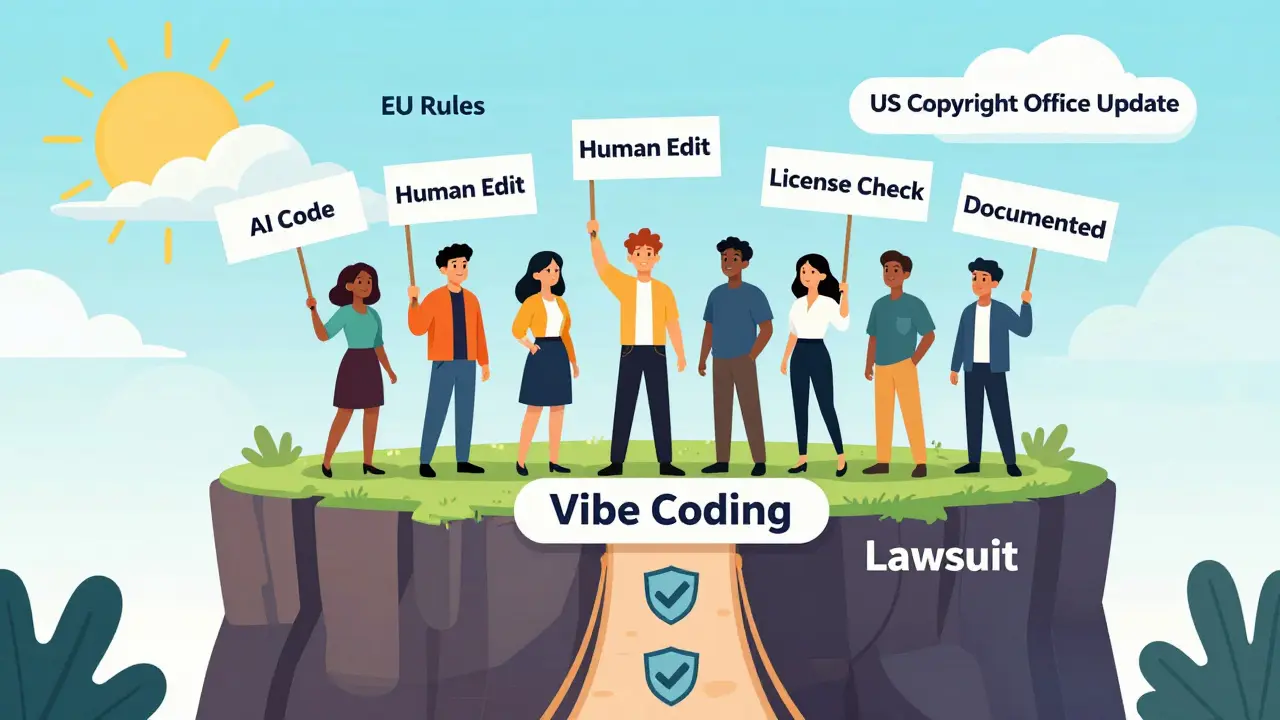
The law is catching up. The EU is drafting rules that require AI-generated code to be labeled. The U.S. Copyright Office is updating its guidelines. Some startups are already offering "AI code insurance"-policies that cover legal costs if your AI-built app gets sued.
For now, treat AI code like a wild animal: it’s powerful, useful, and can bite you if you don’t handle it right. Learn the rules. Check the code. Own your edits. And don’t assume the AI did the work for you-because legally, it didn’t. You did.
Destiny Brumbaugh
March 9, 2026 AT 18:09Sally McElroy
March 11, 2026 AT 13:28Sara Escanciano
March 13, 2026 AT 11:01Elmer Burgos
March 13, 2026 AT 17:25Jason Townsend
March 14, 2026 AT 04:25Antwan Holder
March 14, 2026 AT 13:21Angelina Jefary
March 14, 2026 AT 18:41The future of software isn’t just AI. It’s responsible AI. And that starts with you.
" - but you opened with twotags and closed with one. Also, "vibe coded" is not a hyphenated compound adjective. It's "vibe-coded." Fix your grammar before you lecture the world on legal liability.
Jennifer Kaiser
March 15, 2026 AT 22:48