LLM Price Trends 2026: How Competition Drives Commoditization
 Aug, 28 2026
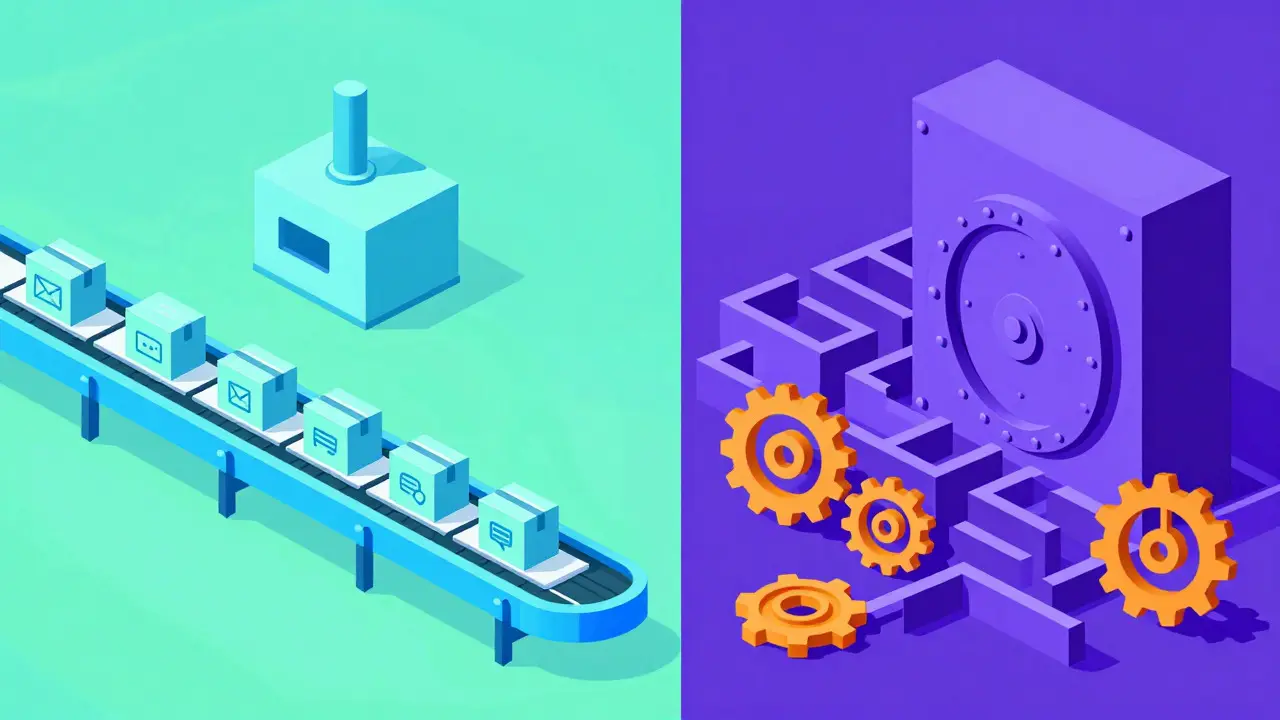
Remember when running a single GPT-4 query felt like spending money on a luxury item? In 2023, you paid roughly $60 per million tokens for that level of intelligence. Fast forward to August 2026, and the same quality output now costs about $0.75 per million tokens. That is a 98% drop in just three years. This isn't just a discount; it's a fundamental shift in how we value artificial intelligence. As LLM price trends continue to compress, the market is splitting into two distinct worlds: cheap, fast commodity models for everyday tasks and expensive, slow premium models for complex reasoning.
If you are building an application or managing an AI budget, understanding this split is critical. You no longer need to pay top dollar for simple summarization or basic chatbots. However, if your workflow requires deep legal analysis or multi-step scientific deduction, the premium tier remains necessary. Here is what is driving these changes and where the costs are heading next.
The Two-Tier Market Structure
The LLM landscape has stopped being a single race to the bottom. Instead, it has bifurcated. On one side, you have general-purpose language models. These handle summarization, standard question answering, and content generation. Because these tasks require less specialized computation, providers compete aggressively on price. Open-source alternatives like Meta’s Llama 4 Maverick have pushed input costs down to a median of $0.27 per million tokens. With context windows exceeding 1 million tokens, these models offer massive capacity at a fraction of the historical cost.
On the other side sits the premium reasoning segment. These models tackle accuracy-sensitive workflows where errors are costly. Take OpenAI’s GPT-5.2 Pro, which charges $21 per million input tokens but escalates to $168 per million output tokens. That is an 8x multiplier between input and output. Why such a gap? Because generating verbose, high-precision responses consumes significantly more compute power than simply reading prompts. Anthropic’s Claude Opus 4 follows a similar pattern, charging $15 for input and $75 for output. If your use case involves long analytical chains, like reviewing a 50-page contract, these output costs add up quickly.
| Model Tier | Representative Model | Input Cost ($/M tokens) | Output Cost ($/M tokens) | Output-to-Input Ratio | Primary Use Case |
|---|---|---|---|---|---|
| Commodity / Open Source | Meta Llama 4 Maverick | $0.27 | $0.85 | ~3.1x | High-volume chat, summarization |
| Mid-Tier Competitive | DeepSeek R1 | $0.60 | $2.34 | ~3.9x | Cost-effective reasoning |
| Premium General | Claude Sonnet 4 | $3.00 | $15.00 | 5x | Business operations, coding |
| Advanced Reasoning | GPT-5.2 Pro | $21.00 | $168.00 | 8x | Complex analysis, scientific research |
Why Prices Are Dropping So Fast
You might wonder how prices can fall by nearly 100% in three years without the technology breaking. The answer lies in architectural efficiency and fierce competition. Older models required activating every parameter for every request. Newer architectures, specifically Mixture-of-Experts (MoE) models, change this dynamic. MoE models only activate a subset of parameters per request. This means the server does less work for each token, directly lowering the compute cost. Providers pass these savings on to users to win market share.
Another key driver is speculative decoding. This technique pairs a small, fast draft model with a larger, slower main model. The small model predicts the next few words, and the large model verifies them. If the verification passes, the process moves faster, increasing throughput. Higher throughput means lower cost per unit of time. Additionally, quantized variants using 4-bit or 8-bit precision allow inference to run on cheaper hardware. When you combine these technical efficiencies with the entry of aggressive competitors like DeepSeek and the proliferation of open-source weights from Meta, the pressure on established providers to lower prices becomes relentless.
The Hidden Costs Beyond Token Counters
Looking only at the sticker price per million tokens is a mistake. Total cost of ownership includes several hidden layers that often surprise developers. The biggest culprit is "reasoning tokens." Models like GPT-o1 and Claude 3.5 Sonnet Thinking perform internal chain-of-thought reasoning. Even if you don’t see the intermediate steps, the model generates them internally, and you pay for them. In long analytical tasks, these invisible tokens can double or triple your bill compared to a standard model that doesn’t reason step-by-step.
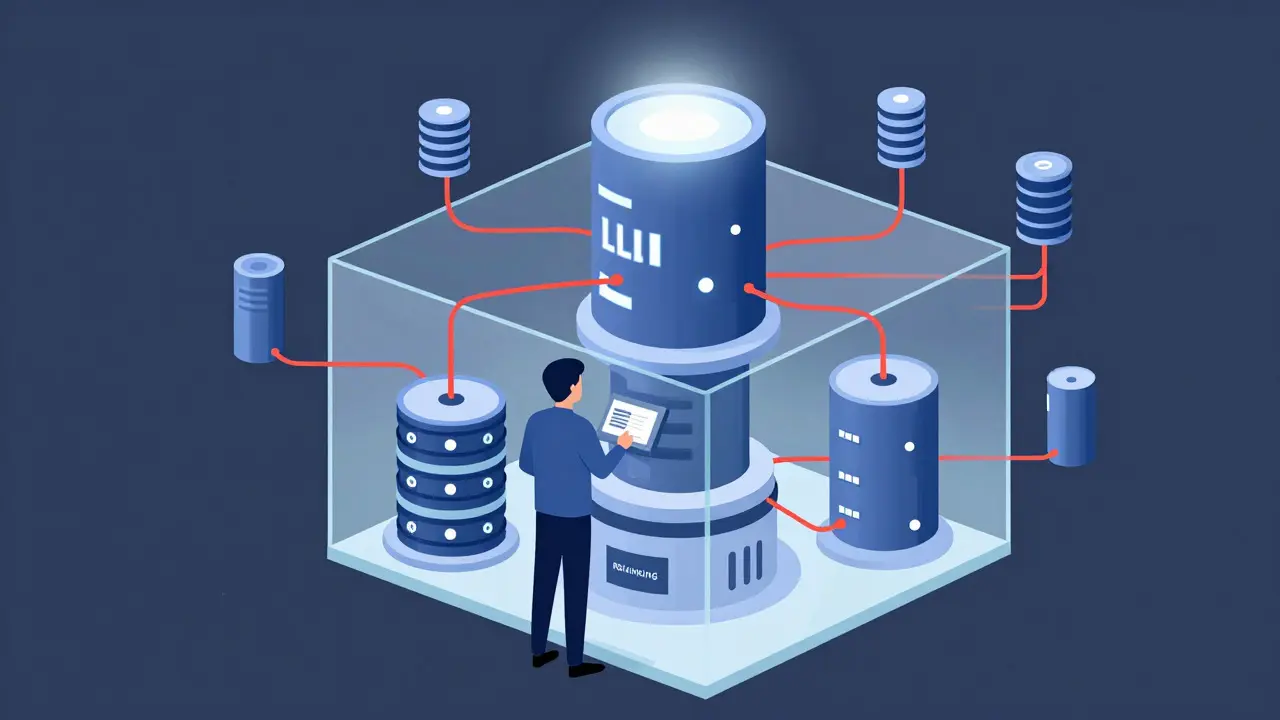
Beyond the core model, your infrastructure adds up. If you are using Retrieval-Augmented Generation (RAG), you need vector databases. Services like Pinecone or Weaviate charge per query and per gigabyte of storage. Embedding models, which convert text into numbers for search, also incur per-token costs. Then there are reranking models used to filter results before sending them to the main LLM. For a production-grade enterprise app, these secondary costs can account for 20-30% of your total AI spend. Always budget for the entire stack, not just the API call.
From Per-Token to Per-Action Pricing
By 2026, the industry is moving away from pure per-token metering. Many business users find token counts abstract and hard to budget against. Consequently, providers are introducing per-action pricing. Instead of paying for the number of words processed, you pay a fixed fee for a defined task, such as "extract data from invoice" or "summarize meeting notes." This aligns better with how non-technical teams conceptualize work products. It simplifies budgeting and reduces anxiety over unexpected spikes in usage.
We are also seeing the rise of Service-Level Agreement (SLA) based tiers. Enterprise customers want guarantees on latency and uptime. Premium SLAs command higher prices but offer predictable performance. For example, OpenAI offers team plans at $25 per user per month (billed annually), which include higher message limits and admin controls. This tiered approach allows companies to choose between raw volume discounts and guaranteed service levels. The trend indicates a maturation of the market, shifting from experimental tech to reliable business infrastructure.
Strategic Implications for Your Budget
How should you position your strategy given these trends? First, audit your current workload. Separate your tasks into two buckets: routine and complex. Routine tasks like customer support triage, email drafting, and basic data cleaning should be routed to commodity models. Using a $21-per-million-token model for simple summarization is wasteful. Switching to a $0.60 model saves you 97% of the cost with negligible quality loss for those specific tasks.
Second, monitor your output-to-input ratio. If your application generates very long responses, the 8x multiplier on premium models will hurt your margins. Consider using a mid-tier model for generation and reserving the top-tier model only for final verification or critical reasoning steps. Third, keep an eye on open-source options. Deploying models like Llama 4 Maverick locally or via low-cost cloud providers can eliminate API fees entirely for high-volume, privacy-sensitive workloads. The barrier to entry for deploying capable AI has never been lower, so leverage that flexibility.
Frequently Asked Questions
Will LLM prices continue to drop indefinitely?
For commodity general-purpose models, yes. Historical patterns in cloud computing suggest that basic compute capacity becomes progressively more affordable as scale increases. However, premium reasoning models may stabilize or even increase in price relative to commodity models because they require specialized hardware and solve harder problems. Expect the gap between cheap and expensive models to widen, rather than all prices dropping uniformly.
What is the most cost-effective way to handle high-volume simple queries?
Use open-source or mid-tier models like Meta’s Llama 4 Maverick or DeepSeek R1. These models offer competitive parity on core capabilities at a fraction of the cost of flagship proprietary models. For extremely high volumes, consider self-hosting quantized versions (4-bit or 8-bit) to avoid per-token API fees altogether, provided you have the engineering resources to manage the infrastructure.
Are reasoning tokens worth the extra cost?
It depends on the task complexity. For simple factual retrieval or short-form generation, reasoning tokens are unnecessary overhead. For multi-step logical deductions, mathematical proofs, or complex code debugging, the improved accuracy often justifies the higher cost. A good heuristic is to start with a non-reasoning model and only escalate to a reasoning model when error rates become unacceptable or manual correction costs exceed the API premium.
How does per-action pricing differ from per-token billing?
Per-token billing charges you based on the volume of data processed (input + output). Per-action pricing charges a flat fee for completing a specific task, regardless of the token count. Per-action pricing is easier to budget for and aligns with business outcomes, while per-token billing offers more granular control and can be cheaper for highly efficient, short interactions.
Which factors determine if a model is considered 'commoditized'?
A model is considered commoditized when multiple providers offer equivalent performance at similar low price points, and open-source alternatives are available. Key indicators include sub-$1 input costs, widespread adoption across industries, and minimal differentiation in quality for standard tasks. Once a capability reaches this stage, price becomes the primary differentiator, forcing providers to optimize for efficiency and scale.
Bonnie Watt
August 29, 2026 AT 00:38Oh look, another article pretending that AI is getting cheaper when it's actually just getting worse and they're too scared to admit it. You think a $0.75 model can do what GPT-4 did in 2023? Please. It's like comparing a gas station hot dog to a steak dinner and saying the price dropped because the meat is now sawdust. The 'commoditization' they talk about is just a polite word for 'mediocrity'. I bet these new models hallucinate every other sentence but nobody wants to say it out loud because everyone is too busy celebrating the discount. It's not progress, it's a downgrade dressed up in a tuxedo. And don't get me started on the 'premium tier'. That's just them milking the cows while selling you the milk as a luxury good. The whole market is a scam built on hype and broken promises. Wake up people, the genie isn't coming back into the bottle, he's just getting stupider and cheaper.
Meagan Mueller
August 29, 2026 AT 09:16they are hiding the real costs
its all about control
you think you are saving money but they are tracking your thoughts
the open source stuff is a trap
deepseek is probably chinese intel anyway
Dave Gibbeson
August 30, 2026 AT 19:52The bifurcation is real and it’s changing how we architect solutions. If you’re still running basic sentiment analysis on a frontier model, you’re burning cash. We switched our support triage to a mid-tier model last quarter and saw a 90% cost reduction with zero drop in user satisfaction scores. The key is routing logic. Use cheap models for the 80% of tasks that are straightforward and reserve the expensive reasoning engines only for edge cases where accuracy is non-negotiable. It’s not about finding the best model; it’s about finding the right tool for each specific job. Stop treating LLMs like a one-size-fits-all magic wand and start thinking like an engineer optimizing for ROI. The tech is there, you just need to stop paying for features you don’t use.
Sabrina Newland
September 1, 2026 AT 03:25i love this perspective 🤔 it makes you realize that intelligence isn't a single commodity anymore its more like... electricity? you have standard power for lights and then high voltage for heavy machinery. the idea that we pay for 'reasoning tokens' is so interesting because it feels like paying for the thought process itself rather than just the answer. i wonder if this will lead to a new kind of digital labor where we hire ai to think through problems step by step and we just verify the final result. its a bit scary but also exciting to see how much cheaper complex cognition is becoming. maybe soon we won't even notice the difference between a human expert and a premium ai model in terms of cost efficiency. just gotta keep an eye on those hidden infrastructure costs though! 💡
Amara Akbar
September 2, 2026 AT 12:02It is truly remarkable to observe how rapidly the landscape has evolved. One must consider the broader implications for enterprise budgeting. The shift from per-token to per-action pricing is not merely a billing change; it represents a fundamental alignment of technological utility with business value. For organizations seeking stability, the SLA tiers offer a predictable framework that mitigates the volatility often associated with experimental technology. We should encourage teams to audit their workflows rigorously to ensure they are leveraging the most cost-effective tier for each task. This strategic approach will undoubtedly enhance operational efficiency and financial prudence in the long run. It is a positive development for the industry as a whole.