Long-Context Prompt Design: Positioning Critical Information for LLM Attention
 Jun, 11 2026
You’ve probably been there. You paste a massive document-maybe fifty pages of meeting notes or a dense technical manual-into your favorite large language model (LLM). You ask a specific question about a detail buried on page twenty. The model confidently gives you an answer. It sounds plausible. It looks professional. But when you check the source text, the answer is completely wrong. The model missed the critical fact because it was sitting right in the middle of that huge block of text.
This isn’t just bad luck. It’s a structural flaw in how modern AI processes information. We call this the "Lost in the Middle" phenomenon. As context windows expand to hold hundreds of thousands of tokens, we assume the model reads everything with equal weight. It doesn’t. To get accurate results from long-context models, you have to stop treating the prompt as a simple container and start designing it like a strategic map. You need to position critical information where the model’s attention actually lands.
The "Lost in the Middle" Phenomenon Explained
Research by Liu et al. in 2023 revealed a startling pattern in how LLMs handle long inputs. When you feed a model a list of facts and ask it to retrieve one, its performance follows a U-shaped curve. The model is excellent at finding information at the very beginning of the text. It is also quite good at finding information at the very end. But if that same piece of information sits in the middle? Performance drops significantly. Sometimes, accuracy plummets by nearly half compared to boundary positions.
Why does this happen? It comes down to architecture. Most modern LLMs are decoder-only models. They process text left-to-right. During generation, each new token attends to all previous tokens, but the attention mechanism naturally biases toward the earliest tokens (where instructions usually live) and the most recent tokens (where the current query lives). The middle gets neglected. It’s not that the model can’t see the middle; it’s that the "attention mass"-the computational focus-is concentrated at the edges.
This mirrors human psychology too. Psychologists call it the Serial Position Effect. We remember the first thing we hear (primacy effect) and the last thing we hear (recency effect), while the middle fades into background noise. Your AI has inherited this bias from both its mathematical design and the data it was trained on, which often places key summaries at the start or end of documents.
Does every LLM suffer from the "Lost in the Middle" problem?
Most decoder-only models exhibit this behavior to some degree. However, newer architectures like Gemini 1.5 Pro show reduced sensitivity to position bias due to improved attention mechanisms. Still, relying solely on architectural fixes is risky; explicit positioning strategies remain essential for consistent accuracy across different models.
Strategic Positioning Techniques That Work
Knowing the problem exists is step one. Step two is fixing your prompts. You don’t need to rewrite your entire workflow, but you do need to change how you arrange information. Here are three high-impact techniques used by expert prompt engineers.
1. Query-First Prompting
The standard habit is to dump context first, then ask the question at the end. Flip it. Place your specific question or instruction at the very top of the prompt. This anchors the model’s attention immediately on the task objective. When the model starts processing, its initial attention heads are focused on what you want it to do, rather than getting distracted by irrelevant background noise. By the time it reaches the context data, it already knows exactly what signal to look for.
2. The Bookend Strategy
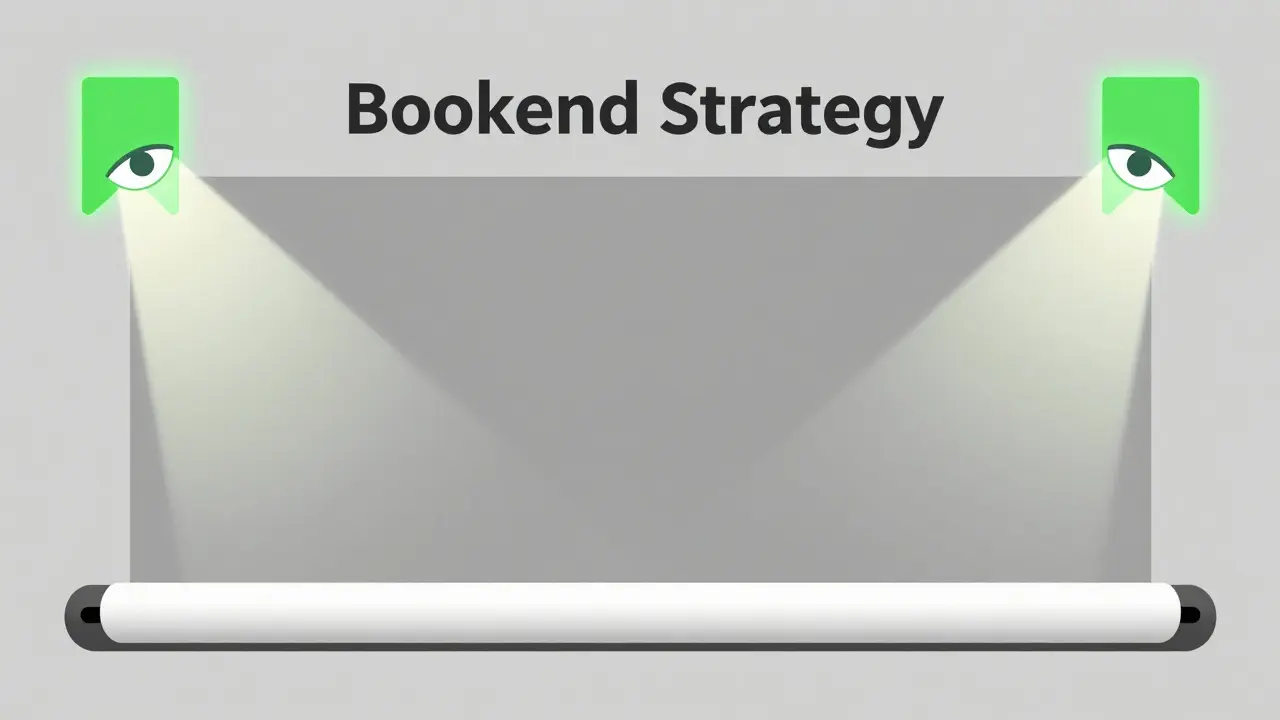
If you must provide a large chunk of context, don’t let the key facts sink into the middle. Use "bookends." Place a concise summary of the critical points at the beginning of the context block, and repeat those same key points at the end. This reinforces the signal at both high-attention boundaries. In synthetic tests, this technique has boosted retrieval accuracy to near-perfect levels because the model encounters the relevant information twice, in the zones where it pays the most attention.
3. Chronological Segmentation
For narrative or historical data, organize content chronologically. Break long texts into smaller, logical chunks. Summarize each chunk briefly. This reduces the cognitive load on the model and prevents any single piece of information from being isolated in a vast, empty middle section. Think of it as creating signposts along a long road, ensuring the model never loses its way.

Optimizing Retrieval-Augmented Generation (RAG)
If you are building applications using RAG (Retrieval-Augmented Generation), positioning is even more critical. RAG systems retrieve relevant documents from a database and feed them into the LLM. If your retriever pulls five documents and slaps them together in random order, you’re gambling with accuracy.
You must implement re-ranking. After retrieving chunks, score them by relevance. Then, deliberately place the highest-relevance chunks at the beginning or end of the final prompt context. Never let your most important evidence sit in the middle of a stack of mediocre matches. Additionally, keep the total context size lean. A 2024 study showed that sheer length degrades performance regardless of position. If you can trim 20% of the fluff without losing meaning, do it. Less noise means higher signal density.
| Strategy | Best For | Key Benefit | Implementation Effort |
|---|---|---|---|
| Query-First | Simple Q&A, Extraction | Anchors attention on task goal | Low (Just reorder text) |
| Bookending | Complex Reasoning, Summarization | Reinforces critical facts at boundaries | Medium (Requires summarization) |
| Re-Ranking (RAG) | Document Search, Legal/Medical | Ensures top evidence is visible | High (Requires vector DB logic) |
| Chunking | Very Long Contexts (>10k tokens) | Reduces positional dilution | Medium (Requires preprocessing) |
When Does Position Bias Matter Most?
You don’t need to over-engineer every prompt. For short chats under 4,000 tokens, the "Lost in the Middle" effect is minimal. The model can easily attend to everything. Position bias becomes a critical risk factor only when:
- You are retrieving more than 3-5 documents per query.
- Your prompts regularly exceed 8,000-10,000 tokens.
- You notice hallucinations or missed citations despite correct retrieval.
- You are running multi-turn conversations with long history buffers.
In these scenarios, ignoring positioning is like throwing away money. You’re paying for compute power that the model simply isn’t using effectively. Implementing position-aware testing-systematically moving relevant passages between the start, middle, and end to measure performance drops-can help you quantify the impact for your specific use case.
Future Trends: Will Architecture Fix This?
Some researchers argue that better models will solve this automatically. Newer systems like Gemini 1.5 Pro demonstrate reduced position sensitivity. Their advanced attention mechanisms allow them to scan longer contexts more evenly. However, relying solely on future architecture is dangerous. First, not all organizations can switch to the newest, most expensive models. Second, even with better attention, clarity and structure always win. A well-positioned prompt on a slightly older model will often outperform a messy prompt on a cutting-edge one. Context engineering-the art of curating the minimal set of high-signal tokens needed for a task-is here to stay.
Practical Checklist for Long-Context Prompts
Before you hit send on your next complex request, run through this quick mental checklist:
- Start with the Question: Is the user’s intent clear in the first 50 tokens?
- Trim the Fat: Have I removed irrelevant paragraphs that just add length?
- Check the Middle: Are my most critical facts buried in the center? If so, move them to the top or bottom.
- Use Bookends: Did I summarize key points at both the start and end of the context?
- Verify RAG Order: If using retrieval, are the most relevant chunks ranked first or last?
By respecting how LLMs actually pay attention, you transform unpredictable outputs into reliable insights. Stop fighting the model’s nature. Work with it. Position your data wisely, and watch your accuracy soar.
What is the ideal context window size for avoiding position bias?
There is no single magic number, but studies suggest keeping prompts under 4,000 tokens minimizes position bias effects. If you must go longer, use chunking and bookending strategies to maintain accuracy beyond 10,000 tokens.
How does "Query-First" prompting differ from standard prompting?
Standard prompting places context first, then the question. Query-first puts the question or instruction at the very beginning. This ensures the model's initial attention is focused on the task goal before processing the supporting data.
Can I fix "Lost in the Middle" errors just by increasing the model temperature?
No. Temperature controls randomness in output generation, not attention allocation during input processing. Position bias is a structural issue related to how the model weighs input tokens, which requires structural prompt changes, not parameter tweaks.
Is re-ranking necessary for all RAG implementations?
For simple queries with few documents, basic similarity search may suffice. However, for complex tasks involving multiple documents or high-stakes accuracy, re-ranking to place the most relevant chunks at attention-heavy boundaries (start/end) is highly recommended.
Do newer models like GPT-4o or Claude 3 eliminate position bias entirely?
They reduce it significantly compared to earlier generations, but they do not eliminate it. Best practices in prompt positioning still yield better results and lower costs, even on state-of-the-art models.