Low-Risk Vibe Coding Use Cases for Enterprise Back-Office Functions
 Jun, 1 2026
Imagine telling your computer to "build a tool that merges these two spreadsheets and flags duplicates," and watching it happen in minutes. That is the promise of vibe coding, which is a method of building software using large language models (LLMs) where the AI handles the end-to-end coding workload with minimal human code review. Unlike traditional programming or even assisted coding tools like GitHub Copilot, vibe coding lets non-engineers or busy professionals generate functional applications by describing their intent in plain English. As of mid-2026, this approach is moving from experimental curiosity to practical utility, especially in enterprise back-office functions where speed matters more than mission-critical reliability.
But here is the catch: you cannot just let an AI agent rewrite your core banking ledger or manage patient records without safeguards. The risk of hallucinated logic, security gaps, or compliance failures is real. So, how do organizations leverage this powerful technology without exposing themselves to catastrophic errors? The answer lies in identifying low-risk, high-reward use cases where failure is contained, outputs are easily verifiable, and the value comes from rapid iteration rather than permanent infrastructure changes.
Understanding Vibe Coding in the Enterprise Context
To apply vibe coding effectively, we first need to define what it actually is versus what it isn't. In 2024 and 2025, platforms like Claude Code, Cursor, and Windsurf popularized the concept. These tools act as junior pair programmers that can plan work, create multiple files, run terminal commands, read error logs, and propose pull requests. However, the key distinction in vibe coding is that the user often does not review every line of code. Instead, they trust the AI's output based on the prompt's clarity and the immediate functionality of the result.
This differs significantly from AI-assisted programming, which is a development workflow where developers use LLMs to suggest code snippets but retain full responsibility for validation, testing, and integration. In AI-assisted programming, the human is the pilot; in vibe coding, the human is the air traffic controller, setting boundaries while the AI flies the plane. For enterprise back-office teams-think HR, finance operations, legal support, and internal IT-this shift lowers the barrier to entry dramatically. You no longer need a Computer Science degree to automate a repetitive report; you just need clear instructions and a safe sandbox environment.
Why Back-Office Functions Are the Sweet Spot
Back-office operations are characterized by routine tasks, structured data, and internal stakeholders. They rarely involve direct customer-facing interactions where a bug could cause immediate reputational damage. This makes them ideal for low-risk vibe coding experiments. The primary jobs-to-be-done in these departments include consolidating disparate data sources, generating standardized reports, automating compliance checks, and creating internal tools for employee self-service.
Consider a typical scenario in a mid-sized company. The marketing team needs a dashboard that pulls data from three different CRM exports and highlights underperforming campaigns. Traditionally, this would require a request to the IT department, waiting weeks for developer availability, and undergoing a formal change management process. With vibe coding, a marketing analyst can describe the desired output, provide sample data files, and have a working prototype in hours. If the tool breaks, it only affects one person’s workflow until fixed. There is no cascading failure across the enterprise.
The benefits extend beyond speed. Organizations see higher speed-to-value, compressing timelines from weeks to days. Cost reduction is also significant; as of late 2025, complete vibe coding setups operate at a fraction of the cost of a single full-time engineer. This elastic capacity allows companies to scale automation efforts up or down based on demand without hiring additional headcount.
Top Low-Risk Use Cases for Implementation
Not all back-office tasks are created equal. To minimize risk, focus on applications where the consequences of error are low, the data is non-sensitive, and the output is easily validated by humans. Here are four proven use cases:
1. Internal Workflow Automation Tools
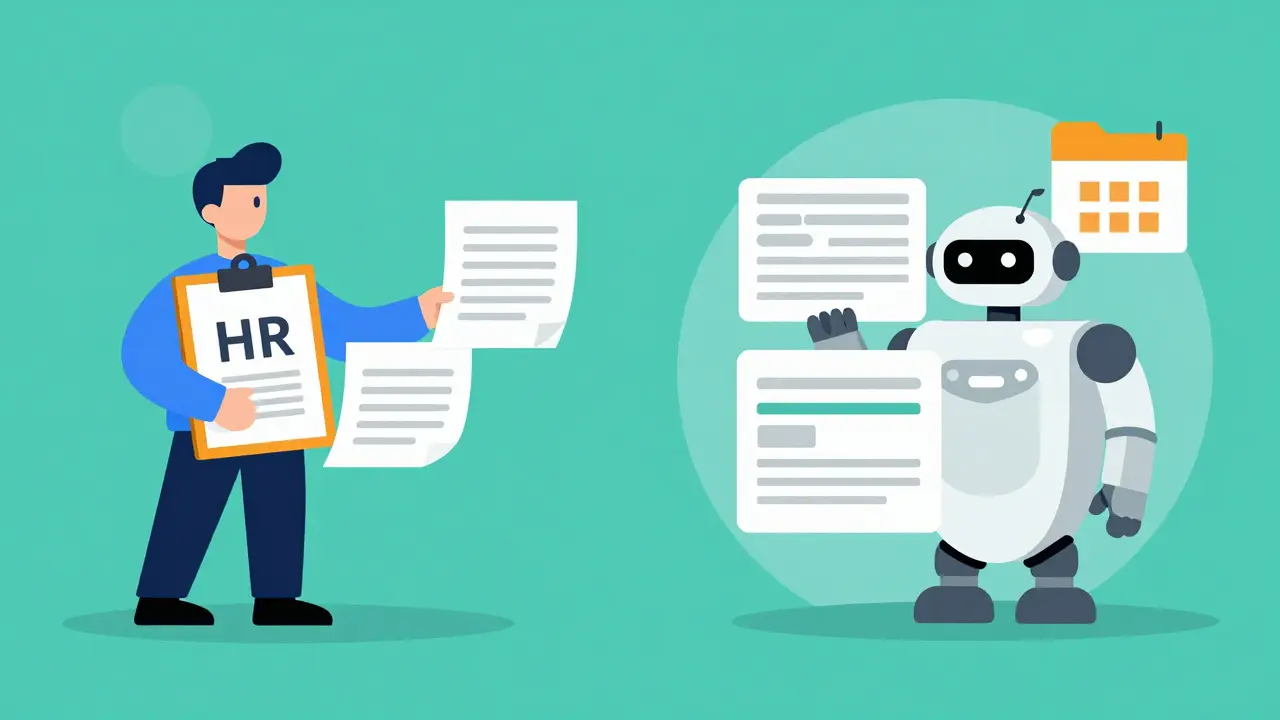
One of the most effective uses of vibe coding is building small, standalone applications that automate mundane tasks. For example, an HR coordinator might use vibe coding to create a script that parses resignation letters from email attachments, extracts key dates and reasons, and populates a database for exit interview scheduling. Because this tool operates on internal documents and produces a simple list, any errors are obvious and easy to correct. The AI generates the Python or JavaScript code, runs it locally, and the user verifies the final spreadsheet before proceeding.
2. Documentation and Knowledge Base Generation
Documentation is often neglected because it is tedious. Vibe coding can streamline this by automatically generating deployment guides, changelogs, or inline code comments based on project history or specific prompts. A DevOps team member can feed the AI recent commit logs and ask for a summary of changes for the weekly stakeholder update. While AI-generated documentation can sometimes be vague, the risk is mitigated because a human reviewer will always read the final document before publishing. The goal is not perfect accuracy but rather reducing the initial drafting burden.
3. Compliance Monitoring Scripts
Security and compliance teams spend countless hours writing scripts to check for policy violations. Vibe coding can draft these scripts rapidly. For instance, an analyst might prompt an AI to write a Python script that scans AWS S3 buckets for unencrypted storage or checks Kubernetes configurations for overly permissive access roles. These scripts serve as a first layer of defense. The critical caveat is that AI may suggest superficial checks. Therefore, these scripts must be layered with robust scanning tools and manually reviewed by security experts before being deployed in production environments. They are best used for discovery and alerting, not for automated remediation.
4. Policy-as-Code Template Drafting
Frameworks like Open Policy Agent (OPA) and Sentinel allow organizations to define rules programmatically. However, learning the syntax for these tools has a steep curve. Vibe coding lowers this barrier by allowing developers to describe policies in natural language-such as "only senior engineers can deploy to production"-and have the AI generate the corresponding Rego or HCL code. Again, peer review is essential. The AI provides a strong starting point, but human oversight ensures that nuanced conditions and edge cases are properly covered.
Risk Mitigation Strategies for Safe Deployment
Even in low-risk scenarios, enterprises must implement guardrails. Unmanaged vibe coding can amplify existing open-source security risks, including vulnerable dependencies or unknown provenance. Here is how to keep things secure:
- Sandboxed Environments: Run vibe coding agents in isolated containers or private clouds. Never allow direct access to production databases or sensitive customer information. If the AI tries to delete a file, it should only affect a temporary workspace.
- Strict Access Controls: Limit what the AI agent can read and write. Use least-privilege principles. If the task is to merge CSV files, the agent should not have permissions to install system-level packages or access network APIs unrelated to the task.
- Input and Output Validation: Enforce prompt hygiene to prevent misuse. Validate outputs against security policies. For example, if the AI generates a SQL query, run it through a static analysis tool to check for injection vulnerabilities before executing it.
- Token Consumption Tracking: Use tools like Langfuse or OpenTelemetry to monitor API costs. Vibe coding can lead to unexpected token usage if prompts are inefficient. Set alerts to avoid budget overruns.
- Human-in-the-Loop Review: Always require a human to approve the final output before it impacts any real-world process. This applies to code execution, documentation publication, and policy deployment.
Comparing Vibe Coding vs. Traditional AI-Assisted Development
| Feature | Vibe Coding | AI-Assisted Programming |
|---|---|---|
| User Skill Level | Beginner-friendly; requires little to no coding experience | Requires baseline understanding of code and engineering principles |
| Code Review | Minimal or none; trust-based on functionality | Extensive; developer validates every snippet |
| Security Profile | Lower; potential for hidden vulnerabilities if unchecked | Higher; security managed by experienced developers |
| Best For | Prototypes, internal tools, documentation, automation scripts | Production systems, complex integrations, critical infrastructure |
| Speed to Value | Very fast (hours to days) | Moderate (days to weeks) |
As shown above, vibe coding excels in speed and accessibility but demands stricter environmental controls. AI-assisted programming offers greater control and security but requires specialized skills. For back-office functions, the trade-off favors vibe coding because the tasks are typically non-critical and benefit from rapid iteration.

Implementation Best Practices for Teams
Success with vibe coding does not mean abandoning engineering discipline. It means shifting the focus from writing code to orchestrating outcomes. Senior engineers still play a crucial role in setting direction, enforcing constraints, and owning merges. For back-office teams, start with experimental and disposable prototypes. Build a culture of innovation where employees feel empowered to test ideas without fear of breaking production systems.
Hold internal hackathons to encourage cross-functional collaboration. Let HR, finance, and operations staff form teams to build solutions for their own pain points. This not only uncovers new business opportunities but also fosters a deeper understanding of technical capabilities among non-technical staff. Over time, as governance matures and expertise grows, you can expand vibe coding into more scalable enterprise systems.
Conclusion: Start Small, Scale Smart
Vibe coding is not a replacement for skilled developers, nor is it a magic bullet for all software challenges. However, for enterprise back-office functions, it represents a transformative opportunity to eliminate friction and accelerate value delivery. By focusing on low-risk use cases like workflow automation, documentation, and compliance monitoring, organizations can harness the power of AI while maintaining strict control over security and quality. The key is to start small, validate everything, and iterate quickly. In doing so, you turn your back-office from a cost center into an engine of innovation.
What is the biggest risk of using vibe coding in an enterprise?
The biggest risk is deploying unreviewed code into production environments where it can introduce security vulnerabilities, data leaks, or logical errors. To mitigate this, always use sandboxed environments, enforce strict access controls, and require human validation before any output affects live systems.
Can non-technical employees use vibe coding safely?
Yes, provided they work within defined guardrails. Non-technical staff can use vibe coding to build internal tools, generate reports, or automate simple workflows. Safety comes from restricting the AI's access to sensitive data and ensuring that outputs are reviewed by appropriate stakeholders before use.
How does vibe coding differ from using GitHub Copilot?
GitHub Copilot assists developers by suggesting code snippets that the human programmer reviews and integrates. Vibe coding involves the AI handling the entire coding workload end-to-end, often without the user reviewing every line of code. The user focuses on defining the problem and validating the result rather than managing the implementation details.
Is vibe coding suitable for financial or healthcare data?
Generally, no. Financial and healthcare data require high levels of security, compliance, and auditability. Vibe coding should be limited to non-sensitive, internal-use-only tasks in these sectors. Any interaction with regulated data must go through rigorous security reviews and likely involve traditional AI-assisted programming methods instead.
What tools are best for tracking vibe coding costs?
Tools like Langfuse and OpenTelemetry are excellent for monitoring token consumption and API usage. Setting up custom alerts helps prevent unexpected cost creep, ensuring that vibe coding projects remain financially sustainable as they scale.