Prefix Tuning vs Prompt Tuning: Lightweight Adapters for LLMs
 Jun, 15 2026
You’ve spent weeks training a massive Large Language Model (LLM). It’s brilliant. It writes code, drafts emails, and analyzes data. But now you need it to do something specific-like summarize legal contracts in a strict format. Do you retrain the whole thing? That costs thousands of dollars in compute and takes days. Or do you try to force it with a few words of text, hoping it understands?
There is a better way. Enter parameter-efficient fine-tuning (PEFT). Specifically, two techniques that are changing how we adapt these giants without breaking the bank: Prompt Tuning and Prefix Tuning. These methods let you freeze your base model completely and only train a tiny fraction of new parameters. The result? A model that behaves exactly how you want, using less memory and time than traditional fine-tuning.
The Problem with Traditional Fine-Tuning
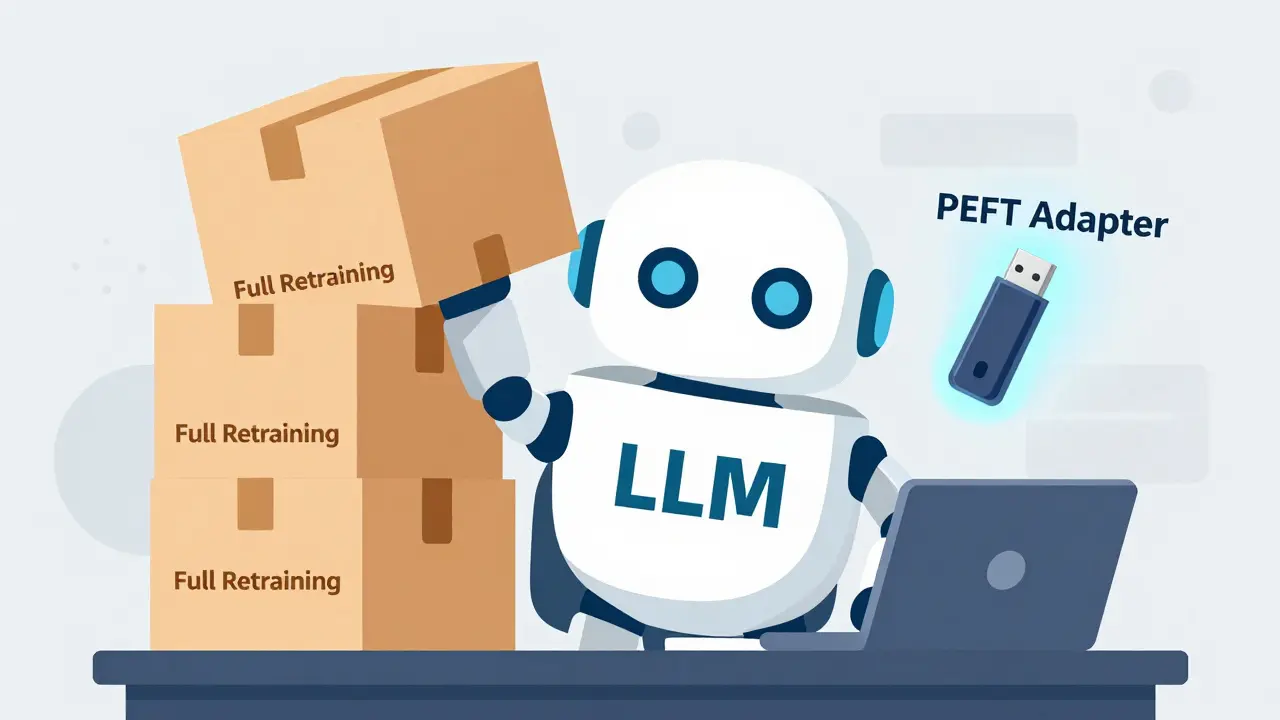
Before diving into the solutions, let’s look at why we needed them. Traditional fine-tuning means updating every single weight in the neural network. If your model has 7 billion parameters, you are calculating gradients for all 7 billion numbers. This requires huge GPU clusters and creates a storage nightmare. If you want three different versions of the model-one for customer support, one for coding, and one for marketing-you need three full copies of the 7-billion-parameter model. That’s 21 billion parameters stored on disk.
It’s expensive, slow, and inefficient. PEFT techniques like Prefix and Prompt Tuning solve this by keeping the backbone frozen. You only store the small "adapter" files. For a 7B model, those adapters might be just a few megabytes each. You can swap them in and out instantly.
What Is Prompt Tuning?
Prompt Tuning, introduced in research by IBM researchers, is the simpler of the two approaches. Think of it as teaching the model to listen better rather than changing what it knows.
In standard usage, you give an LLM a "hard prompt"-text instructions like "Summarize this:". Prompt Tuning replaces or augments this with "soft prompts." These are not words you can read. They are continuous vectors-numbers floating between -1 and 1-that sit right before your input data in the embedding layer.
Here is how it works mechanically:
- You take your input text and convert it to embeddings.
- You prepend a sequence of trainable vectors (the soft prompt) to these embeddings.
- You feed this combined sequence into the frozen transformer.
- During training, you only update the values in those soft prompt vectors using gradient descent.
The magic happens because the model’s attention mechanism attends to these soft prompts. They act as hidden instructions. For example, if you are training a sentiment analysis task, the soft prompt learns to push the model’s internal state toward "positive" or "negative" classifications based on the input, without touching the billions of weights that define the language itself.
The efficiency is staggering. For a typical setup with a short prompt length of around 20 tokens, Prompt Tuning might require training only about 82,000 parameters. Compared to billions in the base model, that is virtually nothing. It’s like adding a single spice to a giant pot of soup to change its flavor, rather than cooking a new meal from scratch.
What Is Prefix Tuning?
If Prompt Tuning is a whisper at the entrance, Prefix Tuning is a guide present at every step of the journey. Introduced in the seminal ACL 2021 paper "Prefix-Tuning: Optimizing Continuous Prompts for Generation," this method goes deeper.
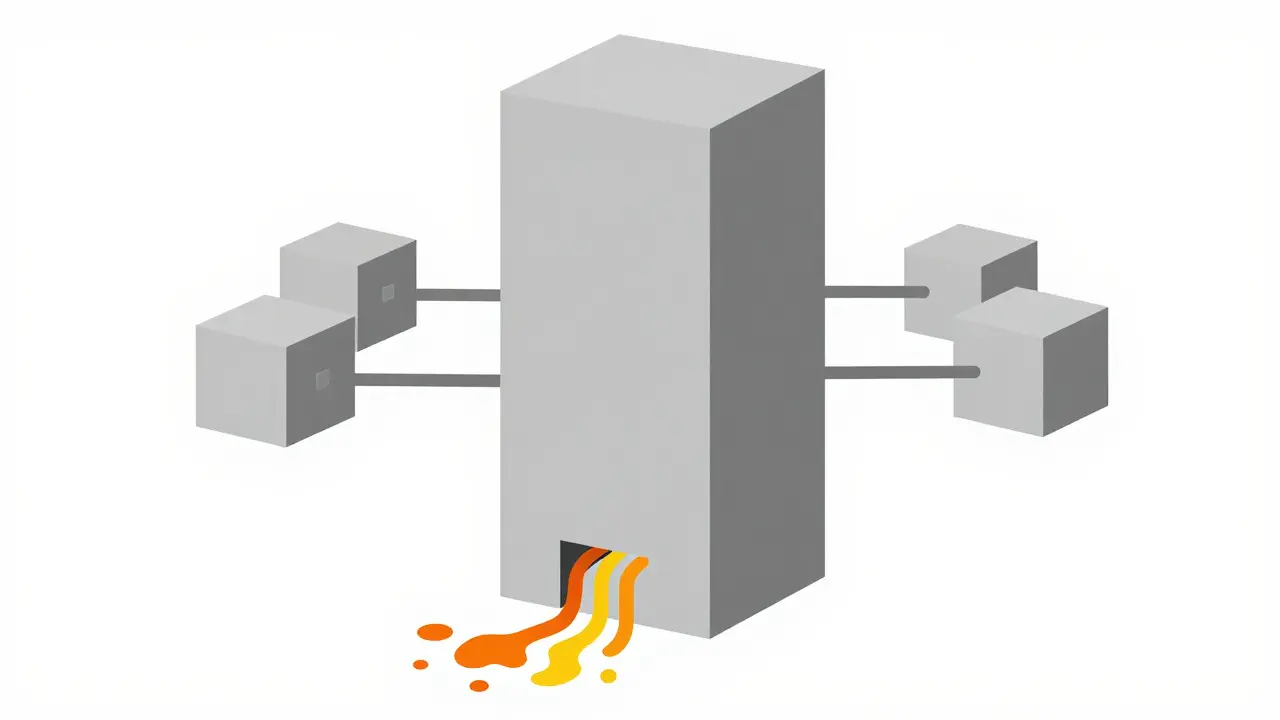
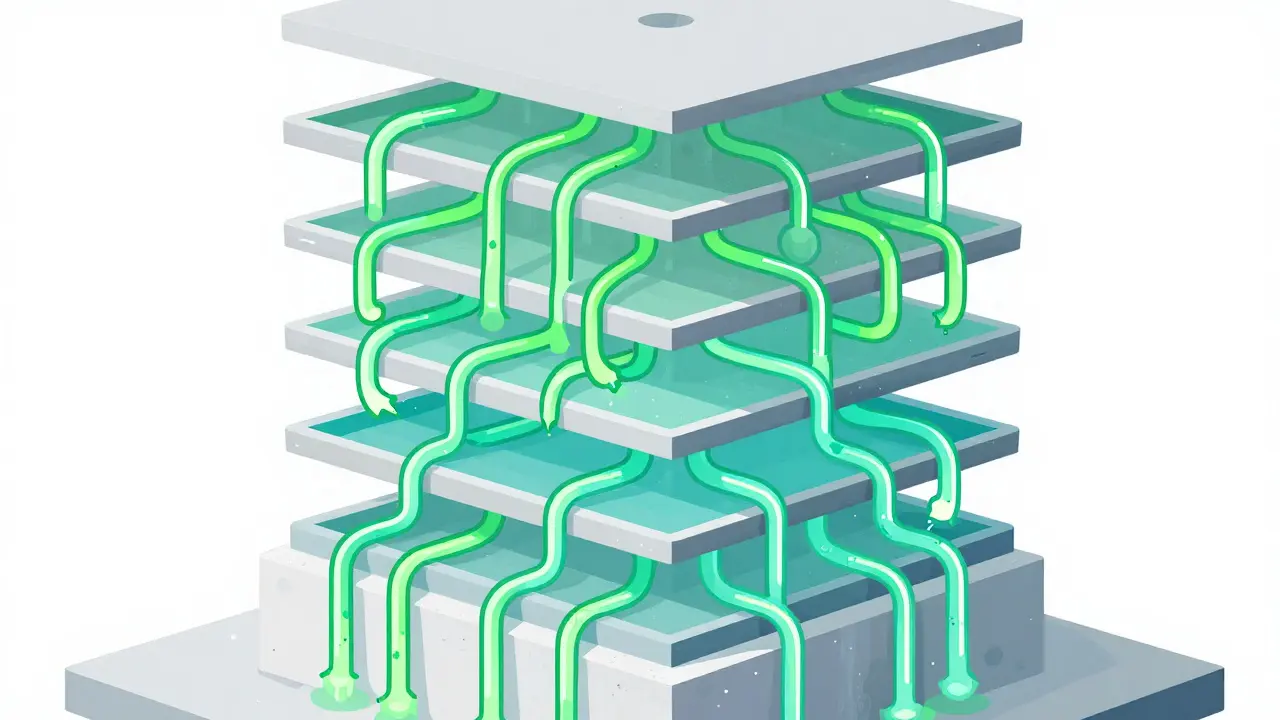
Instead of adding trainable vectors only at the input embedding layer, Prefix Tuning injects trainable tensors into the input of every transformer block. Modern transformers have dozens of layers. By adding prefixes to each layer, you give the model more granular control over its behavior at multiple depths within the network architecture.
Here is the technical breakdown:
- The Prefix Matrix: You start with a trainable matrix. If your prefix length is 10 and the hidden size is 1024, you have 10,240 tunable parameters.
- Reparameterization: To make optimization easier and more stable, Prefix Tuning often uses small feed-forward networks to project this initial matrix into layer-specific keys and values.
- Attention Injection: At each layer, these learned keys and values are concatenated with the original keys and values before the attention calculation happens.
This allows the model to modify its internal representations across many layers while keeping all original model parameters completely frozen. The prefixes act as "virtual tokens" that subsequent tokens attend to. Because the modification happens at every layer, the signal doesn’t have to propagate through a long computational chain from the bottom up. This often leads to faster convergence and better performance on complex generation tasks compared to Prompt Tuning alone.
Key Differences: Prompt Tuning vs. Prefix Tuning
So, which one should you use? They sound similar, but their architectural differences matter. Let’s break down the comparison.
| Feature | Prompt Tuning | Prefix Tuning |
|---|---|---|
| Injection Point | Input Embedding Layer Only | Every Transformer Block (Keys & Values) |
| Parameters Trained | Very Low (~0.01% of model) | Low (~0.1% of model) |
| Complexity | Simple, easy to implement | Higher, requires reparameterization |
| Performance | Good for classification/simple tasks | Superior for complex generation tasks |
| Storage Cost | Negligible | Very Low |
The core distinction is depth. Soft Prompt Tuning concatenates the embedding of input tokens with a trainable tensor optimized through backpropagation, inserting this learned prompt only into the input layer. Prefix Tuning adds trainable tensors to each transformer block’s input. As noted in recent educational resources updated in early 2025, this deeper modification allows Prefix Tuning to directly alter representations deeper in the network. This avoids the bottleneck where input-level modifications struggle to influence later layers in very deep models.
Why Parameter Efficiency Matters in 2026
We are living in an era where foundation models are growing larger, not smaller. A 70-billion-parameter model is common for enterprise use. Full fine-tuning such a model is prohibitive for most teams. Even LoRA (Low-Rank Adaptation), another popular PEFT method, updates weights within the layers. Prompt and Prefix Tuning keep the backbone entirely intact.
This modularity is a game-changer. Imagine you run a SaaS platform. You have one base model. You train a Prefix Adapter for Task A (Legal Summarization) and another for Task B (Medical Coding). When a user requests Task A, you load the Legal Prefix. For Task B, you load the Medical Prefix. You never reload the base model. You just swap the tiny adapter file. This reduces VRAM pressure significantly and speeds up deployment cycles.
According to industry analyses, Prefix Tuning stores updates for approximately 0.1% of the model per task. This enables a dramatic reduction in storage requirements. Instead of terabytes of duplicated model weights, you store kilobytes of configuration data.
Implementation Tips and Pitfalls
Getting these techniques to work smoothly requires attention to detail. Here are some practical insights from deploying these methods in production environments.
1. Initialize Wisely: Don’t initialize your soft prompts with random noise. Research suggests initializing them with the average of the token embeddings from your training dataset. This gives the optimizer a head start and stabilizes training.
2. Watch Your Sequence Length: Both methods add tokens to your input. If your model has a context window of 4096 tokens, and you add a prefix of length 128, you now have 3968 tokens left for actual content. Plan your architecture accordingly.
3. Reparameterization is Key for Prefix Tuning: Directly optimizing the prefix tensors can lead to poor convergence due to the complexity of the loss landscape. Using a small MLP (Multi-Layer Perceptron) to map the prefix to the required key/value dimensions smooths out the optimization path. This was a critical insight from the original ACL 2021 paper.
4. Limitations Exist: While powerful, these methods are not magic. If a task requires fundamentally changing the model’s understanding of logic or math-capabilities deeply embedded in the pre-training-lightweight adapters may hit a ceiling. The arXiv paper "When Do Prompting and Prefix-Tuning Work?" (2023) highlights that these methods excel at conditioning style and format but may struggle with tasks requiring significant knowledge acquisition beyond the pre-trained base.
Choosing the Right Approach
So, what should you pick for your next project?
If you are working on a simple classification task, like spam detection or sentiment analysis, Prompt Tuning is likely sufficient. It’s lighter, faster to set up, and uses fewer parameters. The overhead is minimal.
If you are tackling complex generative tasks-like writing structured JSON, generating code with specific constraints, or translating nuanced literary styles-go with Prefix Tuning. The ability to inject guidance at every layer provides the expressivity needed to steer the model precisely. The slight increase in computational cost during training is worth the gain in output quality.
Both techniques represent a shift away from "big iron" AI development. You don’t need a cluster of H100 GPUs to customize a state-of-the-art model anymore. With Prefix and Prompt Tuning, you can achieve professional-grade results on a single consumer GPU. This democratization of AI adaptation is perhaps the most exciting trend in machine learning right now.
Is Prefix Tuning better than Prompt Tuning?
It depends on the task. Prefix Tuning generally performs better on complex generation tasks because it modifies the model's attention mechanisms at every layer, not just the input. However, Prompt Tuning is simpler, uses fewer parameters, and is often sufficient for classification or simple instruction-following tasks.
Can I use Prefix Tuning with any Large Language Model?
Yes, as long as the model is based on the Transformer architecture (which includes GPT, BERT, T5, and Llama variants). Since Prefix Tuning works by modifying the attention keys and values, it is compatible with any standard Transformer-based LLM.
How much data do I need to train a Prefix or Prompt Adapter?
Because these methods are parameter-efficient, they tend to generalize well even with small datasets. You can often achieve good results with hundreds or low-thousands of examples, whereas full fine-tuning might require tens of thousands to avoid overfitting.
What is the difference between soft prompts and hard prompts?
Hard prompts are natural language text strings (e.g., "Translate to French:"). Soft prompts are continuous vector embeddings that are learned through gradient descent. Humans cannot read soft prompts; they are numerical representations optimized to guide the model's internal states.
Do I need to store the entire model when using Prefix Tuning?
You still need access to the frozen base model weights to perform inference. However, you do not need to store separate copies of the base model for each task. You only store the tiny prefix adapter files (often just a few MBs) and load them onto the shared base model.
Stephanie Frank
June 16, 2026 AT 02:16Another day, another buzzword salad disguised as technical insight. You're telling me that adding a few vectors to the input layer is 'revolutionary'? Please. The real revolution would be if these models actually stopped hallucinating legal precedents that don't exist. I've seen 'Prefix Tuning' turn a simple contract summary into a fever dream of corporate jargon and made-up clauses. It's not about efficiency; it's about hiding the fact that the base model is fundamentally broken for nuanced tasks. Save your VRAM, sure, but don't expect miracles from a band-aid on a bullet wound.
Oskar Falkenberg
June 17, 2026 AT 15:29Hey Stephanie, I think you might be being a bit harsh there! Look, while I totally get the frustration with hallucinations, which are super annoying by the way, the point of PEFT methods like Prefix and Prompt tuning is really just about accessibility and cost. Not everyone has a cluster of H100s lying around in their garage (unfortunately). I found that using Prefix tuning for my little side project on generating JSON schemas was actually quite helpful because it kept the structure tight without needing to retrain the whole Llama model. It’s not perfect, I know, but it’s better than nothing when you’re working with limited resources, right? Maybe give it a shot before writing it off completely?
Bineesh Mathew
June 19, 2026 AT 13:10The hubris of Silicon Valley is truly breathtaking. We stand at the precipice of a digital abyss, staring into the soulless void of frozen weights, pretending that tweaking a few parameters grants us godlike control over truth and logic. It is a moral failing of epic proportions to believe that we can sanitize language through mere vector manipulation. These 'adapters' are but shackles on a beast that does not understand its own chains. You speak of efficiency, yet you ignore the spiritual bankruptcy of a system that generates meaning without understanding it. The prefix is a lie; the prompt is a plea for validation from an entity that feels nothing. We are building cathedrals of sand on a beach of entropy, and calling it progress. How quaint. How utterly tragic.
Jeanne Abrahams
June 21, 2026 AT 00:11Oskar, darling, you’re trying so hard to sound like a helpful community member, but those typos are doing more damage than any hallucination ever could. And Bineesh, please save the existential dread for a philosophy forum, not a tech blog about parameter efficiency. Meanwhile, back in South Africa, we’re still waiting for our internet to stabilize enough to download the base model, let alone train adapters. But sure, keep arguing about the nuances of soft prompts while the rest of us wonder if we’ll have power tomorrow. Priorities, people.
Caitlin Donehue
June 21, 2026 AT 01:02I guess this is cool.