Secure Branch Protection for Vibe-Coded Repositories
 Sep, 11 2026
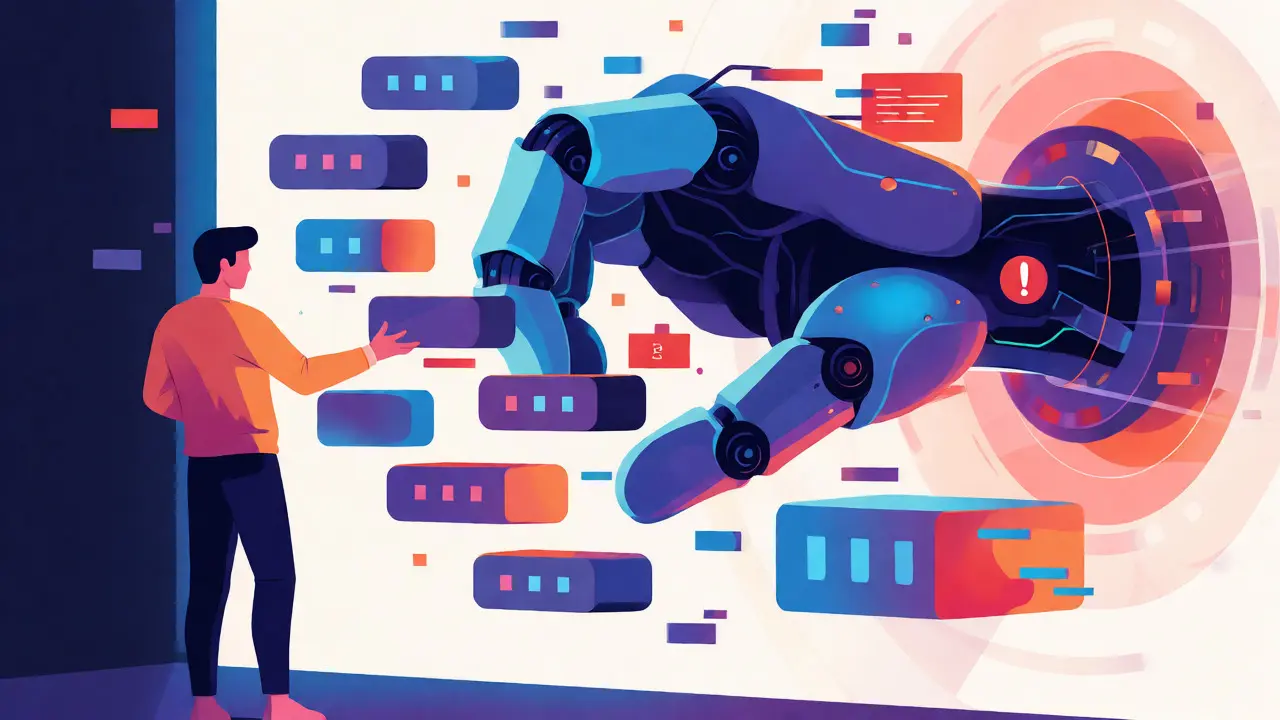
You just prompted an AI to build a login system. It wrote the code in seconds, looked clean, and you merged it into main. Two weeks later, your database is exposed because the AI hallucinated a package name that didn't exist, or worse, shipped with default permissions that let anyone read user data. This isn't hypothetical; it's the reality of vibe coding-the practice of generating code through conversational prompts with AI assistants. While this method accelerates development, it introduces unique risks that traditional code review often misses. If you're using AI to write code, your branch protection rules need a serious upgrade.
| Risk Factor | Traditional Dev | Vibe Coding | Branch Protection Fix |
|---|---|---|---|
| Dependency Trust | Human chooses known libs | AI hallucinates fake packages | Strict version pinning & SCA scans |
| Security Defaults | Engineer sets strict perms | AI uses permissive defaults | Enforce RLS & least-privilege IAM |
| Code Quality | Human catches logic errors | AI may bypass auth checks | SAST scanning for OWASP Top 10 |
| Secrets Leakage | Pre-commit hooks catch keys | AI pastes demo keys in code | Gitleaks/GitGuardian on PR |
The Hallucination Problem: Why AI Needs Guardrails
AI models don't "know" things; they predict them. When you ask an LLM to "add a date picker," it might suggest a library that sounds plausible but doesn't exist, or one that exists but has been abandoned. Attackers know this. They register these hallucinated package names on npm or PyPI, creating backdoors before you even install them. This is called typosquatting, and it's rampant in AI-generated codebases. Your branch protection needs to treat every new dependency as guilty until proven innocent. You can't rely on the AI to verify the credibility of a package. Instead, configure your CI pipeline to block any pull request (PR) that introduces a package not explicitly whitelisted or verified by a Software Composition Analysis (SCA) tool like Snyk or Trivy. For example, if your AI suggests `react-date-picker-pro`, and your team hasn't vetted it, the merge should fail automatically. Don't wait for a human to notice; make the gatekeeper digital and ruthless.
Scanning at the Pull Request Level
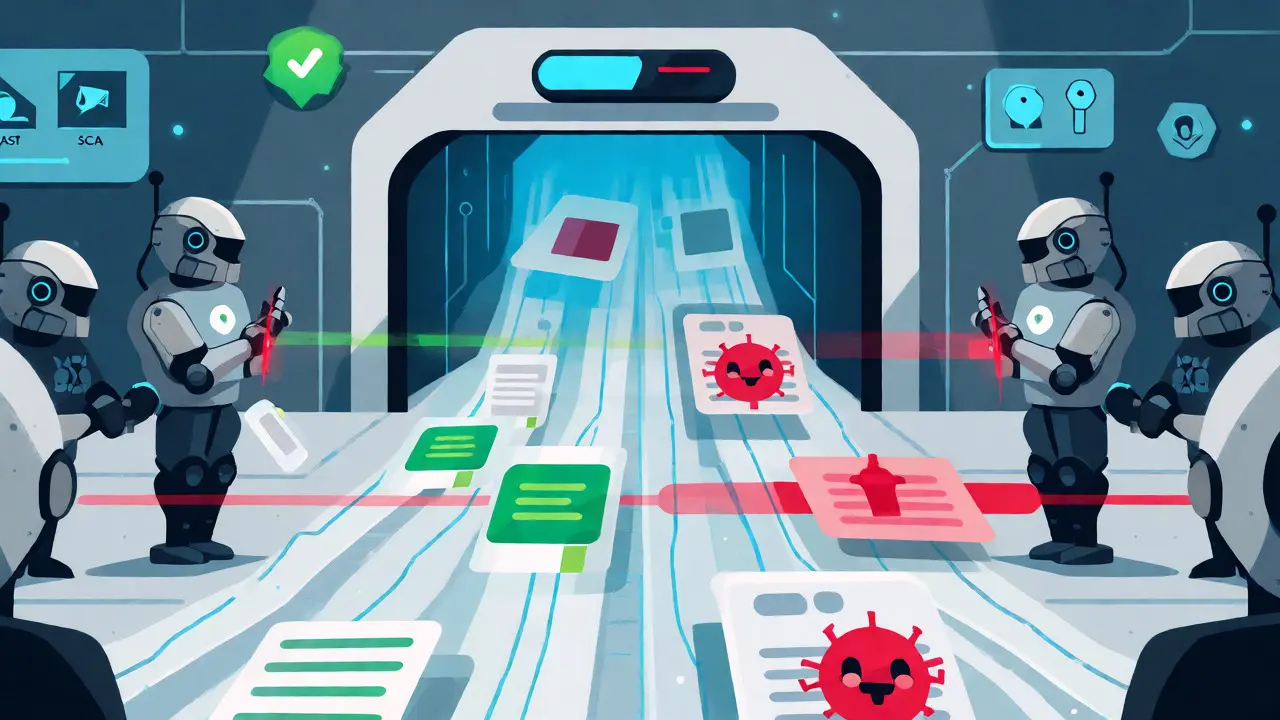
Catching vulnerabilities before they merge is exponentially cheaper than fixing them in production. Industry data from 2025 shows that post-merge fixes cost up to 30x more than pre-merge prevention. So, what exactly do you scan? Four categories matter most when dealing with AI-generated code:
- Static Application Security Testing (SAST): Tools like Semgrep or CodeQL look for insecure patterns. AI loves to concatenate SQL queries instead of using parameterized statements, leading to injection flaws. SAST catches this instantly.
- Software Composition Analysis (SCA): Checks for vulnerable dependencies. Did the AI pull in an old version of `lodash` with a known CVE? SCA blocks it.
- Secrets Scanning: AI often includes placeholder API keys like `sk-test-12345`. While harmless, developers sometimes replace them with real keys and forget to remove them from commits. Gitleaks ensures no secrets ever hit the repository history.
- License Compliance: AI might grab a GPL-licensed library for your proprietary commercial app. License scanners prevent legal headaches down the road.
Enforcing Database and Permission Hygiene
One of the biggest failures in vibe-coded apps is overly permissive database access. AI models tend to generate code that works quickly, which often means granting `SELECT *` rights or exposing service role keys to the client side. In the recent "Lovable and Tea" incidents, AI-generated configurations shipped without proper Row Level Security (RLS), leaving user data wide open. Your branch protection rules must enforce specific architectural constraints. For instance, require that every database table has explicit RLS policies defined. You can automate this check: if a migration file adds a table but doesn't include an RLS policy statement, the CI pipeline fails. Similarly, enforce least-privilege IAM roles. AI assistants often request `AdministratorAccess` or wildcard permissions (`*:*`) because they don't understand the principle of least privilege. Configure your infrastructure-as-code linters to reject any policy containing broad wildcards unless explicitly approved by a senior engineer.
Supply Chain Protections: The Cooldown Strategy
Newly published npm packages are prime targets for supply chain attacks. Malicious actors publish a compromised version, wait hours for adoption, then pull it down. AI agents, eager to satisfy a prompt like "install the latest charting library," might grab the freshest, unvetted version. Implement a "cooldown policy" for dependencies. Block any package version published within the last 24-72 hours. This gives the community time to spot anomalies. Platforms like StepSecurity offer org-wide package search, letting you instantly see if a suspicious package was introduced across all your repositories. If a breach occurs, you can trace exposure back to the exact commit and developer machine. This level of visibility is critical when your codebase is partly written by non-human agents.
Balancing Velocity with Rigor
You might worry that strict branch protection slows you down. After all, the whole point of vibe coding is speed. But consider this: merging broken code creates technical debt that compounds. A well-configured branch protection strategy acts as a safety net, allowing you to move fast without breaking things. Start small. Enable required status checks for SAST and secrets scanning first. Then, add dependency pinning and license checks. Finally, implement custom rules for database permissions and security headers. Use tools like GitHub Actions or GitLab CI to integrate these checks seamlessly. Remember, the goal isn't to stop AI from writing code; it's to ensure that what it writes meets your security standards before it touches production.
Practical Implementation Checklist
Here’s a quick-start guide to securing your vibe-coded repos today:
- Enable Required Reviews: Even with AI, require at least one human approval for merges to main.
- Integrate Gitleaks: Run it on every commit to catch hardcoded secrets.
- Add Semgrep Rules: Create custom rules to flag common AI mistakes, like missing security headers or unsafe eval() usage.
- Lock Dependencies: Enforce `package-lock.json` or `yarn.lock` updates. Reject PRs with floating versions (e.g., `^1.0.0`).
- Verify Security Headers: Add a CI step that checks for `X-Content-Type-Options`, `X-Frame-Options`, and `Strict-Transport-Security` in HTTP responses.
- Monitor Egress Traffic: Ensure your CI/CD pipelines don't exfiltrate source code to unknown endpoints during builds.
What is vibe coding?
Vibe coding is a development style where programmers use AI assistants to generate large portions of code through natural language prompts. The developer focuses on high-level intent and architecture, while the AI handles implementation details. This speeds up prototyping but requires strict oversight to prevent security flaws.
Why do AI models hallucinate package names?
Large Language Models predict text based on patterns, not factual databases. They often combine plausible-sounding words (like 'react' + 'date' + 'picker') to create package names that sound real but don't exist. Attackers exploit this by registering these names with malicious code.
Can I skip human code review for AI-generated code?
No. While automated scanning catches many issues, it misses logical errors and business context violations. Human review remains essential to verify that the AI understood the requirement correctly and didn't introduce subtle security bypasses.
What tools are best for scanning AI-generated code?
For static analysis, use Semgrep or CodeQL. For dependencies, use Snyk or Trivy. For secrets, use Gitleaks. These tools integrate easily with GitHub Actions or GitLab CI to enforce branch protection rules automatically.
How does branch protection help against supply chain attacks?
It prevents unvetted dependencies from merging. By enforcing cooldown periods for new packages and requiring SCA scans, you reduce the risk of installing compromised libraries that attackers inject into popular registries shortly after publication.