Secure Vibe-Coded Backends: Authentication and Authorization Patterns
 Jun, 18 2026
It feels like magic when you type a prompt into an AI assistant and watch it generate a fully functional backend login system in seconds. You ask for a user registration flow, and boom-there’s your database schema, your API endpoints, and your frontend components. This is the promise of vibe coding, a term coined around 2022-2023 to describe development driven by conversational prompts rather than traditional line-by-line programming. But here is the catch that keeps security engineers up at night: while the code looks perfect on the surface, it often hides critical vulnerabilities that could let attackers walk right through your digital front door.
The problem isn’t that AI can’t write secure code. The issue is that AI doesn’t understand your specific business logic or risk profile unless you explicitly tell it to. According to the Cloud Security Alliance’s 2025 Vibe Coding Security Survey, 78% of security professionals have found vulnerabilities in authentication code generated by AI assistants. Even worse, ReversingLabs reported a 63% increase in authorization bypass vulnerabilities in applications built this way. If you are using vibe coding to build backends, you need to know exactly where these tools fail so you can patch the holes before they reach production.
Why AI Fails at Authorization
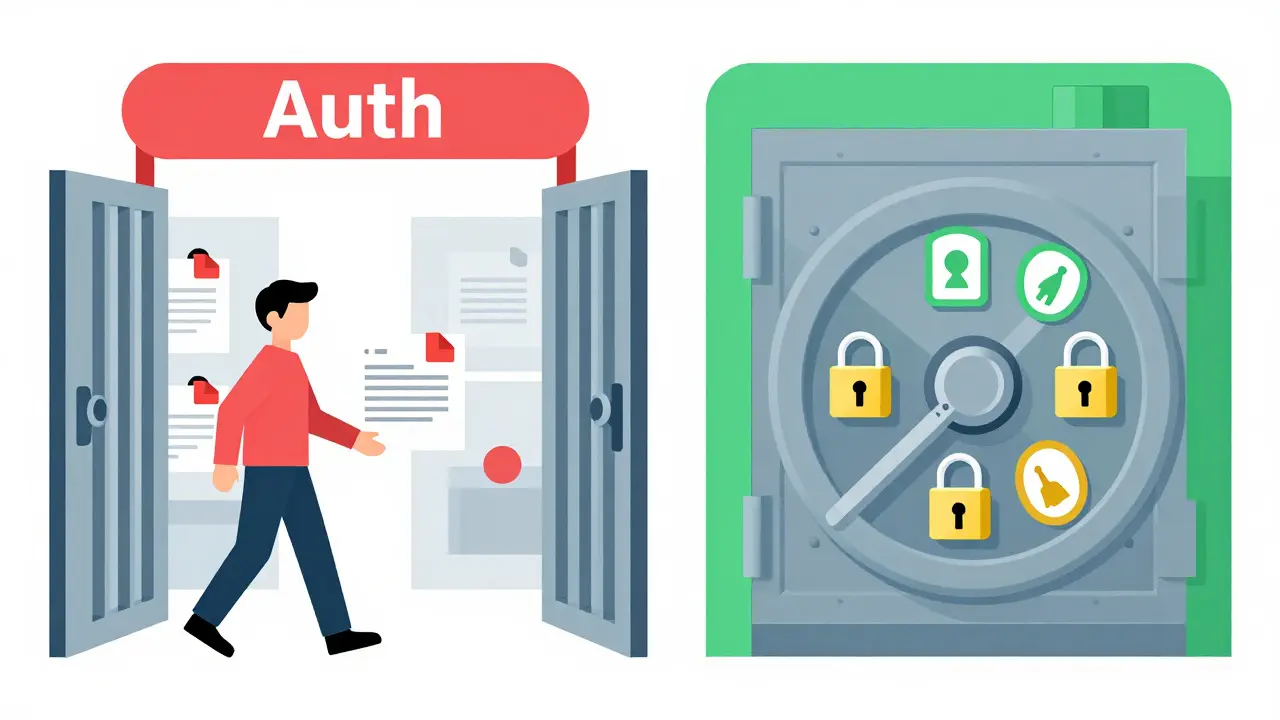
Most developers confuse authentication with authorization, and AI assistants are only too happy to reinforce that mistake. Authentication answers the question, "Who are you?" Authorization answers, "What are you allowed to do?" When you prompt an AI to "create a user login," it will happily generate a robust password hashing function and a JWT issuance flow. It rarely generates the checks that ensure User A cannot access User B’s private data.
ReversingLabs’ 2025 Production Security Report highlights that 68% of vibe-coded applications omit authorization checks between the moment a user logs in and the moment they access data. Naomi Buckwalter, Principal Security Engineer at ReversingLabs, notes that without explicit instructions, AI lacks context about application-specific requirements. The result? An attacker who steals a valid session token might find themselves able to delete any record in the database because the code never asked if that specific user had permission to do so.
To fix this, you must treat authorization as a separate, mandatory step in your prompting strategy. Do not just ask for "user management." Ask for "role-based access control (RBAC) with distinct admin, editor, and viewer roles, ensuring every endpoint validates the user’s role against the requested action." Specificity is your best defense against lazy code generation.
The OAuth 2.0 and PKCE Requirement
If you are building modern web or mobile apps, you should avoid rolling your own authentication from scratch whenever possible. Instead, use established standards like OAuth 2.0. However, not all OAuth flows are created equal, and AI assistants often default to outdated or insecure methods.
| Flow Type | Security Level | AI Adoption Rate | Risk Factor |
|---|---|---|---|
| Authorization Code + PKCE | High | Low (unless specified) | Minimal; industry standard for public clients |
| Implicit Grant | Deprecated | 42% of AI-generated code | High; tokens exposed in URL history |
| Password Flow | Low | Moderate | High; requires sharing credentials directly |
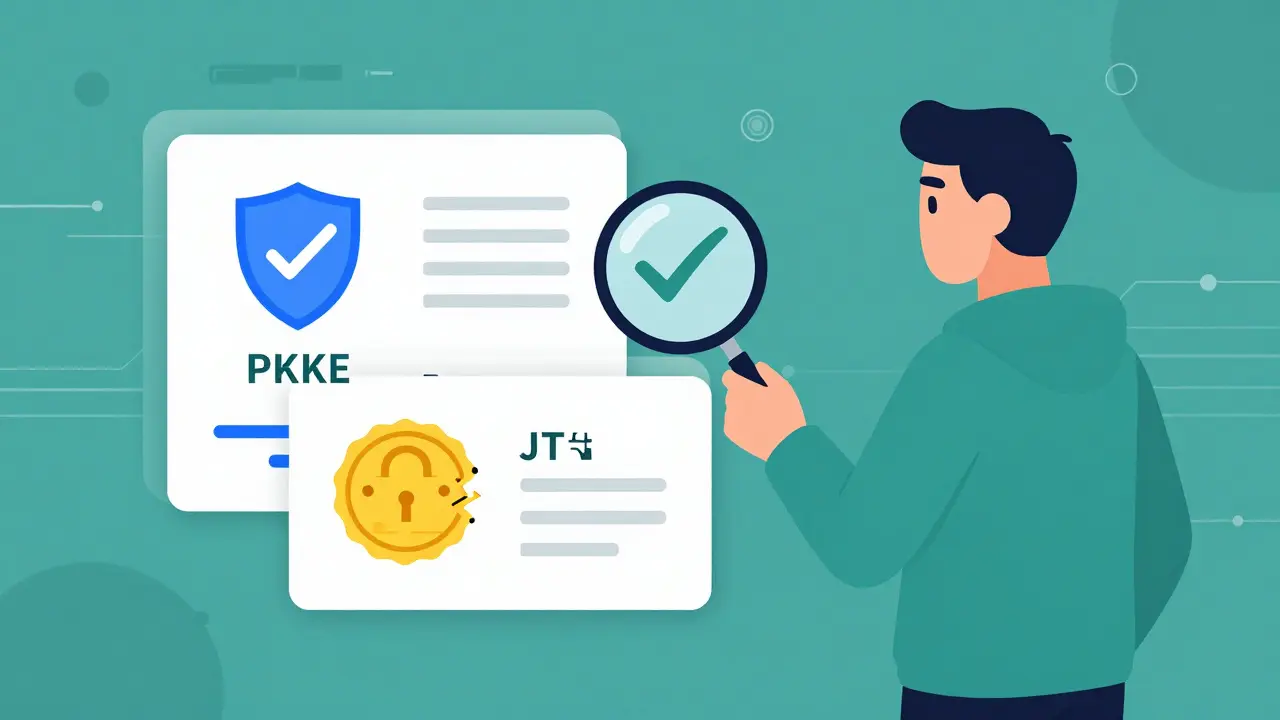
FusionAuth’s analysis of 1,200 GitHub repositories revealed that 42% of AI-generated authentication code still uses the Implicit Grant flow, which has been deprecated due to security flaws. Always specify "OAuth 2.0 Authorization Code flow with PKCE" in your prompts. PKCE (Proof Key for Code Exchange) adds a layer of security that prevents interception attacks, making it essential for single-page applications and mobile backends.
JWT Configuration Pitfalls
JSON Web Tokens (JWTs) are the backbone of stateless authentication in many modern backends. They are convenient, but they are also easy to misconfigure. Brian Pontarelli, CTO of FusionAuth, warns that basic JWT implementations generated by AI often use hardcoded secrets and omit proper validation. This creates a trivial path for attackers to forge tokens and impersonate any user.
When prompting for JWT implementation, enforce strict expiration policies. Access tokens should be short-lived, typically expiring between 15 and 60 minutes. Refresh tokens can last longer, but should not exceed seven days. The Cloud Security Alliance’s Secure Vibe Coding Guide recommends these limits to minimize the window of opportunity if a token is stolen. Additionally, ensure your AI-generated code validates the `alg` (algorithm) header to prevent algorithm confusion attacks, where an attacker switches from a signed token to an unsigned one.
Session Management and Cookie Security
Even if you use JWTs, how you store them matters immensely. Storing tokens in `localStorage` is a common pattern in early tutorials, but it exposes them to Cross-Site Scripting (XSS) attacks. A more secure approach involves using HTTP-only, Secure cookies with the `SameSite=Strict` attribute.
Here is what your prompt should demand for session management:
- HTTP-only: Prevents JavaScript from accessing the cookie, mitigating XSS theft.
- Secure: Ensures the cookie is only sent over HTTPS connections.
- SameSite=Strict: Blocks the cookie from being sent in cross-site requests, reducing CSRF risk.
- maxAge: Set a clear expiration time, such as 3,600,000 milliseconds (one hour), to limit session duration.
Rate Limiting and Input Validation
Authentication endpoints are prime targets for brute-force attacks and credential stuffing. AI-generated code rarely includes rate limiting by default because it focuses on functionality over resilience. You must explicitly request middleware that restricts requests-for example, limiting each IP address to 100 requests per 15-minute window using tools like `express-rate-limit`.
Input validation is another area where AI falls short. HackerOne’s 2025 vulnerability database analysis showed that AI-generated code contains 4.1x more missing input validation flaws than manually written code. Sanitize all inputs to prevent SQL injection and NoSQL injection attacks. Never trust data coming from the client side, even if it was validated by your frontend framework.
The Cost of Technical Debt
Vibe coding accelerates initial implementation by up to 65%, according to Rocket.new case studies. However, this speed comes with a hidden cost. About 89% of AI-generated authentication systems require substantial security refactoring before they are safe for production. Developers report spending 35-50% of their total implementation time fixing security issues that the AI introduced.
This isn’t a reason to stop using AI assistants. It is a reason to change how you use them. Treat AI output as a first draft, not a final product. Allocate time for security reviews, penetration testing, and manual verification of authorization logic. As the Appwrite security guide states, always review AI-generated code; 100% of security professionals surveyed consider this step non-negotiable.
Building a Secure Prompting Strategy
To get the best results from vibe coding, shift your focus from asking for features to demanding security properties. Here is a checklist for your next authentication prompt:
- Specify the exact OAuth 2.0 flow (Authorization Code + PKCE).
- Demand granular RBAC or ABAC checks on every resource-accessing endpoint.
- Require HTTP-only, Secure, SameSite=Strict cookies for session storage.
- Enforce short-lived access tokens (15-60 mins) and refresh token rotation.
- Include rate limiting and input sanitization middleware.
- Ask for explicit error handling that does not leak sensitive information.
Is vibe coding safe for production authentication?
Vibe coding can be safe for production if you implement rigorous security reviews and explicit authorization checks. Currently, 89% of AI-generated auth systems need significant refactoring. Use AI for scaffolding, but manually verify all security controls, especially authorization logic and token handling.
What is the most common vulnerability in AI-generated auth code?
The most common vulnerability is missing authorization checks. While AI handles authentication (login) well, it often fails to implement granular permissions, leading to authorization bypasses where users can access data they shouldn't. ReversingLabs reports this in 68% of vibe-coded apps.
Should I use Implicit Grant or PKCE for OAuth 2.0?
Always use Authorization Code flow with PKCE. Implicit Grant is deprecated and insecure, yet 42% of AI-generated code still uses it. PKCE provides necessary protection against token interception for public clients like SPAs and mobile apps.
How long should JWT access tokens last?
Access tokens should expire quickly, ideally between 15 and 60 minutes. Refresh tokens can last up to 7 days. Short lifespans reduce the risk if a token is stolen. Ensure your AI-generated code implements automatic token rotation upon refresh.
Does AI replace the need for security expertise?
No. The Cloud Security Alliance emphasizes that AI shifts where expertise is needed, not eliminates it. Developers must understand OAuth, JWT, and RBAC principles to correctly prompt and review AI output. Without this knowledge, systems have 4.3x more vulnerabilities.