Stakeholder Review Processes for Ethical Large Language Model Use
 Oct, 28 2026
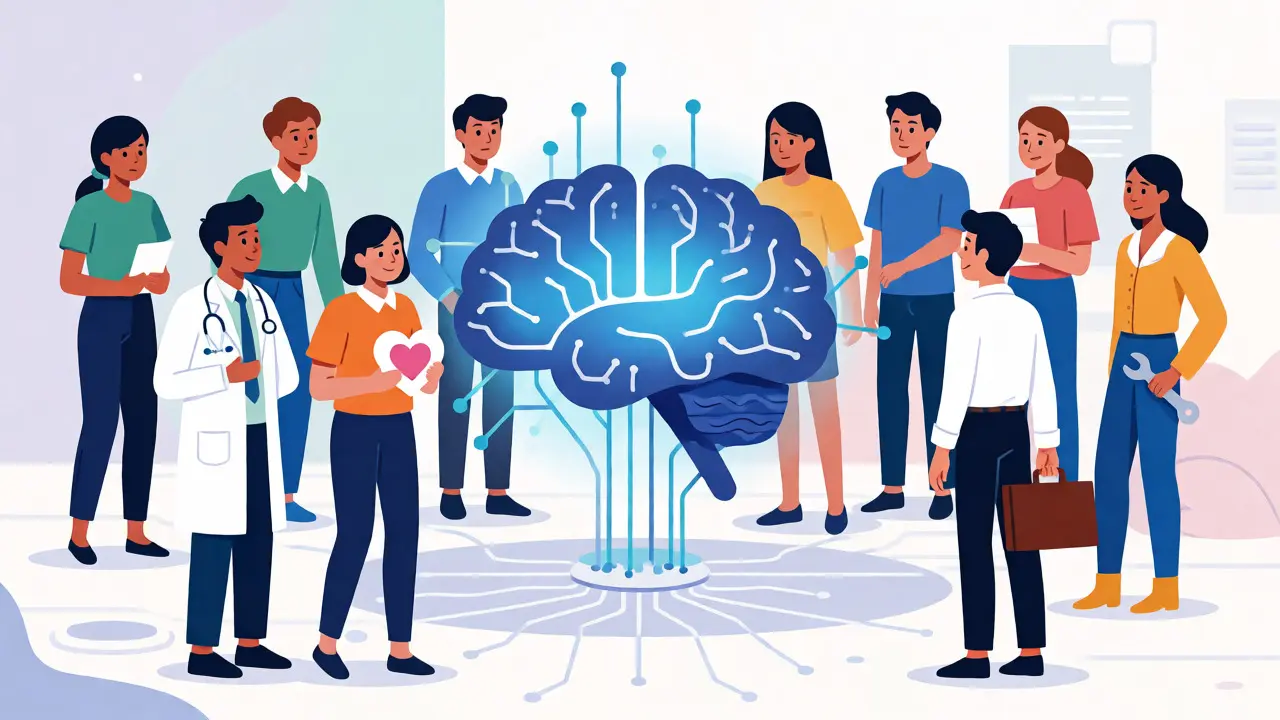
You built a powerful Large Language Model. It writes code, summarizes reports, and chats with customers. But who decides if it’s actually good? Not the engineers. Not the investors. The people it affects. That’s where stakeholder review processes come in. These aren’t just bureaucratic hoops; they’re structured frameworks that catch ethical landmines before your model goes live. Think of them as the immune system for your AI.
If you skip this step, you risk more than bad PR. You risk legal fines, biased outcomes, and user distrust. The EU AI Act, now fully in force, mandates stakeholder engagement for high-risk systems. Ignoring it isn’t an option anymore. So, how do you actually run these reviews without turning your development cycle into a slow-motion car crash? Let’s break down what works, what fails, and how to keep your LLM both smart and fair.
Why Stakeholder Reviews Are Non-Negotiable Now
A few years ago, ethics was a nice-to-have. Today, it’s a compliance requirement and a business imperative. Research shows that organizations using formal stakeholder review processes see a 42% reduction in ethical incidents. That’s not just a statistic; that’s money saved on lawsuits and brand repair.
Consider healthcare. A study published in PMC found that 87% of ethical LLM studies in medicine explicitly included stakeholder perspectives. Why? Because a doctor, a patient, and a hospital administrator care about different things. The doctor wants accuracy. The patient wants privacy. The admin wants cost-efficiency. If you only listen to the engineers building the model, you miss the human context entirely.
The shift happened between 2020 and 2023. As models got bigger, their potential to harm got bigger too. We moved from "does it work?" to "is it right?" This isn’t philosophy class. It’s risk management. When you involve stakeholders early, you identify biases in training data or unintended consequences in deployment scenarios that pure technical testing misses.
Core Frameworks: SKIG and Beyond
Not all review processes are created equal. The most robust current framework is SKIG (Stakeholder Identification, Motivation, Risk, and Morality Evaluation). Developed by researchers at ACL Anthology, it breaks the process into four clear phases. First, you identify every group affected-not just users, but bystanders, regulators, and even competitors. Second, you analyze their motivations. What do they fear? What do they value? Third, you assess risks. What’s the worst-case scenario? Fourth, you evaluate morality. Does the outcome align with societal norms?
There’s also the eight-perspective evaluation framework highlighted in recent arXiv reviews. It looks at transparency, robustness, alignment, and environmental impact. For example, you don’t just ask "is the output correct?" You ask "can we explain why it gave this answer?" and "how much carbon did this inference burn?"
Here’s a quick comparison of common approaches:
| Framework Type | Best For | Key Strength | Limitation |
|---|---|---|---|
| Healthcare-Specific | Clinical decision support | High clinician satisfaction (89%) | Poor fit for commercial apps |
| Business-Oriented | Customer service bots | Strong ROI focus (23% cost savings) | Weak technical robustness checks |
| General Purpose (SKIG) | Diverse enterprise use | Balanced moral reasoning accuracy | Complex implementation (12-16 weeks) |

Step-by-Step Implementation Guide
Ready to implement? Don’t try to boil the ocean. Start small but start real. Here’s the practical workflow used by successful teams:
- Map Your Stakeholders: Identify at least five distinct groups. For a banking chatbot, this might include loan applicants, bank tellers, compliance officers, minority community advocates, and internal IT staff. Use tools like Social Chemistry 101 datasets to help categorize social roles accurately.
- Conduct Motivation Analysis: Interview each group. Ask open-ended questions. What worries them? A teacher might worry about student dependency; a parent might worry about screen time. Document these values.
- Simulate Consequences: Run your LLM through edge cases relevant to each stakeholder. If you’re deploying in a diverse city, test prompts in multiple dialects and cultural contexts. Measure bias incidents here.
- Evaluate and Iterate: Gather feedback from your stakeholder panel. Did the model respect their values? If not, adjust the prompt engineering or fine-tuning data. Repeat.
Pro tip: Keep your review cycles short. Dr. Aisha Patel from the AI Now Institute suggests adaptive review cycles every 45-60 days. Models change as you update them. Stakeholder needs change as society changes. Static reviews become obsolete quickly.
Real-World Wins and Woes
Let’s look at actual user experiences. One financial services company reported saving $2.3 million in potential compliance violations. Their stakeholder review caught cultural insensitivity in loan approval explanations for 17% of their customer base. Without that review, those customers would have received confusing, potentially discriminatory messages, leading to churn and regulatory scrutiny.
On the flip side, some implementations fail spectacularly. A HackerNews thread described a "bureaucratic theater" scenario where eight committee meetings were needed to approve minor prompt changes. Deployment was delayed by 11 weeks, yet ethical improvements were minimal. The problem wasn’t the concept; it was the execution. They lacked clear criteria for escalation. Every tiny change went to the full board.
Another success story comes from customer service. Including frontline representatives in the review process helped catch 83% of problematic chatbot responses before launch. Technical teams missed these because they weren’t seeing the nuanced emotional context of frustrated customers. Human-in-the-loop isn’t just a safety net; it’s a quality control mechanism.
Common Pitfalls to Avoid
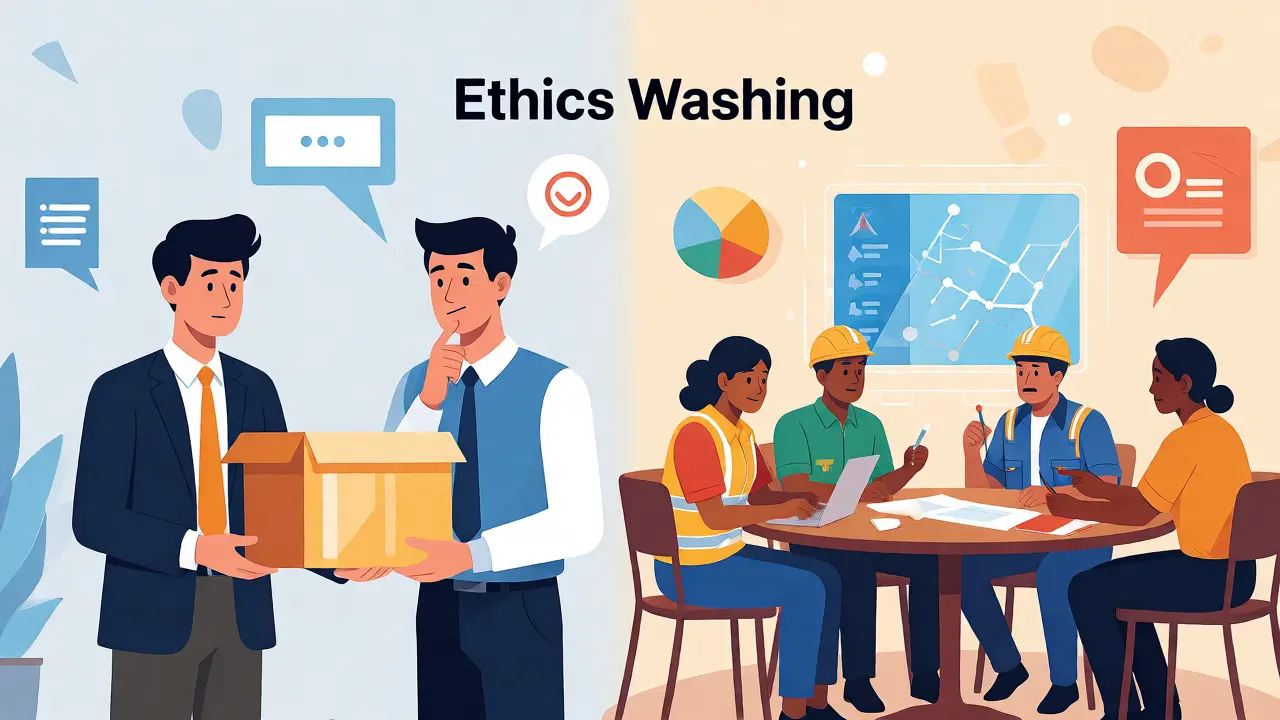
You want to avoid "ethics washing." This happens when companies perform stakeholder reviews for show but ignore the findings. A Nature survey found that 68% of EU AI Act compliance efforts focused on checking boxes rather than substantive engagement. How do you spot this? If your stakeholders have no veto power or influence over design decisions, it’s likely theater.
Another trap is over-reliance on automation. Some platforms offer automated stakeholder mapping tools. While helpful, they often miss nuanced community impacts. Trustpilot reviews for AI governance platforms average a mediocre 3.2/5, largely due to this gap. Automation can flag keywords, but it can’t understand cultural nuance or historical trauma. Keep humans in the loop for interpretation.
Finally, watch out for resource strain. Small organizations spend 18-22% of their AI budgets on review processes, compared to 8-12% for enterprises. If you’re a startup, prioritize high-risk areas first. Don’t try to audit every single feature equally. Focus on features that directly impact vulnerable populations.
The Future of Ethical AI Governance
The landscape is evolving fast. By 2027, Gartner predicts that 92% of enterprise AI deployments will incorporate formal stakeholder review processes. This isn’t speculation; it’s driven by regulation like the California AI Transparency Act and Singapore’s updated governance framework.
We’re also seeing a convergence of technical and ethical testing. Organizations are combining robustness testing (like adversarial attacks) with ethical reviews. This holistic approach ensures that a model isn’t just technically sound but socially acceptable. Emerging technologies aim to automate parts of this, with Google Research targeting 80% accuracy in predicting stakeholder impact by late 2025.
But technology alone won’t save us. The future belongs to teams that treat ethics as a continuous practice, not a one-time gate. It requires shifting from "compliance-driven" to "value-creation." When stakeholders feel heard, trust increases. And trust is the currency of AI adoption.
Who counts as a stakeholder in LLM projects?
Stakeholders include anyone affected by the model's output. This typically means end-users, developers, data subjects (whose data trained the model), regulators, community groups, and internal employees. The EU AI Act recommends identifying at least five distinct groups to ensure comprehensive coverage.
How long does a stakeholder review take?
Initial implementation takes 12-16 weeks for full integration. However, ongoing reviews should be cyclical, occurring every 45-60 days. Quick assessments for minor updates can take 14 hours on average, significantly faster than the 32+ hours required when no framework exists.
Do stakeholder reviews reduce bias?
Yes. Studies show a 37% decrease in discrimination cases and up to a 58% reduction in demographic bias in diagnosis recommendations when structured stakeholder input is integrated into the development pipeline.
What is the biggest failure mode?
"Ethics washing" or bureaucratic theater. This occurs when reviews are performed for compliance appearance but lack genuine power-sharing. If stakeholders cannot influence design decisions, the process adds delay without adding value.
Is there a standard framework I should use?
The SKIG framework is highly regarded for its balance of moral reasoning and practicality. Healthcare sectors often prefer specialized clinical validation frameworks, while businesses may lean toward ROI-focused models. Choose based on your industry risk profile.
Howard Hurd
October 30, 2026 AT 02:40Finally someone gets it. We don't need some EU bureaucrat telling us how to run our tech. This whole "stakeholder" thing is just another way for regulators to strangle American innovation with red tape.
Look at the stats. 42% reduction in incidents? Great. But what about the 12-16 weeks of delay? That's an eternity in this industry. By the time you finish your little committee meetings, the model is already obsolete. The Chinese aren't waiting around for a moral evaluation panel to approve their LLMs. They're shipping product.
This article treats ethics like it's the primary goal, but let's be real: profit is the primary goal. If a model makes money and works, ship it. If it offends someone, that's on them. We built these tools to solve problems, not to hold hands through every single output generation. The "immune system" metaphor is cute, but immune systems also attack healthy cells sometimes. You risk paralysis by analysis here.
I've seen startups burn cash on consultants who couldn't code their way out of a paper bag. These people sit in rooms, argue about "societal norms," and delay launches while competitors eat their lunch. The EU AI Act isn't a gold standard; it's a competitive disadvantage. We should be leading with speed and capability, not apologizing for being efficient.
If you want to keep America dominant in AI, stop listening to people who have never written a line of production code. Let engineers engineer. Let managers manage. And let the market decide what's "good." Not some self-appointed morality police.
Manoj Kumar
October 30, 2026 AT 22:12The inclusion of specific metrics such as the 42% reduction in ethical incidents serves primarily as a distraction from the underlying structural power dynamics at play. One must consider who defines the parameters of "ethical landmines" in the first place. It is rarely the end-user or the marginalized community; rather, it is often a small consortium of corporate entities and regulatory bodies seeking to consolidate control over the information landscape.
The SKIG framework, while presented as robust, appears designed to create a bureaucratic moat around high-cost enterprise solutions. Smaller organizations spending 18-22% of their budgets on review processes are effectively being taxed into irrelevance. This suggests a deliberate strategy to favor incumbent players who can absorb these compliance costs without impacting their bottom line.
Furthermore, the reference to the EU AI Act mandates engagement, yet there is no mention of enforcement mechanisms against those who manipulate stakeholder selection. If a corporation selects only compliant stakeholders who agree with the status quo, the process becomes a rubber stamp. This is not oversight; it is theater designed to legitimize predetermined outcomes.
The data regarding healthcare studies including stakeholder perspectives may be skewed by publication bias. Studies that fail to show positive results are less likely to be published, creating a false impression of efficacy. We must remain skeptical of any framework that claims to quantify morality with such precision. Morality is subjective and contextual; reducing it to a checklist invites manipulation.
Ultimately, the push for formalized reviews coincides with increasing surveillance capabilities. As models become more complex, the need for explanation grows, which in turn requires more data collection. Who owns that data? The corporations do. Therefore, the "stakeholder" is merely a prop in a larger game of data extraction and control.
Hemali Jaiswal
November 1, 2026 AT 01:46This is such a vibrant and necessary conversation! 🌟 I love how you framed the stakeholder review as an "immune system"-it really highlights the protective nature of these processes without making them sound punitive.
I especially appreciate the emphasis on diverse voices. In my experience mentoring junior developers, we often get so caught up in the technical elegance of a solution that we forget the human texture of its impact. The example about the banking chatbot catching cultural insensitivity is a perfect illustration of why empathy must be engineered into the workflow, not just bolted on at the end.
The point about frontline representatives catching 83% of problematic responses resonates deeply. Those folks are the true sensors of user sentiment. Their intuition is a dataset all on its own, one that algorithms struggle to replicate because it’s rooted in lived experience and emotional nuance.
I’d also add that the "bureaucratic theater" mentioned is a valid concern, but it’s a symptom of poor implementation, not the concept itself. When teams treat ethics as a checkbox exercise, they miss the creative opportunity to co-design better products. Imagine if stakeholders were invited to brainstorm features early on, not just critique outputs later!
Let’s champion a culture where feedback is celebrated, not feared. When people feel heard, they become advocates for the technology rather than adversaries. That shift in energy is where true innovation thrives. 💡
Liam Whelan
November 3, 2026 AT 00:10man i hate when ppl say "who decides if its good?" like its not the users lol
but seriously tho the part about the bank saving $2.3m is wild. usually these things cost more then they save cause everyone has to meet and talk and drink coffee ☕
also 12-16 weeks is forever. by then the ai will be smarter then ur review board probably 😂
Tommy Cahyadi
November 4, 2026 AT 16:34Oh, absolutely. Because nothing says "innovation" like a twelve-week committee meeting to discuss whether a chatbot should use the word "sorry" or "apologies."
We’ve clearly reached peak corporate absurdity when we need a formal framework to tell us that customers prefer not to be insulted by software. The idea that we need "motivation analysis" interviews to figure out that people don’t like being lied to is both hilarious and depressing.
But sure, let’s spend millions on consultants to validate what common sense already knew. It’s comforting to know that somewhere, a person is getting paid six figures to write a report on "moral reasoning accuracy."
Meanwhile, the actual engineers are probably still trying to fix the bugs that make the model hallucinate facts. But hey, at least the review board agreed that the hallucinations were ethically processed. 👏