Supply Chain Security in Vibe Coding: Managing Dependencies, SBOMs, and Updates
 May, 25 2026
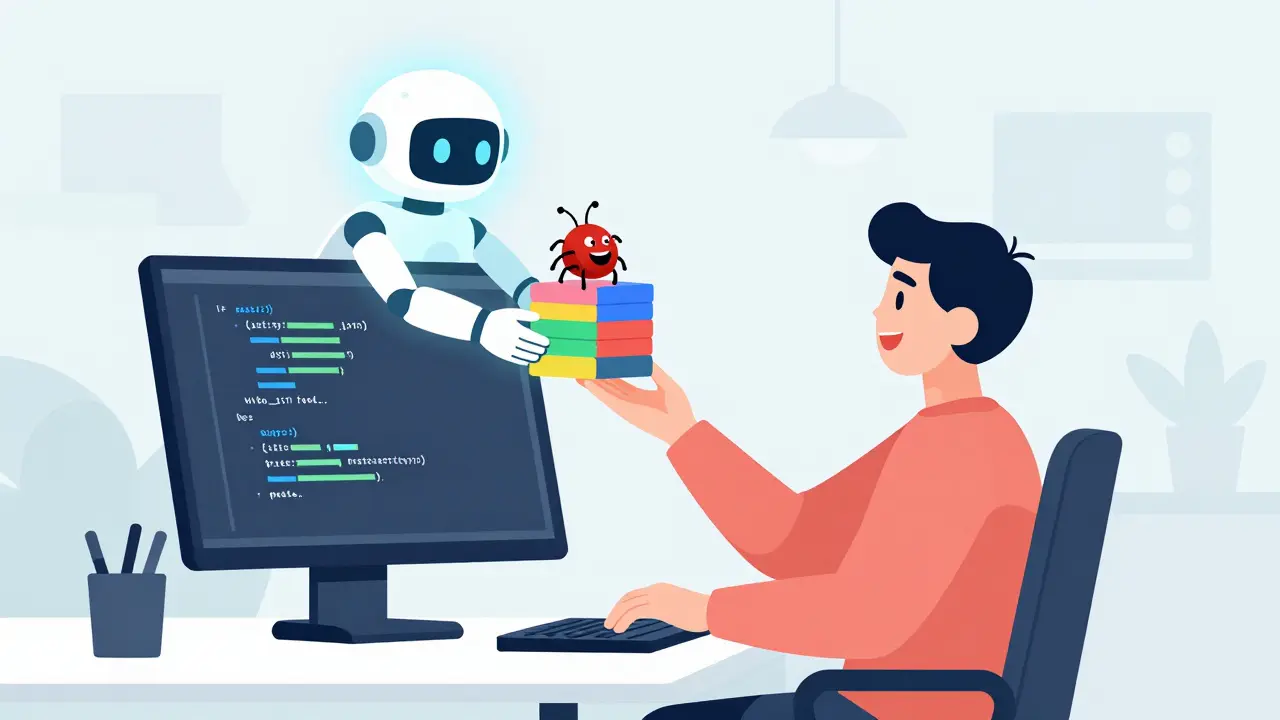
You type a quick prompt into your AI assistant, hit enter, and suddenly your feature is built. It works. You feel good about it. But did you just import a malicious library? Did that vibe coding shortcut silently add a transitive dependency with a critical vulnerability? This is the new reality for developers in 2026. The speed of AI-assisted development comes with a hidden cost: supply chain risk.
Vibe coding-coding by feel using tools like GitHub Copilot or ChatGPT-is fast, but it’s also messy. When you rely on AI to generate code, you often lose track of where every piece of that code came from. This creates a perfect storm for supply chain attacks. If you aren’t tracking your dependencies with a Software Bill of Materials (SBOM), you are flying blind.
What Is Vibe Coding and Why Does It Break Security?
The term "vibe coding" started appearing in developer circles around 2022 and 2023. It describes a workflow where developers use AI assistants to prototype, assemble, and modify code rapidly, often skipping strict design documents or manual reviews. The Cloud Security Alliance (CSA) calls this out in their 2024 research note, warning that this approach leads to "credential sprawl" and "SDLC debt."
Here is the problem: AI tools don’t just write logic; they suggest libraries. When an AI recommends a package from npm, PyPI, or Maven, it might pick something obscure, unmaintained, or even malicious. In a traditional workflow, a senior engineer might review that choice. In a vibe coding workflow, you often just accept the suggestion to keep moving.
This isn't just theoretical. We’ve seen how fragile software ecosystems are before AI existed. Remember the "left-pad" incident in March 2016? A single developer removed an 11-line JavaScript library, and thousands of builds across the internet broke instantly. Now imagine that scenario happening at the speed of AI, where hundreds of dependencies can be added in minutes without human scrutiny.
The Role of SBOMs in Modern Development
If vibe coding is the engine, the Software Bill of Materials (SBOM) is the dashboard. Without it, you have no idea what’s under the hood. An SBOM is essentially a nested inventory-a list of ingredients-that details every component in your software. The U.S. Cybersecurity and Infrastructure Security Agency (CISA) defines it as a comprehensive directory of code, third-party elements, and components.
Why do you need one? Because modern applications are complex. Sonatype’s annual reports consistently show that most vulnerabilities don’t come from the direct dependencies you explicitly install. They come from transitive dependencies-the libraries that your libraries depend on. These hidden layers make up the majority of components in typical Java or JavaScript apps.
An effective SBOM must include specific data fields mandated by the NTIA’s minimum elements standard:
- Supplier Name: Who made the component?
- Component Name and Version: Exactly which version is running?
- Unique Identifiers: Such as Package URLs (pURLs) to avoid ambiguity.
- Dependency Relationships: How do these parts connect?
- Timestamps: When was this snapshot taken?
If your SBOM doesn’t cover transitive dependencies, it’s useless. It gives you a false sense of security while attackers lurk in the shadows of your secondary and tertiary packages.
| Standard | Owner/Origin | Best For | Key Features |
|---|---|---|---|
| SPDX | Linux Foundation | Compliance & Licensing | Supports JSON, YAML, RDF; ISO/IEC 5962:2021 ratified; strong license metadata. |
| CycloneDX | OWASP | Cloud-Native & DevOps | Lightweight; supports services and ML components; integrates well with CI/CD. |
| SWID | NIST/ISO | Installed Software Tagging | Focuses on identifying installed software; less common in developer pipelines. |
Tools for Generating and Scanning SBOMs
You can’t manually create an accurate SBOM for anything beyond a tiny script. You need automation. Several tools have emerged to handle this workload, integrating directly into your build pipeline.
Syft, developed by Anchore, is a popular open-source generator. It scans container images and file systems to produce SBOMs in both SPDX and CycloneDX formats. It’s particularly useful because it catches system-level libraries inside containers, not just application dependencies.
For .NET environments, Microsoft offers the sbom-tool. It’s designed to fit seamlessly into Azure DevOps and other CI/CD workflows, ensuring that every release has an attached inventory.
Once you have the SBOM, you need to scan it. Tools like Grype (also by Anchore) and Trivy (by Aqua Security) consume these SBOMs to identify known vulnerabilities. However, treat these tools with caution too. Trivy itself had a security incident in the past, reminding us that security tools are part of the supply chain and can become targets.

Managing Dependencies in an AI-Driven Workflow
In a vibe coding environment, dependencies change fast. AI agents might suggest updates, and bots like Dependabot or Renovate might auto-create pull requests daily. If you let everything merge automatically, you’ll drown in noise and miss the real threats.
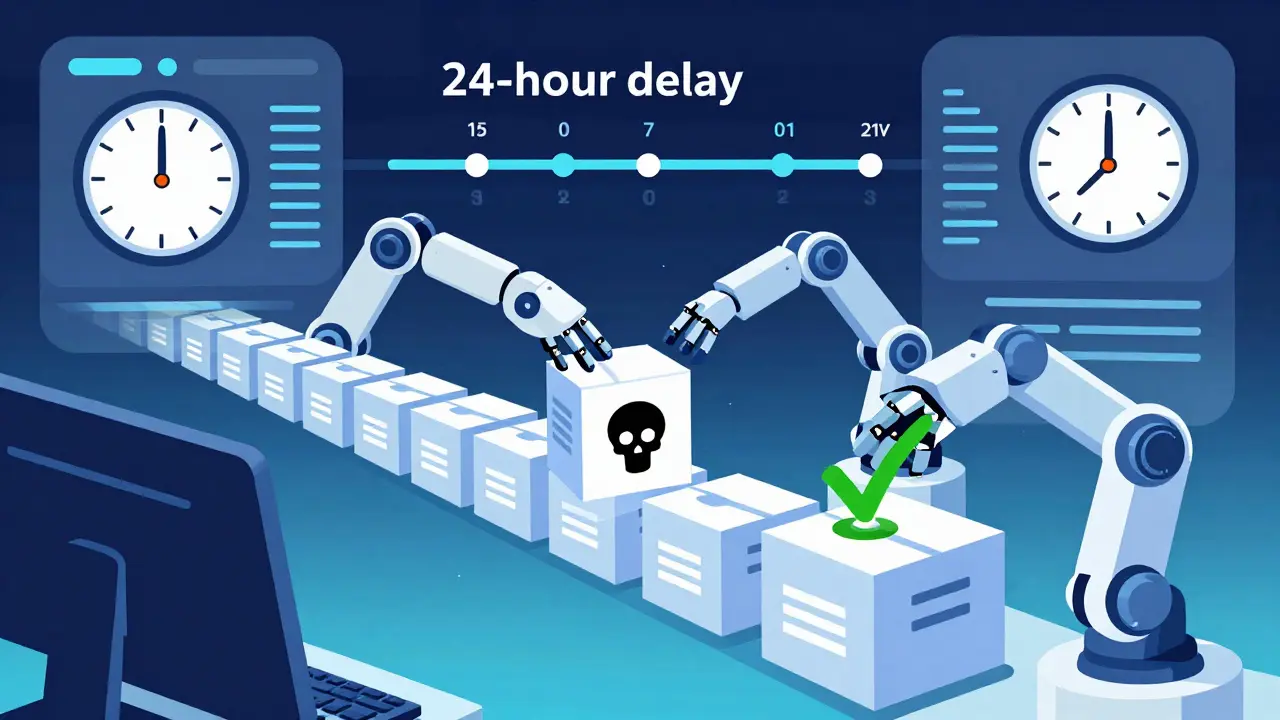
DareData, a security firm specializing in agentic AI risks, recommends a simple but powerful rule: delay automated dependency updates by 24 to 48 hours. This window allows security teams to evaluate new releases and check for emerging reports of malicious packages. It breaks the momentum of a potential attack.
Here is a practical checklist for securing your vibe coding workflow:
- Flag AI-Suggested Dependencies: Treat any library introduced by an AI tool as high-risk until vetted. Require explicit human approval in your pull request process.
- Generate SBOMs at Build Time: Don’t wait for release. Generate an SBOM on every CI run. This gives you a high-resolution history of how your dependencies evolved.
- Restrict AI Access: Ensure AI agents cannot access sensitive credentials like SSH keys or API secrets. If an AI tool is compromised, it shouldn’t be able to exfiltrate your secrets.
- Audit Training Data: If you’re using custom models, ensure they are trained on vetted sources. Models trained on public repositories may learn to recommend deprecated or insecure libraries.
From Static Documents to Agentic Governance
Many companies treat SBOMs as compliance checkboxes. They generate one, send it to a regulator, and forget it. This is a mistake. ReversingLabs argues that SBOMs alone are insufficient. They need to be part of a continuous monitoring loop.
We are moving toward "agentic governance." This means automated systems that ingest new SBOMs, correlate them with threat intelligence, and take action without waiting for humans. For example, if a new CVE emerges in a library your app uses, an agentic system should automatically block deployments containing that library and raise a ticket for remediation.
Platforms like ArmorCode and Cycode are building this layer. They aggregate SBOMs from multiple pipelines into a single risk view. They don’t just tell you what’s there; they tell you what’s dangerous and help you fix it. This is essential for vibe coding teams, where the volume of changes is too high for manual review.
Historical Context: Why This Matters Now
Supply chain security didn’t become a priority overnight. It was forced upon us by major incidents. The SolarWinds Orion compromise in December 2020 showed attackers could tamper with the build pipeline itself, signing malicious updates that looked legitimate. The Log4Shell vulnerability (CVE-2021-44228) in December 2021 demonstrated how a single open-source logging library could compromise millions of servers worldwide.
These events led to U.S. Executive Order 14028, signed in May 2021, which explicitly called for SBOMs. NIST followed up with Special Publication 800-218, making SBOM maintenance a recommended practice for secure software development. Today, ignoring these standards isn’t just risky; it’s potentially non-compliant for many industries.
Next Steps for Your Team
If you are adopting vibe coding practices, start small. Pick one project and integrate Syft or CycloneDX into its CI/CD pipeline. Generate an SBOM on every build. Review the output. You’ll likely be surprised by how many transitive dependencies you never knew existed.
Then, implement the 24-hour delay rule for dependency updates. Train your developers to read SBOMs. Show them how a single vulnerable transitive dependency can bring down production. Finally, demand transparency from your AI vendors. Ask them for security audits and SBOMs for their own tools. You can’t secure what you don’t understand.
What is vibe coding?
Vibe coding is an informal term describing development workflows where programmers rely heavily on AI assistants like GitHub Copilot or ChatGPT to generate, assemble, and modify code rapidly. It prioritizes speed and intuition over strict upfront design, documentation, and manual code reviews, which can introduce significant security risks if not managed properly.
Why are SBOMs important for AI-generated code?
AI tools often suggest or automatically insert third-party libraries without full context. An SBOM provides a complete inventory of all components, including hidden transitive dependencies. This visibility is crucial for identifying vulnerabilities, checking license compliance, and ensuring that AI-suggested packages haven't introduced malicious or unstable code into your application.
What is the difference between SPDX and CycloneDX?
Both are open standards for SBOMs, but they serve slightly different needs. SPDX (Software Package Data Exchange) is widely used for licensing and compliance and is an ISO standard. CycloneDX, maintained by OWASP, is lighter weight and designed specifically for DevOps and cloud-native environments, offering better support for service components and machine-readable dependency graphs.
How can I prevent supply chain attacks in my CI/CD pipeline?
Implement several controls: generate SBOMs at build time using tools like Syft; scan for vulnerabilities with Grype or Trivy; delay automatic merging of dependency updates by 24-48 hours for security review; and restrict AI agents' access to sensitive credentials. Additionally, enforce policies that require human approval for any new dependencies introduced by AI tools.
What is agentic governance in supply chain security?
Agentic governance refers to automated, policy-driven systems that continuously monitor software supply chains. Instead of treating SBOMs as static documents, these systems ingest them in real-time, correlate them with threat intelligence, and automatically take actions-such as blocking deployments or rolling back artifacts-when risks are detected, reducing reliance on manual intervention.