Vibe Coding and DevOps: How AI Is Rewriting How We Build and Ship Software
 Mar, 3 2026
It’s 2026, and the way teams build software has changed - not because of new frameworks or faster servers, but because developers stopped typing code.
Instead of writing YAML files line by line, they say: "Set up a staging environment with our latest data, but don’t make it public." And it happens. No Terraform, no Kubernetes manifests, no debugging a broken pipeline. Just a prompt. And the system does the rest.
This isn’t science fiction. It’s vibe coding - and it’s reshaping DevOps from the ground up.
What Is Vibe Coding, Really?
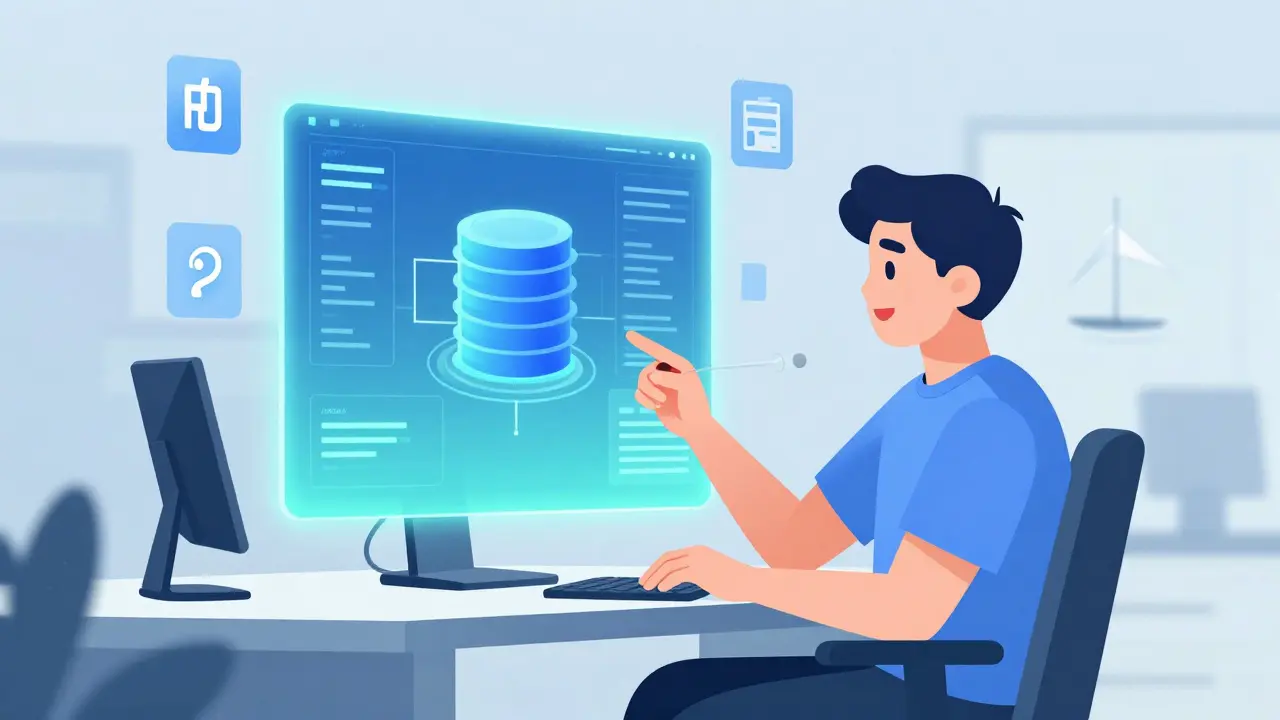
Vibe coding isn’t just using ChatGPT to fix a typo in your script. It’s about letting AI become your co-pilot for entire systems. You describe what you want in plain language - "I need a service that scales when traffic spikes and auto-restarts if it crashes" - and the AI builds the infrastructure, writes the code, configures the monitoring, and deploys it.
It started with GitHub Copilot, but now it’s gone further. Tools like Windsurf and GitLab’s Agentic AI Platform let you ask for full applications: "Generate a backend with auth, a PostgreSQL database, and a Redis cache, all containerized." The AI doesn’t just suggest snippets - it constructs working systems. Developers shift from writing code to reviewing outcomes.
This isn’t about replacing engineers. It’s about removing the friction that once slowed them down. No more hunting down the right Dockerfile syntax. No more forgetting to set resource limits in Kubernetes. The AI learns from your team’s patterns and enforces standards automatically.
How VibeOps Changes DevOps Forever
When vibe coding meets DevOps, you get VibeOps. It’s the idea that every step of the software lifecycle - from idea to production - should be accessible through conversation.
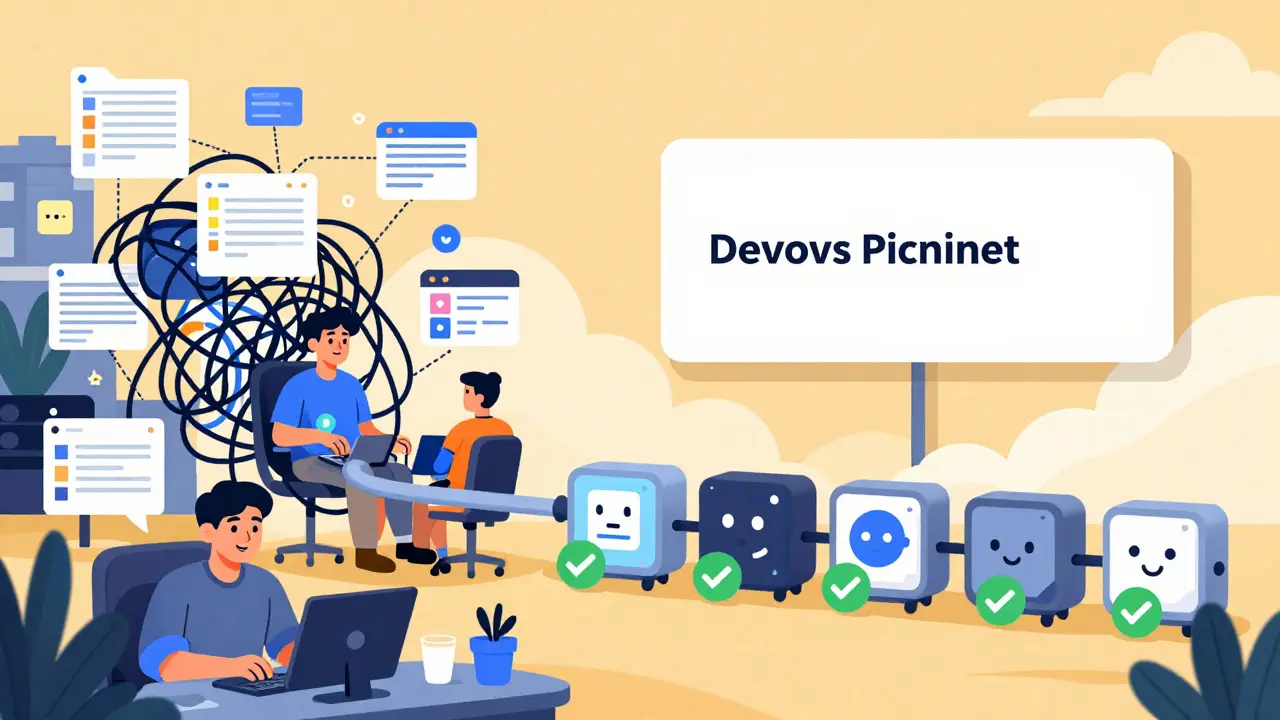
Traditional DevOps is a chain of tools: Git → CI → Build → Test → Deploy → Monitor. Each step needs its own config, its own permissions, its own alert. Switching between them breaks flow. VibeOps collapses it all into one.
Imagine this:
- You type: "Deploy version 2.1 to production with a 10% canary rollout."
- The AI checks: Are tests passing? Is the database schema compatible? Is the cost within budget? Are there open security alerts?
- If everything’s good, it deploys. If not, it tells you why - and suggests fixes.
No manual approval gates. No waiting for a DevOps engineer to free up time. The system acts - but only when it’s confident.
Companies like Cloudflare and GitLab are already doing this. Cloudflare’s AI tools now let engineers configure firewalls and load balancers with natural language. GitLab’s platform lets teams build custom automation agents that learn from past deployments. These aren’t gimmicks. They’re becoming standard.
The FAAFO Framework: Why Vibe Coding Feels Different
There’s a reason vibe coding doesn’t feel like just another tool. It unlocks five core shifts - summed up in the FAAFO framework:
- Speed: Features go from idea to live in minutes, not months. A team that used to take two weeks to spin up a new API now does it in 45 minutes.
- Ambition: Big ideas stop being "too hard." A developer who wanted to build a real-time analytics dashboard for customer behavior? Did it over a weekend.
- Autonomy: One person can now do the work of a team. No more bottlenecks waiting for infrastructure or security reviews.
- Creativity: When you’re not stuck debugging YAML, you start experimenting. Teams are building wild, unexpected features - because the barrier to try is gone.
- Optionality: You can run 5 experiments at once. No risk. No cost. Just try. The AI handles the overhead.
This isn’t about working harder. It’s about working differently.
How On-Call Practices Are Being Rewritten
Remember when on-call meant 3 a.m. alerts, frantic Slack messages, and digging through logs for hours?
Now, AI agents are handling the first response.
When a service crashes, an AI monitor doesn’t just send an alert. It:
- Checks recent deployments for changes
- Compares performance metrics against historical patterns
- Runs a simulated rollback to test recovery
- Writes a root cause summary in plain English
- And if it’s confident, it fixes it - without human input
Teams using this approach report a 70% drop in midnight pager calls. The AI doesn’t eliminate on-call - it makes it meaningful again. Engineers now respond to complex, high-value issues, not repetitive outages.
Tools like AWS CodeGuru and Spacelift’s Saturnhead AI analyze past incidents to predict future failures. They notice that every time a certain microservice gets a traffic spike, it leaks memory - and they automatically add a memory limit before the next deploy.
This is no longer reactive. It’s predictive.
The Tools That Are Making This Real
You don’t need to wait for the future. It’s here - and it’s built into tools you already use:
- GitHub Copilot (Agent Mode): Ask it to generate a Kubernetes operator, validate cloud costs, or write documentation. It doesn’t just suggest - it executes.
- GitLab Agentic AI Platform: Lets teams create custom agents that handle testing, deployment, and security checks. One team built an agent that auto-generates security scans based on code patterns.
- Windsurf: A vibe coding environment that runs entirely in the browser. No setup. Just type and deploy.
- Spacelift Saturnhead: AI that reviews infrastructure-as-code changes before they’re applied, catching misconfigurations before they reach production.
- AWS CodeGuru: Now includes AI-driven recommendations for optimizing cloud resources based on actual usage - not guesswork.
These aren’t separate tools. They’re becoming layers of the same system. You write a prompt. The AI figures out which tool to use. You get results.
The Dark Side: Security and the AI Trust Gap
There’s a catch.
When AI builds your infrastructure, who’s responsible if it breaks? If an AI deploys a service with an open port, is it the developer’s fault? The tool’s? The prompt’s?
Organizations that rush into vibe coding without guardrails are seeing alarming results. A recent internal audit at a fintech firm found that 38% of AI-generated deployments had misconfigured secrets - because the prompt didn’t specify security requirements.
The solution isn’t to stop using AI. It’s to build AI governance:
- Require human approval for any deployment that touches production data.
- Use AI to audit AI: Have one agent review another’s work for security gaps.
- Enforce policy-as-code: Define rules like "No public S3 buckets," and let AI block violations automatically.
- Train teams to write better prompts. "Deploy this" isn’t enough. "Deploy this with TLS, network policy, and weekly secrets rotation" is.
AI doesn’t make security easier. It makes it more invisible. And that’s more dangerous.
The Next Frontier: Edge, IoT, and Distributed Systems
What happens when vibe coding meets edge computing?
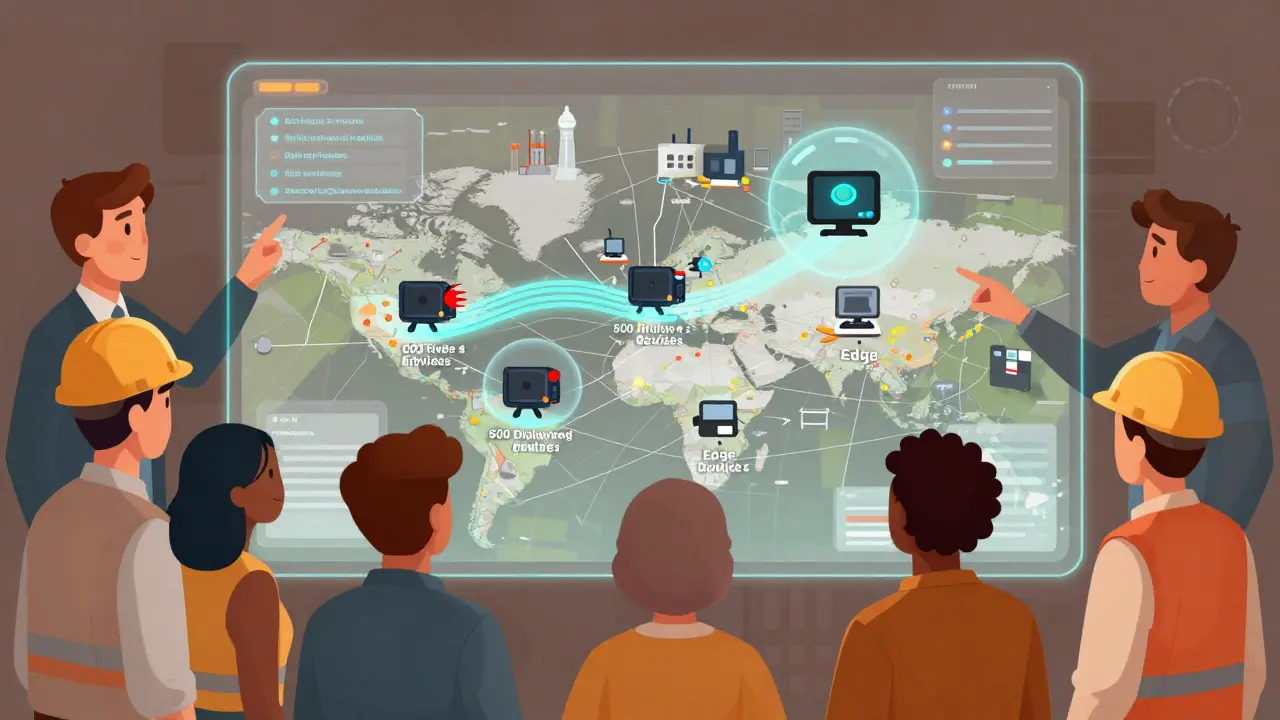
Imagine deploying a sensor network across 500 retail stores. Each has different bandwidth, power, and connectivity. Traditionally, you’d write custom scripts for each location. With vibe coding, you say: "Deploy this firmware to all edge devices, optimize for low bandwidth, and auto-update when firmware v2.3 drops."
The AI analyzes each device’s specs, groups them by capability, pushes updates in waves, and monitors for failures. If one device bricks itself, it isolates it and reroutes traffic. No human needed.
This isn’t theoretical. Companies like Siemens and Bosch are already testing this in factories. The same logic applies to IoT, 5G networks, and even spacecraft telemetry systems.
AI agents are becoming the universal translators between human intent and machine action - no matter where the machine lives.
Who Can Use This? (And Do You Need to Be a Pro?)
You don’t need to be a DevOps expert to use vibe coding. You need to know what you want.
Want to set up a database? Say it. Want to automate a backup? Describe it. Want to monitor a server? Explain what "healthy" looks like.
The barrier isn’t technical skill anymore. It’s clarity of thought. If you can explain a problem in plain English, AI can solve it.
That said, you still need to understand basics: What is a container? What does latency mean? What’s the difference between staging and production? You don’t need to write the code - but you do need to judge whether the AI got it right.
Learning curve? Shorter than ever. But the responsibility? Higher.
What’s Next? The End of Scripting
In five years, we’ll look back at YAML files and bash scripts the way we look at punch cards.
Vibe coding isn’t just making DevOps faster. It’s making it more human. Developers are no longer translators between ideas and machines. They’re directors. They set the vision. The AI handles the execution.
The best teams aren’t the ones with the most engineers. They’re the ones who ask the best questions.
So what’s your next prompt going to be?
Is vibe coding just another name for AI pair programming?
No. AI pair programming helps you write code line by line. Vibe coding lets you skip writing code entirely. Instead of suggesting a function, it builds an entire service - from infrastructure to monitoring - based on your description. It’s not a helper; it’s a team member.
Do I still need DevOps engineers if I use vibe coding?
Yes - but their role changes. Instead of writing scripts, they design AI workflows, define guardrails, audit outputs, and train models on team patterns. They become architects of automation, not operators of it. The job doesn’t disappear - it evolves.
Can vibe coding be used for legacy systems?
Absolutely. Tools like GitHub Copilot and Spacelift can analyze existing codebases and generate prompts to modernize them. You can ask AI to refactor a monolith into microservices, update Dockerfiles, or convert shell scripts to Kubernetes manifests - all from natural language.
What happens if the AI makes a mistake?
The same thing that happens when a human does - you catch it. The difference? AI generates code faster, so mistakes can spread quicker. That’s why governance is critical. Always review outputs. Use automated checks. Never trust AI blindly - even if it’s 99% confident.
Is vibe coding secure?
It can be - but only if you treat it like a real team member. AI doesn’t know your security policies unless you teach them. Use policy-as-code tools, require approvals for sensitive changes, and audit AI-generated code like you would human code. Security isn’t automatic - it’s designed.
Will vibe coding replace developers?
No. It replaces repetitive, tedious work - the kind that burned people out. The most valuable developers are the ones who know what to ask, how to test results, and when to override the AI. This isn’t automation of jobs - it’s elevation of skill.
Frank Piccolo
March 4, 2026 AT 05:28Let me guess - you’re one of those devs who thinks typing is for peasants now. I’ve seen teams go from shipping features to just yelling at their laptops. Vibe coding? More like vibe failing. AI doesn’t know what ‘production’ means until you’ve burned down three environments. I miss when engineers actually knew how their shit worked.
James Boggs
March 5, 2026 AT 15:58Thank you for this thoughtful overview. The shift from scripting to intent-driven development is profound. I’ve seen teams reduce deployment errors by 60% using AI governance layers - not because they stopped caring, but because they stopped micromanaging syntax.
Addison Smart
March 7, 2026 AT 11:23What’s fascinating isn’t just that AI can build systems - it’s that it’s forcing us to articulate what we actually want, not just what we think we need. I used to think I wanted Kubernetes. Turns out, I just wanted a service that didn’t crash when traffic spiked. The AI didn’t care about YAML - it cared about reliability. And that’s the real win. We’re moving from tool mastery to outcome mastery. This isn’t laziness - it’s evolution. The most skilled engineers I know now spend less time configuring and more time defining what ‘good’ looks like. That’s not a threat. It’s a gift. We’re becoming architects of intent, not librarians of config files. And honestly? It feels human again.
David Smith
March 8, 2026 AT 21:03Oh wow, another tech bro who thinks AI is gonna save us from thinking. Let me guess - you also believe in crypto and NFTs and that ‘vibe coding’ is gonna make you a ‘director’ instead of a coder. Newsflash: AI doesn’t fix bad architecture. It just hides it behind a pretty prompt. My team had an AI deploy a service with a public S3 bucket because someone said ‘host this.’ No one noticed until the hackers did. This isn’t progress. It’s negligence with a glow-up.
Lissa Veldhuis
March 9, 2026 AT 16:37Y’all are acting like this is magic when it’s just a fancy autocomplete with delusions of grandeur. I’ve seen devs get so lazy they forget what a port is. AI builds something ‘vibey’ and boom - production down because someone said ‘make it fast’ and forgot about latency. This isn’t empowerment. It’s a trap for people who think thinking is optional. And now we’re stuck with 1000 AI-generated microservices that no one understands. I’m not mad. I’m just… disappointed.
Michael Jones
March 10, 2026 AT 05:33Think about it - for centuries we’ve been translating human ideas into machine language. Now we’re finally letting machines understand us. This isn’t about replacing work - it’s about reclaiming our humanity. The real revolution isn’t the AI. It’s that we’re allowed to focus on what matters: creativity, intuition, solving real problems. No more midnight YAML wars. No more debugging someone else’s forgotten semicolon. We’re not losing skills. We’re upgrading our purpose.
allison berroteran
March 11, 2026 AT 02:32I’ve been experimenting with vibe coding on small internal tools, and honestly, it’s been transformative. I used to spend days setting up monitoring - now I just say, ‘Alert me if response time exceeds 200ms for more than 5 minutes, and auto-scale if CPU hits 70%.’ The AI built the whole thing, including the dashboard. But here’s the thing - I still had to define what ‘healthy’ meant. That’s the real skill now: clarity. Not coding. Not config. Just asking the right question. And the best part? I had time to actually talk to users afterward. The AI didn’t take my job - it gave me back my time.
Gabby Love
March 12, 2026 AT 07:42Just wanted to point out a typo in the post: ‘vibe coding’ is consistently lowercase in the body but capitalized in the headings. Minor, but it’s jarring. Also - love the FAAFO framework. Clean, memorable. The ‘optionality’ part especially resonated. I’ve started using AI to prototype side projects just to see what’s possible. No pressure. Just play. It’s weirdly liberating.
Jen Kay
March 12, 2026 AT 23:17Oh sweetie. You really think this is the future? Let me tell you something - AI doesn’t replace expertise. It replaces accountability. I’ve seen junior devs get handed AI-generated deployments and then panic when things break because they don’t know how to trace back the logic. This isn’t empowerment. It’s a liability waiting to happen. You can’t skip learning the fundamentals and expect to lead. The best teams aren’t the ones with the most prompts - they’re the ones who still know how to read a log file.
Michael Thomas
March 13, 2026 AT 19:00AI builds systems? Yeah, right. I’ve seen the output. Half the time it’s just copied from Stack Overflow with a fancy wrapper. This isn’t innovation. It’s automation of mediocrity. Real engineers write code. Not prompts. Not vibes. Code. And if you can’t, you shouldn’t be near production.