Vibe Coding Tool Costs: What Startups Really Pay in 2026
 Oct, 30 2026
Imagine building a functional SaaS product for less than the cost of a team lunch. That’s not a fantasy-it’s the reality of vibe coding in 2026. For startups burning through cash, the question isn’t whether you can build with AI; it’s which tool won’t blow your runway before launch. You might think all AI coding assistants are priced similarly, but the differences between token-based models and per-prompt systems can swing your monthly bill from $15 to $500 depending on how you work.
This guide breaks down the real costs of the top vibe coding platforms-Lovable, Bolt.new, Cursor, v0 by Vercel, Tempo Labs, and Replit. We’ll look at hidden fees, scaling traps, and actual project expenses so you can pick the right tool without guessing.
Quick Summary: Key Takeaways for Founders
- Cheapest Entry: Windsurf starts at $15/month, while most competitors (Cursor, Replit, v0) start at $20/month.
- Predictable Budgeting: Tempo Labs uses a per-prompt model ($30-$500/month), avoiding surprise token overages common in Bolt.new.
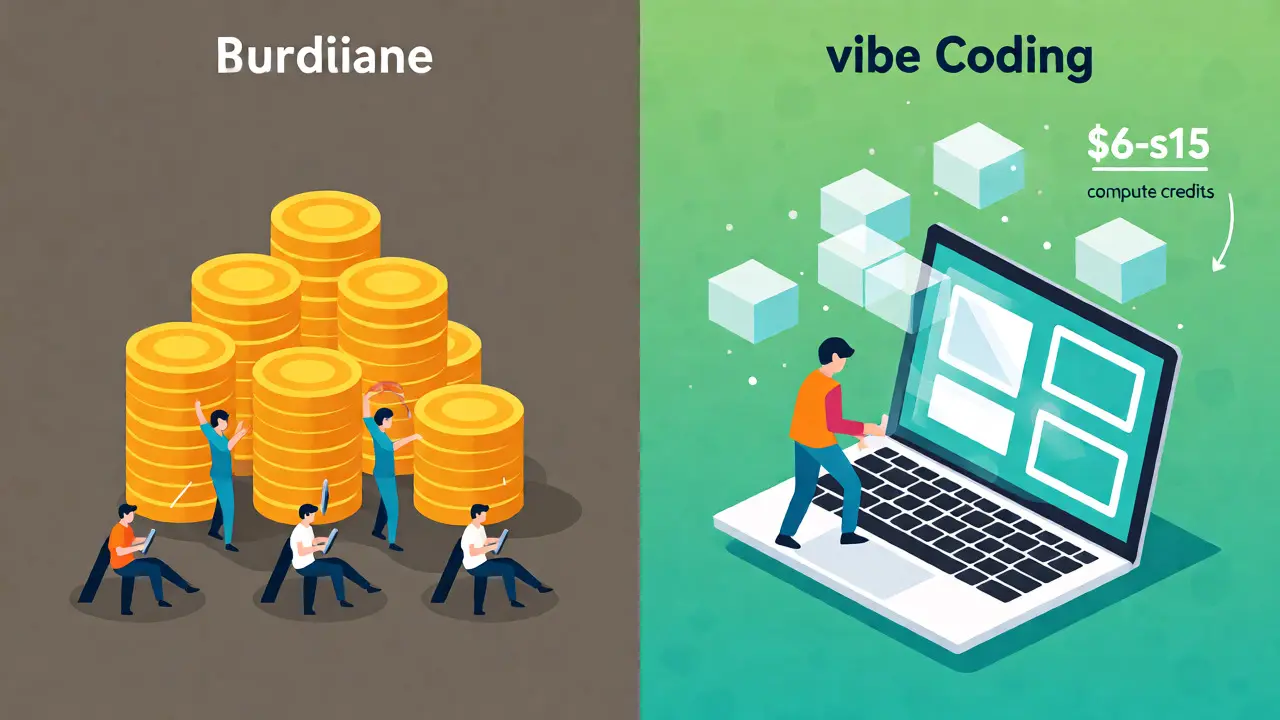
- Real Project Cost: Building a low-to-medium complexity app often costs just $6-$15 in compute credits, not hundreds.
- Hidden Risks: Token-based tools like Bolt.new can see costs jump 10x if you hit usage caps unexpectedly.
- Free Tier Strategy: Use free plans (Base44, Tempo, Cursor trials) to validate ideas before paying a dime.
Understanding the Pricing Models: Tokens vs. Prompts
Before comparing prices, you need to understand what you’re actually buying. Most vibe coding tools fall into two categories: token-based or prompt-based. This distinction matters more than the sticker price.
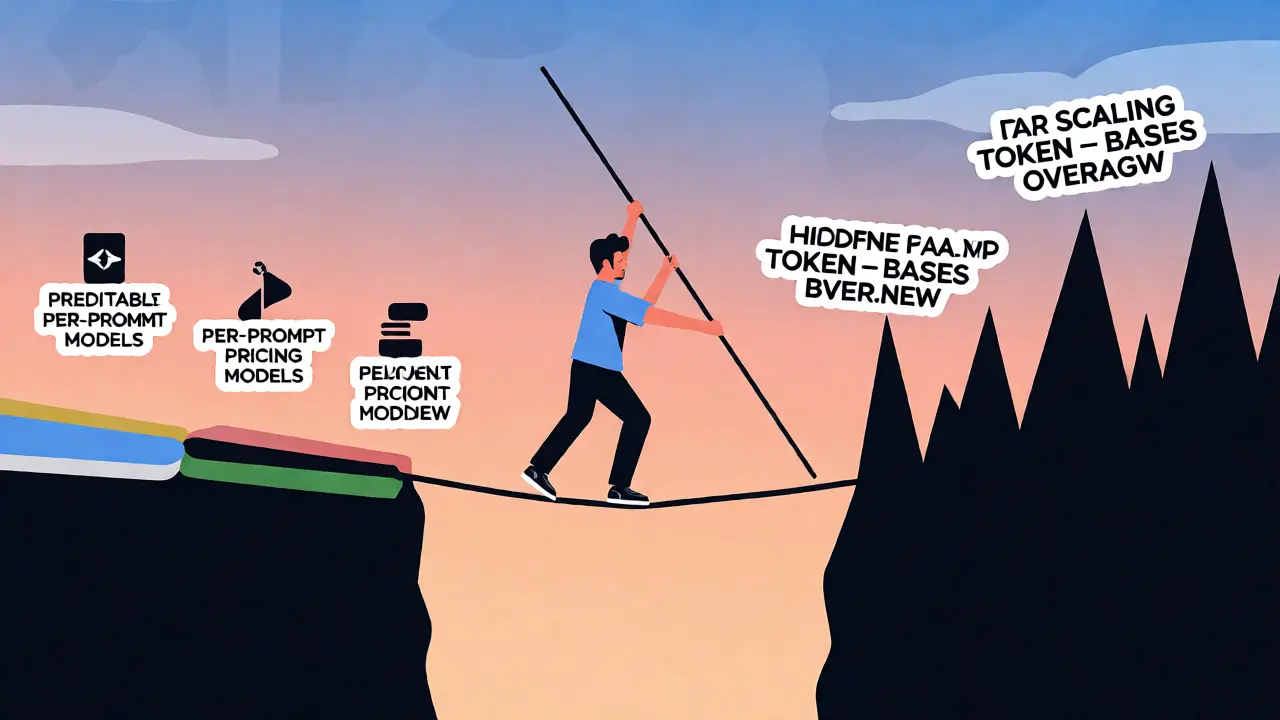
Token-based models, used by Bolt.new is a rapid prototyping platform that charges based on token usage rather than interaction count, measure output volume. A simple fix might use few tokens, but generating a complex UI component could burn through thousands. If you exceed your monthly allocation, costs spike. For example, Bolt.new’s Pro plan gives you 10 million tokens for $18/month. Need 120 million? That jumps to $200/month. It’s a cliff-edge pricing model that punishes heavy iteration.
In contrast, Tempo Labs is a development environment that shifted to a transparent per-prompt pricing model in 2026 to simplify budgeting recently moved to a per-prompt system. Each interaction counts as one unit, regardless of complexity. Their Pro tier offers 150 prompts for $30/month. This makes forecasting easy. If you know you’ll make 100 changes this month, you know exactly what you’ll pay. No surprises.
| Tool | Pricing Basis | Entry Price | Scaling Risk | Best For |
|---|---|---|---|---|
| Windsurf | Subscription/Tiered | $15/mo | Low | Cost-conscious solo devs |
| Cursor | Subscription + Usage | $20/mo | Medium | Codebase-heavy projects |
| Replit | Credits/Compute | $20/mo | Medium | All-in-one hosting needs |
| Bolt.new | Tokens | $18/mo | High | Rapid prototyping |
| Tempo Labs | Prompts | $30/mo | Low | Predictable budgets |
| Lovable | Subscription | $25/mo | Low | UI-focused apps |
The Real Cost of Building an MVP
Subscriptions are just the overhead. The variable costs-the compute power used to generate code-are where the money goes. But here’s the good news: for most startups, these costs are surprisingly low.
Data from developers building production-grade applications shows that creating a low-to-medium complexity app typically costs between $6 and $15 in total compute credits. Bug fixes are even cheaper, often under $0.50 per iteration. Why so low? Because modern AI models have become incredibly efficient. You aren’t paying for hours of human developer time; you’re paying for milliseconds of GPU inference.
However, mobile apps tell a different story. Due to higher complexity and integration requirements, building a mobile application via vibe coding can range from $300 to $500. If you’re targeting iOS or Android specifically, factor this higher baseline into your budget. Web apps remain the sweet spot for cost efficiency.
For teams running multiple projects, some professionals maintain a $200 monthly subscription to cover comprehensive access across the ecosystem. This covers high-volume usage that would otherwise require expensive enterprise tiers.
Platform Deep Dive: Where Your Money Goes
Replit: The All-in-One Value Play
Replit is an integrated development environment offering built-in hosting, database management, and AI assistance consistently ranks as having the strongest overall pricing model for startups. Why? Because it bundles hosting. When you deploy an app on Replit, you don’t need to separately pay for AWS, Heroku, or Vercel hosting initially. Their Core plan starts at $20/month (billed annually) and includes $25 worth of monthly credits for AI and compute resources.
This bundling reduces hidden infrastructure costs. For a bootstrapped founder, eliminating the need to configure CI/CD pipelines or manage server instances saves both time and money. However, be aware that once you scale beyond their managed hosting, you may face migration costs.
Cursor: Best for Existing Codebases
If you already have code and need to modify it, Cursor is an AI-powered code editor designed for deep codebase understanding and modification is likely your best bet. Priced identically to Replit at $20/month entry, Cursor specializes in context-aware editing. It doesn’t just generate new files; it understands your entire project structure.
The cost here is primarily subscription-based, with minor usage fees for advanced AI features. For startups maintaining legacy code or iterating on existing products, Cursor’s ability to reduce manual refactoring time justifies the price. It’s less about “building from scratch” and more about “accelerating maintenance.”
Lovable and v0: The UI Specialists
Design-heavy startups should look at Lovable is a vibe coding tool focused on generating beautiful front-end interfaces and web applications. Starting at $25/month, it’s pricier than Windsurf but excels at producing polished, production-ready UI components. If your competitive advantage is user experience, Lovable reduces the need for expensive designers.
Similarly, v0 by Vercel is a generative UI tool optimized for Next.js and React components integrates seamlessly with the Next.js ecosystem. At $20/month entry, it’s ideal if your stack is already Vercel-native. Note that business plans scale to $30/user/month, so team size impacts costs directly.
Scaling Traps and Hidden Costs
The biggest financial risk for startups isn’t the monthly fee-it’s the scaling cliff. Let’s look at how quickly costs can escalate.
Consider Base44 is a no-code/vibe coding platform with tiered subscription plans ranging from Starter to Elite. Its tiers jump aggressively: $20 → $40 → $80 → $160. That’s a 100% increase between each level. If your user base grows slightly faster than expected, you might double your software spend overnight.
Tempo Labs offers more granular control but still has steep jumps. Moving from Scale ($50/mo) to Ultimate ($100/mo) is a 100% increase. Jumping to Power ($350/mo) is a 250% increase. Unless you are an agency billing clients $150+/hour, the Unlimited plan ($500/mo) rarely makes sense for early-stage startups. Stick to the lower tiers until you prove revenue.
Bolt.new presents a different trap: unpredictability. Because it uses tokens, a single complex request can consume disproportionate resources. If you underestimate token usage, you might face overage charges or forced upgrades. Unlike fixed-price subscriptions, you can’t easily forecast next month’s bill if your development velocity increases.
Strategic Budgeting Tips for Founders
How do you keep costs down while moving fast?
- Start Free: Every major tool offers a free tier. Base44 gives 25 message credits; Tempo Labs offers 30 prompts/month. Use these to test feasibility before committing capital.
- Batch Your Prompts: Instead of asking for one small change at a time, group related tasks into single, well-structured prompts. This reduces the total number of interactions, saving credits on prompt-based systems.
- Choose Based on Stack: Don’t pay for Replit’s hosting if you’re deploying to AWS. Don’t pay for Lovable’s UI focus if you’re building a backend API. Match the tool to your specific bottleneck.
- Annual Billing Discounts: Most platforms offer significant discounts for annual payments. Bolt.new drops from $25 to $18/month effectively. Base44 offers similar reductions. If you’re confident in the tool, lock in the rate.
Also, consider training costs. While vibe coding lowers technical barriers, effective prompt engineering requires skill. Expect 5-20 hours of initial learning time for non-technical founders. This “hidden” labor cost should be factored into your ROI calculations.
Vibe Coding vs. Traditional Hiring
To put these numbers in perspective, compare them to traditional development. Hiring a junior developer in the US costs roughly $70,000-$90,000 annually plus benefits. Even outsourcing a simple MVP to a freelance agency often costs $5,000-$15,000.
Vibe coding tools reduce this to $180-$500 annually for the first year. That’s a 90%+ cost reduction for qualifying use cases. Of course, you still need someone to oversee quality and handle edge cases, but the leverage is undeniable. For many startups, the choice isn’t between vibe coding and hiring a CTO; it’s between vibe coding and not launching at all.
Which vibe coding tool is cheapest for startups?
Windsurf currently offers the lowest entry point at $15 per month. However, if you include hosting costs, Replit’s $20/month plan may be cheaper overall because it bundles deployment infrastructure, eliminating separate hosting fees.
Are there hidden costs in token-based tools like Bolt.new?
Yes. Token-based models can lead to unpredictable bills if you exceed your monthly allocation. Upgrading from 10 million to 120 million tokens on Bolt.new can increase costs from $18 to $200 per month, creating significant budget volatility.
How much does it actually cost to build an app with vibe coding?
For a low-to-medium complexity web app, real-world data suggests total compute costs range from $6 to $15. Mobile apps are more expensive, typically costing $300 to $500 due to higher complexity and integration needs.
Is Tempo Labs' per-prompt pricing better than token pricing?
For startups needing predictable budgets, yes. Tempo Labs’ shift to per-prompt pricing allows precise cost forecasting. Token pricing offers flexibility for variable workloads but carries the risk of unexpected overages.
Can I use free tiers to launch my MVP?
You can use free tiers for prototyping and validation, but they usually lack custom domains, remove branding, or limit collaboration. Most startups transition to paid plans ($15-$25/month) shortly after validating their idea to ensure professional presentation and reliability.